
Everyone wants to be a better leader, but leadership isn’t something you’re simply born with. It’s a set of leadership skills you build over time, through practice, mistakes, and honest feedback.
In today’s workplaces, where teams are often remote and expectations shift fast, strong leadership matters more than a fancy title ever could. A good leader keeps people motivated even when projects get messy. A weak one watches productivity quietly drain away.
This article walks through ten practical ways to strengthen your skills, the common mistakes that quietly hold leaders back, and how the right tools can give managers the visibility they need to lead well.
Read Aloud!
Quick Answer: How Can You Improve Leadership Skills?
You can improve leadership skills by sharpening communication, practicing active listening, building emotional intelligence, asking for honest feedback, and making decisions confidently. Lead by example, delegate wisely, keep learning, build genuine relationships, and practice leadership daily rather than waiting for a title to “make it official.”
Types of Leadership Skills You Should Develop
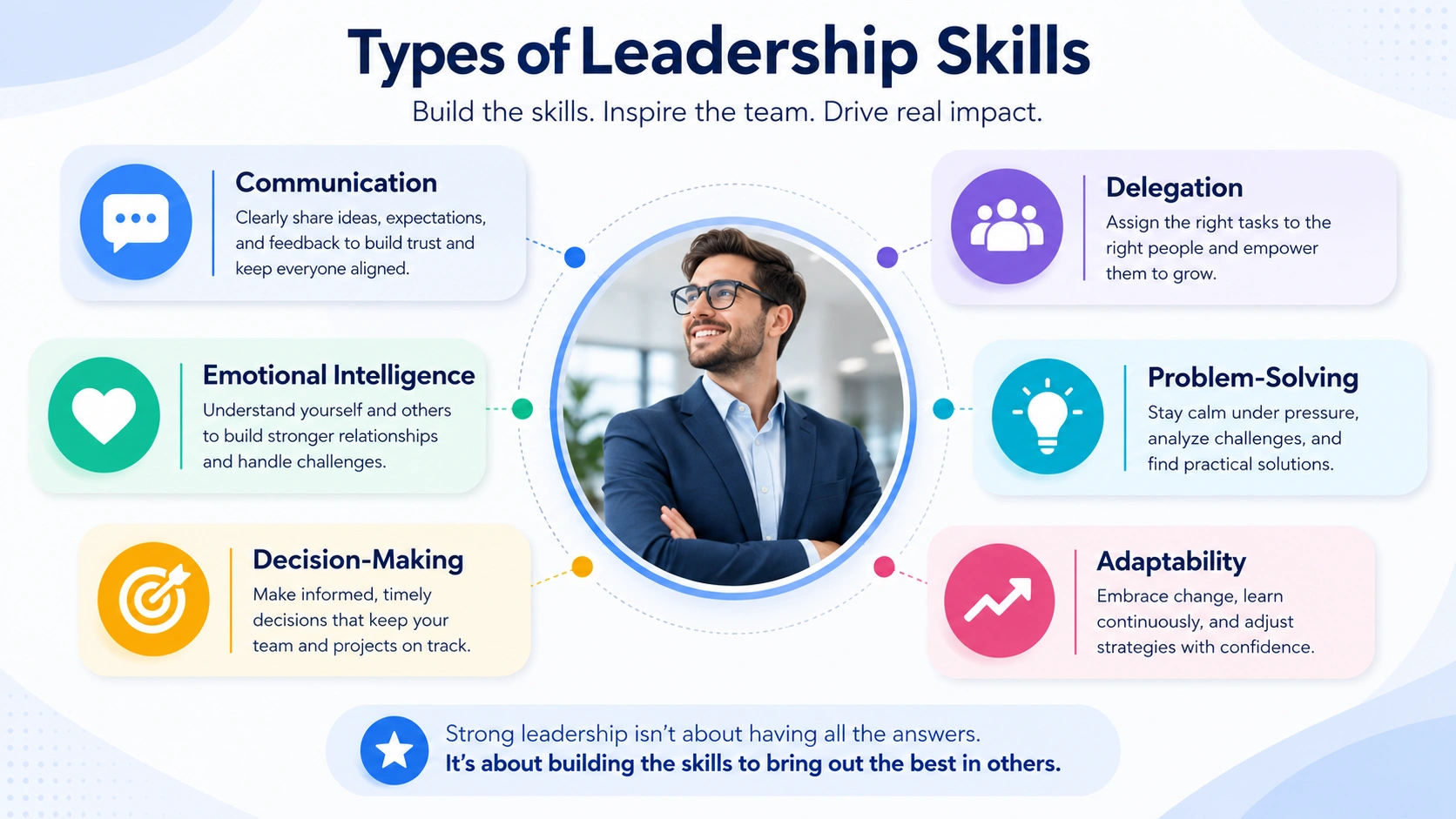
Strong leadership is built on a mix of personal and professional abilities that help you guide, motivate, and support others. Understanding these types of leadership skills can help you identify the areas you need to strengthen and become a more effective leader.
- Communication Skills: Clearly sharing ideas, expectations, and feedback helps build trust, prevent misunderstandings, and keep teams aligned.
- Emotional Intelligence: Leaders with strong emotional intelligence understand their own emotions, empathize with others, and manage workplace relationships effectively.
- Decision-Making Skills: Making informed and timely decisions enables leaders to solve problems, manage risks, and keep projects moving forward.
- Delegation Skills: Assigning tasks based on each team member’s strengths improves productivity while giving employees opportunities to grow and take ownership.
- Problem-Solving Skills: Effective leaders stay calm under pressure, analyze challenges, and find practical solutions that benefit both the team and the organization.
- Adaptability: The ability to embrace change, learn new approaches, and adjust strategies helps leaders navigate evolving workplace demands with confidence.
Developing these skills lays the foundation for becoming a confident leader who can inspire teams, overcome challenges, and drive long-term success.
10 Practical Ways to Improve Leadership Skills
1. Improve Your Communication Skills
Clear communication is the backbone of almost every effective leadership skill. If your team doesn’t understand the goal, they can’t execute it well, no matter how talented they are.
Try this: before sending an important message, ask yourself if a stranger could understand it without context. If not, simplify it. Use plain language, short sentences, and concrete examples instead of vague directives like “do better next quarter.”
2. Learn to Listen Before You Lead
Many new managers talk more than they listen, assuming leadership means having all the answers. It doesn’t. Active listening builds trust faster than any motivational speech ever will.
When someone on your team raises a concern, resist the urge to respond immediately. Pause, repeat back what you heard, and ask a follow-up question. People notice when they’re genuinely heard.
3. Develop Emotional Intelligence
Emotional intelligence covers empathy, self-awareness, and the ability to handle conflict without losing composure. It’s one of the leadership development skills that separates managers people respect from managers people merely tolerate.
Self-awareness starts with noticing your own triggers. Do you get defensive during feedback? Do you avoid difficult conversations? Naming these patterns is the first step toward changing them.
4. Lead by Example
Your actions carry far more weight than your words. If you tell your team to be punctual but show up late to every meeting, the message gets lost.
Consistency between what you say and what you do builds credibility. Accountability works the same way; if you make a mistake, own it openly instead of quietly hoping no one notices.
5. Ask for Constructive Feedback

Feedback is uncomfortable, but it’s one of the fastest ways to grow your leadership skills. Most leaders overestimate how well they’re actually doing.
Ask specific questions like “What’s one thing I could do differently this month?” rather than a vague “How am I doing?” Then actually act on what you hear, even when it stings a little.
6. Strengthen Decision-Making Skills
Indecisive leaders create anxious teams. Confident decision-making doesn’t mean rushing; it means gathering just enough information, then committing.
Balance speed and accuracy by setting a personal deadline for smaller decisions, say, 24 hours, while reserving deeper analysis for choices with lasting consequences. Not every decision deserves a week of deliberation.
7. Delegate Responsibilities Effectively
Trying to control every task is exhausting and, frankly, a sign of weak leadership skills rather than strong ones. Delegation shows trust and frees you up for higher-level thinking.
Avoid micromanaging once you’ve handed off a task. Set clear expectations upfront, then step back. Checking in is fine; hovering isn’t.
8. Invest in Continuous Learning
Leadership development skills don’t stop growing once you get promoted. Read books outside your industry, take a course, or find a mentor who challenges your thinking.
Real-world leadership experiences, like running a small project or volunteering to lead a cross-team initiative, often teach more than any course ever could.
9. Build Strong Relationships
Leadership doesn’t happen in isolation. Networking, internal and external, helps you understand different perspectives and builds a support system you can lean on.
Trust and collaboration grow when people feel like more than just names on an org chart. Remember small details about your team members; it goes further than most leaders realize.
10. Practice Leadership Every Day
You don’t need a formal title to practice leadership skills. Small habits, like volunteering for a tricky project or mentoring a newer colleague, build the muscle long before any promotion happens.
Leadership is less about waiting for the right moment and more about showing up consistently in small ones.
Leadership Skills Examples in Everyday Work
Strong leadership isn’t just about managing a team; it’s about applying the right skills in everyday situations. Here are some practical examples that show what effective leadership looks like at work:
- Resolving Team Conflicts: A good leader listens to all sides, stays neutral, and helps team members find a solution that benefits everyone.
- Motivating Employees: Recognizing achievements, offering encouragement, and setting clear goals can boost morale and keep teams engaged.
- Delegating Tasks Effectively: Instead of handling everything alone, successful leaders assign responsibilities based on each team member’s strengths and trust them to deliver.
- Handling Tight Deadlines: Strong leaders stay calm under pressure, prioritize important tasks, and coordinate the team to meet deadlines without compromising quality.
- Making Difficult Decisions: Whether it’s allocating resources or solving business challenges, effective leaders evaluate the facts, consider different perspectives, and make confident decisions.
- Coaching and Supporting Team Members: Great leaders help employees grow by providing regular feedback, sharing knowledge, and creating opportunities to develop new skills.
Read More!
Leadership Soft Skills In The Modern Workplace: What Actually Works
Common Mistakes That Prevent Leadership Growth
Even well-intentioned managers fall into habits that quietly undermine their growth:
- Avoiding difficult conversations instead of addressing issues directly
- Trying to control every detail instead of trusting the team
- Ignoring feedback instead of using it to improve
- Communicating inconsistently or unclearly
- Lacking consistency between words and actions
Recognizing these patterns early is often the difference between leaders who plateau and leaders who keep improving.
How EmpMonitor Helps Managers Become Better Leaders
Leadership isn’t only about soft skills; it also requires real visibility into how your team is actually working. EmpMonitor gives managers the workforce insights needed to make informed, fair decisions instead of relying on guesswork.
Key Features:
- Employee productivity monitoring
- Attendance and time tracking
- Task and activity insights
- Workforce analytics and reports
- Remote team management tools
- Performance trend tracking
For managers juggling hybrid or remote teams, this kind of visibility removes the guesswork from performance conversations, making feedback more accurate and far less awkward for everyone involved.
How to Develop Leadership Skills
Developing strong leadership skills is an ongoing process that requires self-awareness, practice, and a willingness to learn. Whether you’re an aspiring manager or an experienced leader, these strategies can help you grow over time.
- Set Clear Leadership Goals: Identify the skills you want to improve, such as communication, decision-making, or delegation, and create a plan to work on them consistently.
- Seek Feedback Regularly: Ask colleagues, managers, or mentors for honest feedback about your leadership style. Use their insights to identify strengths and areas for improvement.
- Learn from Experienced Leaders: Read leadership books, attend workshops, or find a mentor who can share practical advice and help you navigate challenges.
- Take on Leadership Opportunities: Volunteer to lead projects, mentor new team members, or manage small initiatives. Real-world experience is one of the best ways to build confidence and leadership ability.
- Reflect and Keep Improving: After completing projects or making important decisions, take time to evaluate what worked well and what could be done better. Continuous reflection helps you become a more effective leader.
By following these steps, you can develop the skills that strengthen your confidence, improve team collaboration, and prepare you for greater responsibilities throughout your career.
Conclusion
Improving leadership skills isn’t a one-time achievement; it’s a continuous process built through practice, feedback, and honest self-reflection. Rather than trying to master every skill at once, pick one area, communication, listening, or decision-making, and focus there first. Small, consistent progress compounds into real leadership growth over time.
FAQs
What are the most important leadership skills?
Communication, emotional intelligence, decision-making, and the ability to listen actively are generally considered the most important leadership skills, since they influence nearly every other interaction at work.
Can leadership skills be learned?
Yes. While some people show natural tendencies toward leadership, most leadership skill examples, like delegation, feedback, and conflict resolution, are learned through deliberate practice and experience.
How long does it take to improve these skills?
There’s no fixed timeline. Noticeable improvement in specific areas, like communication, can happen within a few months of consistent effort, while broader growth often takes years.
Why is communication important in leadership?
Without clear communication, even the best strategy can fail. Teams need to understand expectations, priorities, and feedback to execute effectively.