For many people, time management and setting specific, realistic goals are something that they can struggle with. If you’re in leadership or management, having strong time management skills is critical because you are responsible for managing your own time effectively, as well as managing the time of your entire team or organization. Developing an understanding of time management concepts is an important skill for any leader, but it’s also a difficult aspect of one’s role to learn how to do properly.
In this blog, you will find a comprehensive list of benefits associated with setting effective time management goals, along with some helpful ideas on how to create and implement effective time management goals related to various types of projects and tasks. You will also learn ways that you can use effective time management practices and achieve goals faster and more efficiently.
Now, let’s explore some examples of how to develop effective time management goals so that you can be successful!
What Is Time Management Goal?
A time management goal is a specific, measurable, and actionable objective set to improve efficiency, increase productivity, and optimize how time is used. These goals help individuals and teams prioritize tasks, reduce stress, prevent procrastination, and maintain a better work-life balance through clear, time-bound targets.
Using effective time management goal examples helps managers set realistic and achievable targets for their teams. But is setting a time management goal really necessary? Let’s understand why it matters.
In a hurry? Listen to the blog instead!
Importance Of A Time Management Goal

A time management goal plays a vital role in organizing your day, improving productivity, lowering stress, and maintaining a healthy work-life balance. When you define clear objectives, you can focus on priorities, avoid delays, and concentrate on meaningful tasks that drive real results. Applying proven strategies like eat the frog, tackling the most difficult task first can significantly improve consistency and performance. Reviewing practical Time Management Goal Examples also helps individuals understand how structured planning leads to higher efficiency and reduced burnout.
Key Importance of Time Management Goals:
Increased Productivity and Efficiency: Clear goals highlight the most important responsibilities, helping you accomplish more in less time. Referring to Time Management Goal Examples makes it easier to apply these principles effectively.
Reduced Stress and Overwhelm: Organized planning prevents last-minute pressure, minimizing anxiety and exhaustion.
Better Work-Life Balance: Well-structured scheduling ensures dedicated time for both work commitments and personal priorities.
Improved Prioritization: Goals help separate urgent tasks from important ones, keeping attention on high-impact activities.
Enhanced Decision-Making: Defined objectives create clarity, enabling faster and more confident choices.
Boosted Reputation and Career Growth: Meeting deadlines consistently through strong planning strengthens professional credibility and opens growth opportunities. Exploring Time Management Goal Examples can further guide long-term improvement.
For students managing tight deadlines, tools that help you write essays faster with essayservice.com can support better time allocation while staying aligned with your overall goals.
How To Set Time Management Goals?
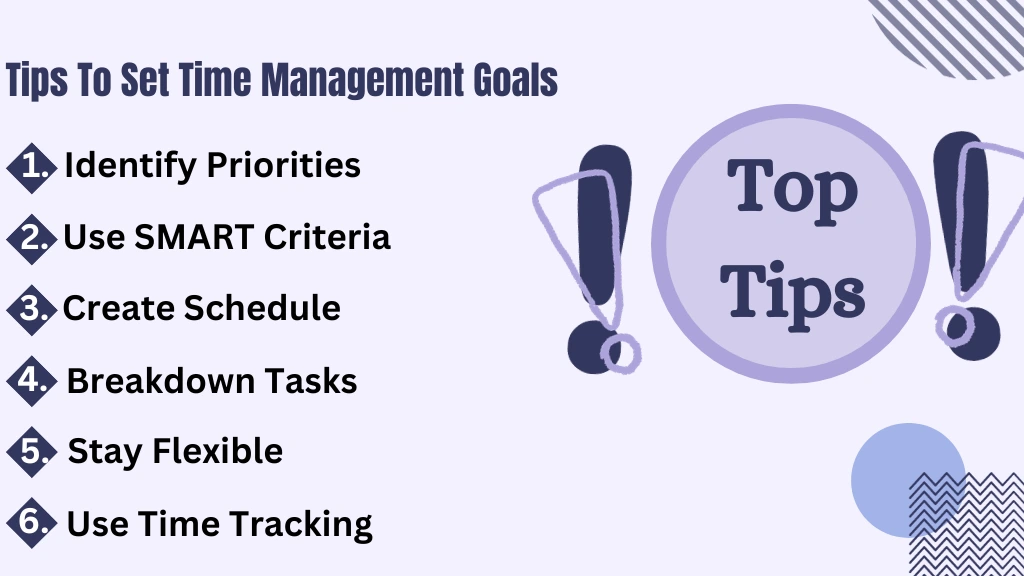
Effective time management goals, known as SMART goals, need to be specific, measurable, achievable, relevant, and time-bound. These goals assist managers in concentrating their efforts and monitoring advancements toward precise time management objectives. These are the best time management techniques that assist in setting effective time management goals.
By establishing and striving for time management goals, managers can enhance their ability to prioritize tasks and concentrate on their key responsibilities.
Here’s a detailed guide on how to set time management goals:
- Identify Priorities:
Start by identifying your priorities, both short-term and long-term. Determine what tasks are crucial for your personal and professional success. You can also use tools like time management matrix.
- Create Specific Goals:
Formulate clear and specific time management goals. For instance, instead of a vague goal like “improve productivity,” specify “complete project tasks before the end of the week.”
- Use SMART Criteria:
Apply the SMART criteria (Specific, Measurable, Achievable, Relevant, Time-bound) to ensure your goals are well-defined and attainable. Utilizing this smart goal for time management technique enhances focus and progress tracking.
- Break Down Tasks:
Divide extensive tasks into smaller, more manageable elements. It makes the goals more achievable and helps avoid overwhelm.
- Prioritize Time Management Goal Examples:
Arrange your objectives by considering both their significance and necessity. Use time management goal examples to guide your decisions, such as allocating focused time for high-priority tasks. You can use the rapid planning method to improve productivity and focus more on time management.
- Create a Schedule:
Develop a daily or weekly schedule that aligns with your time management goals. Allocate specific time blocks for different activities, ensuring a balanced and efficient use of time.
- Review and Adjust:
Regularly review your goals and progress. Evaluate what is functioning effectively and identify areas requiring modifications. This ongoing process facilitates continuous enhancement.
- Seek Feedback:
Share your time management goals with colleagues or mentors. Seek feedback on your approach and consider incorporating valuable suggestions into your strategy.
- Stay Flexible:
Be open to adjustments. Both life and work are dynamic, and unexpected events may occur. Flexibility allows you to adapt while staying committed to your overall time management goals. Also, you can improve your flexibility by taking cues from time management goal examples.
- Use Time Tracking:
Time tracking is vital for time management goals, enabling precise monitoring of tasks. It provides insights into time allocation, identifies productivity patterns, and helps in optimizing schedules for improved efficiency. For this, you can use a time tracker software for employees. EmpMonitor is a valuable tool that you can use for accurate time tracking of employees.
Let us get some knowledge about this remarkable software called EmpMonitor.
EmpMonitor- The Best Time Tracking Software
EmpMonitor stands out as the best management software for employees, offering comprehensive solutions for efficient workforce management.
With robust features like real-time activity tracking, productivity analysis, and detailed reports, EmpMonitor empowers organizations to optimize productivity, ensure accountability, and enhance time management.
Its user-friendly interface and advanced capabilities make it an indispensable tool for businesses aiming to streamline operations and boost overall efficiency.
It not only is a time-tracking software but also the most preferred workforce and project management software. It is a dynamic tool that addresses all work-related problems and provides the perfect solution. EmpMonitor is therefore the best project management time tracking software.
Some of its impressive time-tracking features are:
Automatic Timesheets:
Streamline work with top time-tracking software. Auto-track the time when employees start computers for accurate insights.
Employee Access:
Foster accountability and transparency. Empower employees with detailed insights into daily activities, creating a transparent work environment.
Advanced Administrative Controls:
Gain complete control over its features. Set rules for diverse tracking capabilities, consolidating all data for holistic improvement.
Employee Productivity Tracking:
Reveal real-time productivity insights, ensuring thorough visibility into employees’ total work hours. Identify patterns, eliminate distractions, and enhance efficiency.
Intelligent Alert Feature:
Prevent unproductive or malicious activities during work hours. Set alerts for specific behaviors, receiving real-time notifications.
Active Hours Tracking Of Employees:
Enjoy transparency with more detailed information about employees. Specify the minimum duration employees should be actively engaged during their work hours and obtain up-to-the-minute insights into their working time.
Thus, when the worry about employee management and time tracking arises, EmpMonitor is the best solution for you. With this efficient time tracking software, you can work stress free and without worry.
Having learned about this wonderful software, let us now return to our blog and learn about some time management goal examples for managers.
Also Read:
Why Should Effective Time Management Be Used Routinely?
How To Improve Productivity And Efficiency With Time Management Software?
8 Tips To Get The Most Out Of Project Management Time Tracking Software
Time Management Goal Examples For Managers:
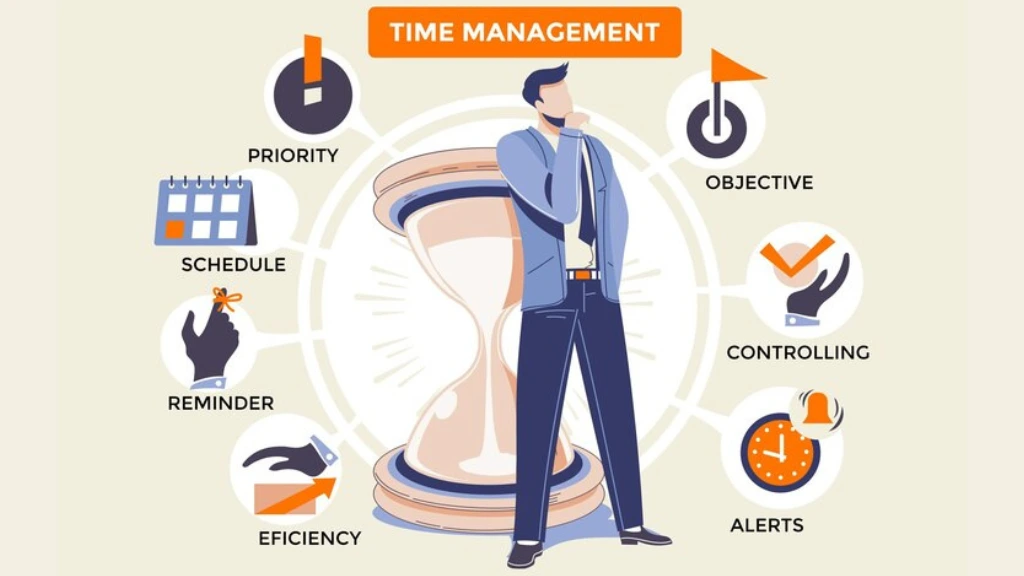
Managers set effective time management goals to maximize productivity through clear prioritization, smart delegation, and structured workflows. Below are practical and actionable time management goal examples managers can implement:
Prioritize and Delegate Strategically:
Use the Eisenhower Matrix every Monday to delegate at least two urgent but non-important tasks to team members. Spend the first 30 minutes of each workday identifying the top three critical tasks and focus exclusively on completing them. This ensures attention remains on high-impact responsibilities.
Set Clear Deadlines and SMART Goals:
Create specific, measurable, and time-bound objectives. For example: Improve team efficiency by automating the weekly reporting process by the end of this quarter, reducing manual work by five hours per week.
Optimize Meetings and Communication:
Limit total meeting time to no more than three hours per week by reducing or eliminating unnecessary meetings. Ensure every meeting has a pre-set agenda. Batch routine emails into two 30-minute blocks daily (e.g., 10:00 AM and 4:00 PM) to prevent constant interruptions.
Use Time Blocking for Deep Work:
Schedule dedicated calendar blocks for strategic tasks. Practice single-tasking by closing unnecessary tabs and turning off notifications for 90-minute deep-work sessions to improve concentration and output.
Apply Task Management Techniques:
Follow the two-minute rule—complete tasks that take less than two minutes immediately to prevent backlog. Group similar tasks together to minimize context switching and improve workflow efficiency.
Review and Plan Regularly:
Dedicate Friday afternoons to reviewing team progress and planning the upcoming week. Regularly assess how time is spent and adjust strategies to improve effectiveness.
Set Boundaries and Maintain Balance:
Protect focused work sessions from interruptions and encourage short breaks to maintain energy and long-term productivity.
By applying techniques such as time blocking, batching, and structured delegation, managers can strengthen their time management practices and consistently achieve better results.
Conclusion:
In conclusion, embracing time management goal examples empowers individuals to strike a harmonious work-life balance. With the benefits outlined with practical tips and examples included, readers will gain valuable tools for improving efficiency and accomplishing their goals.
For a healthy work-life balance, you need to set time management goals. Through the establishment of goals and deadlines, effective time management enables individuals to meet their objectives.
This blog defines the significance of time management goals while exploring the diverse advantages that time management goal examples offer and supplies managers with a range of tips and examples applicable to both personal use and team management.
FAQs:
- What is a time management goal?
A time management goal is a specific, measurable, and time-bound objective designed to improve productivity, efficiency, and overall time utilization. It helps individuals and teams prioritize tasks, reduce stress, and achieve better work-life balance. - Why are time management goals important for managers?
Time management goals help managers allocate resources effectively, meet deadlines, delegate tasks wisely, and improve team productivity. Reviewing practical Time Management Goal Examples allows managers to implement structured and achievable plans. - What are SMART time management goals?
SMART goals are Specific, Measurable, Achievable, Relevant, and Time-bound. Applying this framework ensures that time management goals are clear, realistic, and trackable. - How can I improve my time management skills?
You can improve by setting clear priorities, using time-blocking techniques, applying the “eat the frog” method, tracking your time, reviewing progress regularly, and learning from proven Time Management Goal Examples. - What are some simple time management goal examples for managers?
Examples include setting daily priority lists, assigning clear deadlines, delegating non-essential tasks, conducting time-bound meetings, grouping similar tasks, and reviewing weekly performance metrics.