

Your to-do list keeps growing, even after a full day of work. What if timeboxing could fix it?
You start your day with a long list of tasks. You stay busy, keep working, and still end the day wondering where all your time went. Some tasks take longer than expected, others never get started, and the list just keeps growing.
That’s not because you’re not trying hard enough. It’s because your time has no clear limits.
Time-boxing changes that. Instead of letting tasks stretch endlessly, you give each one a fixed amount of time.
It’s a simple idea, but it can completely change how much you get done in a day.
By the end of this article, you’ll know exactly how to use time-boxing to stay focused, finish more tasks, and feel more in control of your time.
Read Aloud
What Is Timeboxing?
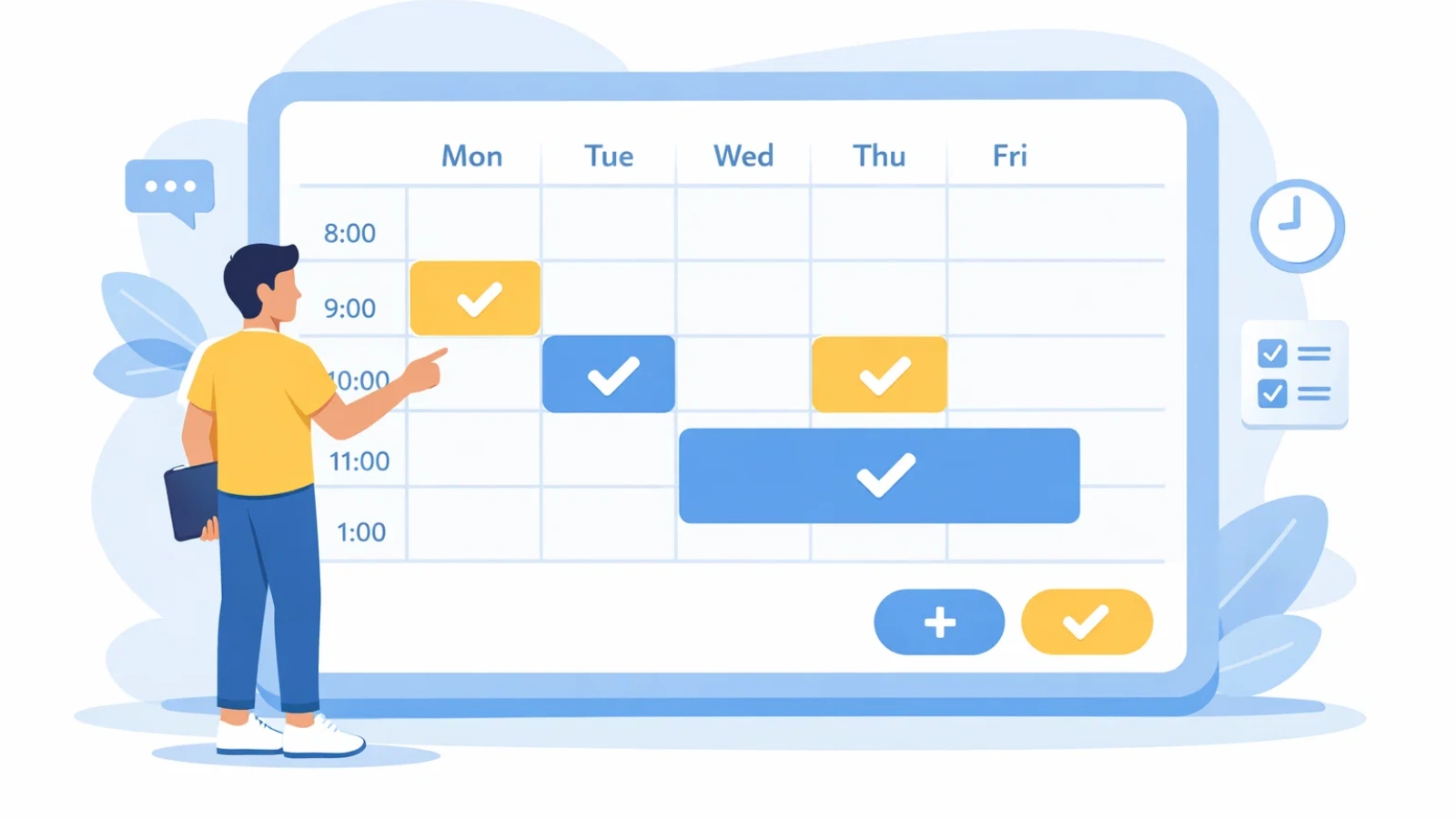
Timeboxing is a time management method where you assign a fixed amount of time to a task before you start and commit to stopping when that time ends.
Instead of working on something until it feels finished, you decide in advance how long it deserves. For example, rather than saying, “I’ll work on this later,” you set a clear boundary like, “I’ll work on this from 2:00 PM to 3:00 PM.” That fixed window is your timebox.
The key idea behind time-boxing is simple: time is limited, so your work must fit within it.
- Fixed Time Limits
Every task gets a clear start and end time before you begin. - Focus on Time, Not Perfection
You stop when the time ends, even if the task isn’t fully complete. - Single-Tasking
Each timebox is dedicated to one task, reducing distractions. - Planned Work Schedule
Your day is structured in advance, so you don’t waste time deciding what to do next. - Iteration Over Completion
If a task isn’t finished, you assign another timebox instead of extending the current one.
Simple Example
Instead of spending hours trying to perfect an email, you give yourself 30 minutes. When time is up, you stop and move on. If needed, you come back to it later with a fresh timebox.
Timeboxing vs Time Blocking vs To-Do Lists
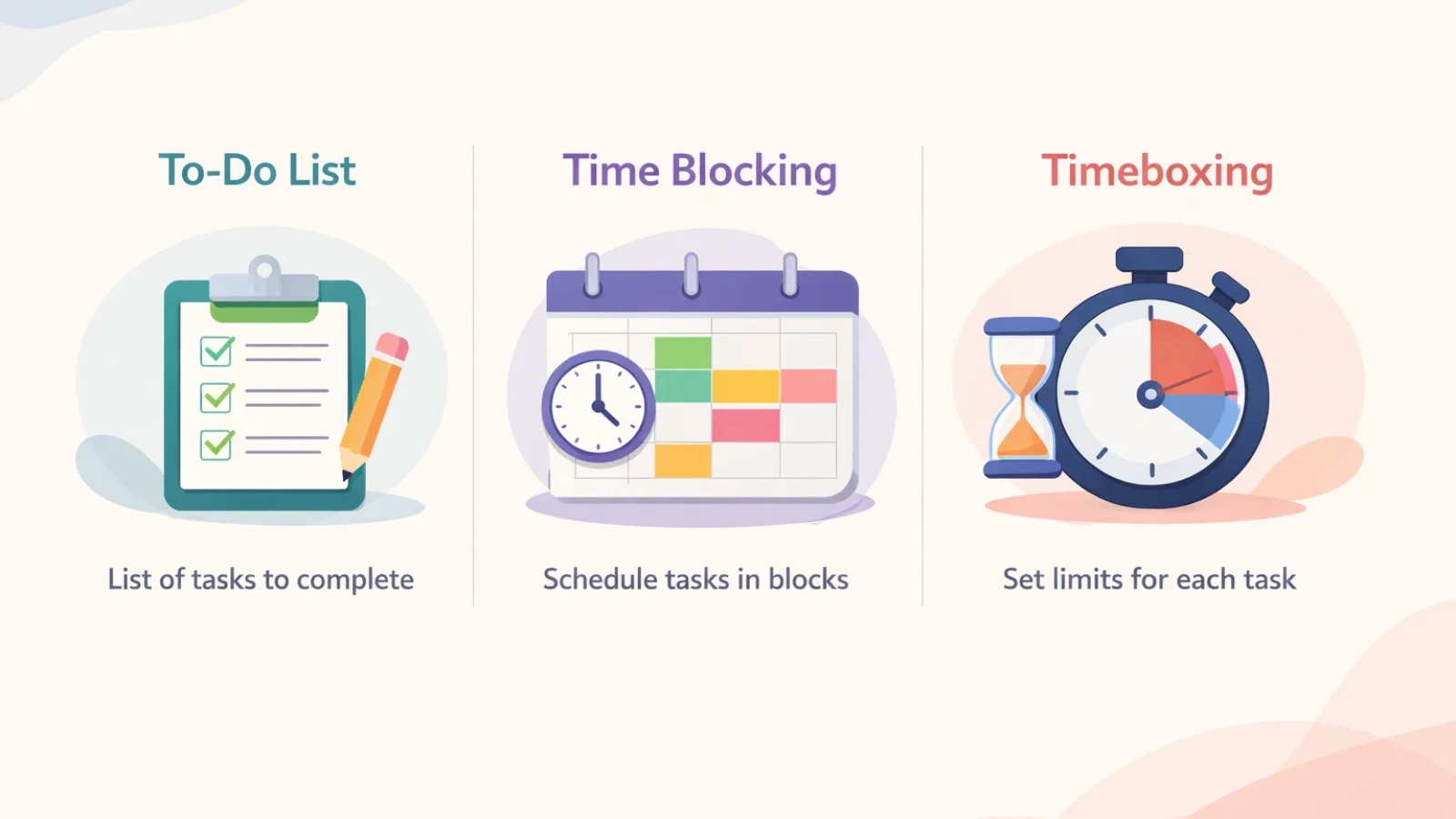
It’s easy to mix these three methods up, but they serve very different purposes. Understanding how they differ will help you choose the right system for managing your time more effectively.
At a basic level, all three help you stay organized. But the way they handle time, structure, and execution is what sets them apart.
Key Differences at a Glance
| Method | What It Does | Time Structure | Flexibility | Main Focus | Limitation |
|---|---|---|---|---|---|
| To-Do List | Lists tasks to complete | No time assigned | Very flexible | Tracking tasks | No control over time or priorities |
| Time Blocking | Schedules parts of your day | Broad time slots | Moderately flexible | Planning your day | Tasks can expand within blocks |
| Timeboxing | Assigns fixed time to each task | Strict start & end | Less flexible | Completing tasks efficiently | Requires discipline to follow limits |
Why Timeboxing Works
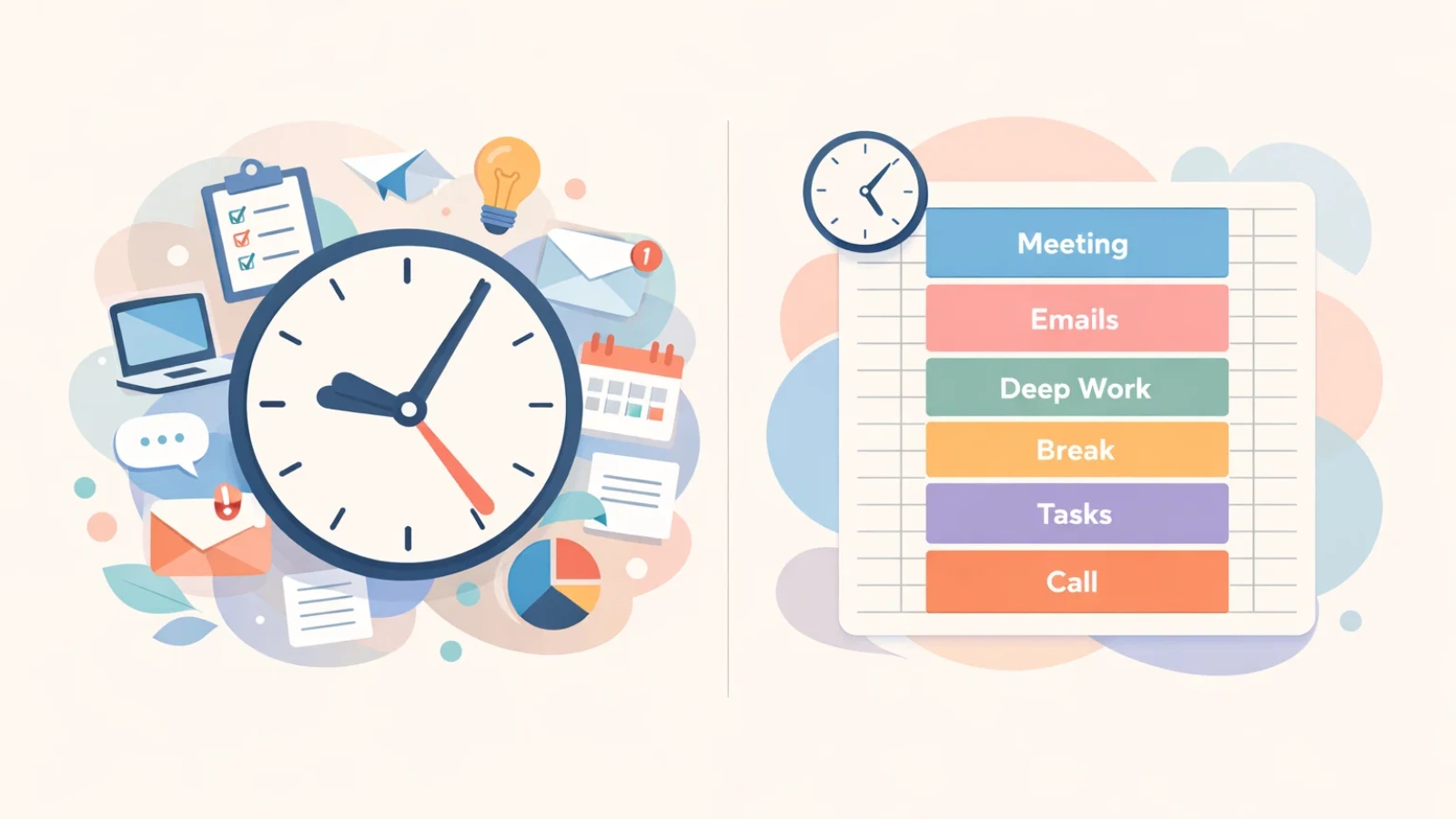
There’s a reason time-boxing works so well: it matches how your brain naturally responds to time, focus, and pressure. Instead of relying on motivation, it creates a structure that pushes you to take action.
Parkinson’s Law in Action
Work expands to fill the time available.
You’ve probably noticed this yourself. A task that should take 30 minutes somehow takes three hours when there’s no clear limit.
Timeboxing fixes this by setting boundaries upfront. When you only have a set amount of time, you naturally cut out unnecessary steps and focus on what actually matters.
Less Decision Fatigue
Every time you stop and think, “What should I do next?” you use mental energy.
It might seem small, but these decisions add up throughout the day and slow you down.
With time-boxing, your plan is already set. You move from one task to the next without stopping to decide, which keeps your momentum going.
Built-In Urgency
Without a time limit, it’s easy to get distracted.
But when a timer is running, your attention sharpens. You become more aware of how you’re using each minute.
Timeboxing creates just enough pressure to keep you focused without feeling overwhelmed.
Better Task Completion
Big tasks often feel overwhelming, which makes them easy to avoid.
Time-boxing breaks them into smaller, manageable chunks. Instead of trying to finish everything at once, you just focus on one timebox at a time.
That small win creates momentum, making it easier to keep going.
Benefits of Timeboxing
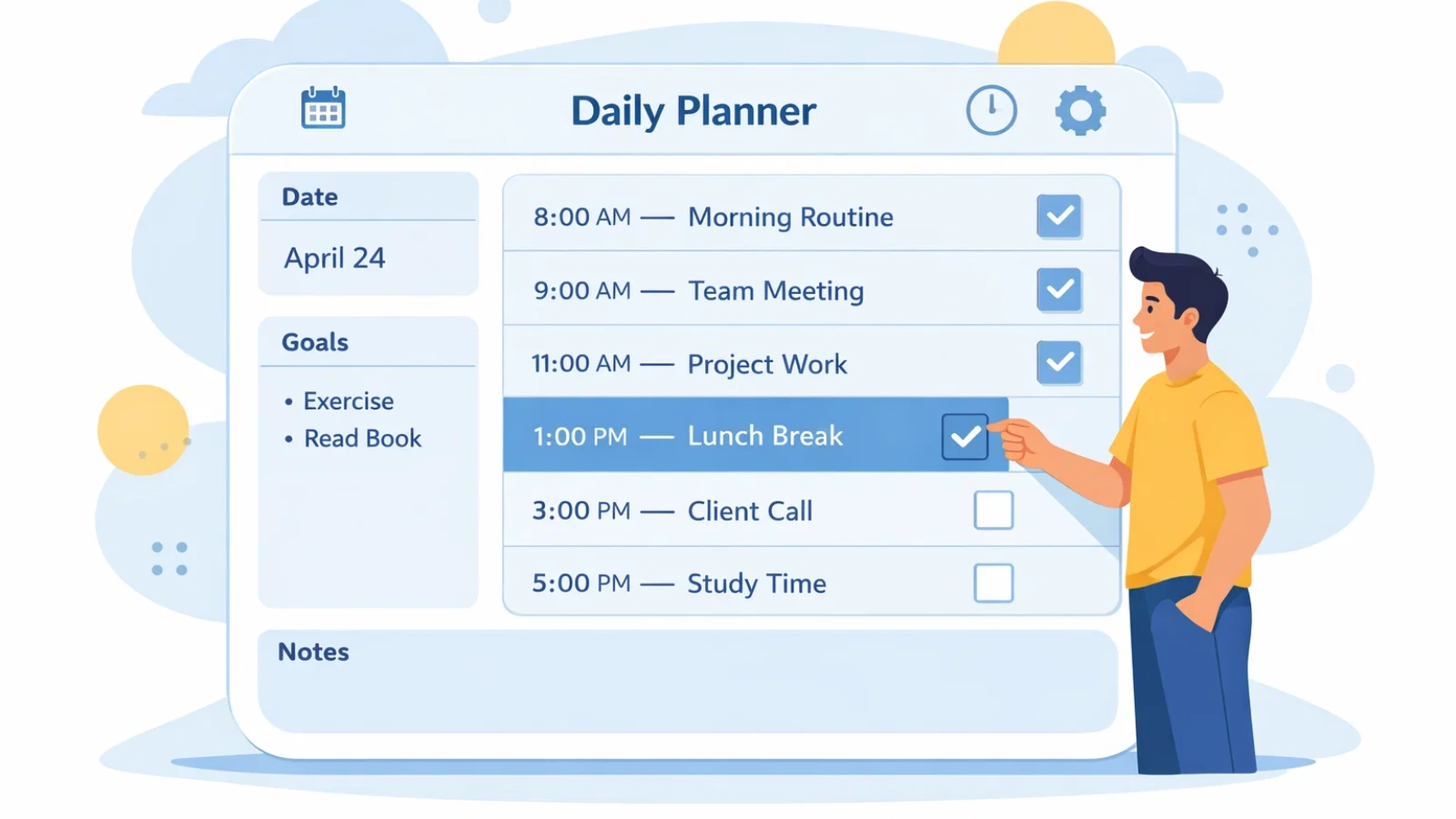
Using timeboxing consistently doesn’t just make you more organized; it changes how you approach work and how your day feels overall.
Here’s what you’ll start to notice:
- You get more done in less time.
When each task has a clear time limit, you naturally focus on what matters most. You stop overthinking and cut out unnecessary steps, which helps you complete tasks faster without sacrificing quality. - You develop a better sense of time.
Most people underestimate how long tasks take. With time-boxing, you regularly compare your estimates with reality. Over time, this improves your planning and helps you create more realistic schedules. - You procrastinate less and start more easily.
Big tasks often feel overwhelming, which is why they get delayed. Time-boxing makes starting easier because you’re only committing to a short, fixed period rather than the entire task. - Your workday becomes more structured and predictable
Instead of jumping between tasks randomly, your day follows a clear plan. This structure reduces stress and makes it easier to stay on track, even when things get busy. - You avoid getting stuck on small details.
Without limits, it’s easy to spend too much time trying to perfect things. Time-boxing forces you to move forward, helping you focus on progress instead of perfection.
Step-by-Step Guide to Using Timeboxing
Step 1: List All Your Tasks
Start by writing everything down.
Big projects, small errands, quick replies, everything goes on the list. This clears mental clutter and prepares you for effective timebox management.
Step 2: Estimate Time for Each Task
Assign rough time estimates.
Don’t aim for perfection here. You’ll improve over time. Even a simple guess is enough to start practicing time-boxing.
Step 3: Schedule Your Timeboxes
Place each task into your calendar.
Now your plan becomes real. This is where the timeboxing technique turns ideas into action.
Example:
- 9:00–9:30: Emails
- 9:30–11:00: Deep work
- 11:00–11:15: Break
Keep some gaps between tasks. Flexibility makes your system sustainable.
Step 4: Use a Timer
When a timebox begins, start a timer.
This small step is what makes time-boxing effective. It creates awareness and urgency.
Step 5: Stop When Time Ends
This is where most people struggle.
When the timer ends, stop working. Even if the task isn’t finished.
This discipline is what makes time-boxing work long-term.
Step 6: Review and Improve
At the end of the day, review your timeboxes.
Were your estimates accurate? Did anything take longer than expected?
This feedback loop is essential for improving your time boxing method.
Also Read-
How Flexible Holiday Policy Can Help You Improve Employee Engagement and Productivity?
09 BEST Teamwork Games That Your Remote Employees Will Enjoy
How to Master Timeboxing with EmpMonitor

Timeboxing becomes much more effective when you can clearly see how your time is actually spent. That’s where EmpMonitor helps you move from basic planning to real mastery.
Instead of guessing, you get real insights that help you improve your timeboxing system every day.
How EmpMonitor Enhances Your Timeboxing
- Accurate Time Tracking
Track exactly how much time you spend on each task, so your timeboxes become more realistic and precise. - Activity Monitoring
Understand how your time is distributed across different tasks and tools, helping you stay aligned with your planned schedule. - Productivity Insights
Identify high-focus vs low-focus periods and adjust your timeboxes to match your peak productivity hours. - Distraction Detection
Spot where time is being lost, whether it’s unnecessary browsing or task-switching, and fix those gaps. - Performance Reports
Use detailed reports to review your day and refine your time-boxing strategy over time.
How Long Should a Timebox Be?
The ideal length depends on the task.
- Deep work: 60–90 minutes
- Light tasks: 15–30 minutes
If you’re new to time-boxing, shorter sessions can help you build the habit.
Adjust based on your experience. Over time, your timeboxing approach will become more refined.
Conclusion
Time-boxing is not about doing more work; it’s about using your time with intention.
When every task has a clear limit, your day stops feeling scattered. You focus better, make faster decisions, and actually see progress instead of just staying busy.
The best part is that you don’t need a perfect system to start. Even a few timeboxes in your day can make a noticeable difference.
Over time, as you refine your approach and understand how your time is spent, time-boxing becomes more than just a technique. It becomes a habit that helps you stay consistent, focused, and in control.
Start small. Pick a few tasks, assign them a fixed time, and follow through.
That’s where real productivity begins.
FAQs
- Can time-boxing work for long-term projects?
Yes, time-boxing works well for long-term projects by breaking them into smaller, manageable sessions. Instead of trying to complete everything at once, you make steady progress through multiple timeboxes over days or weeks.
- Is time-boxing suitable for team environments?
Time-boxing can be highly effective for teams, especially when used for meetings, sprints, or focused work sessions. It helps keep everyone aligned, reduces wasted time, and ensures tasks stay within defined limits.
- What should you do if interruptions break your timebox?
If interruptions occur, pause your timer and resume later, or schedule a new timebox. The goal is to maintain structure without forcing unrealistic conditions.
- Can time-boxing help reduce burnout?
Yes, time-boxing helps prevent burnout by setting clear boundaries for work. It encourages breaks, limits overworking on a single task, and creates a more balanced workflow.
- Do you need digital tools to use time-boxing effectively?
No, you can use timeboxing with simple tools like a notebook and a timer. However, digital tools can make tracking, planning, and improving your time-boxing system easier over time.