
Have you ever felt overwhelmed by endless meetings and tasks, only to realize you’re still not getting ahead? Sit in fewer meetings. It’s helpful, but only to a point.
Because even the most disciplined employee cannot fix a broken system.
If approvals take days, work gets duplicated across teams, or people spend hours searching for files, personal productivity tweaks will not improve work efficiency in any meaningful way. Real work efficiency is not an individual challenge. It is an organizational one.
If you are thinking about how to improve efficiency at work, the answer is not just better habits. It is better systems that support consistent and scalable work efficiency.
Listen To The Podcast Now!
What Work Efficiency Actually Means

Work efficiency refers to the ability to accomplish tasks or achieve desired outcomes while minimizing the use of time, effort, and resources. It’s not just about doing more work, but about doing the right work in the best way possible. In a work context, it means completing tasks or projects in a manner that maximizes productivity and minimizes waste.
Being efficient at work involves using the right strategies, tools, and methods to streamline processes, reduce unnecessary steps, and eliminate bottlenecks. This often means prioritizing tasks that deliver the most value, avoiding time-consuming distractions, and optimizing workflows so that results are achieved faster and with less effort.
A team or organization that is efficient can accomplish more with fewer resources, often leading to higher productivity, better quality outcomes, and a competitive advantage. Efficiency is not just about getting things done quickly, but about getting them done in a way that is sustainable, cost-effective, and impactful.
What Inefficiency Looks Like in Practice
Work inefficiency doesn’t usually show up as a big, obvious problem it quietly affects daily tasks and slows things down more than most teams realize.
You might notice things like:
- A manager spends too much time gathering reports from different tools.
- A new hire is struggling to understand unclear workflows.
- Decisions getting delayed because no one knows who’s in charge.
- Two teams are unknowingly doing the same work, wasting time.
These aren’t small issues; they’re signs that work efficiency is weak.
When these things happen often across teams, it slows everything down and creates more pressure, without actually improving results.
How to Measure Work Efficiency at Work

Understanding work efficiency is important, but improving it begins with measuring it correctly. Without a clear way to track performance, efforts to improve efficiency at work often rely on assumptions rather than data.
1. Define Output Clearly
Start by identifying what “output” means for your team in practical terms. This could include tasks completed, sales closed, reports delivered, or customer issues resolved. A clearly defined output makes it easier to evaluate work efficiency accurately.
2. Track Input (Time, Effort, Cost)
Next, measure the resources used to produce that output. This includes the time spent on tasks, the number of people involved, and any tools or operational costs required. Tracking input helps you understand the real investment behind your results.
3. Use the Work Efficiency Formula
Work Efficiency=Input divided by Output.
This formula provides a simple way to evaluate work efficiency. It shows that efficiency improves either when output increases without increasing input, or when input decreases while maintaining the same output.
4. Identify Bottlenecks
Look for areas where work slows down or becomes inefficient. This could include tasks that take longer than expected, delays in approvals, or situations where effort is duplicated across teams. These bottlenecks are clear indicators of low efficiency at work.
5. Monitor and Optimize Continuously
Work efficiency is not a one-time improvement. It requires ongoing tracking and refinement. Workforce Tools like EmpMonitor can help monitor time usage, identify inefficiencies, and support continuous improvement in efficiency at work.
Example
A team spends ten hours each week preparing reports. After introducing automation, the same work is completed in four hours without affecting quality. This reduction in time while maintaining output is a clear example of improved work efficiency.
How to Improve Efficiency at Work with Practical Changes

If you are exploring ways to improve efficiency at work, the focus should be on removing friction from daily workflows. Improving work efficiency does not require a complete overhaul. It requires consistent, targeted improvements.
1. Automate repetitive tasks
Repetitive work consumes time without adding much value. Automating such tasks directly improves work efficiency and frees up mental bandwidth for higher-value work.
2. Reduce tool overload
Too many tools reduce efficiency at work by creating confusion and constant switching. Simplifying your tech stack improves clarity and supports better work efficiency.
3. Standardize workflows
When processes vary across individuals, results become inconsistent. Standardization strengthens work efficiency by making processes predictable and easier to improve.
4. Improve information access
A significant amount of time is lost searching for information. Faster access improves work efficiency and reduces delays in execution.
5. Streamline communication
Unstructured communication slows decision-making. Clear and focused communication is one of the most effective ways to improve efficiency at work.
6. Use monitoring and analytics tools
If you want to improve efficiency at work, visibility is essential. Without data, improving work efficiency becomes guesswork.
How Tools Like EmpMonitor Improve Work Efficiency
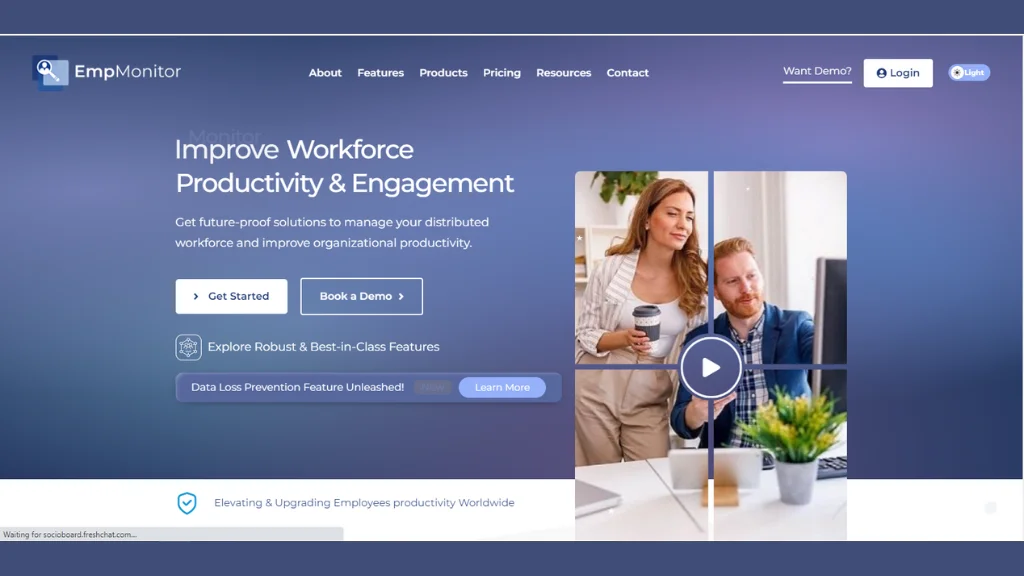
There is a simple principle behind improving work efficiency. You cannot improve what you cannot measure.
Tools like EmpMonitor provide visibility into how time and effort are actually spent. This clarity makes it easier to identify gaps in work efficiency and address them effectively.
Instead of relying on assumptions, managers can see how workflows function in reality. This directly improves efficiency at work by highlighting where time is lost.
With better insights, teams can:
- Identify bottlenecks that reduce work efficiency
- Understand how resources are being used
- Improve accountability without micromanagement
- Make better decisions based on actual data
This structured visibility is one of the most practical ways to improve efficiency at work across teams.
Over time, tools like EmpMonitor contribute to sustained work efficiency by enabling continuous improvement rather than one-time fixes.
Also Read
The Role of AI in Work Efficiency

AI is becoming an important driver of work efficiency, especially in tasks that are repetitive or time-consuming.
It helps improve efficiency at work by handling tasks such as drafting, summarizing, and analyzing data. This allows employees to focus on work that requires judgment and creativity, which further enhances work efficiency.
However, AI is not a universal solution. It does not fix poorly designed workflows. Applying AI to inefficient systems can actually reduce work efficiency by adding complexity.
The key is to use AI selectively in areas where it genuinely improves efficiency at work.
Why Most Efficiency Efforts Fail
Many organizations attempt to improve work efficiency, but fail to see results.
The issue is rarely effort. It is usually an approach.
Common challenges include:
Introducing tools without understanding workflows
Poor integration between systems
Focusing on activity instead of outcomes
Lack of ownership for improvement initiatives
Without addressing these issues, attempts to improve efficiency at work remain ineffective.
True work efficiency improvements are visible in faster processes, better quality output, and reduced effort.
Building Work Efficiency That Scales
Sustainable work efficiency isn’t about pushing employees to work harder. It’s about creating systems where tasks flow easily, without unnecessary hurdles or delays. By focusing on improving systems, organizations can make work more efficient in the long run.
When organizations improve efficiency at a system level, they gain several key benefits, such as:
- Clear workflows: Well-organized processes that make it easy for everyone to know what needs to be done and when, reducing confusion.
- Better visibility with tools: Using the right tools helps teams track progress and spot problems early, making it easier to stay on top of tasks.
- Data-driven decisions: With the help of data, organizations can make smarter choices, avoiding mistakes and wasting less effort.
- Targeted automation: Automating repetitive tasks frees up employees to focus on more valuable work, increasing productivity.
These are practical and proven strategies that can make work more efficient across teams. As these changes build over time, they lead to higher overall efficiency without putting more pressure on employees. Instead of asking people to do more, organizations can create a smoother, more efficient system that works for everyone.
Final Thought
Work efficiency is not about doing more work. It is about doing better work with less friction, fewer delays, and clearer direction. When systems are designed well, effort leads to stronger results without constant pressure.
If you want to understand how to improve efficiency at work, focus on systems, visibility, and consistency. Clear processes reduce confusion, while tools like EmpMonitor provide the visibility needed to understand how time and effort are actually being used. This makes it easier to identify gaps and improve efficiency at work in a practical way.
Over time, strong work efficiency leads to better decisions, improved focus, and more stable performance. Organizations that invest in work efficiency build systems that continue to deliver results without increasing effort, making them more scalable and resilient.
FAQ
How can I measure work efficiency without sophisticated tools?
Measuring work efficiency can be done with basic methods like tracking time spent on tasks, setting clear goals, and evaluating the quality of output. Manual tracking or using simple spreadsheets can help identify where improvements can be made. However, for more accurate insights, using dedicated software can streamline this process.
What are some common signs of work inefficiency in a team?
Common signs include delays in project completion, constant bottlenecks, frequent miscommunication, duplicated efforts, and employees working on tasks that do not align with the team’s core objectives. These inefficiencies often reduce the team’s overall productivity.
How can AI be integrated to improve work efficiency in small businesses?
Small businesses can use AI to automate repetitive tasks such as scheduling, data entry, or customer service. Chatbots, for instance, can handle basic inquiries, and AI-based analytics tools can track performance and suggest areas for improvement without adding extra workload.
What are some simple workflow improvements that don’t require new technology?
Streamlining communication, creating standardized processes, eliminating redundant steps, and improving task prioritization are simple but effective ways to enhance workflow efficiency. Even small changes, like reducing meeting times or improving document organization, can yield big results.
How can I ensure that my team adopts new tools for efficiency improvements?
Successful adoption of new tools requires clear communication about the benefits, proper training, and feedback loops. Involve team members in the selection process to ensure the tool meets their needs, and start with small, achievable goals to demonstrate its value before full implementation.