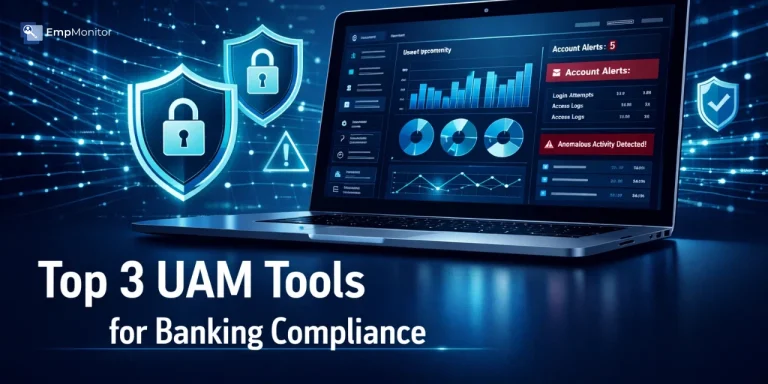
Banking teams handle sensitive data every single day. One small mistake can trigger audits, fines, or serious security risks. For employers and business owners, staying in control of employee activity is no longer optional. It is a must for strong banking compliance.
The real challenge begins when teams grow or move to remote work. You cannot sit behind every employee and check what they are doing. Yet regulators expect full visibility, clean audit trails, and tight data protection. This is where UAM becomes a powerful ally. It helps leaders see who accessed what, when, and why.
Modern organizations are turning to smart UAM tools to remove guesswork and tighten internal controls. These platforms track user behavior, flag risky actions, and support compliance efforts without slowing down operations. For employees, it also sets clear boundaries and accountability.
In this blog, we break down the top three UAM software solutions built for the banking sector. You will learn how they work, what benefits they offer, and which one fits your compliance strategy best.
Hit ‘Play’ Button & Tune Into The Blog!
Why Banks Can’t Ignore UAM Anymore
 The financial sector faces some of the strictest regulations in the world, such as SOX, GLBA, PCI-DSS, and more. Regulators want proof. Auditors want logs. And leadership wants accountability.
UAM software delivers all three.
The global UAM market was valued at $4.14 billion in 2024 and is projected to hit $9.67 billion by 2030. That growth tells you something: businesses are waking up to the risks they were previously blind to.
What UAM Actually Means And Why It Matters in Banking
So, what is the UAM full form in software? It stands for User Activity Monitoring. In simple terms, UAM software records, tracks, and analyzes what users do on company devices and networks.
In a banking environment, this means:
- Tracking who accessed which customer records
- Recording keystrokes, file transfers, and email activity
- Capturing screen sessions for audit trails
- Alerting security teams to suspicious behavior in real time
Without UAM, banks are essentially flying blind. And in a regulated industry, blind spots cost money and compliance.
The Hidden Risks Inside Your Banking Team

Most leaders focus on external threats. But insider risks are just as damaging and much harder to detect without the right tools.
Here’s what UAM helps uncover:
- Data exfiltration: employees sending sensitive files to personal accounts
- Policy violations: accessing restricted systems without authorization
- Idle time abuse: productivity gaps that inflate payroll costs
- Compliance breaches: actions that violate GDPR, PCI-DSS, or internal policies
The scary part? Many of these go unnoticed for months. UAM changes that equation completely.
UAM vs. Traditional Monitoring: The Gap Most Leaders Miss
Basic time trackers show you when someone worked. UAM software shows you what they actually did.
For banks, that distinction is critical. A time tracker can’t tell you if an employee downloaded 500 customer records at 11 PM. UAM can, and it can alert your security team within seconds.
Traditional monitoring checks a box. UAM builds an evidence trail.
Read More:
User Activity Monitoring| A Complete Guide To Stay Profitable
User Activity Monitoring (UAM) Explained: The CISO’s Guide
The Top 3 UAM Software Solutions for Banking Compliance
After reviewing the competitive landscape, here are the three tools that stand out specifically for banking environments.
1. EmpMonitor: Best for Complete Banking Visibility
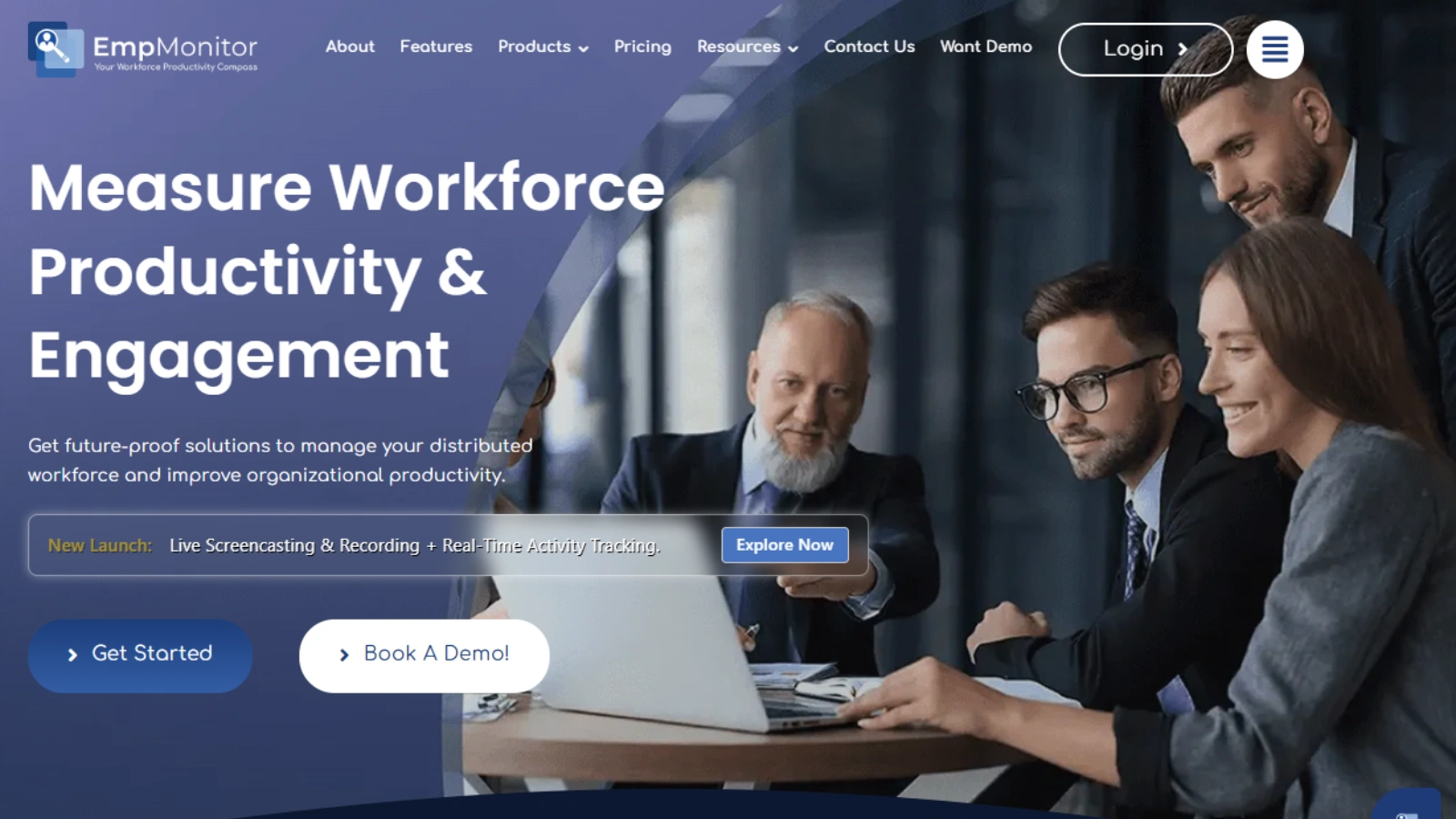 EmpMonitor is built for organizations that need total oversight without complexity. For banks juggling compliance requirements and large employee bases, it delivers a clean, centralized dashboard that makes monitoring intuitive.
Why banks love it:
- Real-time screen monitoring with detailed activity logs
- Productivity tracking tied to specific applications and URLs
- Automated reports that simplify audit preparation
- Lightweight deployment that doesn’t disrupt workflows
EmpMonitor’s strength lies in its simplicity. You don’t need a dedicated IT security team to configure it. Compliance managers can generate audit-ready reports in minutes, not hours. For banking teams focused on banking compliance, that kind of efficiency is invaluable.
It’s an excellent starting point for financial institutions stepping into structured UAM for the first time.
2. ActivTrak: Best for Productivity and Behavior Insights
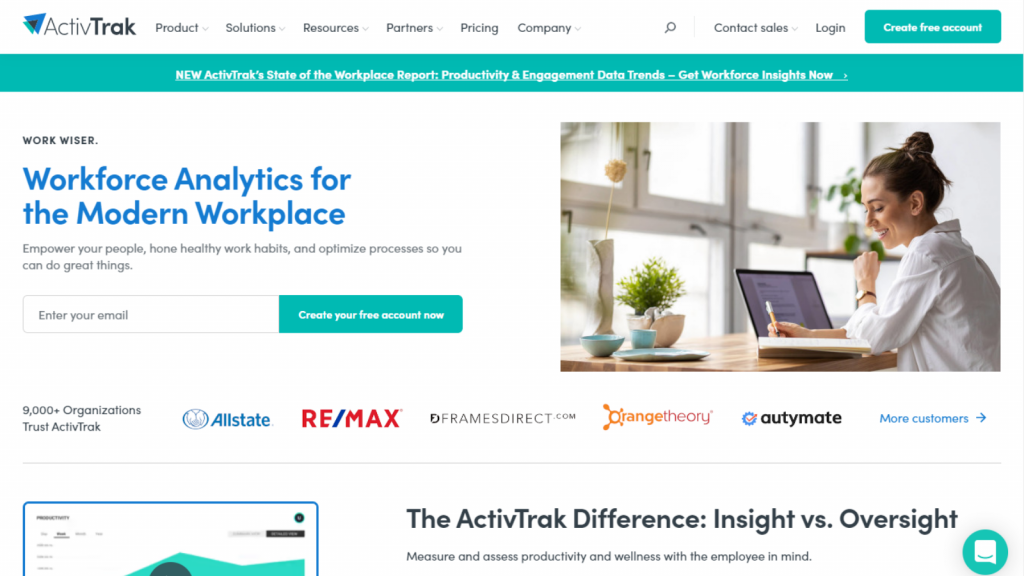
ActivTrak sits at the intersection of productivity analytics and employee monitoring. It’s cloud-based, easy to deploy, and especially effective for banks managing hybrid or remote teams.
Standout features:
- Tracks application and website usage across all endpoints
- Provides workload balance insights to prevent burnout and bottlenecks
- Offers productivity coaching tools for managers
- Burnout risk assessments to keep your workforce healthy and compliant
Where ActivTrak shines is behavioral pattern recognition. It doesn’t just show you what employees did, it shows you how they work, when productivity dips, and where workflow inefficiencies hide.
For compliance officers, the detailed activity logs are clean, readable, and audit-friendly. The free plan supports up to three users, making it low-risk to trial before full deployment.
One limitation: ActivTrak lacks keystroke logging, which some heavily regulated banking environments may require.
3. Teramind: Best for Advanced Threat Detection
When it comes to UAM at an enterprise level, Teramind is the most powerful option on this list. It’s built specifically for high-security environments, and banking compliance is where it truly earns its reputation.
Core capabilities:
- Full keystroke logging and clipboard monitoring
- Optical Character Recognition (OCR) to search unstructured data for policy violations
- Automated behavioral alerts triggered by deviation from normal patterns
- Session recording with forensic-grade evidence capture
- DLP (Data Loss Prevention) is built directly into the platform
Teramind’s UAM engine is designed to catch what others miss. If an employee attempts to copy sensitive customer data or access a restricted system, Teramind doesn’t just log it; it can automatically block the action and alert your security team.
For banks under strict regulatory scrutiny, this level of control is a game-changer. The tradeoff is complexity. Teramind has a steeper learning curve and higher price point, starting at $30/user/month for full UAM capabilities.
📊 Quick Comparison: Which Tool Wins for Banks?
| Feature | EmpMonitor | ActivTrak | Teramind |
| Real-time monitoring | ✅ | ✅ | ✅ |
| Keystroke logging | ✅ | ❌ | ✅ |
| DLP features | ❌ | ❌ | ✅ |
| Audit-ready reports | ✅ | ✅ | ✅ |
| Ease of use | ⭐⭐⭐⭐⭐ | ⭐⭐⭐⭐ | ⭐⭐⭐ |
| Best for | SMB banks | Hybrid teams | Enterprise compliance |
What Banks Gain After Implementing UAM
The results speak for themselves. Banks that implement UAM software typically report:
- Faster incident response times from days to minutes
- Stronger audit trail documentation for regulatory reviews
- Measurable reduction in insider threat incidents
- Improved employee accountability across remote and in-office teams
- Greater confidence during compliance audits
UAM doesn’t just protect your bank. It transforms how you manage risk across the entire organization.
Rolling Out UAM Without Employee Pushback
Transparency is everything. Before deploying any UAM tool, communicate clearly with your team.
- Explain what is being monitored and why
- Share the policy in writing, and get a signed acknowledgment
- Focus messaging on security and compliance, not surveillance
- Give employees access to their own activity data where possible
When employees understand the purpose, resistance drops significantly. Banks that lead with transparency see smoother rollouts and stronger compliance culture.
Legal and Ethical Boundaries You Must Respect
UAM is powerful, but misuse creates liability.
- Always obtain employee consent before monitoring
- Never monitor personal devices without explicit authorization
- Ensure your UAM practices comply with local privacy laws (GDPR, CCPA, etc.)
- Restrict access to monitoring data to authorized personnel only
The goal of banking compliance is protection, not punishment. Keep that framing front and center in your policy documentation.
Final Verdict: Which UAM Tool Is Right for Your Bank?
The right User Activity Monitoring software depends on your size, budget, and compliance requirements.
- Choose EmpMonitor if you want fast deployment and easy reporting
- Choose ActivTrak if hybrid team visibility and productivity insights are your priority
- Choose Teramind if you need enterprise-grade security, DLP, and forensic capability
All three deliver measurable value for banking compliance. The best one is the one your team will actually use, and that fits the regulatory environment you operate in.
Don’t wait for an audit failure or a data breach to act. The time to implement UAM is before the incident, not after.
Frequently Asked Questions
-
Can User Activity Monitoring help banks pass compliance audits faster?
Yes. UAM provides detailed audit trails and real-time activity records. This makes it easier for compliance teams to produce proof during regulatory reviews and avoid last-minute panic. -
What risks do banks face without User Activity Monitoring software?
Banks without UAM risk insider data leaks, unauthorized access, and compliance violations. Even one unnoticed incident can trigger fines, reputational damage, and strict regulatory scrutiny. -
Is User Activity Monitoring only useful for large banking institutions?
Not at all. Small and mid-sized financial firms also benefit from UAM. In fact, growing teams often need structured monitoring the most to maintain strong banking compliance controls. -
How quickly can User Activity Monitoring detect suspicious employee behavior?
Most modern UAM tools work in real time. They flag unusual logins, risky file transfers, and policy violations instantly so management can act before damage spreads. -
Does User Activity Monitoring slow down employee systems or productivity?
No, when properly configured. Leading UAM solutions run quietly in the background while giving employers full visibility. In many cases, productivity actually improves due to better accountability.