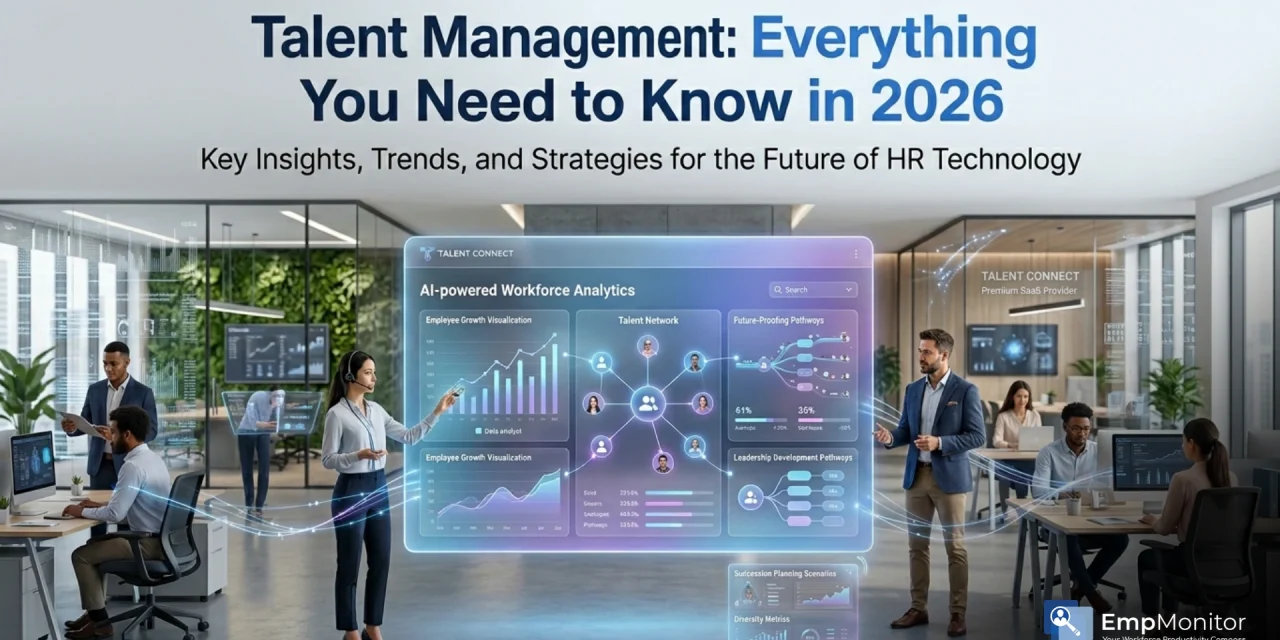
Businesses spend millions attracting great employees. Yet many still struggle with a frustrating reality: talented people leave, skills become outdated, and leadership gaps appear when they’re least expected.
The problem isn’t always recruitment. More often, it’s what happens after hiring. Candidate screening automation can help organizations improve the early hiring process, allowing talent teams to focus on building long-term employee relationships.
A company can bring in exceptional talent, but without the right environment, growth opportunities, and support systems, even the best employees eventually disengage. That’s where talent management comes in.
In 2026, organizations are competing for talent in a market shaped by AI, hybrid work, changing employee expectations, and increasing skill shortages. Companies that treat employees as long-term assets are outperforming those that view hiring as a one-time transaction.
This guide explores what talent management is, why it matters, the strategies that work, and how organizations can build a workforce ready for the future.
In a hurry? Listen to the blog instead!
What Is Talent Management?
Talent management is the process of attracting, developing, engaging, and retaining employees so they can contribute effectively to organizational goals.
Rather than focusing solely on recruitment, talent management covers the entire employee journey—from the moment a candidate applies for a position until they leave the organization or move into leadership roles.
At its core, talent management answers a simple question:
How can an organization help people perform at their best while ensuring the business has the skills it needs to succeed?
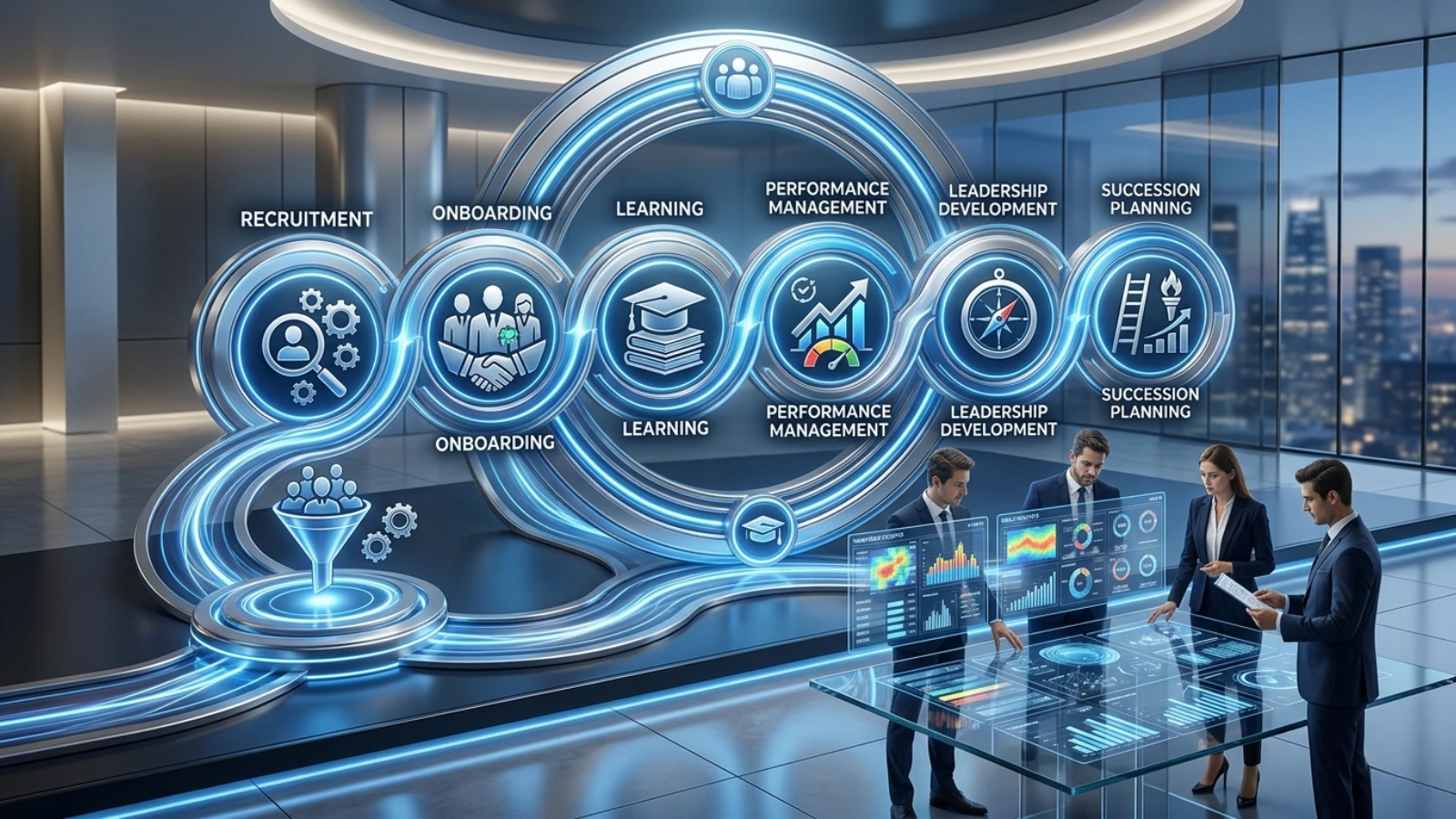
A strong talent management approach combines workforce planning, recruitment, onboarding, employee development, performance management, succession planning, and retention initiatives into one connected strategy.
Why Talent Management Matters More Than Ever in 2026?

The workplace has changed dramatically over the past few years.
Organizations are dealing with:
- Rapid technological advancements
- AI-driven transformation
- Evolving employee expectations
- Remote and hybrid work models
- Increasing competition for skilled professionals
- Growing demand for continuous learning
As a result, hiring alone is no longer enough.
Companies need systems that help employees learn, adapt, and grow alongside the business.
Organizations that prioritize talent management often experience:
- Higher employee engagement
- Improved productivity
- Better retention rates
- Stronger leadership pipelines
- Increased innovation
- Enhanced employer branding
Simply put, when people thrive, businesses thrive.
The Core Components of Talent Management
Successful talent management is built on several interconnected areas.
1. Workforce Planning
Before hiring begins, organizations need clarity on future workforce requirements.
Workforce planning involves identifying:
- Skills required for future growth
- Potential talent gaps
- Succession needs
- Strategic hiring priorities
Companies that plan ahead are better prepared for change and less likely to face disruptive talent shortages.
2. Talent Acquisition
Talent acquisition focuses on finding and hiring individuals who align with both job requirements and company culture.
Modern recruitment goes beyond filling vacancies.
It involves:
- Employer branding
- Candidate experience
- Skills-based hiring
- Diversity initiatives
- Strategic sourcing
The goal is not just to hire quickly but to hire effectively.
3. Employee Onboarding
First impressions matter.
A structured onboarding experience helps employees understand their role, connect with colleagues, and adapt to organizational culture faster.
Research consistently shows that employees who receive strong onboarding support are more likely to remain with their employer long-term.
4. Learning and Development
Skills have a shorter shelf life than ever before.
Employees expect organizations to support their professional growth through:
- Training programs
- Mentorship opportunities
- Certifications
- Leadership development
- Upskilling initiatives
Organizations that invest in learning often build more adaptable and future-ready teams.
5. Performance Management
Annual reviews alone are no longer sufficient.
Modern performance management emphasizes:
- Continuous feedback
- Goal alignment
- Coaching conversations
- Development planning
- Performance insights
Employees perform better when expectations are clear, and feedback is timely.
6. Succession Planning
Leadership vacancies can create major disruptions if organizations aren’t prepared.
Succession planning identifies high-potential employees and prepares them for future leadership opportunities.
Instead of scrambling when key employees leave, businesses maintain continuity and stability.
7. Employee Retention
Attracting talent is expensive.
Losing top performers is even more costly.
Retention efforts focus on creating an environment where employees feel valued, challenged, and supported throughout their careers.
The Talent Management Process
Although every organization approaches it differently, most talent management frameworks follow a similar cycle.
Step 1: Identify Talent Needs
Understand business objectives and determine what skills and capabilities are required to achieve them.
Step 2: Attract Talent
Build a strong employer brand and attract qualified candidates through targeted recruitment efforts.
Step 3: Select and Hire
Evaluate candidates based on skills, potential, and cultural alignment.
Step 4: Onboard Employees
Provide resources, training, and support that help employees become productive quickly.
Step 5: Develop Talent
Offer learning opportunities and career development pathways.
Step 6: Measure Performance
Track progress, provide feedback, and identify areas for improvement.
Step 7: Recognize and Reward
Acknowledge achievements and reward contributions fairly.
Step 8: Plan for the Future
Prepare employees for advancement and ensure critical roles have successors.
This continuous cycle helps organizations build sustainable talent pipelines.
7 Talent Management Strategies That Work in 2026
Many organizations invest in talent initiatives but fail to see meaningful results because their efforts are disconnected.
The following talent management strategies are proving effective in today’s workplace.
1. Align Talent Goals With Business Objectives
Talent initiatives should directly support organizational priorities.
For example:
- A company pursuing digital transformation needs digital skills.
- A company expanding globally requires strong cross-cultural leadership.
Talent decisions should always connect to business outcomes.
2. Prioritize Internal Mobility
Employees increasingly want career growth without changing employers.
Organizations that promote internal mobility:
- Retain valuable knowledge
- Reduce recruitment costs
- Increase engagement
- Strengthen succession pipelines
Sometimes the ideal candidate is already working within the company.
3. Focus on Skills Instead of Job Titles
Traditional job descriptions are becoming less relevant.
Forward-thinking organizations are shifting toward skills-based workforce planning.
This approach enables companies to:
- Identify hidden talent
- Improve workforce agility
- Fill critical skill gaps faster
4. Create Personalized Development Paths
Employees have unique goals and learning preferences.
Generic training programs often produce limited results.
Personalized development plans help individuals build relevant skills while supporting organizational needs.
5. Strengthen Leadership Development
Many organizations struggle because they fail to prepare future leaders.
Leadership development should start long before leadership positions become available.
Investing in future leaders creates long-term organizational resilience.
6. Use Data to Guide Decisions
Effective talent management relies on evidence rather than assumptions.
Organizations increasingly track:
- Employee engagement
- Retention rates
- Internal mobility
- Learning participation
- Performance trends
- Hiring effectiveness
Data provides valuable insights into what’s working and what isn’t.
7. Build a Culture of Continuous Feedback
Employees don’t want feedback once a year.
They want regular conversations that help them improve and grow.
Organizations that encourage open communication often experience higher engagement and stronger performance outcomes.
Common Talent Management Challenges
Despite its importance, talent management isn’t without obstacles.
Skill Gaps
Technology evolves quickly, making existing skills obsolete.
Organizations must continuously invest in upskilling and reskilling efforts.
High Employee Expectations
Today’s workforce expects:
- Career growth
- Flexibility
- Purpose-driven work
- Recognition
- Well-being support
Employers that fail to meet these expectations often face retention challenges.
Leadership Shortages
Many organizations lack a strong succession pipeline.
Without proactive development efforts, leadership gaps can emerge unexpectedly.
Data Fragmentation
Talent information is often spread across multiple systems.
This makes it difficult to gain a complete view of workforce performance and potential.
Read More:
What Is Workforce Management? 7 Powerful Truths Revealed
Empower Your Management With Employee Productivity Metrics
What Is a Talent Management System?
Many HR leaders ask: What is a talent management system?
A talent management system is software designed to streamline and manage employee-related processes across the entire talent lifecycle.
Instead of handling recruitment, onboarding, learning, performance reviews, and succession planning separately, organizations can manage everything within a centralized platform.
A modern talent management system typically includes:
- Recruitment tools
- Applicant tracking
- Onboarding workflows
- Learning management
- Performance reviews
- Goal tracking
- Succession planning
- Analytics dashboards
By consolidating these functions, organizations gain greater visibility into workforce performance and development.
As organizations grow, managing employee performance, attendance, productivity, engagement, and development through separate tools often creates inefficiencies. Many businesses are therefore adopting integrated workforce management platforms like EmpMonitor that combine employee monitoring, time tracking, workforce analytics, attendance management, and productivity insights into a single system. Such platforms provide leaders with greater visibility into workforce performance while supporting broader talent management objectives.
How EmpMonitor Strengthens Talent Management Efforts?
Effective talent management relies on visibility, accountability, and data-driven decision-making. While strategy helps organizations attract and develop talent, the right technology ensures those strategies are executed successfully. EmpMonitor helps businesses gain deeper workforce insights, streamline operations, and create a more productive work environment through its comprehensive workforce management capabilities.
Key Features of EmpMonitor
-
Real-Time Employee Monitoring
Track employee activities as they happen and gain complete visibility into workforce productivity through a centralized dashboard.
-
Time Tracking & Productivity Analysis
Measure productive and idle hours accurately with automated timesheets and detailed performance reports.
-
Live Screencasting & Screen Recording
View employee screens in real time and access recorded sessions for training, support, compliance, and workflow analysis.
-
Attendance & Leave Management
Simplify attendance tracking, manage employee leave records, and reduce administrative effort through a unified dashboard.
-
User Activity Monitoring
Monitor application usage, website activity, and work patterns to identify productivity trends and improvement opportunities.
-
Project & Task Management
Create, assign, and monitor tasks while tracking project progress in real time to improve collaboration and accountability.
-
Workforce Analytics & Reporting
Access detailed reports, productivity metrics, and workforce insights that support smarter talent and business decisions.
-
Data Security & Insider Threat Prevention
Protect organizational data with activity monitoring, threat detection capabilities, and enhanced workforce security controls.
Talent management doesn’t end after hiring. Organizations need continuous visibility into employee performance, engagement, productivity, and development to build high-performing teams. EmpMonitor helps bridge that gap by providing actionable workforce insights that support employee growth, operational efficiency, and long-term business success.
Ready to Build a More Productive Workforce?
Whether you’re managing an in-office, remote, or hybrid team, EmpMonitor provides the tools needed to monitor productivity, streamline workforce management, and support your talent management goals.
Start your free trial or schedule a demo today at EmpMonitor.com and see how data-driven workforce management can transform team performance.
Why Organizations Need Talent Management Solutions
As organizations grow, managing talent manually becomes increasingly difficult.
This is where talent management solutions play a crucial role.
Modern talent management solutions help organizations:
- Automate repetitive HR tasks
- Improve hiring efficiency
- Track employee performance
- Support workforce planning
- Identify future leaders
- Improve employee experience
Rather than replacing human decision-making, these solutions provide the insights needed to make smarter workforce decisions.
How Technology Is Transforming Talent Management

Technology is reshaping every aspect of talent management.
Artificial intelligence now assists organizations with:
- Candidate screening
- Skills matching
- Learning recommendations
- Workforce forecasting
- Performance insights
At the same time, advanced analytics enable HR leaders to predict turnover risks, identify development needs, and optimize workforce planning.
The future of talent management will likely become increasingly data-driven while maintaining a strong focus on human relationships and employee experience.
Talent Management Trends Shaping 2026
Several trends are influencing the future of talent management.
Skills-Based Organizations
Companies are moving beyond traditional job structures and focusing on capabilities instead.
Internal Talent Marketplaces
Organizations are creating platforms where employees can discover projects, assignments, and career opportunities internally.
AI-Assisted Workforce Planning
AI is helping leaders forecast future talent needs with greater accuracy.
Personalized Employee Experiences
Employees increasingly expect customized learning, career development, and well-being support.
Continuous Reskilling
Organizations are investing heavily in skill transformation to remain competitive in rapidly changing markets.
Final Thoughts
Talent management is no longer an HR initiative operating in the background.
It has become a strategic business function that influences growth, innovation, productivity, and long-term success.
Organizations that attract exceptional people but fail to develop them eventually lose their competitive advantage. On the other hand, businesses that invest in employee growth, create meaningful career opportunities, and align talent initiatives with business goals build stronger teams and more resilient organizations.
In 2026 and beyond, the organizations that win won’t necessarily be the ones with the largest workforce—they’ll be the ones that manage talent most effectively.
Frequently Asked Questions
1. What is talent management?
Talent management is the process of attracting, developing, engaging, and retaining employees to maximize both individual performance and organizational success.
2. What is a talent management system?
A talent management system is software that helps organizations manage recruitment, onboarding, learning, performance management, succession planning, and employee development from a centralized platform.
3. Why is talent management important?
Talent management helps organizations improve productivity, reduce turnover, strengthen leadership pipelines, and create a more engaged workforce.
4. What are the main talent management strategies?
Some of the most effective talent management strategies include workforce planning, leadership development, internal mobility, skills-based hiring, continuous learning, and data-driven decision-making.
5. What are talent management solutions?
Talent management solutions are tools, technologies, and processes designed to improve how organizations attract, develop, manage, and retain employees throughout the employee lifecycle.