
No career grows on autopilot. The professionals who consistently advance, earning promotions, building influence, and finding more meaningful work are the ones who treat professional development as an active, ongoing commitment rather than something that happens by accident. Whether you’re early in your career or a seasoned professional looking to reset your trajectory, the strategies you use to grow your skills, expand your network, and sharpen your thinking determine how quickly you move forward. In this guide, we’ll walk through 10 proven strategies that actually accelerate careers not vague advice, but specific, actionable approaches that you can start applying this week.
Listen to this podcast!
What Is Professional Development?

Understanding what professional development actually means helps you approach it with more intention. At its core, professional development is the continuous process of gaining new skills, knowledge, and experiences that make you more effective and valuable in your career.
It’s not limited to formal training or academic qualifications. This practice encompasses reading, mentoring, networking, certifications, side projects, feedback cycles, and deliberate practice anything that expands your capability or deepens your expertise. The most successful professionals treat it not as an occasional obligation but as a consistent, self-directed habit built into how they work every single week.
1. Define Clear Professional Development Goals
Vague intentions produce vague results. The starting point for any meaningful career acceleration is defining clear professional development goals: specific, time-bound targets that give your learning direction and your effort a measurable outcome.
Rather than “I want to improve my communication skills”, a strong goal looks like “I will complete a public speaking course and deliver two internal presentations by Q3.” That specificity creates accountability and makes it far easier to choose what to invest your time in. Review your goals quarterly and adjust as your role, industry, or ambitions evolve.
2. Seek Out a Mentor Who Has Done What You Want to Do
Mentorship remains one of the most underutilised levers in career development. A mentor who has navigated the path you’re aiming for compresses your learning curve dramatically, offering perspective, introductions, and hard-won wisdom that no course can replicate.
Don’t wait for a formal programme to assign you one. Be proactive: identify two or three people whose careers you genuinely admire, research them, and reach out with a specific, respectful ask. Most experienced professionals are willing to offer their time to someone who approaches them thoughtfully and clearly values their insight.
3. Build Skills That Are Adjacent to Your Current Role
Depth matters, but so does breadth. Professionals who understand how their role connects to adjacent functions – finance, operations, marketing, and technology – become far more valuable than specialists who can only operate in a narrow lane.
Deliberately acquiring adjacent skills makes you a better collaborator, a stronger communicator across teams, and a more credible candidate for leadership roles. It also dramatically reduces your career vulnerability during periods of organisational change. Map the roles above and around your current position and identify one or two skills that would make you more effective across that wider landscape.
4. Invest in Employee Professional Development Through Formal Learning
Formal learning certifications, courses, workshops, and degree programmes remain one of the most credible signals of investment in your own growth. Many employers actively support employee professional development through training budgets, paid study leave, or reimbursement schemes that go underutilised every year.
Find out what your organisation offers and use it. If your employer doesn’t provide a budget, there are hundreds of high-quality courses available at low or no cost through platforms like Coursera, LinkedIn Learning, and edX. The credential matters less than the habit of structured, intentional learning.
5. Ask for Stretch Assignments
Comfort zones feel safe but rarely produce growth. One of the fastest ways to accelerate your development is to actively request projects that push you slightly beyond your current capability – stretch assignments that force new thinking and build skills you couldn’t develop in your regular role.
These might include leading a cross-functional project, presenting to senior leadership, managing a budget for the first time, or spearheading a new initiative. The discomfort is the point. Skills built under productive challenge tend to stick far more deeply than those acquired in a classroom setting.
6. Prioritise Feedback Even When It’s Hard to Hear
Most professionals dramatically underestimate how much they could accelerate their growth simply by seeking more feedback, more often. Waiting for an annual performance review gives you one data point per year. Actively asking for feedback after projects, presentations, and key decisions gives you dozens.
Create a simple habit: after any significant piece of work, ask one or two trusted colleagues or your manager a single specific question: “What’s one thing I could have done better in that presentation?” That specificity gets you far more useful input than a general “any feedback?” and signals to others that you take your development seriously.
7. Build and Maintain a Strong Professional Network
Your network is a career asset that compounds over time but only if you actively invest in it. Career growth doesn’t happen in isolation; it’s accelerated enormously by the quality of the relationships you build with peers, leaders, and experts inside and outside your industry.
Set a simple goal: connect with two new people in your field each month, and follow up meaningfully with two existing connections. Attend industry events, contribute to professional communities online, and look for ways to add value before you ask for anything. Relationships built on generosity are the ones that endure and open unexpected doors.
8. Develop Stronger Communication Skills
Communication is the multiplier of every other capability you develop. A professional who can clearly articulate ideas, write persuasively, and present with confidence consistently gets more credit for the same quality of work than someone who struggles to communicate.
Focus on both written and verbal communication. Practice structuring your thinking before you speak in meetings. Work on concise, clear writing in your emails and documents. Consider joining a group like Toastmasters if public speaking is a gap, or take a business writing course if that’s where the friction lives. Clear communication isn’t just a soft skill; it’s a strategic career advantage.
9. Professional Employee Development: Learn From Every Experience
Professional employee development becomes more effective when organisations can turn everyday work into measurable insights. Every project, completed task, and workplace interaction offers valuable lessons—but without visibility, many of those opportunities are missed.
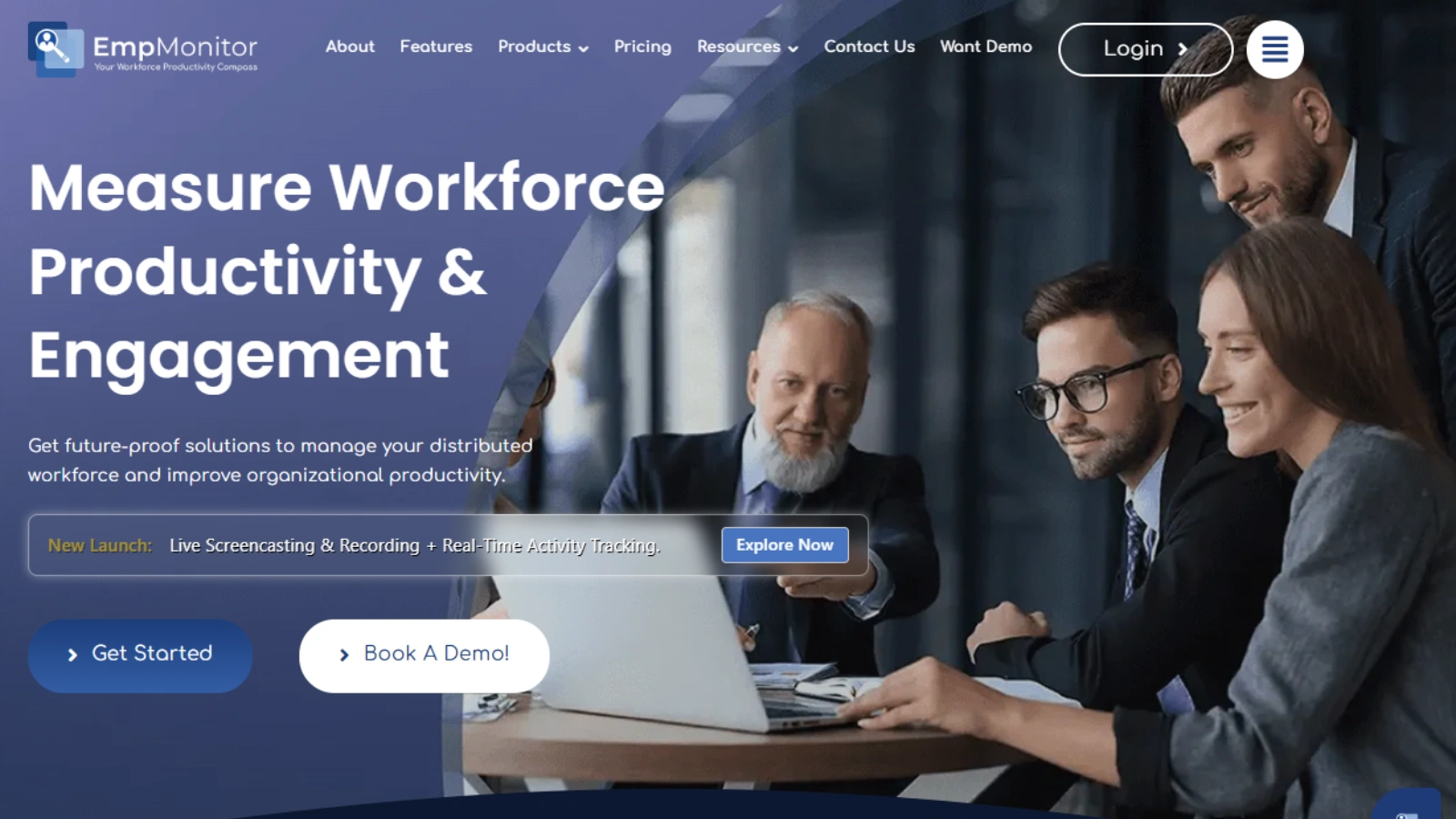
EmpMonitor helps businesses support continuous growth by providing actionable insights into employee productivity, work patterns, and performance trends. Managers can identify strengths, recognise areas for improvement, and encourage meaningful feedback based on real data. Combined with regular check-ins and reflection, these insights help employees learn from their experiences and make steady progress over time.
Teams that consistently review their performance and adapt are better positioned to improve skills, boost productivity, and achieve long-term success.
10. Take Ownership of Your Career Trajectory
Perhaps the most important mindset shift for any career growth journey is recognising that your career belongs to you, not to your manager, your employer, or the market. Nobody will advocate for your growth more effectively than you will.
That means being clear about what you want, proactively communicating your ambitions, seeking out opportunities rather than waiting for them, and consistently demonstrating the value of your development through your work. Employers support professionals who demonstrate ownership of their own growth; it signals initiative, self-awareness, and long-term potential.
Read More!
Professional Development: A Complete Guide To Building A High-Performing Workforce
What Is an Employee Development Plan? (With Real Examples + a Step-by-Step Guide)
Conclusion
Professional development is not a destination; it’s a practice. The ten strategies above work best when they’re treated as interconnected habits rather than one-off activities. Define your goals, invest in relationships, seek feedback, keep learning, and take ownership of your own trajectory. Small, consistent investments in your own growth compound into significant career advancement over time. The professionals who accelerate fastest are simply the ones who start and don’t stop.
Frequently Asked Questions
Q1. What is professional development in simple terms?
It is the ongoing process of building skills, knowledge, and capabilities that make you more effective and valuable in your career through formal learning, experience, feedback, and reflection.
Q2. How do I set effective professional development goals?
Make them specific, time-bound, and tied to a clear outcome. Instead of “improve my skills”, try “complete X certification by Q2 and apply it in Y project.”
Q3. Is investing in your career only for employees in senior roles?
Not at all. Employee professional development is valuable at every career stage; early investment in growth habits produces the strongest long-term returns.
Q4. How much time should I invest in self-improvement each week?
Even 2–3 hours per week of deliberate, focused development reading, learning, reflecting, and networking compounds significantly over a year.