Let’s be honest, annual performance reviews, dry compliance modules, and repetitive daily tasks have a way of draining the energy right out of your workforce. When employees feel like they’re simply going through the motions, workplace productivity takes a hit. Enter gamification in the workplace, a strategy that is quietly transforming how companies engage, motivate, and retain their best people.
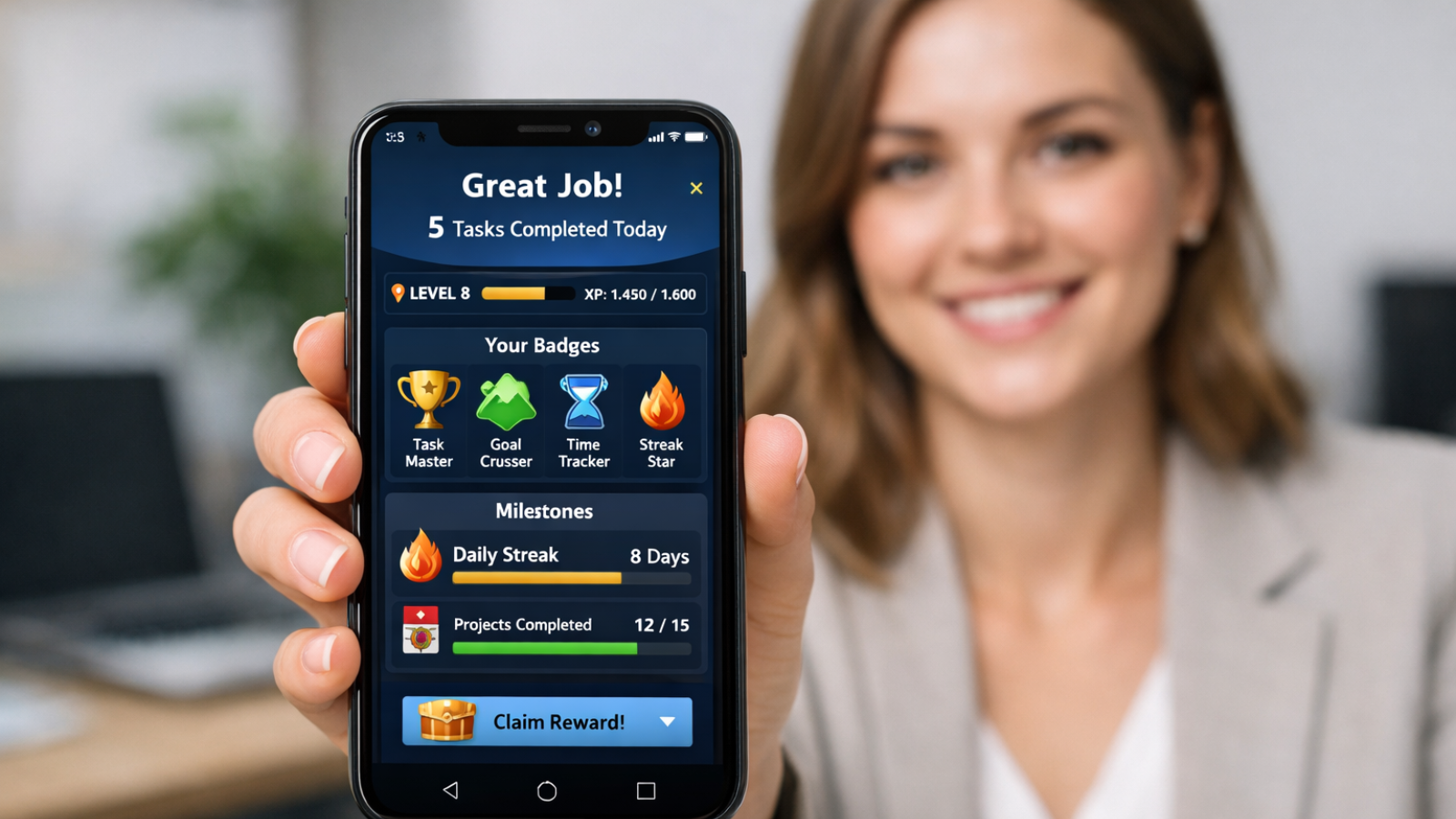
By borrowing mechanics from the world of gaming, points, leaderboards, badges, and levels, businesses are turning mundane work into meaningful, motivating challenges. The results speak for themselves: 89% of employees believe they would be more productive if gamification elements were introduced into their daily work, and studies show employee engagement increases by as much as 48% when these game mechanics are applied.
So what exactly does gamification in the workplace look like in practice, and how can your organization use it to supercharge productivity? Let’s break it all down.
Hit ‘Play’ Button & Tune Into The Blog!
What Is Gamification? The Basics Explained
At its core, gamification in the workplace is the application of game design elements and mechanics to non-game environments, in this case, your office, remote team, or hybrid workforce. It works by tapping into the fundamental human psychology of achievement, competition, and reward.
The most common gamification elements include:
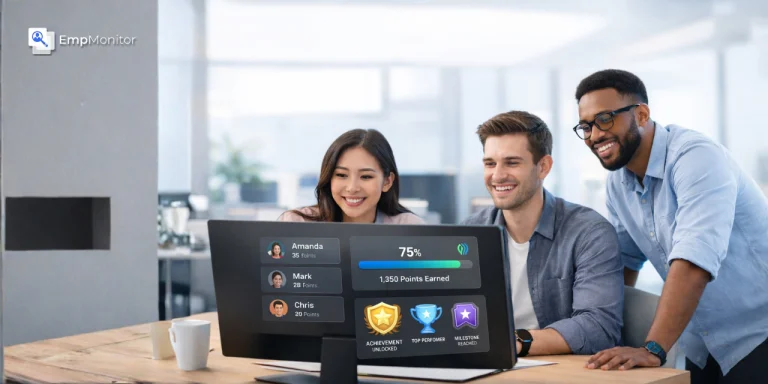
Points: awarded for completing tasks, hitting targets, or demonstrating skills
Points and Badges: visual symbols of achievement and competency that employees can display
Leaderboards: real-time rankings that create friendly, visible competition
Levels and Ranks: progress markers that signal advancement and status
Challenges and Missions: time-bound goals that generate urgency and focus
These mechanics are grounded in neuroscience. Each time an employee earns a reward or sees their name rise on a leaderboard, the brain releases dopamine, the feel-good chemical directly tied to motivation, focus, and drive.
The Business Case: Why Gamification Actually Works
The global gamification market was valued at over $12 billion in 2024 and is projected to surpass $35 billion by 2033. That kind of growth doesn’t happen unless the strategy delivers real results, and it does.
Insight: 72% of employees say gamification in the workplace motivates them to work harder. Sales teams using it report a 40% productivity increase.
When it comes to workplace productivity, the data is compelling:
- Employees who complete gamified training score 14 points higher on skill assessments than those who don’t
- Organizations report a 50% reduction in training time when gamified learning is used
- Over 52% of HR departments note better employee retention after rolling out a gamification strategy
- 65% of enterprises report a measurable productivity boost after implementation
Traditional performance management, static KPIs, annual reviews, and one-size-fits-all targets rarely tap into what actually drives people. Gamification of the workplace changes by offering real-time feedback, visible progress, and a clear path forward. Employees know where they stand, what’s next, and what they’ll earn for getting there. That clarity alone is a powerful engine for employee motivation.
Turning gamified goals into measurable outcomes requires clear visibility into performance data. Tools like EmpMonitor help translate engagement efforts into actionable productivity insights, making it easier to track progress and sustain results.
Why Gamification Works: Key Benefits for Workplace Productivity

Gamification isn’t just a trendy buzzword; it delivers real, measurable results. When game mechanics are applied thoughtfully, they transform how employees engage with their work, learn new skills, and stay committed to their organization. Here’s why it works.
Higher Engagement & Motivation
Most employees don’t lack talent; they lack motivation. Gamification in the workplace changes that by making everyday tasks feel purposeful and rewarding. When employees earn points for hitting targets or unlock badges for completing training, they feel recognized. This structured sense of progress helps boost engagement at work by making achievements visible and goals more attainable.
Studies show that 85% of employees are more engaged when gamification is part of their work environment, and 72% say it directly motivates them to work harder.
Increased Productivity
The numbers speak for themselves. Sales teams using gamification in the US reported a 40% increase in productivity. When employees can see a leaderboard, track their progress, or compete in a challenge, they naturally push themselves further. Gamification in the workplace creates a results-driven culture without the pressure of micromanagement; employees are driven by the fun and challenge itself.
Better Employee Retention
High turnover is expensive. Gamification helps tackle this by making employees feel valued, seen, and invested in their growth. When people enjoy their work and feel rewarded for their contributions, they’re far less likely to look elsewhere. Companies using gamification strategies have reported up to 52% improvement in employee experience and retention, a massive win for any HR team.
Improved Training and Learning
Traditional training sessions are often forgettable. Gamified learning flips that entirely. When training includes quizzes, progress levels, and achievement badges, employees are more engaged and retain information faster. Research shows that participants in gamified training programs score 14% higher in skill assessments compared to those in conventional programs, proving that learning sticks better when it’s made interactive and fun.
Implementing Gamification: Effective Methods for the Workplace
Understanding the benefits is one thing; putting gamification in the workplace into practice is another. You don’t need to overhaul your entire work culture overnight. Start small, stay consistent, and the results will follow.
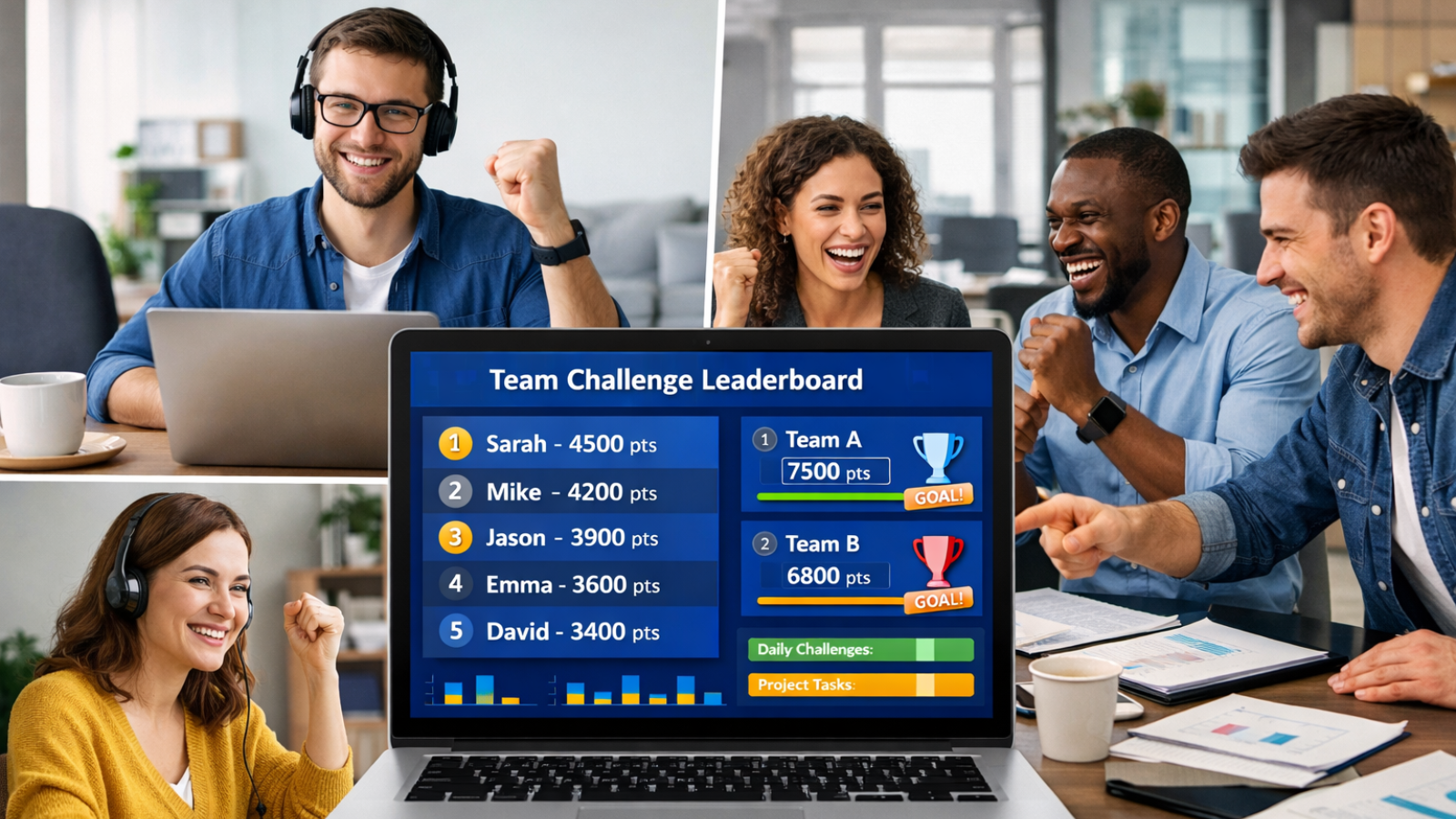
Leaderboards for Motivation
Display top performers in real time to spark healthy competition and give employees a clear sense of where they stand.
Reward & Recognition Systems
Points, badges, and tangible rewards make great work feel appreciated, keeping employees motivated and consistent over time.
Progress Bars and Milestones
Break big goals into smaller checkpoints. Watching a progress bar move forward keeps employees focused and makes long-term targets feel achievable.
Team Challenges and Competitions
Collective goals build teamwork. When teams compete together, it drives both collaboration and productivity simultaneously.
Gamified Training and Development
Interactive, level-based learning keeps training engaging, helping employees build skills faster and retain them longer.
Read More:
Unlock 30 Creative Ways To Boost Engagement At Work
How To Improve Employee Experience In A Distributed Workforce In 2025?
Real-Life Examples: Successful Gamification in Action
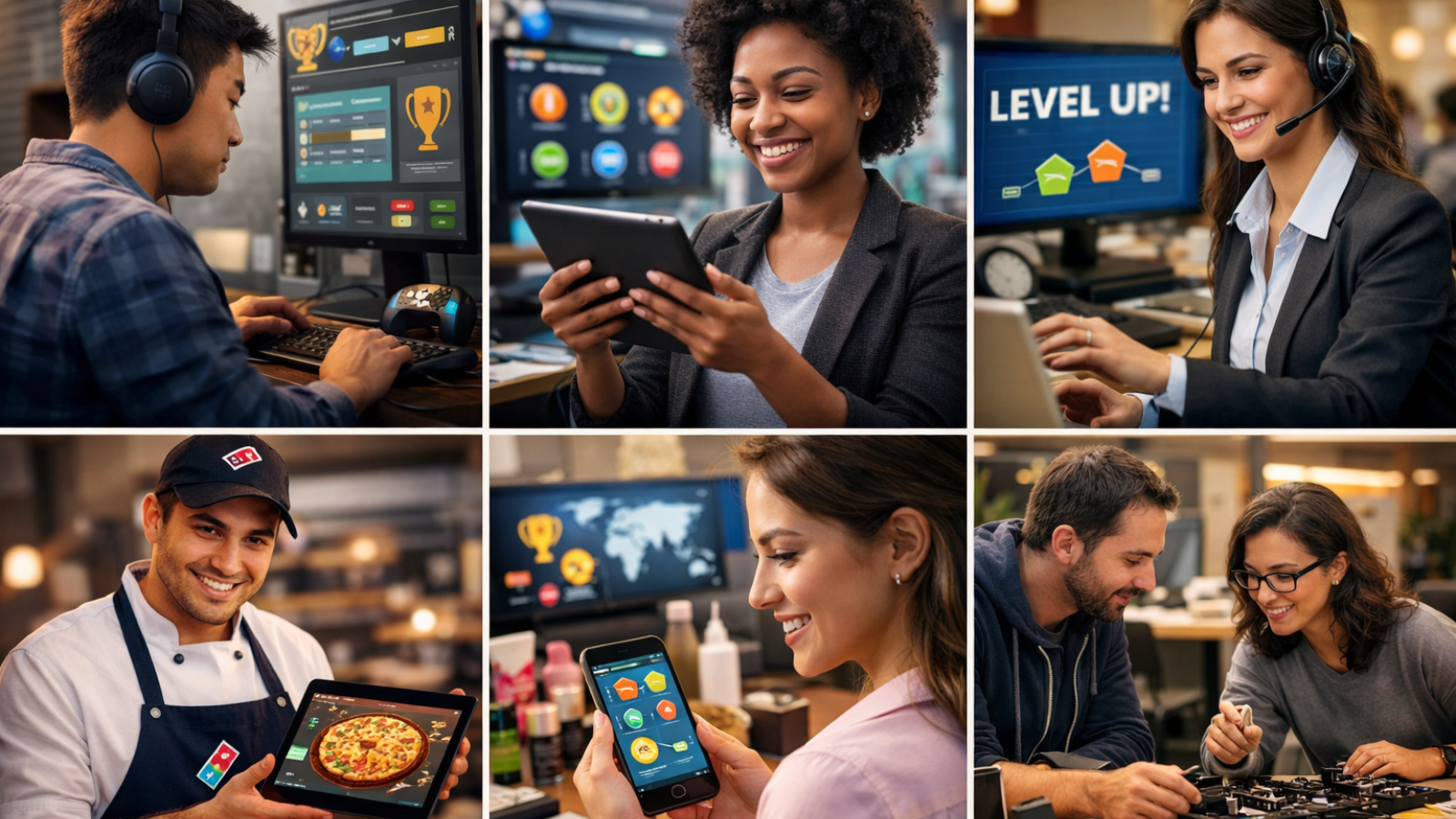
Gamification of the workplace is not a theoretical concept; it’s a proven strategy used by some of the world’s most successful organizations:
Microsoft: Turned software localization into a competitive game, generating 900,000+ contributions in year one
SAP: Launched a gamified knowledge platform that led to a 400% increase in community feedback
Deloitte: Gamified leadership training resulted in a 37% jump in course completion rates
Domino’s Pizza: The Pizza Hero recruitment app increased sales by 30% through gamified training
L’Oreal: Trained salespeople across 18 countries via a gamified mobile app, dramatically improving knowledge retention
Google: The famous ‘20% Time’ policy gave employees one day a week to work on self-chosen projects. That structured autonomy, a core gamification principle of letting people choose their own challenge, directly led to the creation of Gmail and Google Maps, proving that when employees are empowered to drive their own progress, innovation follows.
These examples span industries and company sizes, proving that gamification works regardless of your sector, whether you’re running a contact centre, a retail chain, or a remote tech team.
The Pitfalls: Where Gamification Can Go Wrong
For all its promise, gamification is not a guaranteed win. As per estimates, 80% of poorly designed programmes fail to meet their business objectives. Here is what to watch out for:
Toxic competition: Leaderboards can motivate high performers while demoralising those at the bottom. Design systems that reward improvement, not just top rank.
Over-gamification: If every task becomes a competition, employees start to feel micromanaged. Be selective, target areas like onboarding or training first.
Shallow rewards: A reward system built purely on cash prizes delivers short-term spikes but no lasting engagement. Meaningful recognition, extra time off, public acknowledgement, and learning opportunities can create deeper employee motivation.
Poor design: Without clear goals, fair mechanics, and a proper feedback loop, gamification frustrates rather than inspires.
How to Implement Gamification Successfully
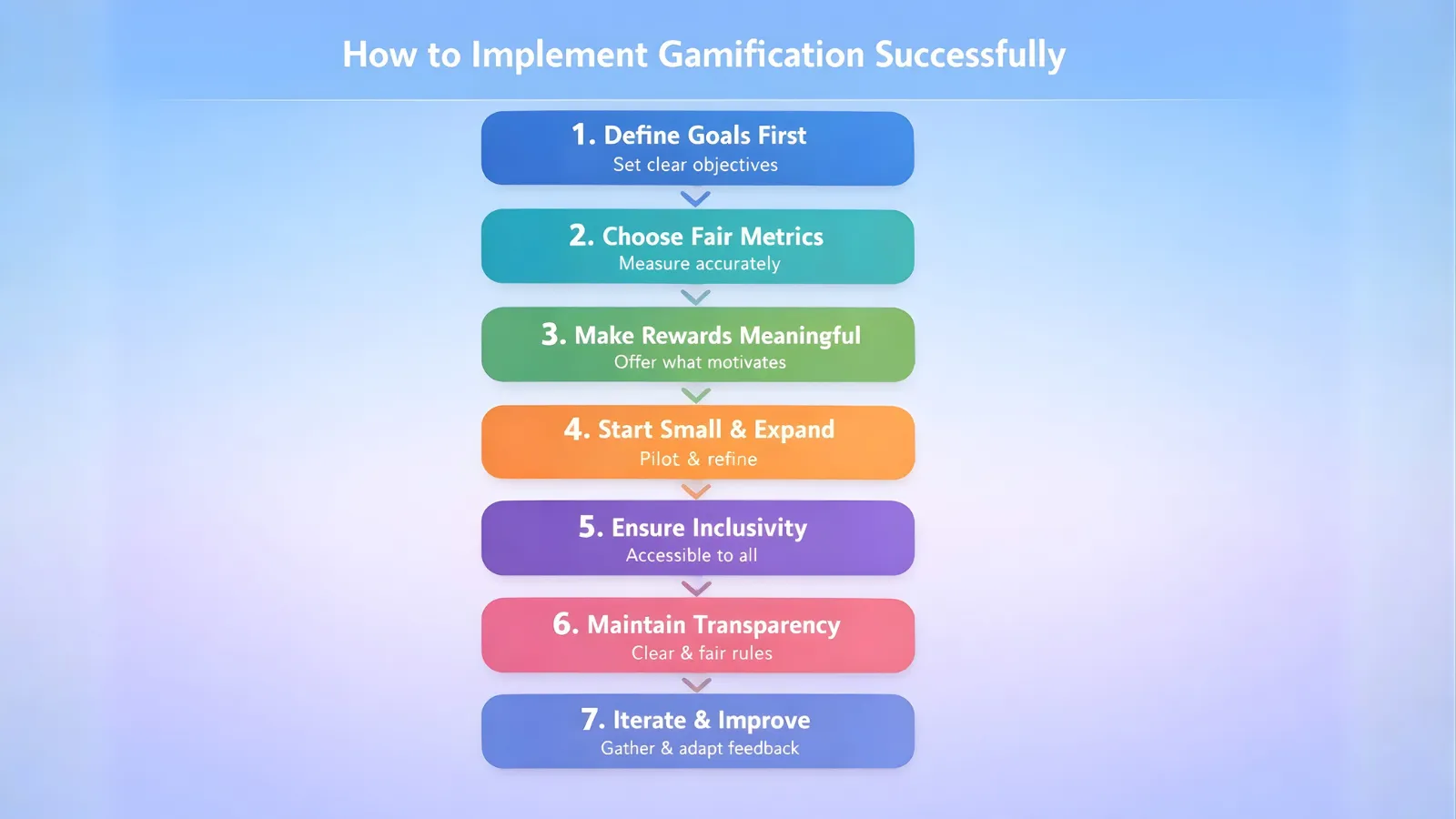
Getting gamification right requires more than adding a leaderboard to your existing tools. Here is a practical framework:
Step 1. Define goals first: Are you targeting sales performance, training completion, or daily task output? Your objectives shape the mechanics.
Step 2. Choose fair metrics: Only gamify what you can measure accurately. Vague metrics create frustration; clear ones create clarity and drive performance tracking.
Step 3. Make rewards meaningful: Survey employees on what motivates them. Flexibility, recognition, and growth often outperform cash prizes.
Step 4. Start small and expand: Pilot in any one area, like onboarding or training, before overhauling everything. Use data to refine your approach.
Step 5. Ensure inclusivity: Design systems that don’t disadvantage certain groups. Offer multiple pathways to earn recognition, especially for remote teams who may not benefit from in-office dynamics.
Step 6. Maintain transparency and fairness: Employees need to trust the system. Publish the rules clearly, explain how rewards are earned, and ensure leaderboard data is accurate and unbiased. When people believe the playing field is level, they engage more wholeheartedly.
Step 7. Iterate based on feedback: Gamification is not a set-it-and-forget-it solution. Regularly collect input from employees, what’s motivating them, what feels pointless, and what rewards they actually want. Use that feedback alongside performance data to refresh challenges, retire stale mechanics, and keep the system feeling relevant. The best gamification programmes evolve continuously.
How EmpMonitor Enhances Gamification in the Workplace?
Tools like EmpMonitor give your gamification strategy something it can’t work without — reliable data. With productivity tracking, activity monitoring, and real-time reporting dashboards, EmpMonitor acts as the backbone behind your leaderboards, milestone tracking, and recognition systems. Because let’s be honest, gamification only works when the numbers behind it are accurate and trustworthy.
- Track Performance: Get clear, measurable performance insights that make your gamification metrics actually mean something.
- Leaderboards: Build leaderboards that employees trust, backed by real performance data, not guesswork.
- Milestone Tracking: Monitor progress effortlessly through intuitive dashboards that keep employees engaged and on track.
- Spot Top Performers: Use real-time reports to identify your high achievers and make sure they get the recognition they deserve.
- Transparency & Fairness: When employees know the tracking is fair and consistent, they participate more willingly and confidently.
EmpMonitor takes gamification from a fun idea to a genuine performance-driving strategy, one your whole team can get behind.
The Future of Workplace Gamification
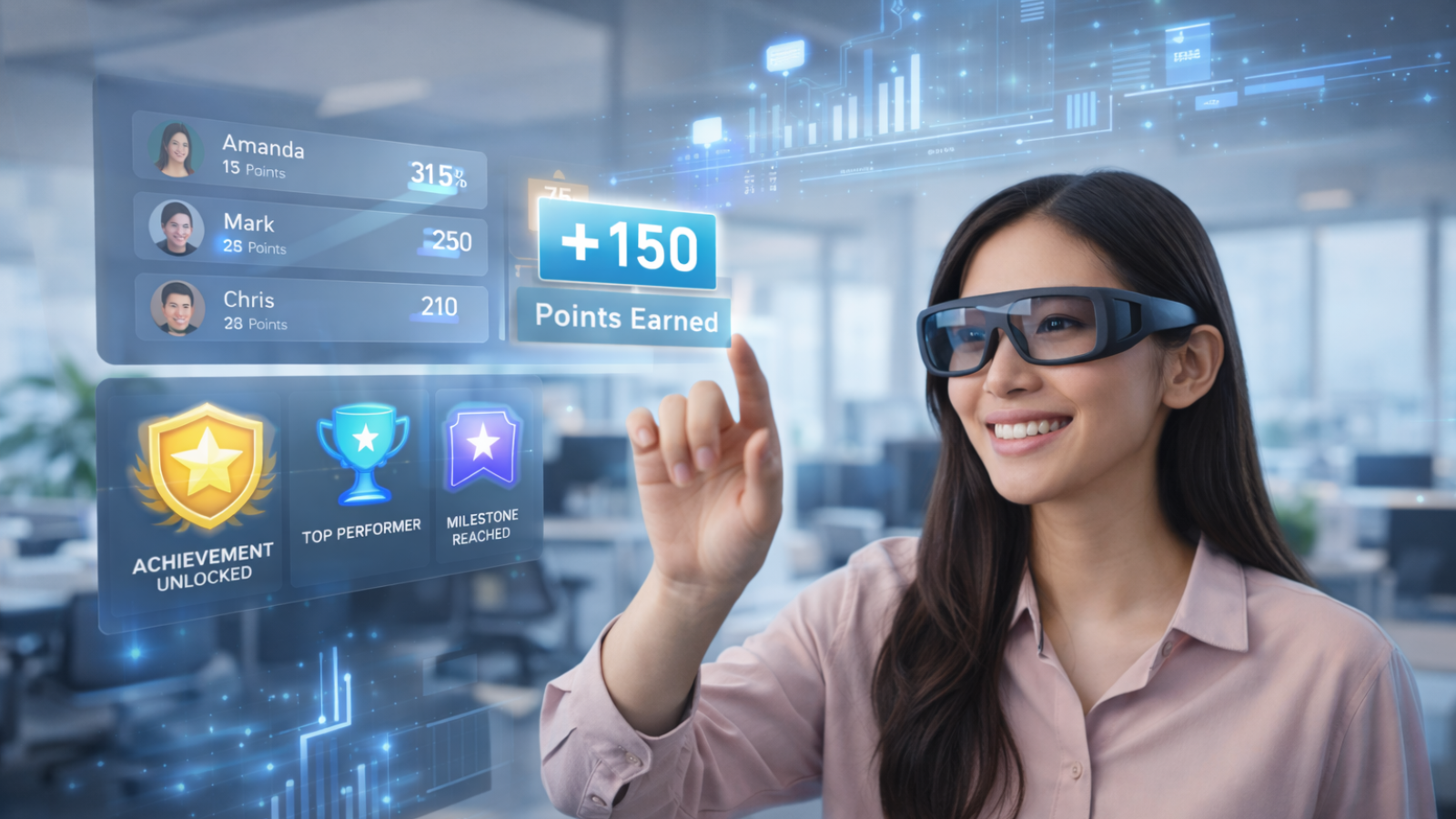
The next wave of gamification in the workplace will be smarter and more immersive. AI-driven platforms will adapt in real time to individual employee behaviour, serving personalised challenges and rewards that genuinely resonate. VR-based simulations will become a mainstream tool for employee onboarding and skill development. Mobile-first platforms will make it easier than ever to engage remote teams, bridging the connection gap that physical distance creates.
For businesses that act now, the competitive edge is clear: engaged employees are more productive, more loyal, and more innovative. Gamification is how you build that engagement systematically, measurably, and at scale.
Conclusion
The modern workplace doesn’t have to feel like a grind. With a thoughtful gamification strategy, organisations can build environments where people genuinely want to show up, compete, grow, and succeed. The evidence is clear: game mechanics belong in the workplace.
Whether you’re managing a hybrid team spread across time zones or a bustling in-office sales floor, the principles are the same: give people clear goals, real-time feedback, meaningful rewards, and the thrill of visible progress. That is exactly what gamification in the workplace delivers. And with tools like EmpMonitor providing the productivity insights to back it up, there has never been a better time to level up your workforce.
Frequently Asked Questions
Can gamification be applied to remote teams, or is it better suited for in-office environments?
Absolutely! Gamification works even better in remote teams, where traditional engagement methods may fall short. Gamified systems like leaderboards and milestone tracking can keep remote employees motivated and connected, offering clear, transparent performance metrics despite the distance.
How does EmpMonitor ensure fairness and prevent bias during gamification in the workplace?
EmpMonitor ensures fairness by providing data-backed insights and real-time performance tracking. The system tracks performance metrics consistently and transparently, ensuring that employees can trust the rewards system and that no one is unfairly advantaged or disadvantaged.
Is gamification in the workplace suitable for non-sales teams, such as HR or support staff?
Yes, gamification can be applied to any department! It’s not just for sales. HR teams can use gamified systems for training completion and employee recognition, while support teams can benefit from productivity challenges, milestone tracking, and engagement metrics, all of which can drive efficiency and satisfaction.