

Many founders assume that managing a team starts with better leadership skills, great communication, or a smarter org chart. In reality, the problems of most people begin much earlier, at the level of business structure.
You can have the most talented team in the world, but if your company isn’t clearly structured, confusion creeps in everywhere. Who decides what? Who owns outcomes? Who is on the hook when something goes south? Without answers, frustration builds and productivity drops.
What often appears to be a “people issue” is actually a systems issue.
Legal, financial, and operational structure quietly shapes how teams function day to day. It determines how decisions are made, how money flows, how accountability works, and how conflicts are resolved.
When the structure is weak, leadership feels harder, and management becomes reactive. When structure is strong, teams feel more aligned, confident, and capable.
This blog explores why a clear business structure doesn’t just boil down to paperwork, it’s a leadership tool. From legal foundations to financial transparency and compliance systems, the way your company is built directly influences how effectively you can lead and scale your team.
The Hidden Link Between Structure and Leadership
Team dysfunction rarely starts with bad people. More often, it starts with unclear systems.
When roles, ownership, and decision paths are fuzzy, even well-intentioned teams get stuck. People duplicate work, step on each other’s toes, or avoid taking responsibility because expectations were never defined.
Ambiguity breeds tension. Small misunderstandings turn into recurring conflicts. Leaders spend more time mediating than building.
Clear structure changes that dynamic.
When responsibilities are defined, conversations become calmer and more productive. When decision-making is honest and upfront, resentment fades. When processes feel “cookie cutter,” people feel safer stepping up and taking the lead.
In other words, structure reduces emotional friction inside a company. It turns leadership from constant firefighting into normalized guidance. The clearer the system, the easier it is to lead… and the better teams perform.
Business Structure as the Foundation of Team Clarity
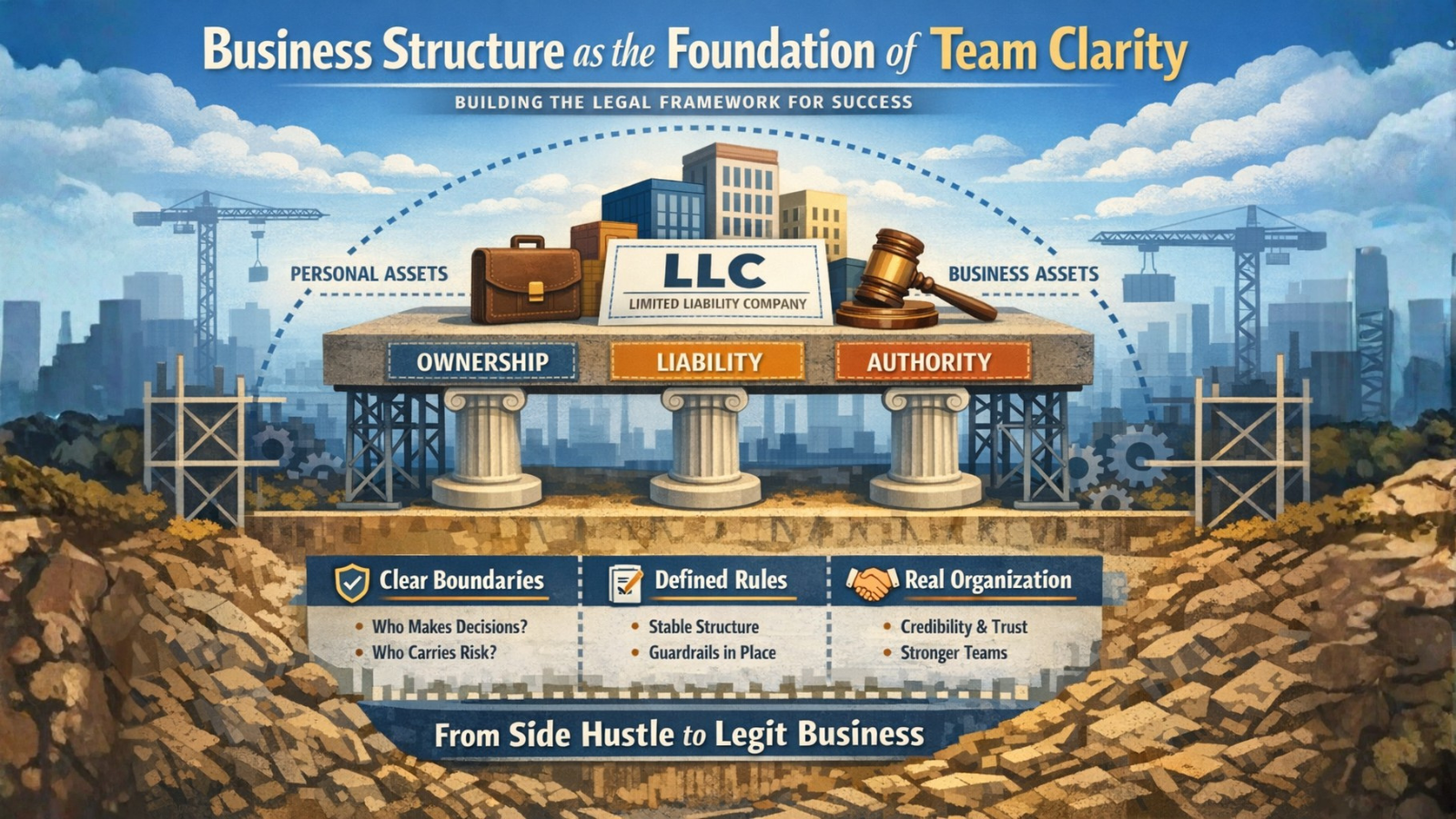
Legal structure isn’t just about taxes or paperwork. It quietly defines how your company operates and how your team experiences it.
When you form a Limited Liability Company (LLC), you create a clear boundary between you as an individual and the business as an entity. That boundary matters for teams. It clarifies who the company is, who makes decisions on its behalf, and where responsibility ultimately sits.
Reading about forming an LLC in Texas can feel like jumping through hoops, but what you’re really doing is drawing lines that make teamwork possible. You’re defining who owns assets, who carries risk, and how authority flows.
That clarity makes delegation easier. Managers can assign work knowing it exists within outlined parameters and guardrails. Employees feel more secure because they understand the rules of the game. Contractors and partners take you more seriously because you look like a real organization, not a loosely organized side hustle.
In short, legal structure becomes the invisible scaffolding that holds your team together. Without it, everything feels negotiable. With it, collaboration becomes far smoother.
EIN: More Than a Tax Number… A Team Enabler
An Employer Identification Number (EIN) might sound purely administrative, but for teams, it’s a surprisingly powerful organizing tool. It gives your company its own financial identity, separate from yours as a founder, which immediately reduces confusion and risk.
That separation matters inside your organization. Payroll runs smoothly when the business (not you personally) is the employer. Contractors get paid cleanly, benefits are handled properly, and reimbursements feel professional instead of ad hoc.
Financial efficiencies also impact team trust. When money moves through clear, legitimate channels, employees feel more secure and respected. There’s less anxiety about “will I get paid on time?” or “is this company actually real?”
In practical terms, an EIN enables better systems, including proper banking, accounting, and compliance, so leaders spend less time untangling money issues and more time supporting their people.
Registered Agent: Quiet Compliance That Protects the Team
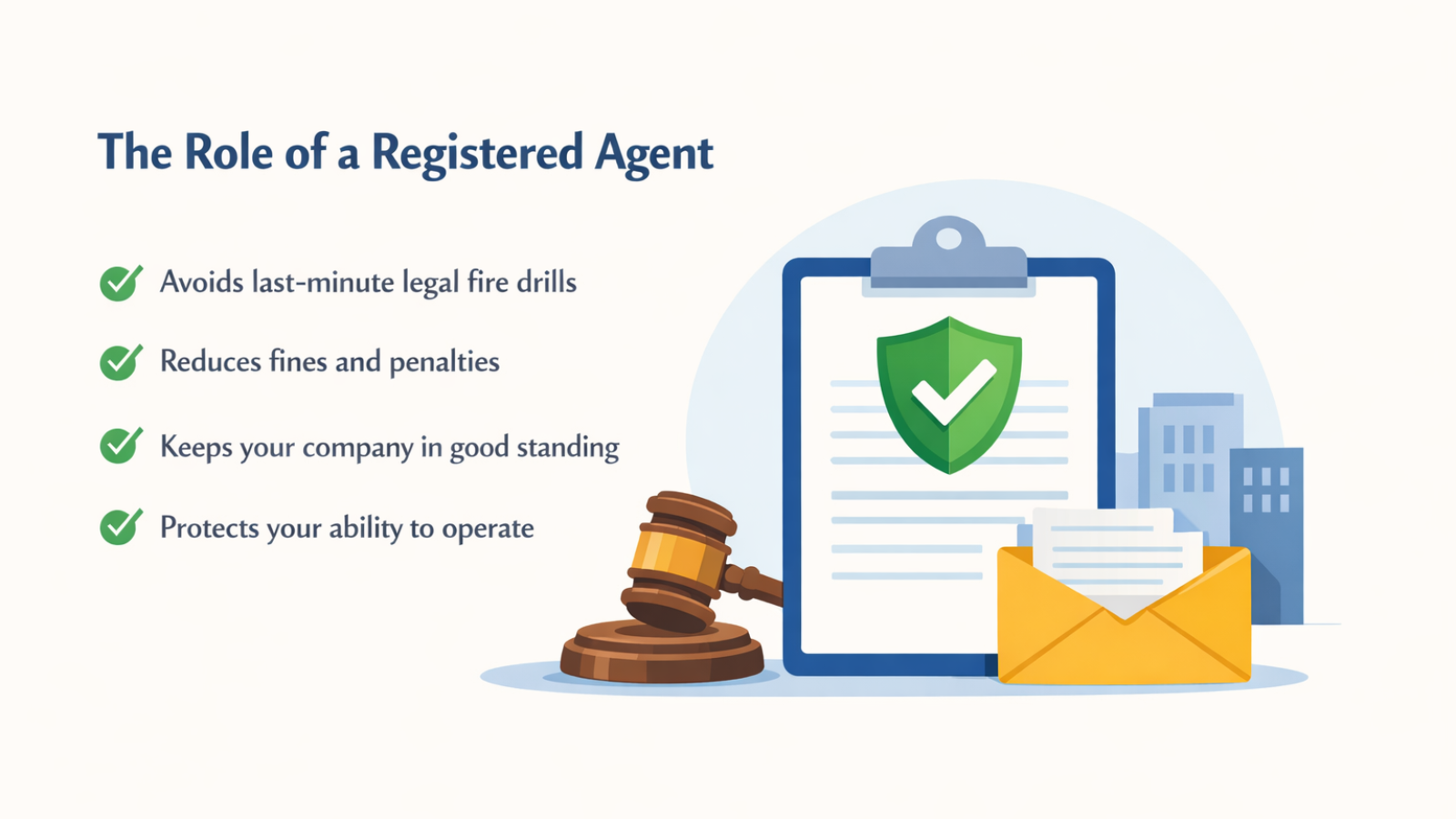
A registered agent might seem like a formality required by the law, but this individual or entity is key to how smoothly your team can operate.
At its core, this person (or service) is responsible for receiving official legal and compliance notices on behalf of your company. That includes things you don’t want to miss.
Why this matters for teams:
- It prevents last-minute legal fire drills that disrupt work.
- It reduces the risk of surprise fines or penalties.
- It keeps your company in good standing with the state.
- It protects your ability to operate, hire, and get paid.
When compliance is handled quietly in the background, leaders can focus on managing people instead of getting buried up to their eyeballs in red tape or legal issues.
In that sense, a registered agent is a stability mechanism for your entire organization.
Clear Roles, Ownership, and Accountability
Structure gives people something to align around. Without it, even talented teams drift into confusion.
When responsibilities are vague, work gets dropped, duplicated, or quietly avoided. People spend more time guessing than doing.
A clear structure helps define three things that every healthy team needs:
- Who owns what
- Who decides what
- Who is accountable if something goes wrong
When ownership is explicit, accountability stops feeling personal and starts feeling procedural. Conversations become less emotional and more practical.
Teams move faster because they don’t have to debate authority every time a decision is needed. Leaders can delegate confidently. Employees know exactly what success looks like.
Hiring, Onboarding, and Scaling Teams

A defined business structure also conveys how new people experience your company from day one. Well-organized businesses feel safe, professional, and credible to candidates.
Strong structure supports scaling in three key ways:
- Makes job descriptions clearer and more realistic.
- Helps new hires ramp up faster.
- Reduces confusion as the team grows.
Without structure, growth can feel confusing and will break processes before it breaks people. New hires get overwhelmed, managers get pulled in too many ways, and teams feel chaotic.
With structure, growth feels organized and thoughtful instead of reactive. Systems absorb the pressure of expansion, so people don’t have to.
Compensation, Payroll, and Trust
Money issues are one of the fastest ways to damage team morale. Even small problems with pay, reimbursements, or contracts can quietly break down trust.
Your business structure helps prevent those problems before they start. When payroll, benefits, and contractor payments run through proper systems, everything feels more professional and predictable.
A positive financial structure supports trust by confirming:
- Employees are paid accurately and on time.
- Contractors are compensated under standard contracts.
- Expenses and reimbursements follow a consistent process.
When people feel secure about how they’re paid, they’re more willing to focus on their work instead of worrying about the company’s stability.
Conflict Resolution and Accountability

Your business structure changes how conflict shows up and how it gets resolved.
When expectations are defined, disagreements are less likely to feel personal. Instead of “you messed this up,” conversations shift toward “the process didn’t work as intended.”
Structure supports healthier conflict by providing:
- Clear roles and responsibilities
- Documented policies and procedures
- Agreed-upon decision paths
- Consistent consequences for mistakes
This doesn’t eliminate conflict, but it makes it more constructive. Issues get addressed through systems rather than emotions.
Additionally, leaders become more consistent. They can point to shared rules rather than rely on gut instincts or favoritism. In turn, your team will feel safe and willing to contribute to your company.
Remote and Hybrid Teams Need Even More Structure
Distributed teams can’t rely on hallway conversations or quick desk-side check-ins. When people work from different cities (or in different time zones), structure becomes the glue that keeps everything united.
Clear systems replace informal communication. Written processes, shared documents, and defined workflows stop confusion and keep everyone on the same page.
Legal and functional clarity matter even more in this environment. When roles, decision paths, and compliance responsibilities are explicit, teams don’t need constant clarification.
Strong structure also creates harmony across locations. It assures that expectations are the same whether someone is in the office, at home, or halfway around the world.
Business Structure is How Leadership Levels Up
Managing people effectively isn’t just about communication or charisma; rather, it’s about the systems behind the scenes. A legit business structure creates the clarity, fairness, and stability that teams need to do their best work.
When legal, financial, and operational foundations are solid, leadership becomes less reactive and more intentional. Teams know what’s expected, conflicts are easier to resolve, and growth feels manageable instead of chaotic.
Strong structure doesn’t slow teams down. It frees them to focus, collaborate, and scale with confidence.