Managing employee attendance manually is costing businesses more than they realise, in wasted hours, payroll errors, and unchecked time fraud. As workplaces evolve in 2026, organisations are replacing outdated punch cards and fingerprint scanners with smarter, contactless alternatives.
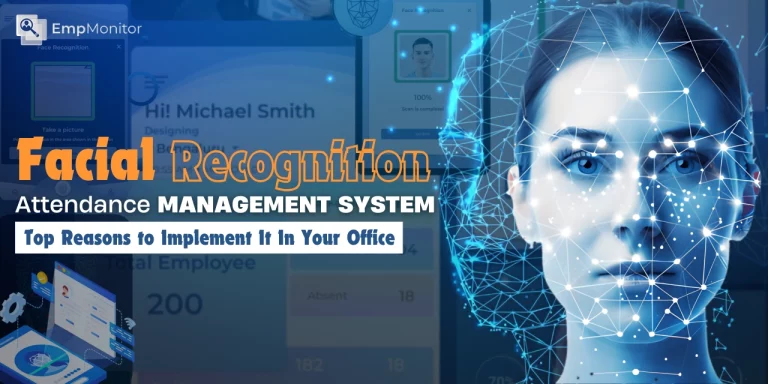
A facial recognition attendance system uses AI-powered biometric technology to automatically identify employees by their facial features and log their attendance in real time – no touching, no cards, no manual entries.
The result? Faster check-ins, zero buddy punching, accurate payroll, and a more secure workplace, all managed from a single dashboard.
In this guide, we cover 11 compelling reasons why businesses are rapidly adopting facial recognition attendance systems in 2026, and why your office should too.
Ready to upgrade? Let’s explore what this game-changing technology has to offer!
Listen To The Blog Now!
What Is a Facial Recognition Attendance System?
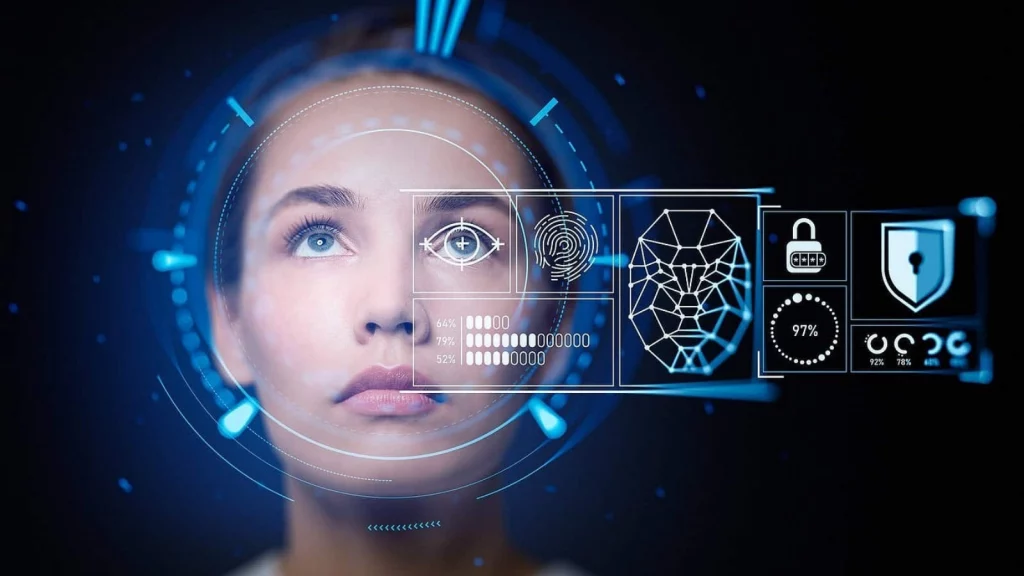
A Facial Recognition Attendance System is an advanced time and attendance tracking solution that uses biometric technology to identify and record employees’ attendance based on their facial features.
Unlike traditional attendance methods that rely on punch cards, RFID cards, or passwords, a face recognition biometric attendance system scans an employee’s face to verify their identity and log their clock-in or clock-out time.
This system works by mapping facial landmarks such as the distance between the eyes, nose shape, and jawline contours, creating a unique facial signature for each employee. These facial signatures are then stored in a secure database, which is accessed every time the employee signs in or out. This touchless, seamless, and quick process eliminates the need for physical contact, making it a perfect solution for modern offices.
How Does a Facial Recognition Attendance System Work?
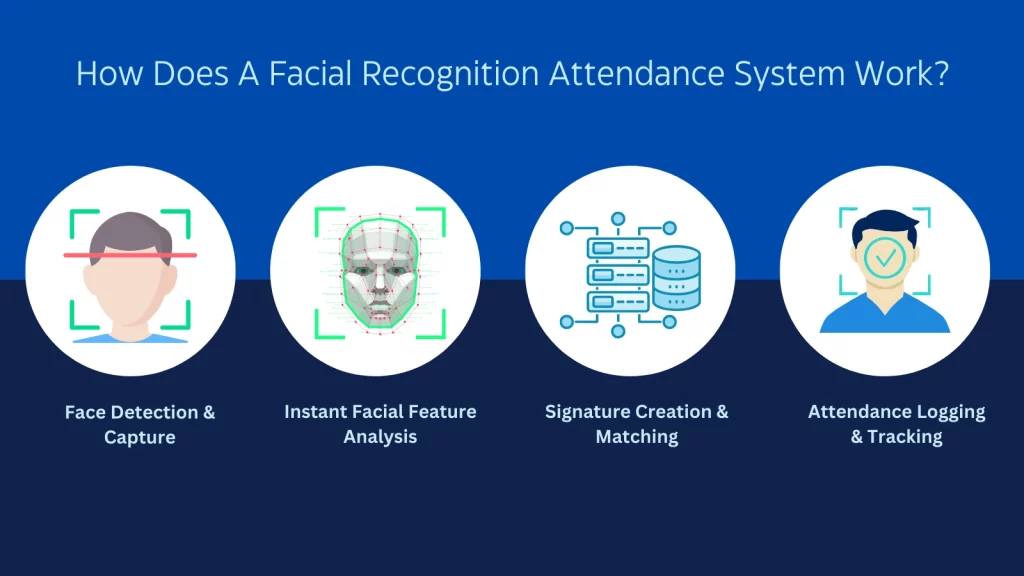
A facial recognition attendance system combines artificial intelligence, machine learning, and cloud technology to deliver fast, accurate, and contactless attendance tracking. Here is exactly how the process works, from the moment an employee walks in to the time their attendance is recorded:
Step 1: Face Detection and Image Capture
As the employee approaches the entry point, a high-definition camera instantly detects and captures their facial image. Advanced cameras ensure accurate capture even in low lighting, at angles, or in high-traffic entry points, making it reliable for busy offices, factories, and institutions across India.
Step 2: Facial Feature Extraction
The system’s AI engine analyses the captured image and extracts unique facial landmarks, including eye distance, jawline structure, nose shape, and cheekbone contours. These measurements are unique to every individual, making facial recognition significantly more secure than cards or PINs.
Step 3: Biometric Matching and Verification
The extracted facial data is instantly converted into a digital biometric signature and compared against the organisation’s secure employee database. If a match is found, the employee’s identity is verified in real time. The entire matching process takes just 1–2 seconds.
Step 4: Automatic Attendance Logging
Once verified, the system automatically records the employee’s check-in or check-out time — with a precise timestamp, directly into the attendance management system. No manual entry, no delays, no errors.
Step 5: Real-Time Sync Across Systems
The attendance data is instantly synced to the cloud-based dashboard, accessible by HR and management from any device. It also integrates directly with payroll software and HRMS platforms, ensuring salary calculations are always based on accurate, real-time attendance records.
Pro Tip: Modern systems like EmpMonitor also function offline and sync data automatically once connectivity is restored, ensuring zero attendance data loss even during internet outages.
Why Should Your Office Use a Facial Recognition Attendance System in 2026?
Let’s dive into the top 11 reasons why implementing a facial recognition attendance system can transform how your office manages employee attendance:
1. Ensures Touchless Sign-In
In a world that’s become increasingly aware of hygiene and safety, especially after the COVID-19 pandemic, touchless solutions are a priority for many workplaces. A face attendance app powered by facial recognition technology allows employees to sign in and out without having to touch any surfaces or devices, unlike traditional systems that rely on cards or fingerprint scanners.
This touchless technology minimizes the spread of germs, creating a safer, more hygienic work environment for everyone. No shared devices mean less risk of contamination, making it ideal for businesses that prioritize employee health and safety.
2. Automates Time Tracking
A Facial Recognition Attendance System completely automates the time-tracking process. Employees no longer need to manually punch a clock or fill out time sheets. Once an employee’s face is recognized by the system, their exact time of entry or exit is recorded instantly.
This automation eliminates the possibility of human error and ensures that timekeeping is accurate to the second. As a result, companies gain a reliable record of hours worked without the need for manual intervention, making time tracking faster and more efficient.
3. Reduces Buddy Punching
“Buddy punching” occurs when one employee clocks in or out on behalf of another, often leading to payroll inaccuracies and inflated labor costs. A face detection attendance system effectively eliminates this issue by using each employee’s unique facial features to log attendance.
Since no two faces are alike, only the correct person can clock in or out, ensuring that attendance fraud is a thing of the past. This improves accountability and ensures that you’re paying for the actual hours worked.
4. Saves Time and Money
Traditional attendance systems often require substantial time and resources to manage. HR teams must regularly track, verify, and process employee attendance data, leaving room for errors and delays. A Facial Recognition Attendance Management System drastically reduces this workload by automating the entire process.
This means HR teams can spend less time on repetitive administrative tasks and focus on more strategic functions, like employee engagement or recruitment. The elimination of human error and attendance fraud also leads to significant cost savings, improving the bottom line for businesses.
5. Works from Anywhere
One of the greatest benefits of a Facial Recognition Attendance System is its ability to function in a variety of environments, including remote and hybrid work setups. Thanks to its cloud-based attendance system nature, employees can clock in from any location, whether they’re working from home, traveling, or at the office.
This flexibility ensures that companies can accurately track attendance regardless of where employees are based. Managers can monitor attendance data in real-time from any device, providing a high level of transparency and control, even with distributed teams.
6. Offers Transparency & Control
For management and HR, having clear visibility into employee attendance is crucial for effective workforce management. A Facial Recognition Attendance System generates detailed reports on attendance, including hours worked, late arrivals, overtime, and absenteeism.
This real-time data allows businesses to better monitor employee performance, ensure compliance with labor laws, and make informed decisions based on actual attendance patterns. The transparency that comes with automated reporting helps maintain a more accountable and productive workforce.
7. Reduces Extra Effort
Traditional attendance systems often involve numerous steps—like entering PINs, swiping ID cards, QR code Check in or using fingerprint scanners—which require maintenance and troubleshooting. An Attendance System Using Face Recognition simplifies the process dramatically.
Employees only need to show their face, and the system takes care of the rest, with no need for remembering passwords or carrying additional items like cards. Once set up, the system runs with minimal oversight, freeing up time and reducing the effort needed from both employees and HR teams.
8. Enhances Security
A Face recognition biometric attendance system offers a much higher level of security compared to older attendance tracking methods. Since it relies on biometric data, specifically the unique features of an individual’s face, it is nearly impossible to falsify attendance or gain unauthorized access.
This helps prevent unauthorized personnel from entering restricted areas within the workplace, and it ensures that attendance logs are accurate and trustworthy. To strengthen accuracy and prevent spoofing in attendance check-ins, teams often pair recognition with liveness detection. One option is Banuba’s Face Recognition SDK, which includes identity verification and liveness detection to prevent spoofing.
The security boost applies not just to attendance tracking but also to access control, making it a dual-purpose solution for modern offices.
9. Increases Productivity
Manual processes, like logging in with keycards or entering PINs, can slow employees down, especially during peak times like the start of a shift. A facial recognition attendance system speeds things up by eliminating wait times and queues.
Employees simply walk by the camera, and their attendance is recorded instantly, allowing them to begin their workday without delay. This streamlined process improves efficiency, saves time, and helps employees focus on their tasks, ultimately boosting productivity across the board.
10. Offers an Intuitive Interface
Most facial recognition attendance systems are designed to be user-friendly, requiring little to no technical expertise from employees. The system is intuitive, meaning employees don’t have to engage with complex technology—they simply stand in front of the camera, and the system handles the rest.
This ease of use makes it accessible to everyone, regardless of their comfort level with technology. Even for new hires or temporary workers, the learning curve is minimal, allowing them to adapt quickly to the system.
11. Simplifies Payroll
Calculating payroll based on manual attendance records can be time-consuming and prone to errors, especially when dealing with complex schedules or overtime. A facial recognition attendance management system integrates seamlessly with payroll software, ensuring that all attendance data—like hours worked, overtime, and leaves—is accurate and up-to-date.
This integration automates payroll calculations, reducing the risk of errors and ensuring that employees are paid correctly and on time. For HR teams, this saves hours of manual work and eliminates payroll discrepancies, improving overall satisfaction for both employees and employers.
By implementing a facial recognition attendance system, businesses can streamline their operations, enhance security, and create a more efficient, productive workplace. From eliminating buddy punching to simplifying payroll, this technology offers tangible benefits that can help companies save time, reduce costs, and ensure accuracy in employee attendance management.
Read More:
The Complete Guide To Leave And Attendance Management System
9 Powerful Reasons To Use A Cloud-Based Attendance System
Why Cloud Based Biometric Attendance Systems Are Valuable?
Fingerprint Recognition: Simple And Secure Authentication
Which Industries Benefit Most from Facial Recognition Attendance Systems?
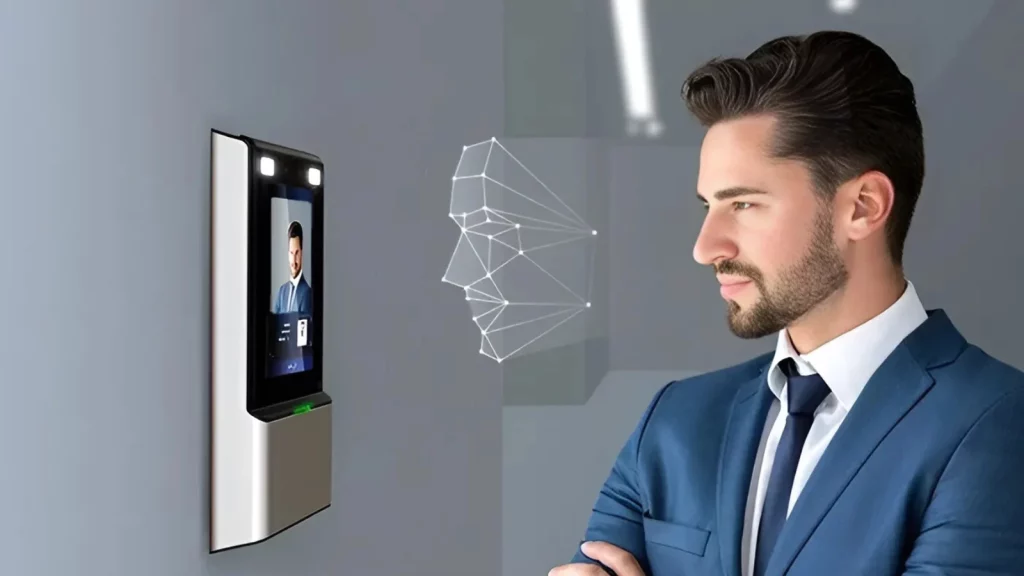
While the advantages of a facial recognition attendance system are applicable across various sectors, specific industries stand to gain even more from its implementation. These sectors often face unique challenges related to attendance tracking, security, and operational efficiency. Below, we delve deeper into how different industries can leverage this innovative technology to streamline their operations.
1. Healthcare
Hospitals and Clinics
In healthcare settings, accurate attendance tracking is crucial for staff accountability and patient care. A facial recognition attendance system automates attendance logging, reducing human error and administrative workload. Additionally, it enhances security by restricting access to sensitive areas, ensuring that only authorized personnel can enter, ultimately improving patient safety and care quality.
2. Manufacturing
Production Facilities
Manufacturing environments are often dynamic, requiring precise attendance management. A facial recognition attendance system streamlines shift changes, enabling workers to clock in quickly and reducing downtime. Moreover, it minimizes buddy punching, ensuring that attendance records reflect actual productivity, leading to more efficient operations and better compliance with labor regulations.
3. Education
Schools and Universities
Educational institutions can significantly improve attendance monitoring with a facial recognition attendance system. This technology automates attendance tracking, allowing educators to focus on teaching rather than paperwork. Furthermore, it enhances campus security by controlling access to restricted areas, ensuring a safer environment for both students and staff while promoting accountability.
4. Hospitality
Hotels and Restaurants
In the hospitality sector, a facial recognition attendance system enhances guest experiences through streamlined check-in processes, reducing wait times. It also simplifies employee attendance management by automating clock-ins and outs. Additionally, improved security measures protect sensitive areas, ensuring that only authorized personnel can access them, thus safeguarding guest privacy and property.
5. Retail
Stores and Supermarkets
Retailers can benefit from a facial recognition attendance system by accurately tracking employee attendance, reducing time theft and buddy punching. The technology also facilitates access control, ensuring that only authorized staff enter secure areas. By analyzing attendance data, retailers can optimize staffing levels based on customer traffic patterns, improving service quality.
6. Transportation and Logistics
Airports and Warehouses
In transportation hubs and logistics companies, a facial recognition attendance system expedites employee check-ins, minimizing delays in busy environments. Enhanced security measures ensure that only authorized personnel enter restricted areas, such as boarding gates or cargo zones. This innovation is just one example of how IT solutions for transportation are modernizing workforce management and security across airports and logistics centers. Accurate attendance tracking aids compliance with labor regulations and improves overall operational efficiency.
7. Corporate Offices
Business Enterprises
Large corporations benefit from a facial recognition attendance system by ensuring employee accountability and minimizing time theft. Integrating attendance tracking with access control enhances security, allowing only authorized individuals into sensitive areas. Detailed reporting provides insights into attendance patterns, helping management make informed decisions about staffing and resource allocation for increased productivity.
Organizations in these and many other industries can enhance their operational efficiency and security by adopting a facial recognition system.
EmpMonitor – Face Recognition Based Access & Attendance System
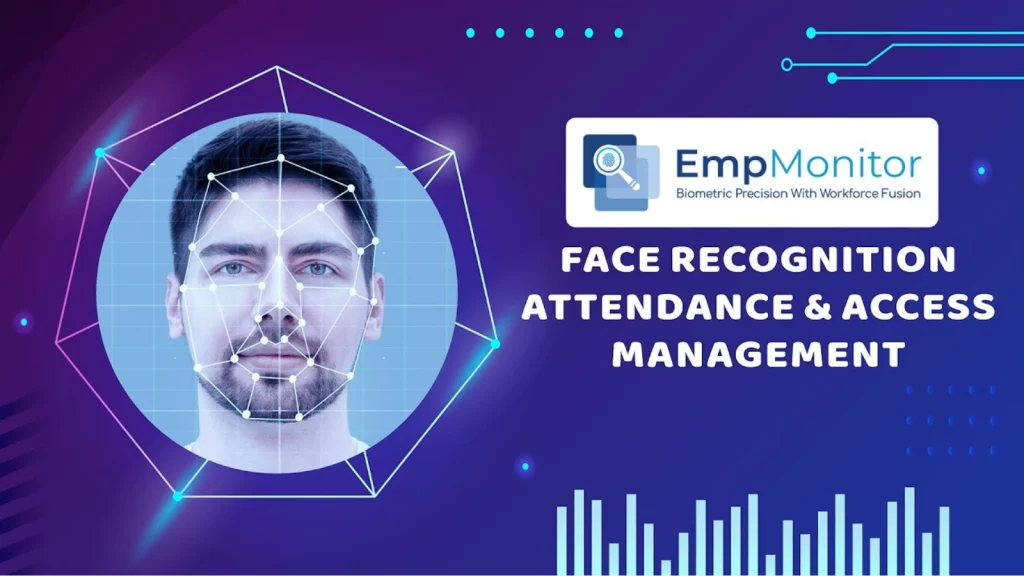
When it comes to choosing the best facial recognition attendance system, EmpMonitor stands out as a top solution. EmpMonitor’s Face Recognition Attendance and Access Management System offers a complete attendance and access management platform that enhances workplace efficiency, security, and productivity.
With EmpMonitor’s face recognition system, businesses can easily automate their attendance tracking processes, eliminating the need for manual records. Here’s a closer look at its key functionalities:
- Blazing-Fast & Precise: The system employs advanced AI algorithms for lightning-fast face recognition, achieving 100% accuracy in identifying employees. This ensures that each attendance entry is precise and reliable.
- Contactless Identification: Employees can sign in and out using a completely contactless method. This reduces the need for physical interaction with devices, promoting a hygienic workplace environment.
- Quick Enrollment: The enrollment process is designed to be fast and hassle-free. New users can be quickly registered in the system, facilitating a smooth transition and immediate access to attendance tracking.
- Automated Attendance: Attendance is automatically recorded as users check-in or out. This automation minimizes manual data entry and ensures accurate tracking of employee hours without delays.
- Access Control: The system allows administrators to grant or restrict access to specific areas based on an employee’s role. This enhances security by ensuring that only authorized personnel can enter sensitive areas.
- Alert System: Receive alerts for unauthorized access attempts or any suspicious activities. This feature helps maintain a secure environment by promptly notifying management of potential security breaches.
- User Management: The system includes a user-friendly dashboard for managing employee access. Administrators can easily add, edit, or deactivate user accounts, providing a streamlined approach to user management.
- Visitor Management: The system facilitates the registration of visitors and issues temporary access credentials. This ensures that visitor access is controlled and monitored, enhancing overall workplace security.
- Offline Functionality: The system remains fully operational during internet outages, ensuring uninterrupted functionality. Attendance data is automatically synchronized once the connection is restored, safeguarding records against data loss.
- User-Friendly Interface: EmpMonitor’s interface is designed for ease of use, allowing employees and administrators to navigate effortlessly. This reduces the learning curve and enhances the overall user experience.
- Detailed Reports: Generate in-depth reports on attendance, access logs, and visitor activity, all within a single dashboard. This feature provides valuable insights for management, aiding in decision-making and resource allocation.
- Access History: The system maintains a comprehensive record of employee access to all locations. This historical data is crucial for audits, compliance checks, and understanding employee movement within the organization.
If you’re looking for a seamless, secure, and efficient way to manage employee attendance, check out EmpMonitor’s face recognition system now. It’s the perfect solution for businesses looking to enhance workplace efficiency while ensuring security and accuracy.
Conclusion
The adoption of a facial recognition attendance system is a smart investment for any business looking to improve productivity, enhance security, and streamline administrative processes. By offering a touchless, automated, and highly secure method of tracking employee attendance, this leave and attendance management system solves many of the challenges that come with traditional attendance methods.
With benefits like preventing buddy punching, reducing administrative workload, increasing accuracy in payroll, and offering flexibility for remote work, it’s clear why businesses are rapidly adopting this innovative solution. Moreover, with options like EmpMonitor, implementing this technology has never been easier or more effective.
If you haven’t yet considered upgrading your office’s attendance system, now is the time. Embrace the future of workforce management with a facial recognition system and experience the benefits firsthand.
FAQs: –
1. How long does it take for an employee to clock in using facial recognition?
The entire process takes just 1–2 seconds. As soon as the employee steps in front of the camera, the system detects, verifies, and logs their attendance automatically. This is significantly faster than swiping cards, entering PINs, or using fingerprint scanners — making it ideal for high-footfall entry points during peak hours.
2. Can a facial recognition attendance system work in high-traffic environments?
Yes. Modern facial recognition systems are built to handle simultaneous entries and busy environments efficiently. Whether it is a large corporate office, a manufacturing unit, or a school with hundreds of students, the system processes each face quickly and accurately without causing bottlenecks at entry points.
3. Is a facial recognition attendance system secure?
Facial recognition is one of the most secure attendance methods available today. Since it relies on unique biometric data that cannot be shared, stolen, or duplicated, it effectively eliminates proxy attendance and unauthorised access. Data is stored in encrypted cloud servers, ensuring employee information remains protected at all times.
4. Is facial recognition attendance suitable for small businesses in India?
Absolutely. While the technology was once associated with large enterprises, cloud-based facial recognition systems in 2026 are highly scalable and cost-effective, making them accessible to small and medium businesses across India. The long-term savings on payroll errors and administrative effort far outweigh the initial investment.
5. Can the system recognise employees wearing glasses or with changed appearances?
Yes. AI-powered systems are trained on diverse facial data and can accurately identify individuals even with glasses, facial hair, masks, or minor changes in appearance. The machine learning models continuously improve recognition accuracy over time.
6. Does the system need constant internet connectivity?
No. Most modern facial recognition attendance systems, including EmpMonitor, offer offline functionality. Attendance is recorded locally during outages and automatically synced to the cloud once the connection is restored, ensuring no data is ever lost.