Every organization collects employee data, work communications, device activity, performance metrics, and more. But do you have a clear, legally sound plan for how that data is handled?
That’s exactly what an employee privacy policy answers.
It defines what personal information your organization collects, how it’s used, who can access it, and how it’s protected. It covers workplace monitoring, data retention, and employee rights — for everyone from full-time staff to remote contractors.
And in 2025, getting it right matters more than ever. Regulators are issuing fines in the tens of millions, AI tools are creating new data leakage risks, and employees expect transparency. This guide breaks down everything you need to know.
In This Article
- Why employee privacy policy matters more than ever
- The new threat landscape: AI, shadow tools, and hybrid work
- The fast-changing legal landscape (GDPR, DPDP, US state laws)
- Real case studies: when companies got it wrong
- Best practices for 2025 and beyond
- How EmpMonitor supports compliant monitoring
- Frequently asked questions
Listen To The Blog Post
01 Why It Still Matters Employee Privacy Policy: The Stakes Are Higher Now
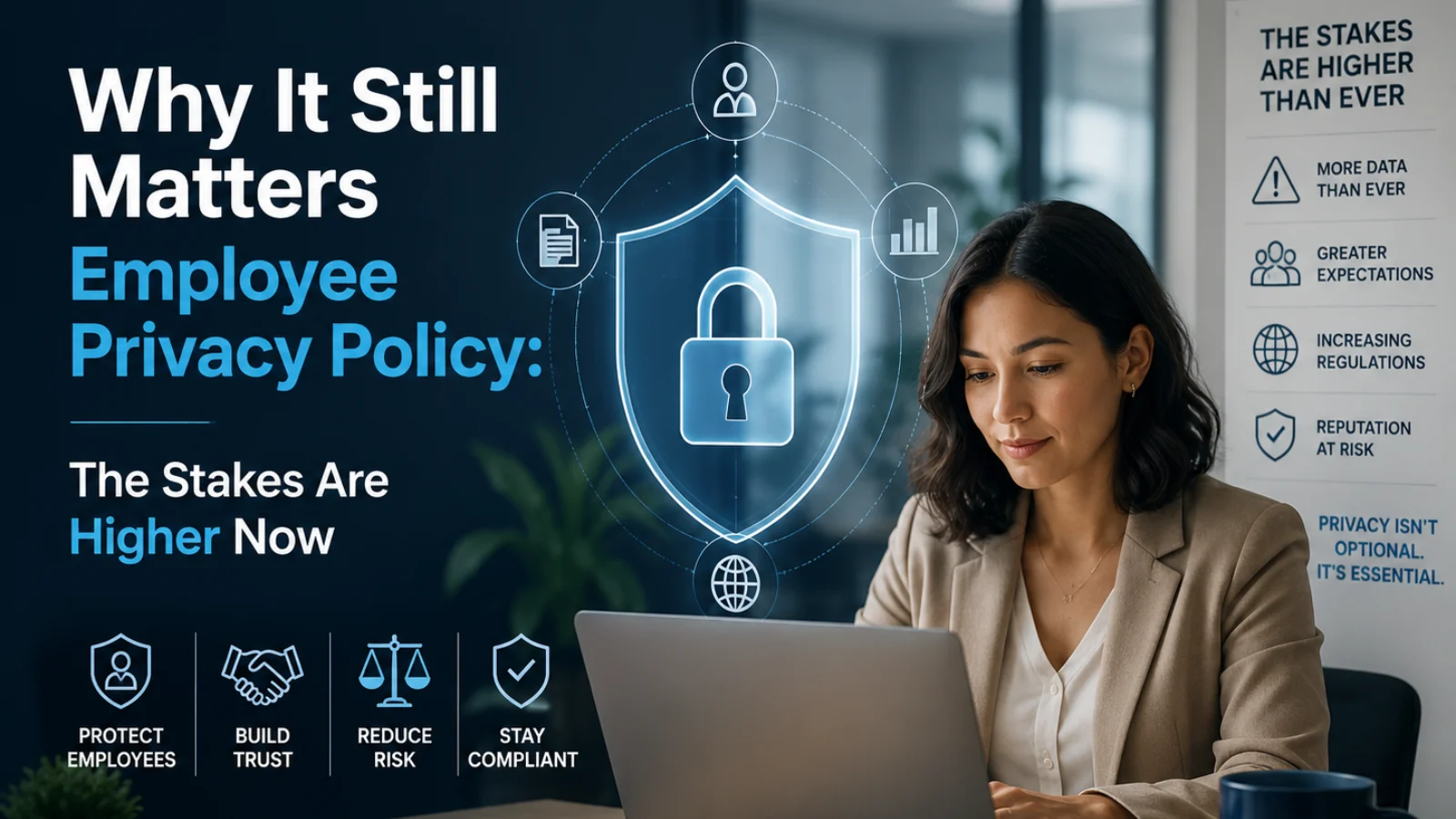
Five years ago, the conversation around employee privacy policy was largely theoretical for most mid-size organizations. Compliance teams quietly updated a document, HR filed it away, and life moved on. Then 2020 happened, and everything changed.
Remote work became the norm almost overnight. Personal devices became professional workstations. Home Wi-Fi networks became conduits for sensitive company data. And employees started mixing personal browsing, cloud storage, and messaging apps with their work tools in ways that would have seemed unimaginable in a traditional office.
Today, an employee privacy policy isn’t a dusty legal formality. It’s a live business instrument that sits at the intersection of data security, talent retention, legal compliance, and organizational culture. Get it wrong and you’re looking at regulatory fines that can run into tens of millions of euros or a workforce that simply doesn’t trust you.
- 73% of US-based employers now use online monitoring tools (ExpressVPN, 2025)
- €4.44M Global average cost of a data breach in 2025 (IBM Security)
- 93% of employees admit to pasting company data into public AI tools (HRStacks, 2025)
- 56% of monitored employees report stress or tension from surveillance (2025)
The numbers tell a clear story: monitoring is widespread, threats are costly, but employee trust remains fragile. A robust, transparent privacy policy is the bridge between security and culture.
02 The New Threat Landscape: AI Tools, Shadow Apps, and the Hybrid Work Blind Spot
The original article highlighted the risks of unsecured home networks and disgruntled employees, both of which remain relevant. But the threat landscape of 2025 looks dramatically different. Three new categories of risk have emerged that most employee privacy policies simply weren’t written to handle.
The AI Data Leakage Problem
Perhaps the most startling finding from recent research: nearly all employees admit to copying company data into public AI tools like ChatGPT, Gemini, or Claude. They’re doing it to write faster, summarize documents, or get coding help, and most of them have no idea that their inputs may be used to train models or stored on external servers.
An updated employee privacy policy should define clearly what constitutes sensitive company data, which AI tools are permitted (and under what conditions), and the consequences of non-compliance. This isn’t about being punitive it’s about helping employees make the right call in the moment.
The Hybrid Work Blind Spot
Over 50% of knowledge workers now operate in hybrid or fully remote setups, and the security perimeter of the traditional office has dissolved. Employees move between corporate networks, home broadband, coffee shop Wi-Fi, and mobile data often within the same day.
The policy implication here is significant: what data can be accessed on personal devices? What happens when an employee uses a personal cloud storage account to share a work file for convenience? Who owns that data? These questions feel mundane until there’s a breach — and then they become very expensive very quickly.
“Bossware” and the Trust Deficit
Surveillance tool adoption jumped roughly 50% during the remote-work shift, and many organizations deployed monitoring software quietly, without informing their employees. One third of UK employers now use “Bossware” that logs emails, browsing history, or screen captures in the background. The irony is that opaque monitoring often creates the very distrust it’s meant to prevent, and 56% of employees subject to intrusive monitoring report elevated stress, which correlates with higher turnover.
Transparent monitoring, backed by a clear employee monitoring policy that employees actually read and understand, consistently outperforms covert surveillance on both security outcomes and retention metrics.
“What bothers employees isn’t that some form of tracking exists, it’s not knowing what’s being watched or why.”
Hubstaff, State of Employee Monitoring Report 2025
03 Legal Landscape Regulations That Changed Everything
The regulatory environment around employee privacy has matured dramatically. Here’s a quick-reference breakdown of the frameworks your policy needs to account for in 2025.
GDPR (Europe) Still the Global Benchmark
Europe’s General Data Protection Regulation remains the most comprehensive framework worldwide. Under the GDPR, employers must demonstrate a legitimate interest in monitoring, minimize data collection to what’s strictly necessary, and provide employees with prior notice. As of January 2025, total GDPR fines have crossed €6.7 billion, with AI and employee monitoring cases representing a growing share of enforcement actions.
India’s Digital Personal Data Protection Act (DPDP)
India’s landmark DPDP Act, passed in 2023 and with obligations coming into force through 2025–2026, directly impacts how Indian companies handle employee data. Consent requirements are stricter, passive tracking without notice is restricted, and data fiduciaries (including employers) must appoint a Data Protection Officer in many cases. If your organization operates in India, your privacy policy needs a complete DPDP-aligned section.
US State Laws A Patchwork, Not a Framework
The United States still lacks a comprehensive federal data privacy law, but state-level legislation is accelerating rapidly. California’s Digital Privacy for Workers Act, passed in late 2024, limits employer use of cameras and microphones during personal hours. Several other states have introduced or passed workplace monitoring disclosure laws requiring employers to notify employees in writing before surveillance begins. What was permissible in 2020 may now carry liability.
The EU AI Act The Next Frontier
The EU AI Act began phased enforcement in 2024, with high-risk AI system obligations rolling out through 2026. Real-time biometric surveillance in workplaces is now prohibited in Europe. AI-driven performance scoring that makes automated decisions affecting employment is classified as high-risk and subject to strict documentation and transparency requirements. If your monitoring tools use AI-powered analytics, your policy and your vendor contracts need to reflect this.
Also Read
How To Write An Employee Monitoring Policy?
Privacy First Monitoring: Getting Data Without Being “Creepy”
04 Real Cases: What Happens When Companies Get It Wrong
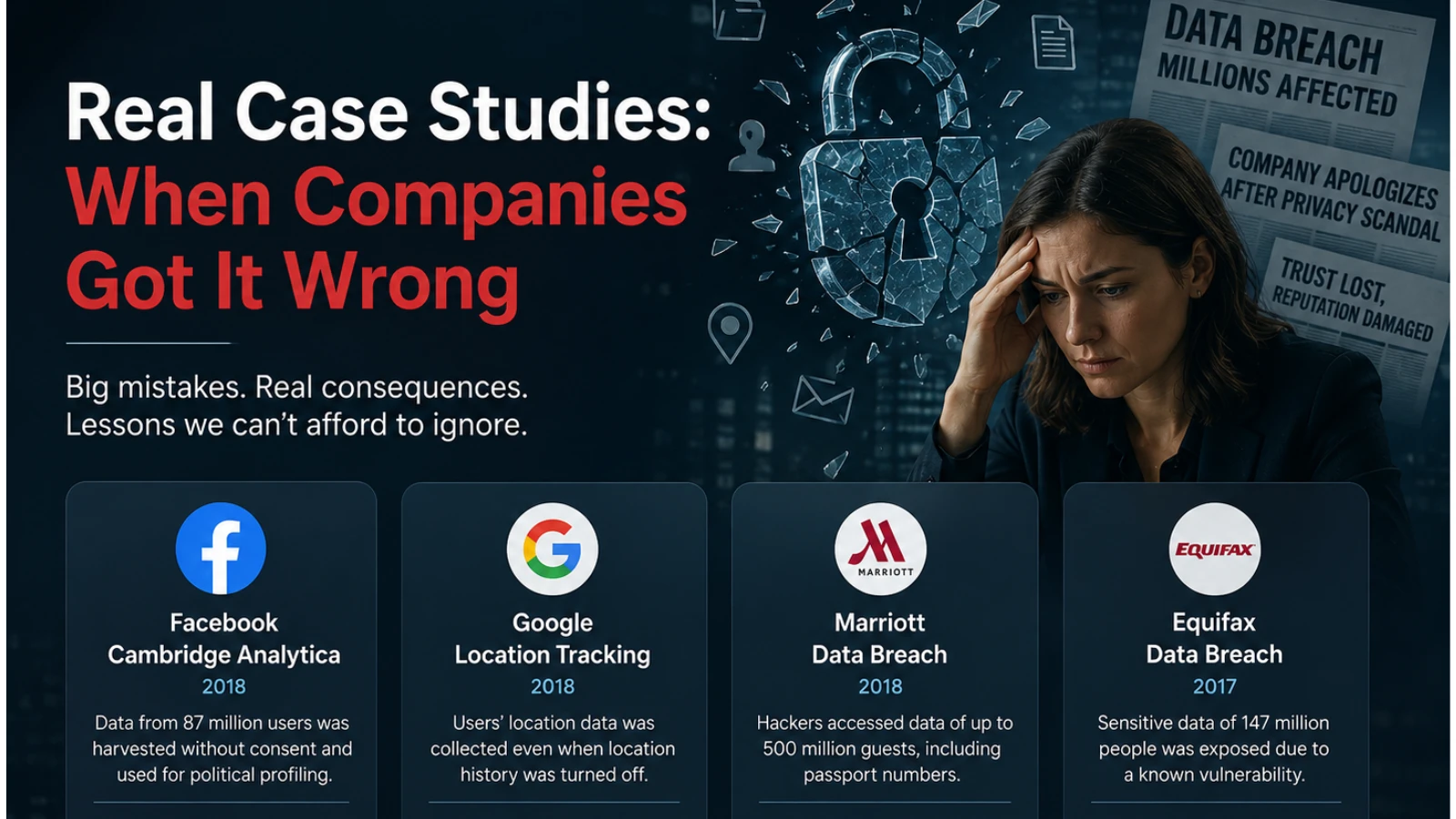
Abstract compliance language becomes a lot more concrete when you look at what’s actually happening in courts and regulatory offices around the world.
Case Study · France, 2024
Amazon Warehouse: €32 Million for Overzealous Productivity Tracking
France’s data regulator fined Amazon’s warehouse management arm €32 million for violating GDPR by excessively tracking employee productivity. The monitoring system was so granular it recorded the time between each scanned item, with supervisors receiving real-time alerts if an employee paused for more than a few seconds.
The regulator found the surveillance went far beyond what was necessary to manage operations a core GDPR principle called proportionality. There was no meaningful policy disclosure to employees about the nature or extent of the monitoring.
Case Study · Netherlands, 2024
Clearview AI: €30.5 Million + Personal Liability Investigations
The Dutch DPA fined Clearview AI €30.5 million for illegally building a facial recognition database and in an unprecedented move, announced it was investigating whether individual company executives could be held personally liable for the ongoing violations. The case signals that regulators are increasingly willing to pierce the corporate veil when privacy breaches are systematic.
Case Study · EU, 2024–2025
Food Delivery Platforms: Driver Surveillance and GDPR
Italian regulators fined two major food delivery companies for violating the privacy of their drivers through algorithmic monitoring tracking location, speed, and performance in ways drivers were not clearly informed about. The cases establish an important precedent: gig workers and contractors, not just full-time employees, are protected by data privacy frameworks.
05 Best Practices Building a Privacy Policy That Actually Works
A good employee privacy policy is not just a legal document it’s a communication tool, a trust-building instrument, and a security protocol rolled into one. Here are the pillars of a modern, effective policy.
-
📋Write it in plain language, not legalese
Employees who can’t understand the policy can’t comply with it. Use clear sections, real examples, and accessible language. A policy that nobody reads protects nobody. -
🤖Add an explicit AI tools clause
Specify which AI tools are permitted, what data may or may not be inputted, and how personal data in prompts is handled. This is the single biggest gap in most existing policies. -
📍Define monitoring clearly and proportionately
State exactly what is monitored (keystrokes, screenshots, URLs, location), when, and why. Proportionality collecting only what you need, is both a legal requirement under GDPR and a trust prerequisite with employees. -
🌍Account for geography
If your team is distributed across countries, your policy must address the most stringent applicable regulation. A single global policy with jurisdiction-specific addenda is a common and effective approach. -
🔄Build in a review cycle
The legal landscape is changing fast enough that annual reviews are now a minimum. Assign ownership usually the DPO or HR lead and create a calendar trigger so reviews actually happen. -
🎓Train, don’t just distribute
Policy acknowledgment forms are not training. Short, scenario-based sessions at onboarding and annually thereafter create the behavioral change that actually prevents incidents. -
🚨Define your incident response clearly
Employees and managers need to know: what to do when they suspect a breach, who to call, what gets documented, and what the timelines are. Under GDPR, breach notification to regulators is required within 72 hours.
06 How EmpMonitor Supports Compliant Monitoring
When we first wrote about EmpMonitor in 2020, it was primarily a response to the sudden shift to remote work. Five years on, the platform has evolved in step with the legal and organizational demands of a more complex world. Here’s what’s most relevant for organizations building a compliant monitoring strategy today.
Transparency-First Architecture
Modern data protection law requires that employees be informed about monitoring before it begins. EmpMonitor’s deployment model supports transparent rollout; admins can configure visible notifications, ensuring that the monitoring posture aligns with disclosure requirements under GDPR, India’s DPDP Act, and US state-level laws. The era of purely covert “stealth mode” monitoring without disclosure is legally untenable in most jurisdictions.
Productivity Measurement — With Context
The dashboard provides productivity and activity reporting at both individual and team levels, covering up to 180 days of history. The key evolution here is using this data to support employees in identifying workload imbalances, flagging burnout risk, or spotting training needs rather than solely as a surveillance instrument. Organizations that frame monitoring through a support lens see better employee acceptance and stronger compliance outcomes.
Screenshot Monitoring and Activity Logs
Screenshot capture, website and application usage logs, and keystroke recording remain core capabilities. Used within the bounds of a clear, disclosed policy, these tools provide the audit trail that both security teams and legal departments need in the event of a data incident. The critical requirement is proportionality: capturing what you need to demonstrate a legitimate business purpose, not everything you technically can.
Cloud-Based Data Retention
All monitoring data is stored in EmpMonitor’s cloud environment, with access controls and audit logging. For organizations subject to GDPR or DPDP, this raises important data retention questions that your privacy policy must address: how long is data retained, who can access it, and what is the deletion schedule? Working with your legal team to set EmpMonitor’s retention windows in line with your policy commitments is an essential configuration step.
Frequently Asked Questions
What should be included in an employee privacy policy?
A complete employee privacy policy should cover: what personal data is collected from employees (and why), what monitoring activities are in place and on what legal basis, how data is stored and for how long, who has access to employee data, employee rights (access, correction, deletion where applicable), how to raise a concern or complaint, and jurisdiction-specific provisions if you operate across multiple countries. In 2026, a dedicated clause on AI tools and acceptable use of generative AI is also essential.
Is employee monitoring legal?
In most jurisdictions, yes, but with significant conditions. The core requirements across major frameworks (GDPR, DPDP, US state laws) are: employees must be informed before monitoring begins, the monitoring must be proportionate to a legitimate business purpose, and data must be handled securely and retained only as long as necessary. Covert monitoring without disclosure is increasingly illegal in Europe and several US states. Always consult local legal counsel before deploying monitoring tools.
How often should an employee privacy policy be updated?
At minimum, annually. Given how rapidly regulations are evolving — the EU AI Act, India’s DPDP, US state laws — many legal experts now recommend a six-month review cycle. Any time a new monitoring tool is deployed, a significant technology change occurs, or a relevant law passes in a jurisdiction where you operate, that should also trigger a policy review.
Can employees be monitored while working from home?
Yes, within limits. Home-based monitoring is generally permissible on company-owned devices and during contractual working hours, provided employees are informed. Monitoring personal devices, capturing audio or video in personal spaces, or monitoring outside work hours is significantly more restricted — and under some laws (including California’s 2024 worker privacy law) may be prohibited altogether. The employee’s privacy policy must clearly delineate what is and isn’t monitored in remote settings.
What is the risk of not having an employee privacy policy?
The risks are substantial and multi-directional. Regulatory risk: GDPR fines alone have reached €32 million for a single company’s monitoring practices. Legal risk: employees can bring claims for privacy violations in many jurisdictions. Reputational risk: data breaches and privacy scandals damage employer brand and talent acquisition. Operational risk: without clear policies, employees make their own decisions about data handling — often insecurely. A well-drafted policy is cheap insurance relative to any of these outcomes.
Do privacy policies cover contractors and gig workers?
Increasingly, yes. Following regulatory enforcement actions against food delivery platforms in Europe (2024–2025), it’s clear that regulators view gig workers and contractors as falling within privacy protections when employers collect data about their work activities. If your organization monitors, tracks, or collects data from contractors or freelancers, your employee privacy policy should address them explicitly.
What should we do about employees using AI tools at work?
Start by acknowledging that it’s almost certainly already happening. Prohibitive policies that ban AI tools outright are generally ineffective; employees find ways around them. A more effective approach is to define an approved list of tools (vetted for data-handling practices), create clear guidance on which types of data cannot be entered into AI tools (confidential client information, personal data, proprietary code), and provide training that helps employees understand the reasoning behind it. Follow this with technical controls — such as monitoring for known AI tool endpoints — to support the policy in practice.
Ready to Audit Your Employee Privacy Policy?
The regulatory environment won’t slow down. Start with a gap analysis against GDPR, your local data protection law, and the AI-specific provisions now coming into force and document what you find. Your employees, your regulators, and your organization will all benefit.