There’s a quiet shift happening inside many organizations right now, and most managers don’t notice it until the damage is already done. An employee who used to be sharp and reliable starts missing deadlines. Their work quality dips. They seem distracted in meetings, chronically tired, and oddly unavailable during hours they’re supposed to be online. The instinct is to chalk it up to burnout, but sometimes the real explanation is more concerning: they’re working another job on your time.
Employee moonlighting is more widespread than most employers realize. In the US alone, the rate at which employees hold multiple jobs rose to 7.8% between 1996 and 2018, and that number has climbed further since remote work normalized the idea of splitting your day between two employers without anyone noticing. The pandemic accelerated it, giving rise to a new wave of workers quietly juggling full-time roles with freelance gigs, side businesses, or second jobs often without a word to their primary employer.
Understanding employee moonlighting means goes beyond the textbook definition. Employees moonlight to pursue passion projects, hedge against job insecurity, build new skills, or quietly set up their own businesses while still drawing a salary. The motivations vary, but the risks don’t and they’re more serious than most leaders anticipate. This guide breaks down what employee moonlighting looks like in practice and how to find out if an employee is moonlighting before it compromises your team or your data.
Listen To The Podcast Now!
What Is Employee Moonlighting And Why It’s More Complex Than It Sounds

The moonlighting meaning, at its simplest, is when an employee takes on a second job or side gig alongside their primary employment usually without informing their employer. The term comes from the idea of working a second job “under the moonlight” after finishing regular daytime hours.
In today’s remote-first environment, it rarely looks that tidy. It might be a full-time employee running client calls for a competitor during lunch. It could be someone freelancing under a different name while logged into your systems, or an employee who has quietly accepted a second full-time role and is attempting to manage both.
What makes dual employment genuinely complicated is that not all moonlighting carries the same risk. There’s a real difference between an accountant who drives for a ride-share app evenings and a software engineer quietly consulting for a direct competitor using your proprietary knowledge. Both qualify as employee moonlighting, but the risk profiles are entirely different and that distinction shapes how you should respond.
The Real Risks Of Dual Employment for Your Organization

Before exploring how to detect employee moonlighting, it’s worth understanding why it deserves genuine attention rather than just a routine policy checkbox.
Productivity erosion is the most visible risk. Employees managing two jobs split their focus and recovery time. What starts as minor dips in output often escalates into more errors, slower turnaround, and disengagement that can spread to the broader team if left unaddressed.
Confidentiality breaches are the higher-stakes concern. When an employee works for a competitor, they carry knowledge across client strategies, pricing structures, internal processes regardless of intent. This is particularly acute in tech, finance, and consulting where intellectual property is essentially the product itself.
Client poaching is less discussed but equally damaging. Employees with strong client relationships can quietly redirect those relationships to a second employer in ways that are difficult to trace until the damage is already done.
How To Find Out If An Employee Is Moonlighting
Detecting employee moonlighting isn’t about surveilling your workforce or creating a culture of suspicion. It’s about knowing what signals to look for and having the right systems in place to surface them.
Watch for Behavioral Red Flags
The most reliable early indicators are behavioral. Employees juggling two jobs show consistent patterns: fatigue, slower response times during core hours, and more guarded availability. Performance that was previously stable starts slipping not dramatically, but noticeably over weeks.
For remote teams, unusual login patterns and employee behavior are worth monitoring. Sessions significantly outside normal hours, brief disconnected logins, or irregular spikes of activity followed by long inactivity can suggest an employee is managing competing demands. A growing cluster of missed deadlines, frequent last-minute unavailability, and increased time-off requests especially from an employee whose behavior has recently shifted warrants closer attention.
Check Professional Networking Profiles
Employees engaged in undisclosed dual employment often leave public traces. Professional networking platforms sometimes list consulting roles or side businesses never disclosed during employment. Monitoring these periodically isn’t invasive the information is publicly visible by design. It’s most useful when other red flags have already surfaced and you need corroborating evidence before initiating a formal conversation.
Conduct Background Screening and Verification
For new hires, employment history verification before onboarding can reveal patterns of concurrent employment not disclosed on a resume. Social Security Number verification in the US allows employers to cross-reference work history and flag discrepancies early. For existing employees where concern has emerged, always route the process through HR with clear policy reference not through individual manager decisions made without oversight.
Also Read
How to Tackle Dual Employment Before It Becomes a Problem
Detection is reactive. The stronger move is building an environment where work or employee moonlighting either doesn’t happen or happens transparently within boundaries you’ve defined.
Draft a clear moonlighting policy –Your employment contracts and HR handbook should explicitly define what dual employment means, whether it’s permitted under specific conditions, and what the consequences of undisclosed moonlighting are. Employees can’t be held to a standard they were never clearly shown.
Pay competitively and invest in growth – Financial pressure is the most common driver of employee moonlighting, and career stagnation is the second. Regular salary benchmarking and genuine investment in development training programs, stretch projects, visible advancement paths address both at the source.
Have the direct conversation first – If behavioral signals suggest employee moonlighting, start with a private, non-accusatory conversation before escalating. Ask about workload, stress, and whether aspects of the role aren’t working. This approach gathers information and often prompts disclosure before formal action becomes necessary.
When clarity is needed beyond discussion, having structured visibility ensures decisions remain fair, objective, and evidence-based.
How EmpMonitor Helps In Preventing Employee Moonlighting Risks
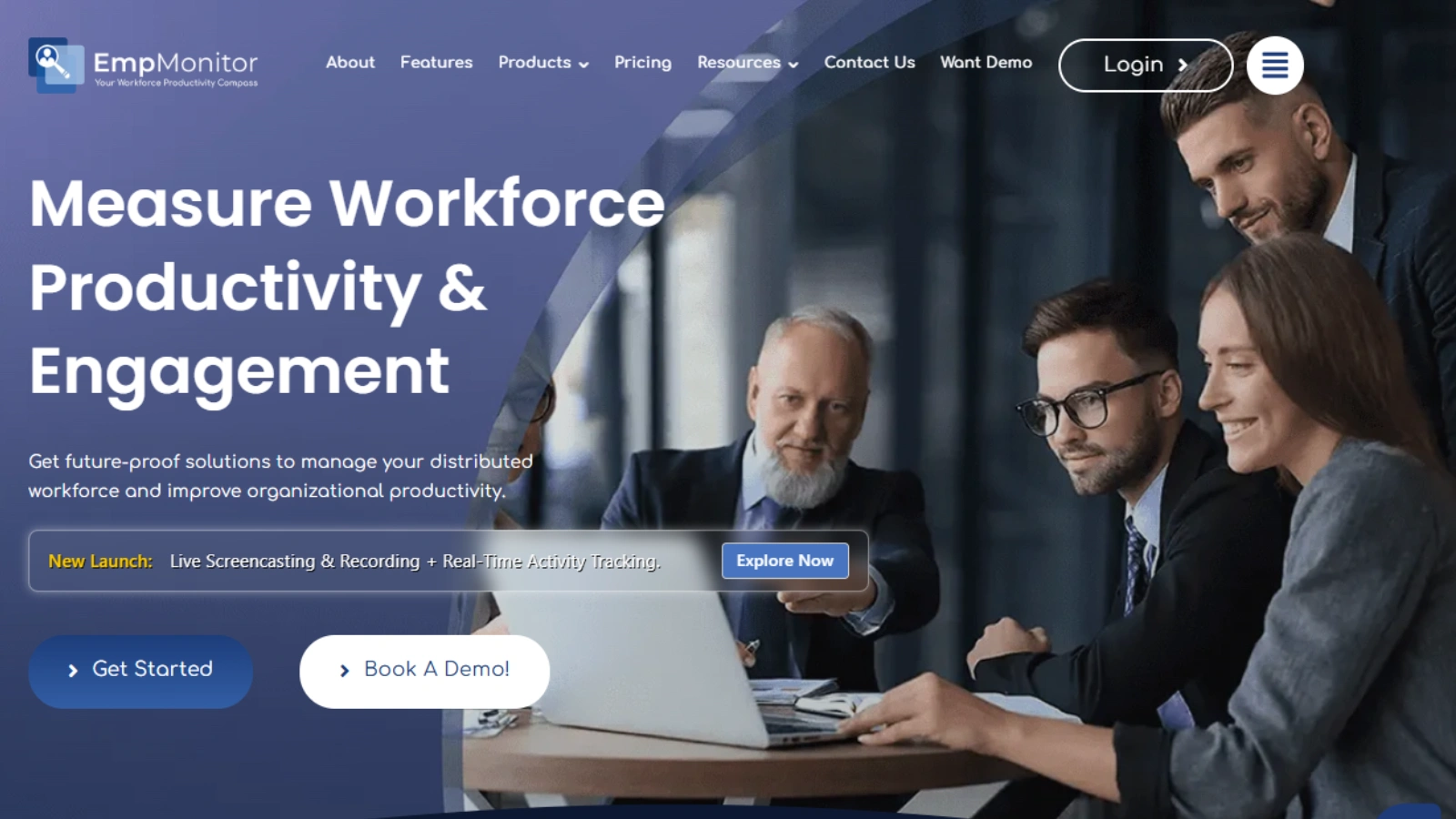
Once certain behavioral patterns start raising questions, the last thing any manager should rely on is guesswork. Acting on assumptions damages trust. Ignoring warning signs creates risk. What you need is clear, defensible data collected transparently and used responsibly.
That’s where EmpMonitor supports smarter decision-making.
Instead of intrusive oversight, it provides structured visibility designed for professional accountability. Here’s how its features work in practical, human terms:
- Real-Time Activity Visibility
See who is active, idle, or logged in all from one centralized dashboard. You’re not spying; you’re identifying unusual patterns early, whether it’s unexpected inactivity or off-hour system access. - Automated Time Tracking
Every working minute is recorded automatically, creating a clean timeline of activity. This helps you notice unexplained time gaps, inconsistent schedules, or logins that don’t match assigned hours without manually checking in. - Screenshots & Screen Recordings
Instead of constant supervision, you get interval-based screenshots and recorded sessions when needed. This creates a documented activity trail that supports fact-based conversations, not suspicion-driven ones. - Live Screen Monitoring
For situations that require immediate clarity, managers can view screens from a single panel. This is particularly helpful for distributed teams where physical visibility simply isn’t possible. - Chat & Social App Monitoring
Track time spent on messaging or social platforms during work hours. If communication patterns suggest distraction or divided focus, you’ll see it reflected in the data. - Insightful Reports & Automated Timesheets
All activity feeds into structured, visual reports. Instead of scattered data points, you get clear analytics that make performance discussions objective and professional.
Just as important as the features themselves is how they’re implemented.
EmpMonitor operates with role-based access controls and limits monitoring strictly to defined work hours. That means visibility stays work-focused, proportionate, and defensible. The goal isn’t to create pressure, it’s to create clarity.
Conclusion
Employee moonlighting isn’t a new problem, but remote and hybrid work has made it significantly easier to go undetected and harder to manage without the right tools and policies in place. Not every employee who moonlights is acting in bad faith. Financial pressure, stagnation, and job insecurity are real drivers that deserve to be addressed directly rather than only discovered and punished after the fact.
That said, the business risks are real. Reduced productivity, confidentiality exposure, and client vulnerability all justify a proactive approach one built on clear policy, competitive conditions, open communication, and targeted monitoring that gives you accurate information without undermining your culture.
Knowing how to find out if an employee is moonlighting isn’t about catching people out. It’s about having enough visibility into how work is happening that you can identify problems early, handle them fairly, and protect the integrity of your team before the consequences become irreversible.
FAQs
- Should the employee moonlighting policies for remote and in-office workers differ?
Similar core policies should apply to both groups, but the actual methods of enforcing them may differ. Employees who work remotely will generally have more means of moonlighting without being detected, so more important to have clear activity expectations, as well as monitoring tools, for remote employees. Employees in an office have the benefit of natural visibility, however, all employees, regardless of where they work, should have a clear understanding of the policy.
- Can an employee be terminated for moonlighting even if their performance hasn’t suffered?
This depends on what’s written in their employment contract and applicable local laws. If an employee has signed a non-compete or non-disclosure agreement covering dual employment, working for a competitor may be grounds for action regardless of current performance. Without a specific contractual clause, termination becomes legally complicated in most regions. Always consult legal counsel before taking formal disciplinary action.
- What’s the difference between employee moonlighting and a conflict of interest?
Moonlighting refers broadly to holding a second job or side gig. A conflict of interest is a specific subset where the outside employment creates competing loyalties that compromise the employee’s objectivity or duties to their primary employer. All conflicts of interest involve dual engagement, but not all moonlighting creates a conflict. The distinction matters when defining policy and determining appropriate responses especially when legal exposure is involved.
- Is it better to prohibit employee moonlighting outright or allow it under conditions?
A blanket prohibition often creates more resentment than it prevents and may not hold up legally in jurisdictions that protect employees’ right to outside work. A more effective approach is allowing work moonlighting that doesn’t involve competitors, doesn’t use company resources, doesn’t compromise performance, and is formally disclosed. Building a structured disclosure process gives employers visibility while giving employees a legitimate path to reducing covert moonlighting while preserving trust.