The workplace is constantly changing. New technologies are emerging and reshaping the way people work. Organizations need employees who can adapt, develop new skills, and respond confidently to changing demands. However, finding time for learning and keeping employees motivated can be challenging.
Creating a learning culture can help. When employees have opportunities to learn, share knowledge, and grow as part of their daily work, both individuals and businesses benefit. In this guide, we’ll explore 7 practical steps to build a learning culture that supports employee development and helps your organization adapt to change.
What Is a Learning Culture?
A learning culture is a workplace environment where employees are encouraged to continuously develop skills, share knowledge, and learn from experience. Instead of treating learning as something that happens only during training sessions, companies make it a natural part of how people work together and improve their performance.
Why a Learning Culture Matters
A strong learning culture helps employees develop new skills, improve their performance, and adapt to changes at work. When learning is connected to everyday tasks, it becomes more useful and easier to apply. For example, sales representatives can improve their communication skills by reviewing customer calls, while finance teams can learn new software by sharing tips and solving problems together.
Learning also encourages employees to share their knowledge and support one another. Through mentoring, coaching, and team discussions, organizations can retain valuable expertise and help employees grow professionally.
How to Create a Learning Culture in 7 Steps
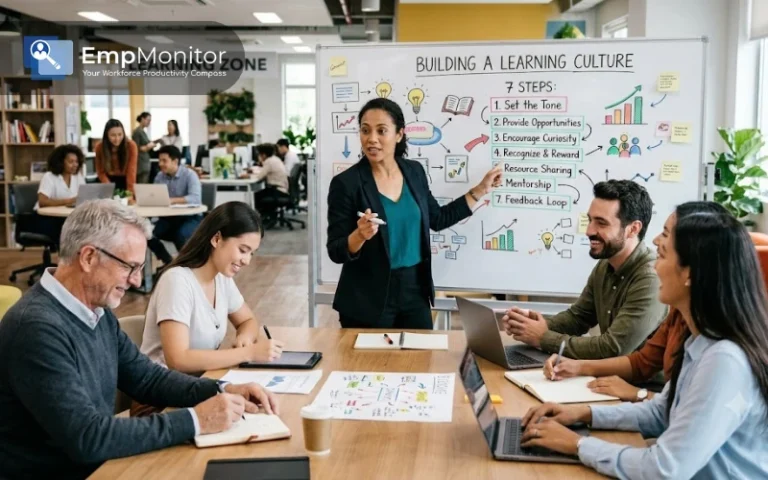
Building a learning culture takes time, but you don’t have to change everything at once. Start with your organization’s biggest learning needs and introduce small improvements that make a difference. Here are 7 practical steps to get started.
- Assess Your Current Learning Culture
Start by understanding how employees currently learn and what challenges they face. Use surveys, interviews, and performance reviews to identify skill gaps and areas for improvement. Ask employees which learning opportunities they find useful and what prevents them from participating.
- Align Learning With Business Goals
Make sure learning activities support your company’s objectives. For example, if your goal is to reduce order errors, provide training on the relevant systems and processes. Track employee performance and other relevant metrics afterward to see whether the training is making a difference, and adjust your approach as needed.
- Gain Leadership Buy-In
Managers and executives play an important role in creating a learning culture. Show them how employee development can help solve business challenges. Encourage leaders to participate in training, share feedback, and give employees enough time to learn.
- Build Psychological Safety
Create an environment where employees feel comfortable asking questions, sharing ideas, and learning from mistakes. Managers should encourage open discussions and constructive feedback without blaming or embarrassing employees when something goes wrong.
- Encourage Continuous Development
Help employees take an active role in their professional growth. Encourage them to set learning goals, practice new skills, and discuss their progress with managers. Make learning part of everyday work through regular feedback, quick demonstrations, and team discussions. Recognize employees who apply new skills, improve their performance, or help colleagues learn.
- Make Learning Accessible
Offer learning opportunities that fit different roles, schedules, and preferences. These might include short videos, online courses, mobile learning, or practical job aids. AI-powered learning management systems can further improve accessibility by providing personalized learning paths, tailored content recommendations, and flexible, self-paced training experiences. The easier it is to access training, the more likely employees are to use it.
- Support Peer Learning
Encourage employees to learn from one another through mentoring, coaching, and knowledge-sharing sessions. For example, experienced team members can demonstrate useful techniques or help colleagues solve common challenges.
Common Barriers in Building a Learning Culture
Building a learning culture isn’t always easy. Organizations often face challenges that make it difficult for employees to participate in learning activities. Here are some common barriers and ways to overcome them:
- Low employee participation. Employees may lose interest when training feels irrelevant to their work. Focus on practical skills, involve employees in choosing learning topics, and explain how training can help them in their daily tasks.
- Limited time and budget. Busy schedules and tight budgets can make employee development challenging. Start with your most important learning needs and offer short training sessions, online courses, or peer mentoring that fit into working hours.
- Resistance to change. Some employees and managers may be hesitant to adopt new learning practices. Explain the benefits, listen to their concerns, and introduce changes gradually. Starting with a small pilot program can help demonstrate the value of learning.
Examples of a Learning Culture in the Workplace
There are many ways to encourage continuous learning at work. Here are a few practical examples of how organizations can help employees develop skills and share knowledge.
| Learning activity | Workplace example |
| Peer mentoring and coaching | An experienced manager meets regularly with a new supervisor to share advice and discuss workplace challenges. |
| Knowledge-sharing sessions | An employee demonstrates a useful tool or shares a successful approach with colleagues during a team meeting. |
| Self-paced online learning | New employees complete eLearning courses and practice tasks at their own pace. |
How Learning Technology Supports a Culture of Continuous Learning
Technology can make workplace learning easier to manage and more convenient for employees. A learning management system (LMS) and other employee training tools help companies organize learning resources, provide flexible training options, and track employee development.
Centralizing Learning Resources and Training Materials
An LMS keeps courses, videos, assessments, and other training materials in one place. Employees can quickly find the resources they need, while HR and L&D teams can easily update content, manage training programs, and make sure everyone has access to the right information.
Providing Flexible, Self-Paced Learning Opportunities
Employee training software allows employees to learn when it’s convenient and at their own pace. Short lessons, mobile-friendly courses, and personalized learning paths make it easier to fit professional development into busy schedules without disrupting daily work.
Tracking Employee Progress and Learning Outcomes
Learning platforms make it easier to see how employees are progressing. HR and L&D teams can use LMS reports to track course completion, assessment results, and learning progress. These insights help teams identify where employees may need additional support and improve future training programs.
Conclusion: Make Continuous Learning Part of Your Company Culture
Building a learning culture doesn’t happen overnight. It takes support from leadership, opportunities for employees to develop their skills, and a workplace where sharing knowledge and learning from experience are encouraged.
The good news is that you don’t need to make big changes all at once. Start with simple steps, such as introducing peer mentoring, setting aside time for learning, or offering flexible online training. Encourage managers to get involved and regularly check what’s working and what could be improved.
Over time, these small efforts can help make learning a natural part of everyday work, giving employees the skills and confidence to grow alongside your business.