
Running a business is challenging enough without wrestling with outdated attendance tracking systems. If you’re still relying on spreadsheets, punch cards, or manual timesheets to manage when your employees show up and leave, you’re not alone, but you’re also losing money every single day. That’s where attendance management software comes into play.
Pick The Right Attendance Management Software and transform how your business operates. This software has completely changed how companies handle workforce scheduling, track time, and process payroll, making operations smoother and significantly more profitable. The shift from old-school methods to modern attendance management software isn’t just about convenience; it’s about survival in a competitive business landscape where efficiency directly impacts your bottom line.
If you’re not using attendance management software yet, your competitors likely are. And if they are, they’re already ahead of you in terms of operational efficiency and cost management. This guide will walk you through exactly how attendance management software can save your business both time and money, and why it’s become essential for organizations of every size.
In A Hurry? Listen To The Podcast Now!
The Hidden Costs Nobody’s Talking About:

Here’s something that keeps HR managers up at night: manual attendance tracking is costing you far more than you realize. Let’s talk real numbers. When your HR team manually manages attendance, they’re spending 5 to 10 hours every single week just handling attendance records, calculating hours, and fixing mistakes.
That’s 260 to 520 hours annually. Do the math on that with your average HR salary, and you’re looking at $10,000 to $30,000+ spent every year just managing attendance instead of doing strategic work. But the real damage goes beyond labour costs. Manual systems are error factories. A miscalculated hour here, a forgotten clock-out there, and suddenly your payroll is completely off.
These aren’t small mistakes; they cascade into serious problems like overpaying employees, dealing with frustrated workers demanding corrections, and creating compliance headaches that can attract audits or legal issues. Think about it: buddy punching alone costs American businesses around $11 billion annually. That’s when employees clock in for each other.
Your manual system probably can’t even detect it. Then there’s the invisible cost of absenteeism; unplanned absences drain U.S. companies over $250 billion every year. When you can’t track attendance effectively, you can’t identify patterns or address problems before they become expensive habits. This is precisely why forward-thinking companies are turning to attendance management software. It’s not a luxury anymore; it’s a necessity for companies that want to stay competitive and profitable.
Understanding What Time Attendance Management Software Actually Does?
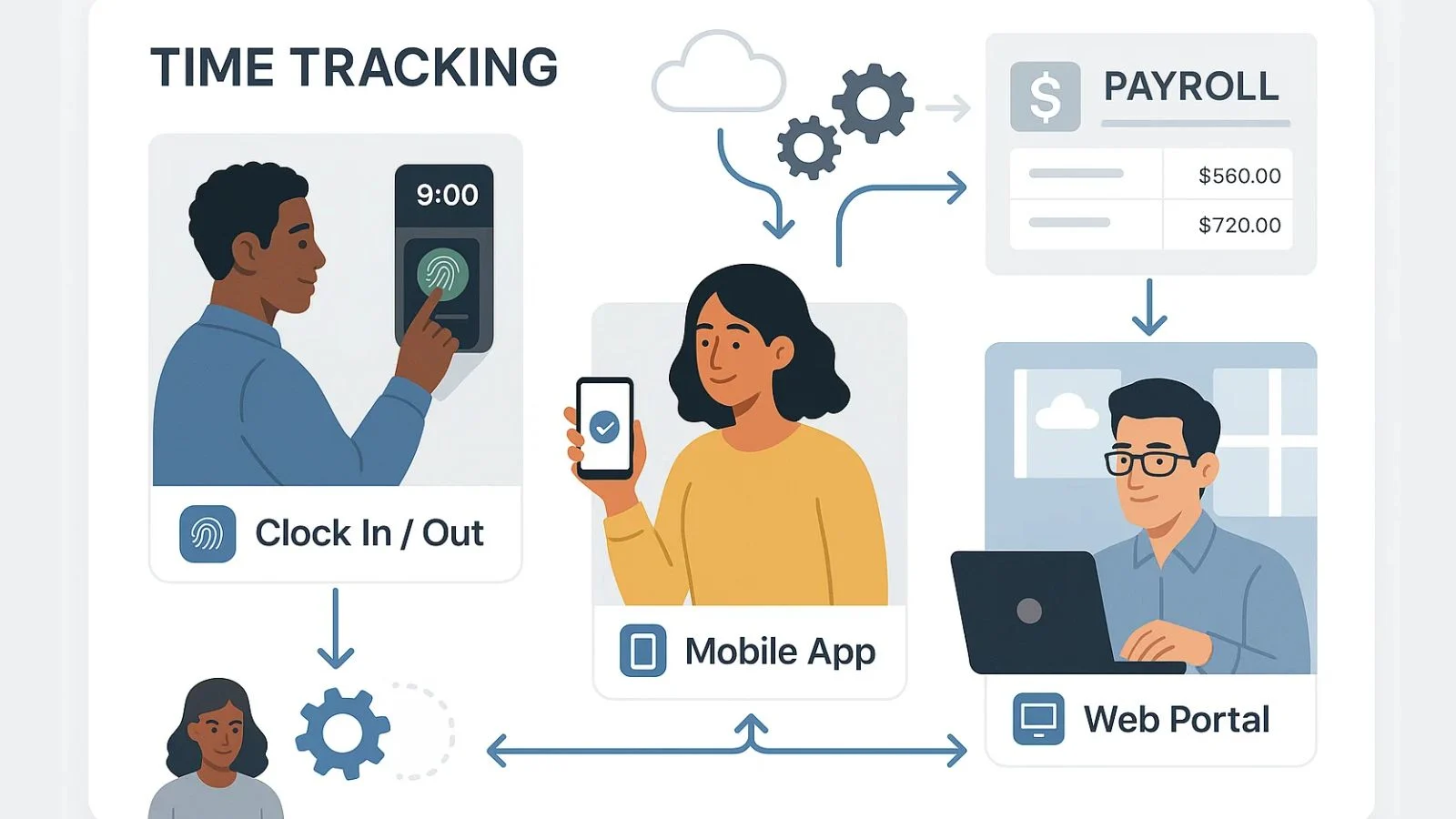
Let’s break down how time attendance management software actually works, because it’s simpler than you might think. Modern systems capture employee clock-ins and clock-outs automatically through multiple channels, mobile apps, web interfaces, or biometric devices like fingerprint scanners. The moment someone clocks in, it’s recorded with a timestamp in a secure, centralized system.
The beauty of this approach is the automation that follows. The system doesn’t just record time; it calculates hours worked, identifies overtime, applies leave adjustments, and prepares everything for payroll, all without human intervention. Your managers get real-time visibility into who’s present, who’s running late, and who’s missing. This isn’t micromanagement; it’s informed decision-making.
When time attendance management software integrates with your payroll system, something magical happens. Data flows automatically from time tracking to payroll processing. No manual exports, no re-entering data, no opportunities for errors. You get accurate, compliant payroll every single time. For remote and hybrid teams, time attendance management software becomes even more valuable because it captures work hours regardless of location, ensuring accountability across distributed workforces.
Real Time Savings That Add Up Fast:

Companies implementing time attendance management software typically see their HR administrative workload drop by 70 to 80 percent. That’s not a small improvement; that’s transformational. Consider the specific tasks that disappear. Generating attendance reports that used to take hours?
Now it’s instant. Custom reports showing trends, patterns, and problem areas? A few clicks. Manually entering employee hours into spreadsheets? Gone. Hunting down missing time entries and trying to reconstruct what happened? Eliminated. All those emails back and forth trying to clarify late arrivals or determine overtime? Handled automatically through the system.
When you’re onboarding new employees, attendance management software automatically sets up their profiles, permissions, and schedules. When someone leaves, it instantly deactivates their access. Departments that previously spent days managing these transitions now handle them in minutes. The practical impact is huge. An HR manager who was spending two full days per week on attendance tasks suddenly has those days back for strategic work, employee development, culture initiatives, or analysing workforce trends. That’s not just a time saver; it’s a productivity multiplier across your entire organization.
Where Does the Real Money Start Saving?
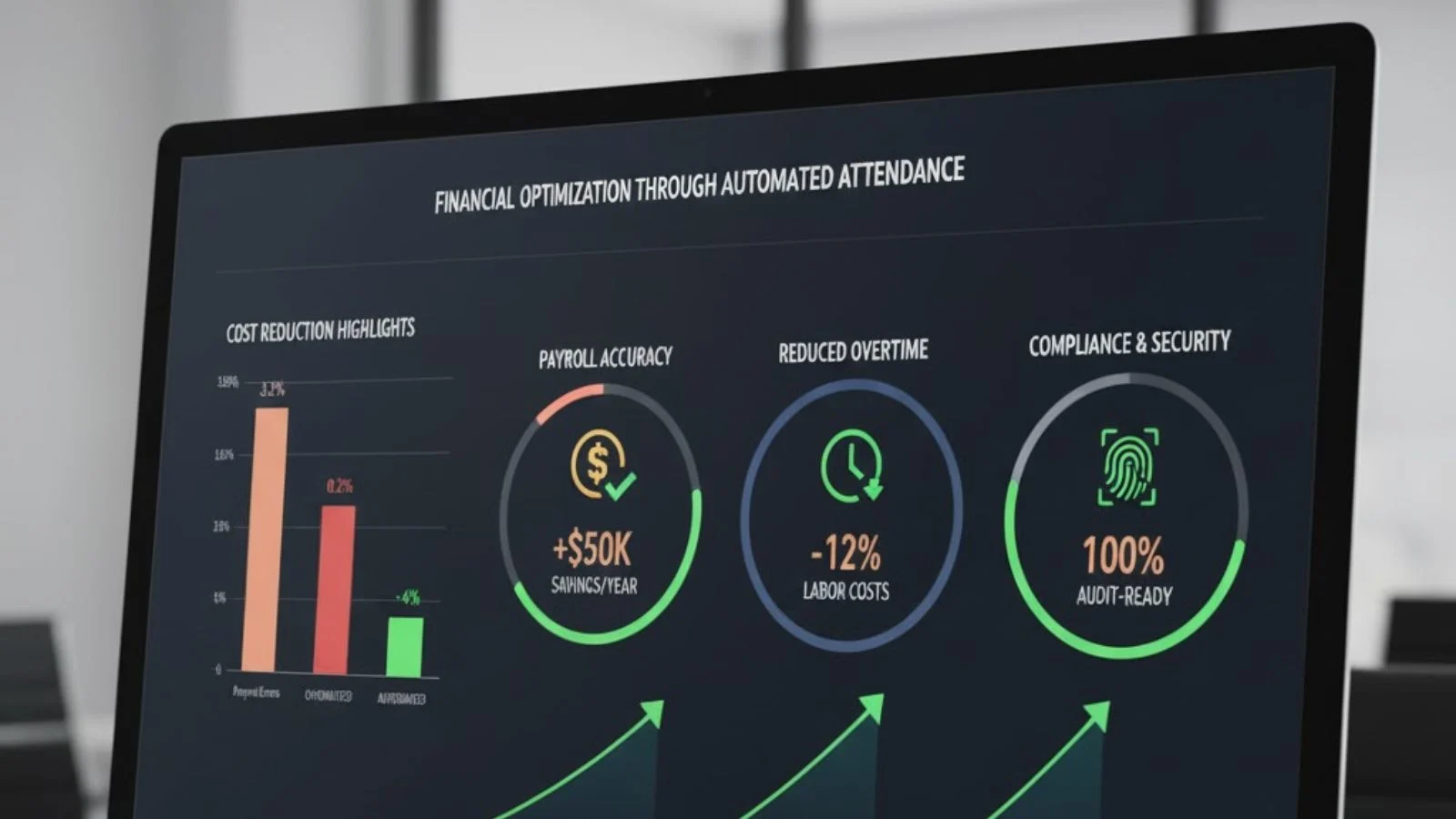
Beyond time, here’s where attendance management software delivers the biggest financial impact. First, it stops the bleeding from payroll errors. Studies show companies lose an average of $11,000 per employee annually through payroll mistakes. Attendance management software brings that error rate from 3 to 5 percent down to essentially zero. If you have 100 employees, that’s potentially $1.1 million in prevented overpayments, underpayments, and dispute resolutions.
Then there’s overtime control. When attendance management software tracks hours accurately and gives managers real-time visibility, they can see overtime building up and adjust schedules before costs spiral. Companies typically see 10 to 25 percent reductions in overtime expenses within the first year of implementation. For a company with average employee counts and normal overtime patterns, that’s easily thousands of dollars monthly. Buddy punching prevention is another major savings area. When attendance management software uses biometric verification or tied-to-device login, employees can’t clock in for each other.
You immediately recover that lost productivity and pay accuracy. Absenteeism reduction is equally important when employees know attendance is tracked accurately and patterns are visible to management; attendance improves by 15 to 20 percent. That means fewer replacement workers, better team consistency, and higher overall productivity. Compliance alone saves considerable money.
Labour law violations around wage and hour tracking are expensive. Fines for improper overtime compensation, misclassification, or inadequate record-keeping can reach thousands per violation. Attendance management software maintains audit-ready records that prove wage calculation accuracy, protecting your company from legal exposure.
What Are the Benefits of Attendance Management Software for Your Business?

Understanding what are the benefits of attendance management software goes beyond just time and money. It’s about creating a more professional, transparent workplace. Employees appreciate clarity about their schedules and pay. They like having a system that accurately reflects their work. The benefits include improved employee satisfaction because disputes disappear when records are accurate and transparent.
Another benefit is manager empowerment. When managers have real-time attendance data, they can make better scheduling decisions. They can identify which team members are consistently reliable and which need support. This leads to better team management because you’re making decisions based on actual data, not assumptions.
Scalability is huge, too. When you have manual systems, adding more employees means adding a proportional administrative burden. The system scales infinitely without additional labour costs. This means you can grow your business without proportionally growing your HR overhead.
How Attendance Management Software Transforms Remote and Hybrid Work?
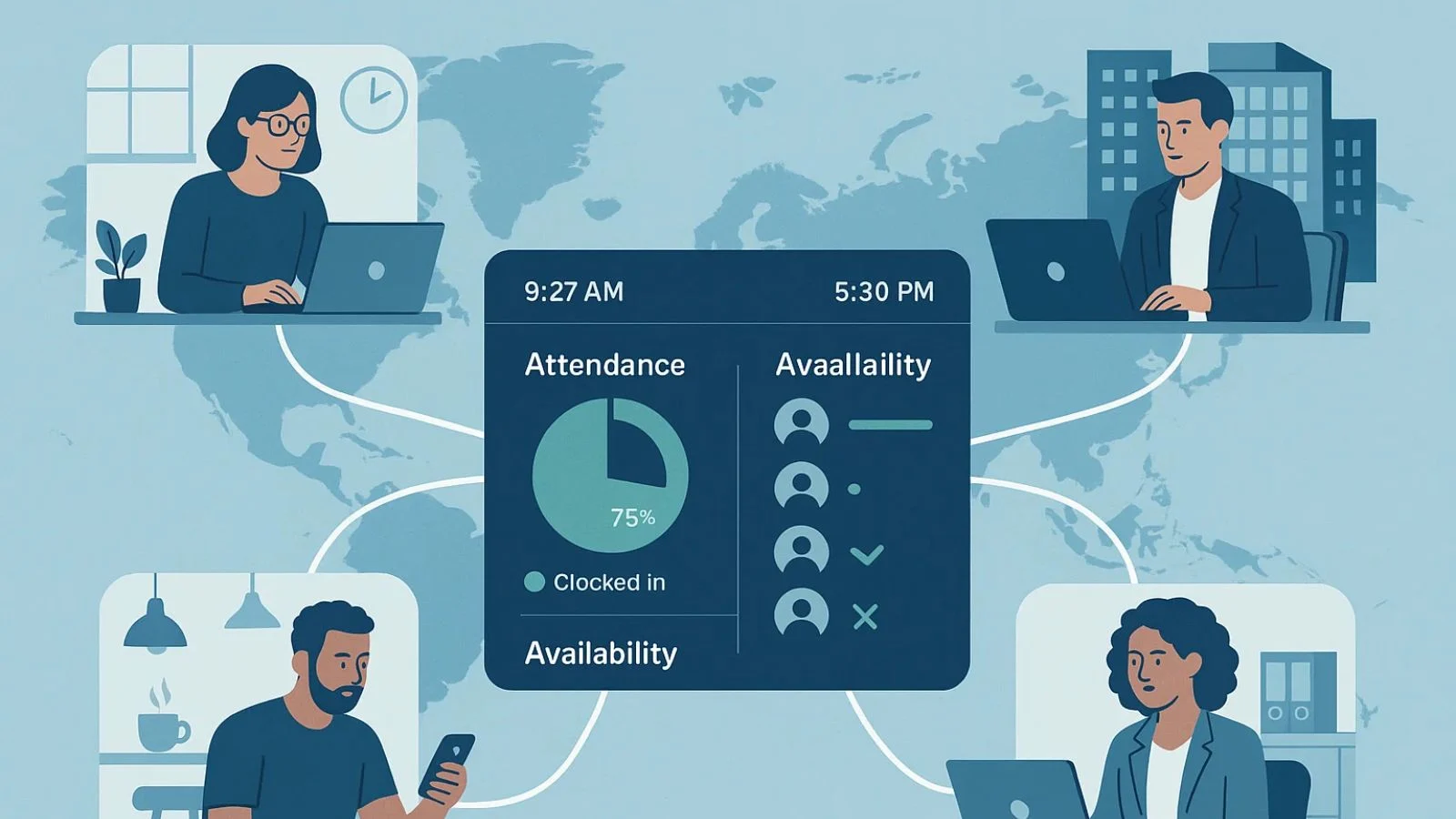
The modern workplace doesn’t exist in one physical location anymore. Remote and hybrid work arrangements have become standard, and traditional attendance tracking completely fails in these environments. This is where attendance management software becomes absolutely critical. With attendance management software, remote employees clock in via a mobile app from anywhere.
They could be working from home, a coffee shop, or traveling. The system records their time accurately regardless of location. Managers can see real-time availability across distributed teams without needing to check email chains or send tracking requests. Attendance management software ensures accountability and that coordination works smoothly, regardless of physical location.
For hybrid teams, especially, attendance management software is invaluable. It shows who’s in the office, who’s remote, and when people are available. This visibility helps with meeting scheduling, collaboration, and team coordination. Without it, managing hybrid teams becomes chaotic and error-prone.
Also Read:
How To Pick The Right Attendance Management Software For Your Organization?
Time And Attendance Management Systems: What Are The Benefits
EmpMonitor: Attendance Management Software That Goes Beyond Basic Tracking:
When evaluating attendance management options, EmpMonitor stands out as a comprehensive solution that extends far beyond simple time tracking.
1. Core Features That Set EmpMonitor Apart:
EmpMonitor’s attendance management software combines real-time time tracking with productivity insights, providing complete visibility into workforce operations. The platform integrates multiple functions seamlessly: real-time tracking captures every clock-in and clock-out, automated leave management handles absence requests and approvals instantly, and the mobile app ensures employees can clock in from anywhere. Managers receive intuitive dashboards displaying exactly who’s present, absent, or running late in real-time.
2. Actionable Insights That Drive Results:
Unlike basic systems, EmpMonitor delivers actionable intelligence that prevents costly issues. Automated alerts immediately flag attendance problems such as missed clock-outs, unusual patterns, or late arrivals that break normal behaviour patterns. The system identifies problems before they become expensive habits, while leave balances update automatically to prevent confusion about accrued time.
3. Seamless Payroll Integration:
EmpMonitor connects directly to major payroll platforms, eliminating manual data export processes. Information flows automatically, accurately, and compliantly between systems. For companies managing distributed teams, the platform provides the accountability and insights necessary to maintain smooth operations across any work arrangement.
4. Strategic Business Advantage:
EmpMonitor recognizes that attendance management software transcends mere compliance, it’s fundamentally about business performance. The platform transforms attendance management from an administrative burden into a strategic advantage that directly impacts profitability and operational efficiency.
Real Numbers: What Actually Happens When Companies Implement This:
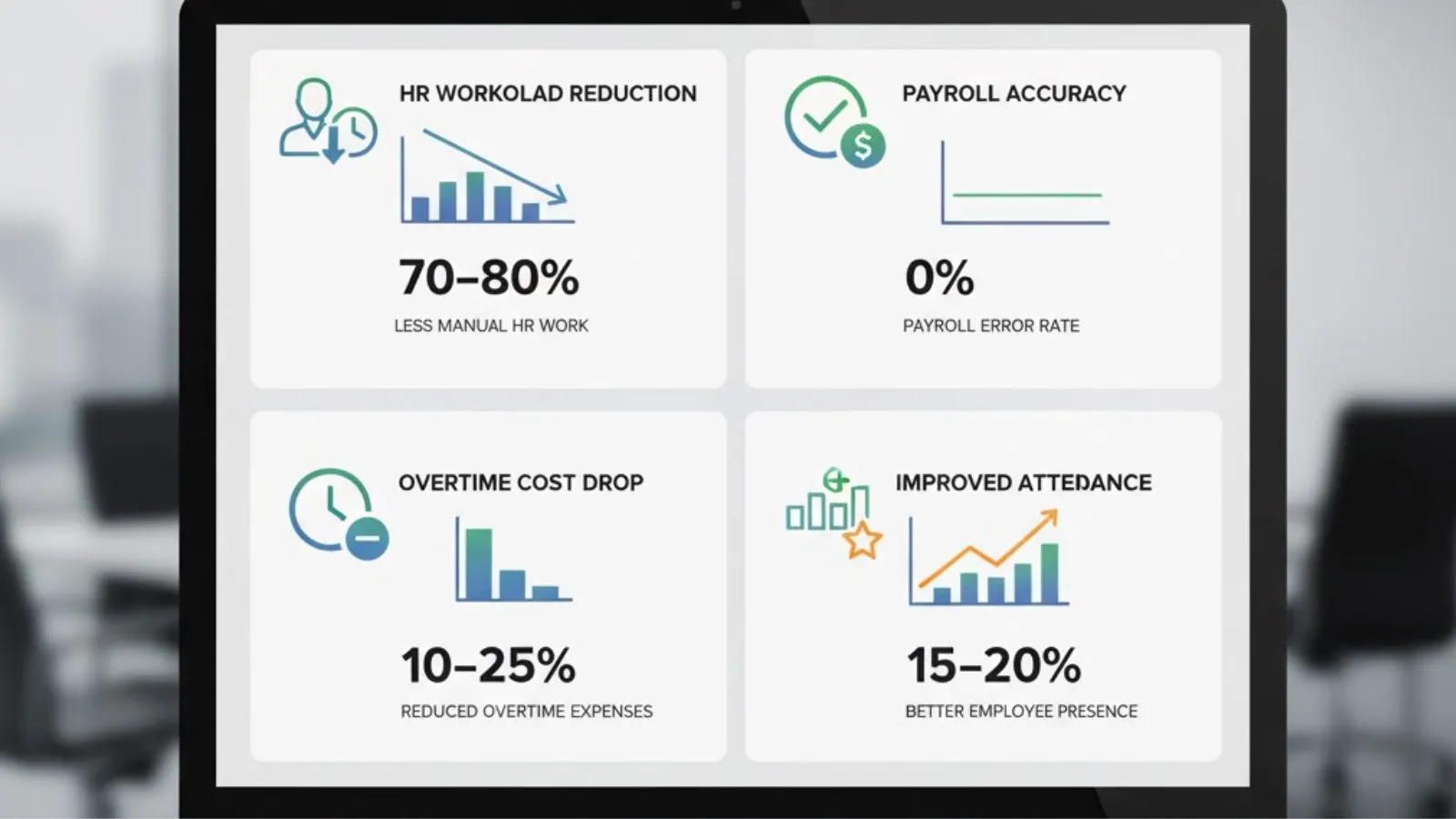
Companies implementing quality attendance management software typically report a 70 to 80 percent reduction in time spent on attendance administration. For a company with 200 employees, that’s roughly 30 to 40 hours weekly saved in HR work. Payroll accuracy improves dramatically. Error rates drop from 3 to 5 percent to near zero. Overtime expenses typically decline 10 to 25 percent through better visibility and proactive management.
Absenteeism improves by 15 to 20 percent when tracking becomes transparent and consistent. Most importantly, companies report full ROI within 3 to 6 months through these combined savings. These aren’t theoretical numbers; they’re what actual businesses experience when they stop managing attendance manually and let attendance management software handle it systematically.
Making the Transition Successfully:
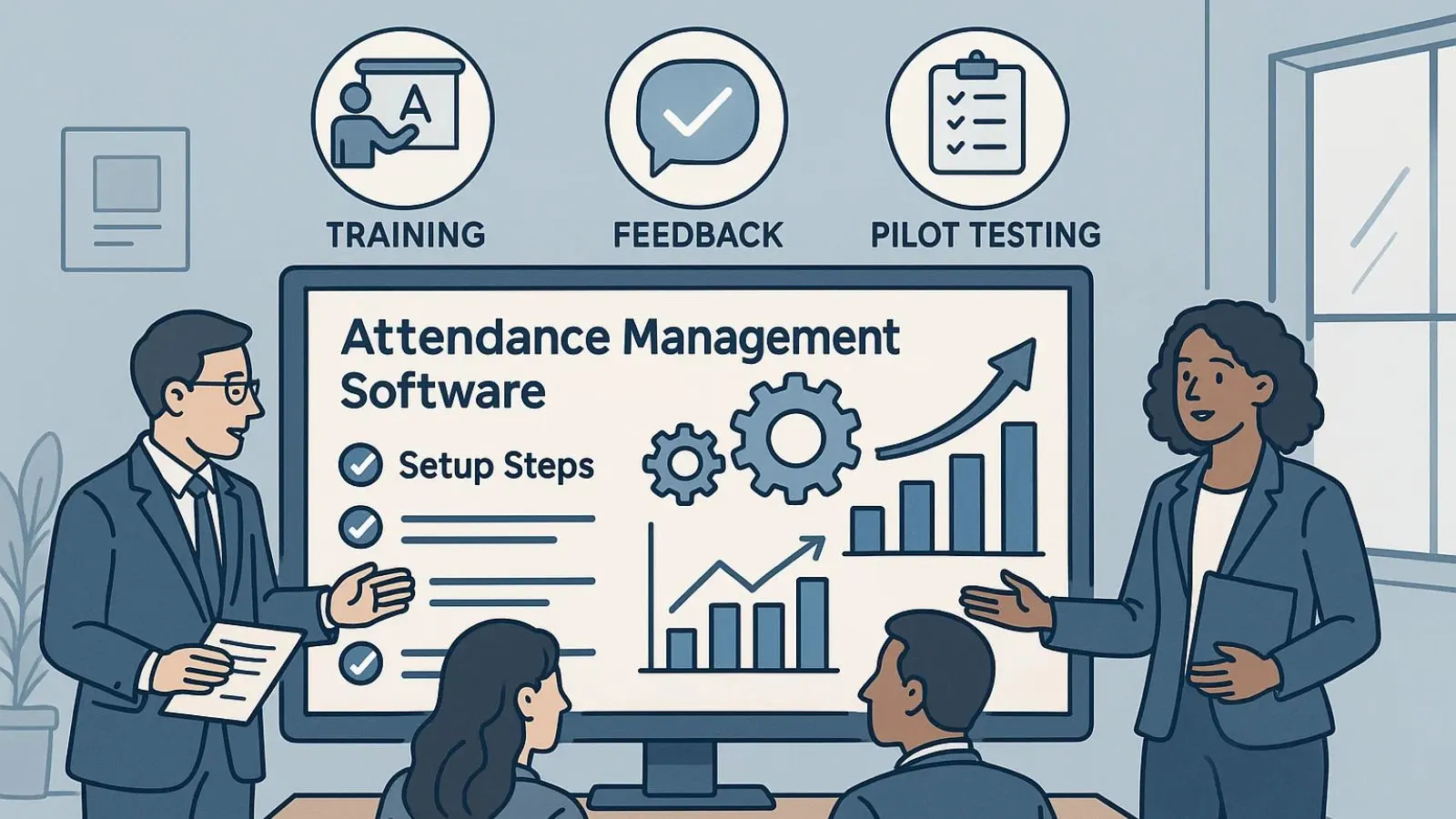
Implementing attendance management software successfully requires thoughtful planning. First, assess your specific needs. How many employees? What work arrangements? What’s your current payroll system? What compliance requirements matter most? Answer these questions before choosing a solution. Evaluate options carefully. Different attendance management software serves different needs. Some are simple time clocks; others are comprehensive workforce management platforms.
Choose based on your requirements and growth plans. Plan for adoption properly. Employees need clear training on using the system. Some resistance is normal, but transparent communication about benefits helps. Start with a pilot program if possible. Run attendance management software with one department first. Work out bugs, gather feedback, and refine your approach before company-wide rollout. Once live, use the analytics to continuously optimize. Attendance management software provides data that helps you improve processes over time.
Conclusion:
Attendance management software isn’t optional anymore if you want to run an efficient, profitable business. By automating time tracking, eliminating calculation errors, and providing real-time workforce visibility, attendance management software saves measurable time and money while dramatically improving accuracy and compliance.
Whether managing a traditional office, a fully remote team, or a hybrid arrangement, modern attendance management software adapts perfectly to your needs and delivers immediate, visible results. The real question isn’t whether you can afford attendance management software, it’s whether you can afford not to implement it.
Most organizations recover their complete investment within 3 to 6 months through reduced administrative labour, prevented payroll errors, and improved productivity. If you’re still managing attendance manually, you’re leaving substantial money on the table. It’s time to make the switch.
FAQ’s:
Q1: How difficult is it to set up attendance management software?
Ans: Setup is straightforward for modern cloud-based systems. Most implementations take 3 to 5 days from start to finish. You import employee data, configure work schedules, integrate with payroll, and train your team. Most providers walk you through the entire process.
Q2: Will attendance management software work with our current payroll system?
Ans: Almost certainly yes. Quality attendance management software integrates seamlessly with ADP, Gusto, Paychex, and most major payroll platforms. If you’re concerned about compatibility, verify integration options before purchasing.
Q3: What kind of ROI can we actually expect?
Ans: Most companies see positive ROI within 3 to 6 months. The exact timeline depends on company size, current process inefficiency, and how effectively you implement the system. Larger organizations and those transitioning from very manual processes typically see faster returns.