**Start your free 15‑day trial →
Short answer: anchor work to outcomes, shift to async by default, and pair people with AI on high‑friction tasks. Those moves reflect the productivity trends changing adapt in 2026, and they work without burnout.
You don’t need more meetings or more tools. You need fewer handoffs, clear metrics, and tight loops between people and AI. In 2026, teams that document decisions, automate repeatable tasks, and measure outputs (not hours) are shipping more with less noise. This guide shows how to make those shifts practical, with concrete examples you can pilot this quarter.
However, tools alone won’t fix messy workflows. First, define what “good” looks like. Then, decide where AI copilots help, where async notes replace status calls, and where a small set of metrics guides trade‑offs. Finally, set a monthly review so you adjust fast as work changes.
What's Actually Driving Productivity Changes in 2026?
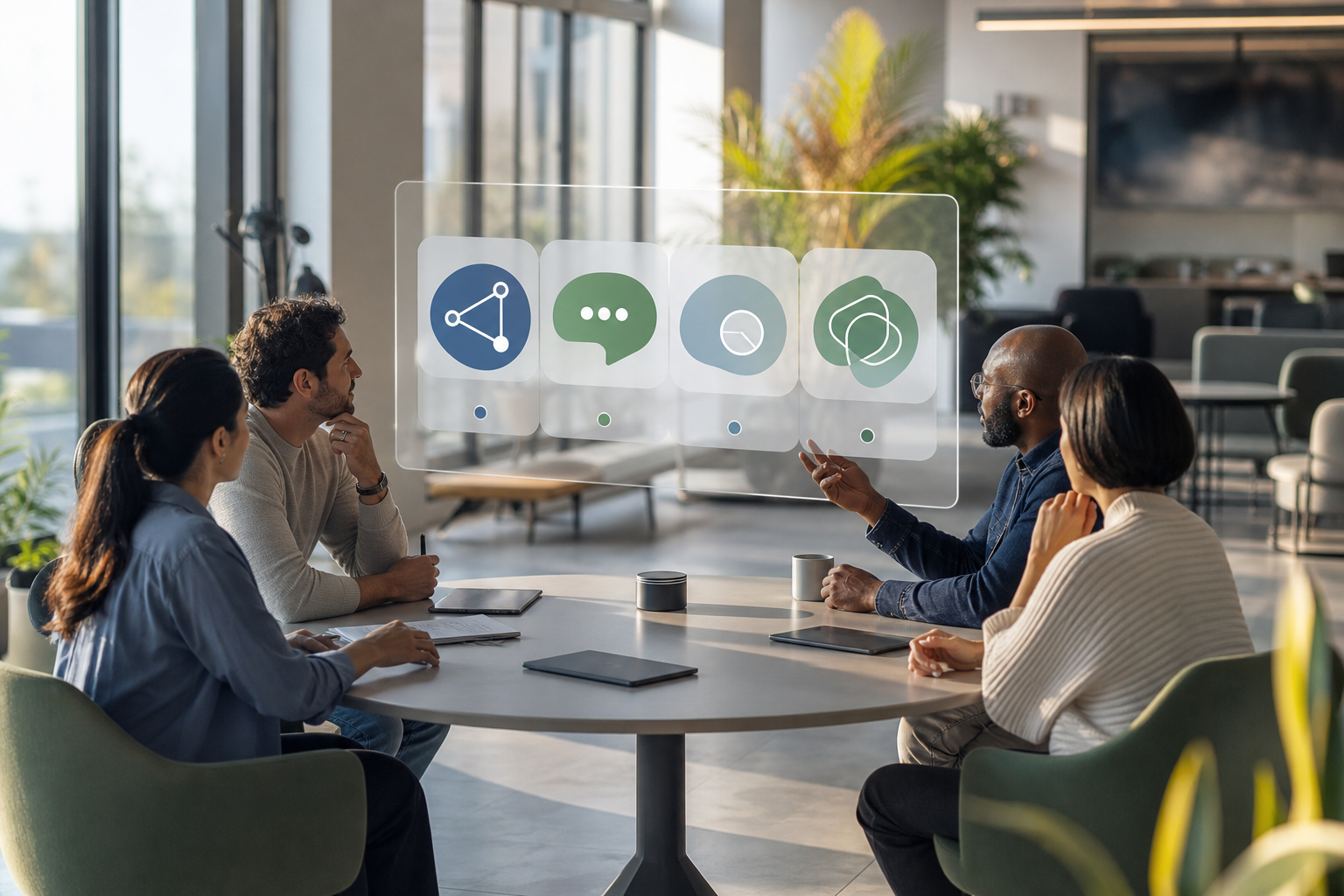
AI copilots moved from novelty to daily utility. In 2026, knowledge workers draft emails, summarize threads, write tests, and outline briefs with AI in the loop. The gains show up in cycles saved, not headcount cuts.
For example, product managers use AI to synthesize user feedback into themes in minutes, then spend human time on priority calls and scope. As a result, teams cut rework and move decisions forward faster. These shifts explain why productivity trends changing adapt is a real imperative, not a fad.
Async norms and measurable outcomes
At the same time, async‑first norms are settling in. Teams document decisions in shared notes, record short Loom‑style walkthroughs, and reserve meetings for debate or design. Moreover, documented context reduces onboarding time and makes handoffs less fragile. You don’t need to wait for a calendar slot to keep work moving. You need a clear owner, a short written update, and a deadline.
Finally, measurement has changed what managers watch. Instead of “online” time, teams track outcomes: tickets closed, cycle time, quality signals, and customer impact. Therefore, leaders talk about throughput and error rates, not green dots. This pairs with “structured flexibility”: stable core hours for overlap plus freedom outside them. In short, the post‑hybrid workforce runs on clarity and trust.
Structured Flexibility, Defined
- Core collaboration window (e.g., 11 a.m.–3 p.m.) for live work.
- Async updates for the rest (written/recorded, with clear owners).
- Outcome metrics visible to the team, not just managers.
“More autonomy worked once we agreed on three metrics that matter and wrote them down.” — A real‑world lesson shared across distributed teams
7 Productivity Trends Reshaping Work in 2026
The list below reflects what teams are actually adopting now, not distant forecasts. Use it as an audit checklist and pick one trend to pilot each quarter so your changes stick. By testing in small slices, you keep the spirit of productivity trends changing adapt without whiplash.
-
AI task delegation
AI takes the first pass on repeat tasks: drafting briefs, summarizing calls, generating test stubs, or reconciling data. Specifically, you assign inputs, define “done,” and review. The biggest gains come from clear prompts and tight review loops, not from magic. Set guardrails: what AI can do alone, what needs human sign‑off, and what stays manual due to risk. -
Async‑first communication
Replace status meetings with short written updates and screen recordings. For background reading, see the concept of asynchronous communication. In practice, use a template: context, decision, owner, due date. Then keep meetings for debate, design, or issues that need real‑time back‑and‑forth. As a result, calendars clear and focus time grows.
Trends 3–4
-
Outcome‑based performance tracking
Shift reviews from hours logged to outputs shipped. For product teams, track cycle time, escaped defects, and customer‑facing impact. For GTM teams, track lead conversion, deals to close, and ramp time. Moreover, make “Productivity Measurement” explicit and shared. When people see the same scoreboard, they course‑correct faster and with less friction. -
Energy management over time management
Plan high‑cognitive work when energy is high. Then group light work (approvals, admin) for lower‑energy windows. Furthermore, budget recovery like any other resource. Burnout is not a badge; it’s a drag on quality. The World Health Organization classified burnout in the International Classification of Diseases (ICD‑11) in 2019, see this WHO update for context: Burn‑out an “occupational phenomenon”.
Trends 5–7
-
Consolidated tech stacks
Reduce tool sprawl. One note system, one tracker, one chat, one dashboard. Therefore, you cut context switches and reduce lost info. Consolidation also makes onboarding faster and analytics cleaner because data lives in fewer places. -
Data‑driven workforce analytics
Use “Advanced analytics” and “Real‑time insights” to spot bottlenecks and waste. For example, if handoffs stall at code review, fix the queue size or reviewer load. If context switches spike, limit WIP or simplify workflows. However, treat data as a conversation starter, not a hammer. Pair it with team input before you act. -
Employee autonomy with transparent accountability
Give people clear goals, decision rights, and visibility into results. Then ask for a simple weekly plan and a short Friday recap. In addition, use “Automated time tracking” only to fill in gaps for billing or compliance, not as the sole signal of value. Trust plus clear metrics beats micromanagement every time.
Also Read!
What Is Coffee Badging and How to Address It in Your Workplace
Common Mistakes People Make When Chasing Productivity Trends
Trend chasing can backfire. The most common error is tool hoarding: adding yet another app without removing anything. As a result, you add friction and create two sources of truth. Before you add a tool, decide what you will retire. And write it down with dates.
Another frequent mistake is confusing surveillance with accountability. Accountability is about shared goals and visible outcomes. Surveillance is about trying to infer value from activity traces alone. Moreover, heavy monitoring without clear purpose harms trust and nudges people to “look busy” instead of doing the work that matters.
Pitfalls to avoid
- Adopting every new tool without a stack audit and deprecation plan.
- Treating dashboards as verdicts, not as prompts for discussion.
- Ignoring burnout signals while chasing short‑term metrics.
- Copying enterprise playbooks in small teams, where overhead crushes speed.
- Treating trends as mandates; pilot first, then scale what works.
“We cut meetings by half, then quietly added five new tools. Net result? Slower work.” — A sobering lesson from a mid‑size engineering org
Tools and Resources to Stay on Top of 2026 Productivity Shifts
Start with categories, not logos. For drafting and task help, AI writing/task tools like Notion AI and ChatGPT speed first passes. For async communication, screen recording and chat tools such as Loom and Slack reduce status calls.
For project management, use a clear tracker. Linear or Asana keep scope, owners, and dates in one place. For focus and deep work, lightweight apps like Centered and Forest make focus blocks and breaks easy to plan.
For workforce analytics and activity insights, pick a tool that treats people as adults and data as feedback. Tools like EmpMonitor are one option among many for teams that need activity insights and “Productivity Measurement,” with a “Real‑time dashboard,” “Automated time tracking,” and “Advanced analytics.” It’s GDPR compliant and used in 100+ countries, with a free 15‑day trial so you can test fit before you roll out. If you try it, share the goals up front (e.g., find bottlenecks, validate focus time), and agree on privacy settings with your team.
“Simplified the management of the entire workforce by 80% in terms of workforce, time, and effort.” — Ashwin Kumar, Chief Project Coordinator
- AI writing/task tools: Notion AI, ChatGPT
- Async communication: Loom, Slack
- Workforce analytics: EmpMonitor (activity insights, reports)
- Project management: Linear, Asana
- Focus/deep‑work: Centered, Forest
What to Do Next: Putting These Trends Into Practice
You don’t need a full overhaul to see results. Pick one area, set a baseline, and run a clear pilot. Then review outcomes and choose the next change. By pacing your rollouts, you keep risk low and buy‑in high. This is how productivity trends changing adapt without chaos.
-
Audit your workflow against the seven trends
Map a recent project end‑to‑end. Where did time go? Where did handoffs stall? Which updates could have been async? Which tasks could AI draft? -
Pick one trend to pilot this quarter
For example, replace two weekly status meetings with written updates and a 5‑minute screen recording. Or, add AI first drafts for QA test cases. -
Set baseline metrics before you change tools
Capture cycle time, handoff delays, and rework rate. Moreover, define success targets. You can’t claim gains if you never wrote down where you started. -
Schedule a monthly review
Hold a 45‑minute session to review results, share lessons, and decide the next pilot. Therefore, momentum builds without rushing.

**Get instant visibility in days →
Key Takeaways on 2026 Productivity Trends
The core ideas are simple, but they need steady practice. Use this summary to align your team and choose your next experiment. By keeping scope small and feedback fast, you’ll see clear gains without thrash. That’s how productivity trends changing adapt into durable habits.
- AI is your first‑draft partner; human review is non‑negotiable.
- Async beats recurring status calls; save live time for debate and design.
- Measure outputs, not online time; share the same scoreboard with the team.
- Cut your stack to what you’ll actually use; name what you’ll retire.
- Pair analytics with context; treat data as a prompt for better talks.
- Give autonomy with clear goals; write weekly plans and short Friday recaps.
- Protect energy; plan deep work for your best hours and budget recovery.
What to Do This Week
Block 90 minutes for a mini‑sprint. First, pick one project. Second, draft a one‑page “ways of working” note: owners, goals, async update template, and what AI will draft. Third, record a 3‑minute walkthrough to align the team.
Fourth, set three baseline metrics (e.g., cycle time, handoff delay, rework). Fifth, run the pilot for two weeks and schedule a 30‑minute review. By next Friday, you’ll have evidence, not opinions, about what to keep, change, or drop. That’s how you adapt in 2026 with less noise and more progress.