**Start your free trial today →
15,000+ companies across 100+ countries still struggle to make hybrid office days feel worth the commute. This guide shows how coffee badging address your workplace concerns with a practical, people-first plan for 2026.
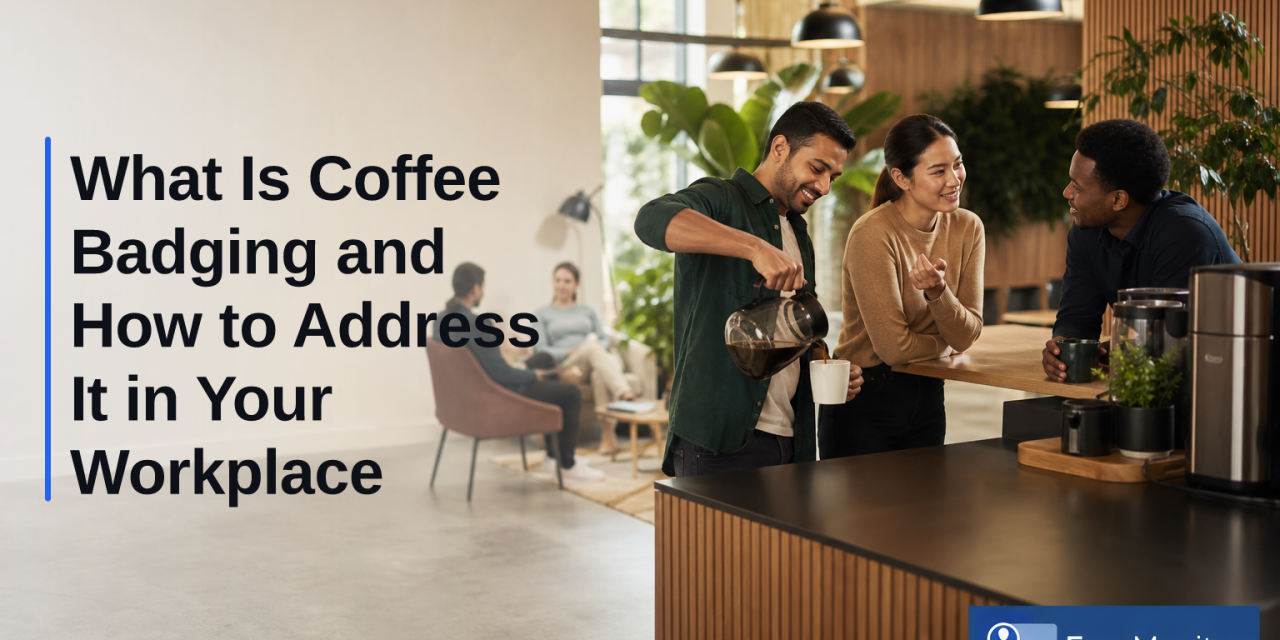
Here’s the short answer: “Coffee badging” happens when employees scan into the office, grab a quick coffee, say hello, and then leave to work elsewhere. It’s a symptom, not the root problem. You reduce it by fixing the value of in-office time, setting clear norms, and measuring output instead of attendance. Then you iterate with feedback.
In 2026, more leaders are rethinking return-to-office rules because the old badge-swipe model rewards presence, not results. However, your team wants choice, quiet focus time, and clarity on why the office helps them do real work. If you meet those needs, you’ll see fewer “drive-by” badge taps and more engaged, on-purpose office days.

What Is Coffee Badging and Why Is It Happening?
“Coffee badging” means an employee checks into the office, makes a brief appearance, grabs a coffee, then heads out to work remotely. The goal is to signal compliance with a badge rule without spending the whole day on site. Owl Labs’ 2023 State of Hybrid Work Report spotlighted the term and described its spread among hybrid workers. The behavior grew as strict return‑to‑office (RTO) rules met a workforce that still values flexibility and deep work.
For many teams, the office is great for trust-building and live problem solving. But for heads-down tasks, home wins. When RTO policies push people in for no clear reason, they optimize around the rule. They “badge and bounce.” That’s not defiance as much as it is friction between policy and real work.
Moreover, the rise of hybrid schedules, team dispersion, and long commutes makes ad hoc office trips costly. If a day on site is packed with video calls from a cubicle, people question the point. So they show face, keep relationships warm, and go where they can focus. That is rational behavior.
- Core drivers:
- Vague RTO goals that don’t tie to team outcomes
- Commute time that kills energy for focused work
- Offices designed for quiet work, not planned collaboration
- Role differences ignored by blanket rules
- Performance judged by presence, not results
As a leader, you can change this pattern. You can reset why and when the office matters, then back it with smart measurement and fair norms. For context on hybrid work and how it differs from remote-only setups, see this overview of Hybrid work.
“Coffee badging” is a symptom of low office value density. Raise the value of each on-site hour, and the symptom fades.
Therefore, your challenge is not catching coffee badgers; it is designing on-site time that earns the trip. Do that, and you’ll see coffee badging address your workplace pain points much faster than enforcement alone.
Also Read!
How to Monitor Employee Internet Usage for Remote Teams
Healthcare Guide to Employee Time Tracking: How to Choose and Implement the Right System
How to Address Coffee Badging: A Step-by-Step Framework for Managers
You don’t need a crack-down. You need a clear, repeatable way to make office days worth it. Use this five-step framework and review it quarterly.
Step 1: Audit why employees avoid the office
Start simple. Ask your team what makes an office day helpful or wasteful. Then check calendars and meeting types.
Identify where in-person adds real value: kickoff sessions, whiteboarding, shadowing, onboarding, and conflict resolution. As a result, you’ll see where the office helps outcomes, not just optics. Use what you learn to guide the next steps so coffee badging address your workplace tensions with evidence, not guesses.
Step 2: Redesign in-office days around collaboration
Plan the on-site agenda before the week starts. For example, cluster workshops, pair programming, live design reviews, and customer war rooms on the same day. Reserve quiet zones for breaks, not day-long solo work. In addition, stack cross-team touchpoints to reduce extra commutes. The aim is simple: pack the day with face-to-face interactions you can’t do well on Zoom.
Step 3: Set clear attendance expectations
Write it down. State which roles need on-site time, how many hours count as “in office,” and how exceptions work. However, avoid one-size-fits-all rules.
Engineers, sales reps, and analysts have different rhythms. If you must set a floor, pair it with role-based reasons. Clarity beats “gotcha” tracking every time.
Step 4: Measure output, not presence
Switch your success metrics to outcomes you can ship or show: customer tickets closed, story points delivered, content published, test coverage raised, cycle time reduced. Therefore, a badge tap becomes a minor detail, not the headline. You’ll still know who showed up, but you’ll reward results.
Step 5: Create feedback loops and iterate
Hold short retros after each in-office cycle. What worked? Which parts felt like filler? Which work should move remote next time?
Then adjust the next office day plan. Furthermore, share the changes you made based on feedback. People engage more when they see their input land.

Common Mistakes Companies Make When Responding to Coffee Badging
It’s tempting to tighten controls when badge data looks thin. But control-first moves backfire if you don’t fix root causes. Here are traps to avoid and what to try instead.
First, punitive badge-tracking without context breeds avoidance. People feel watched, not supported. Instead, share why you want people on site and what they gain. Pair attendance logs with outcome metrics, so presence supports results.
Second, blanket RTO mandates ignore role differences. For example, a researcher might gain little from a loud open office, while a new AE benefits a lot from live coaching. As a result, flat rules feel unfair. Build role-based guidance tied to real tasks.
Third, heavy surveillance sparks resentment. Tools that record every screen or keystroke can tank trust. However, you can still get useful insight with privacy controls and clear boundaries. Track trends and patterns, not every click.
Calibrate controls with context
Fourth, ignoring feedback on office value keeps the loop broken. Ask, listen, change, and tell people what changed. Moreover, measure the before and after with simple signals: meeting outcomes, decision speed, and sprint throughput.
- Mistakes to skip:
- Treating badge hours as the goal, not a proxy
- Equating “butts in seats” with productivity
- Setting “one rule to rule them all”
- Making exceptions opaque instead of fair and visible
- Running office days without an agenda or host
If you avoid these, you’ll see coffee badging address your workplace friction more quickly and with less drama.
Tools and Resources for Managing Hybrid Workforce Attendance
You don’t fix a culture issue with software alone. Still, the right stack gives you clean data for fair decisions. Think in three buckets: HRIS, scheduling, and workforce analytics.
First, HRIS platforms help with people records, role definitions, and policy communication. You need a single source of truth so role-based attendance norms are clear and auditable. Systems like BambooHR can serve this base. Keep it simple, current, and easy to access.
Second, scheduling and workplace coordination tools align space, time, and people. For example, Envoy and Robin help plan who is on site, reserve rooms, and avoid chaos. In addition, you can set “team days” and see floor load to place high-collab groups together.
Third, workforce analytics platforms give you Attendance Tracking and Productivity Measurement without drowning you in raw data. As one option, tools like EmpMonitor combine real-time insights with advanced analytics so you can spot patterns, compare planned vs. actual attendance, and see output trends by team over time.
Security, scale, and cost
You can track over 500,000 employees-scale data while still focusing on outcomes. Moreover, the service is GDPR compliant and offers SSL, Firewall, and IP allowlisting for security. With a free 15-day trial and pricing that starts at $9–$12 per user per month (plan-dependent), you can test quickly, then choose what to keep.
- What to look for:
- Role-based attendance views, not just headcount
- Outcome dashboards next to presence data
- Privacy controls and a “private time” option
- Automated, scheduled reports for managers
Therefore, use tools to inform decisions, not to replace judgment. The aim is fair, shared understanding of how, when, and why the office drives results.
**Get instant attendance insights →
Also Read!
What to Do Next: Building an Office Culture Worth Showing Up For
Shift your stance from enforcement to attraction. People show up for useful work, not rules. So make the office a tool, not a test.
First, run a fast, anonymous survey this week. Ask three questions: What makes on-site time valuable? What makes it wasteful?
What should we pilot next month? Then share the results with the team. Transparency builds buy-in.
Pilot collaboration days
Second, pilot collaboration-focused days for four weeks. For example, run “Design Thursdays” with structured workshops in the morning, customer reviews after lunch, and cross-team office hours late afternoon. In addition, appoint a host for each day who owns the agenda and outcomes. Track what shipped.
Third, move to outcome-based metrics. Write one or two clear success measures per role.
Make outcomes visible by role
For sales, it could be qualified demos per week.
For product, decision speed on priority specs. For support, time to acknowledge mishaps. Then share team dashboards.
- Practical next steps:
- Publish role-based on-site guidelines and exceptions
- Time-box meeting blocks; ban “Zoom from a cubicle”
- Create quiet corners for short breaks, not full-day focus
- Hold a 15-minute retro after each office day
As you do this, you’ll see coffee badging address your workplace struggles more by design than by discipline. In 2026 and beyond, this is how hybrid wins: clear purpose, flexible rules, measurable outcomes.

Key Takeaways for Your Workplace
You’ve got choices. And small, steady moves beat a sweeping policy rewrite. Use these points as your north star while you test and learn.
- Coffee badging is a signal that the office day lacks value density. Therefore, redesign on-site time around collaboration and decisions you can’t do well remotely.
- Role clarity beats blanket rules. Write down which roles gain from live work, and set fair, visible exceptions so policies feel designed, not arbitrary.
- Measure results, not badge taps. When outcomes improve, the need to police attendance fades, and coffee badging address your workplace concerns with less friction.
- Data helps when it’s trusted. Use attendance and productivity trends with privacy controls and share changes you make from feedback and facts.
- Security and scale matter as you grow. GDPR compliance, SSL, Firewall, and IP allowlisting protect your data while you track what counts across teams.
What to Do This Week in Your Workplace
Day 1: Send a three-question survey and book a 30-minute readout for Day 3. Keep it short. Ask about value, waste, and pilot ideas for on-site time. Promise to share the results and stick to it.
Day 2: Draft role-based on-site guidelines. For each role, write two bullets on when the office helps and one bullet on when remote is better. Share the draft with managers for comments. As a result, you’ll align on purpose before you set rules.
Day 3: Review survey themes in a live 20-minute huddle. Pick one pilot office day format for the next four weeks. Name a host for each date and publish the agenda by Friday.
Day 4: Choose your metrics. For each team, pick one output measure you can track weekly without extra admin. For example, “decisions shipped,” “bugs closed,” or “qualified meetings booked.
Close the loop and report
Day 5: Turn on light analytics. Set up attendance and outcome dashboards with real-time insights and advanced analytics so you can compare planned vs. actual. Then schedule auto-reports to land every Monday morning.
Finally, book a 15-minute retro after your first two pilot days. Ask what to keep, cut, or change. Therefore, as you reach the middle of 2026, you’ll have a simple, fair system that makes the office worth it, and you won’t have to chase people with badge data.