Every manager has faced the same frustration at some point, you look at your team and wonder who is actually pulling their weight, who needs help, and who is silently burning out. Without a reliable employee performance tracker, answering those questions is mostly guesswork. And guesswork costs businesses money, morale, and momentum.
This guide is for business owners, HR professionals, and team leaders who want to move beyond gut feelings and start making data-backed decisions about their workforce. Whether you are running a startup of ten people or managing hundreds of employees across departments, having the right employee performance tracker in place is what separates average teams from exceptional ones.
Let’s break down everything you need to know about using an employee performance tracker effectively, from the basics to advanced tools, so you can build a culture of accountability and growth.
In a hurry? Listen to the blog instead!
What Is An Employee Performance Tracker?
An employee performance tracker is a system, digital or manual, that helps organizations measure, record, and analyze how well their employees are performing against set goals and standards. At its core, it answers three critical questions: What is each employee doing? How well are they doing it? And how does that performance compare over time?
The concept sounds simple, but execution matters enormously. A poorly designed tracker creates busywork. A well-designed one becomes the backbone of your entire talent management strategy, feeding into decisions about promotions, training, hiring, and resource allocation.
An employee performance tracker can take many forms. Some companies rely on spreadsheets, others on dedicated software platforms. Some focus on output metrics, others on behavior and engagement. The best systems combine multiple data points to give managers a complete, fair picture of each team member.
Why Traditional Methods Are No Longer Enough?
For decades, the annual performance review was the gold standard. Once a year, managers sat down with employees, reviewed the past twelve months, and assigned a rating. It felt thorough. In reality, it was deeply flawed.
Research consistently shows that annual reviews are poor predictors of future performance. Managers tend to remember only the most recent events, not the whole year. Employees feel blindsided by feedback they never received in real time. And the pressure of a single high-stakes review creates anxiety rather than improvement.
This is why many forward-thinking companies have abandoned the annual review model entirely. Instead, they use a continuous employee performance tracker that provides feedback in real time, sets goals on a rolling basis, and documents patterns over weeks and months, not once a year.
The shift to remote and hybrid work has accelerated this change. When your team is not physically in the same office, you cannot rely on visual cues or casual check-ins to gauge productivity. You need data. That is where modern tools for monitoring staff performance come in, giving managers real insight regardless of where their team members are working from.
What Key Metrics Should Every Employee Performance Tracker Measure?
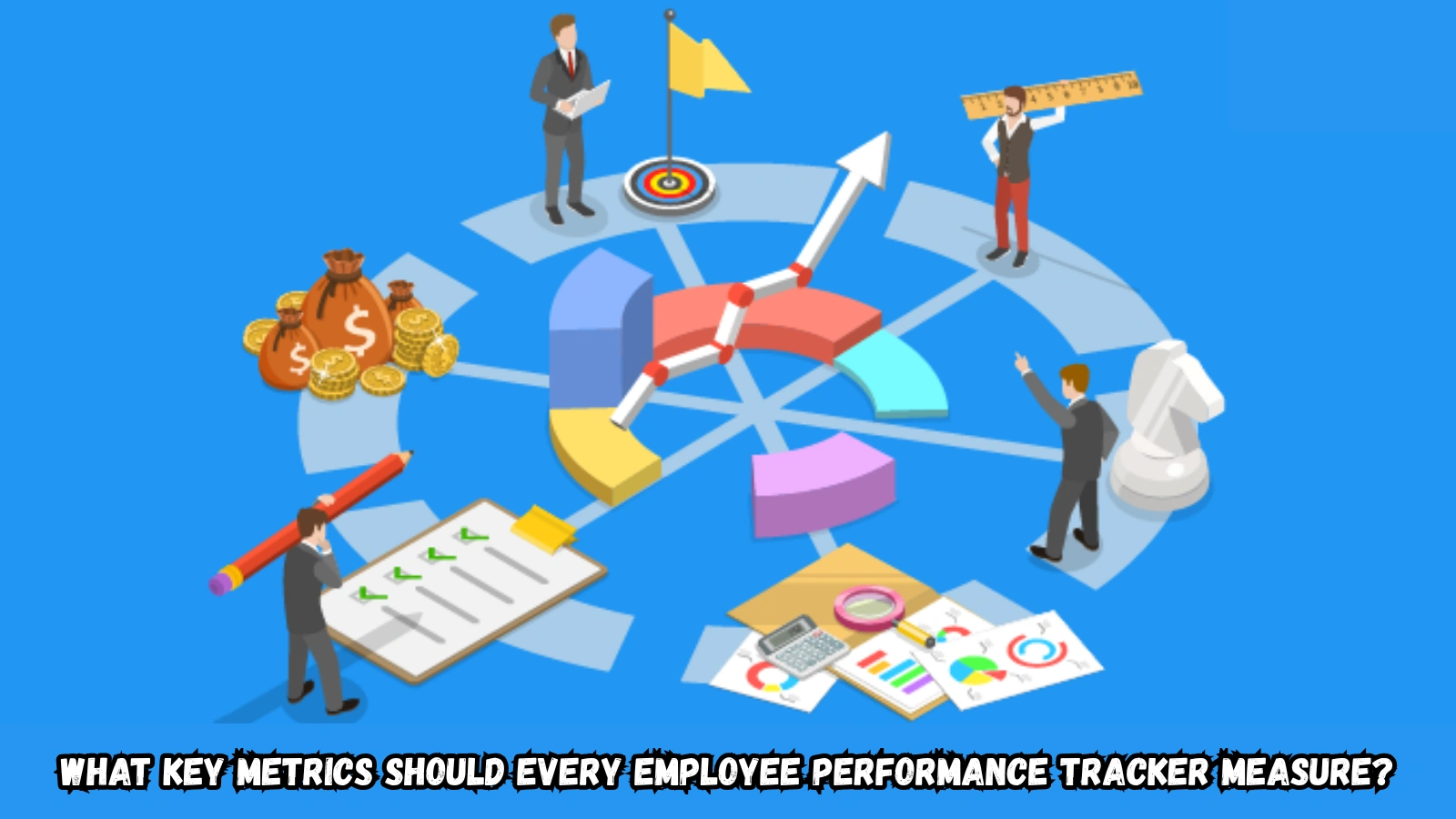
Before you choose a tool or build a system, you need to define what you are measuring. Here are the most important performance metrics worth tracking:
1. Goal Completion Rate:
How many tasks, targets, or projects did an employee complete on time and to the required standard? This is the most direct measure of output. A strong employee performance tracker links individual tasks to larger team and company goals, so completion rates tell a story beyond just the number of tasks finished.
2. Quality of Work:
Output volume without quality measurement is misleading. Track error rates, rework frequency, customer satisfaction scores, and peer feedback to get a balanced picture. High-volume, low-quality work is often worse than lower-volume work done correctly the first time.
3. Attendance and Punctuality:
Attendance patterns often reveal early signs of disengagement or burnout. Frequent late starts, long absences, or erratic hours can be early warning signals that something is wrong, either with the employee or with their work environment. An employee performance tracker that logs attendance automatically removes the burden from managers and creates an accurate, reliable record.
4. Time Spent on Tasks:
Knowing how employees allocate their working hours is incredibly valuable. Are they spending too much time on low-priority tasks? Are they consistently overworking to meet deadlines? Time data helps managers redistribute workloads more fairly and identify inefficiencies in workflows.
5. Collaboration and Communication:
Especially in team-based environments, individual performance cannot be measured in isolation. How often does an employee contribute to group projects? Do they respond promptly to team communications? Tracking collaboration metrics gives a more complete view of performance than individual output alone.
6. Skill Development and Learning:
A strong employee performance tracker does not just measure current output, it also tracks growth. Are employees completing training? Are they expanding their skill sets? Progress in professional development is a leading indicator of future performance and retention.
Also Read:
How To Drive Organizational Success With Employee Performance Tracker In 2025?
Employee Performance Tracking: What It Is And How To Do It In 2025
Employee Performance Tracker Excel Vs. Dedicated Software
When small businesses begin tracking performance, an employee performance tracker excel template feels like the obvious starting point, free, familiar, and requires zero technical knowledge. Many teams also rely on a monitoring staff performance employee productivity tracker excel template to manually log daily activity and measure output before committing to a full software solution. But Excel breaks down faster than you think:
- No real-time updates, data is always behind
- Manual entry errors that compound over time
- Zero automated alerts for performance issues
- Spreadsheet chaos once your team scales up
The moment your team grows, you hit a wall. This is exactly where performance management software steps in, automating data collection, generating instant on-demand reports, and keeping every manager and stakeholder working from the same live information. No version confusion, no chasing updates.
One platform consistently standing out in HR conversations is EmpMonitor. It goes far beyond basic tracking by bringing everything that matters into one centralized place:
- Real-time activity data and behavioral patterns
- Attendance records and project progress tracking
- Instant visibility into who is excelling and who needs support
- Bottlenecks identified and flagged before they escalate
Whether your team works in-office, remotely, or hybrid, EmpMonitor transforms raw numbers into clear, actionable workforce insights.
Less guesswork. Stronger accountability. Smarter decisions, every single day.
What Makes EmpMonitor A Standout Employee Performance Tracker?
Here are six key features that make EmpMonitor a particularly effective choice for businesses serious about tracking and improving employee performance:
1. Employee Monitoring Software:
EmpMonitor’s core monitoring capability provides detailed team activity analysis and context-rich reporting. Managers get insights into daily and hourly team activities, making it easy to identify patterns, recognize top performers, and support those who may need additional guidance. The system tracks your distributed workforce and provides the data foundation that sound performance decisions require.
2. Time Tracking:
Accurate time data is essential for any employee performance tracker. EmpMonitor delivers meticulous time monitoring through automated, real-time timesheets that reflect activity stats. You can identify productive versus idle work hours, assess performance across shifts, and generate accurate timesheet reports, all without relying on manual entry or self-reporting that is prone to bias.
3. User Activity Monitoring:
EmpMonitor’s user activity monitoring gives managers a detailed view of how employees spend their working hours, which applications they use, which websites they visit, and what tasks they focus on during the day. This level of insight helps organizations identify time-wasting behaviors, optimize workflows, and ensure that every working hour contributes meaningfully to team goals.
4. Real-Time Activity Tracking:
With EmpMonitor’s real-time tracking dashboard, managers can monitor live application use, website visits, and productivity scores across their entire team. You can quickly spot whether employees are active or idle and filter data by employee, time, or task for deeper analysis. This real-time visibility is especially valuable for remote teams where traditional supervision is not possible.
5. Attendance Monitoring:
EmpMonitor automates attendance tracking and leave management through a centralized dashboard that saves time and eliminates the need for paper-based processes. The system ensures data accuracy and compliance while giving HR teams a complete record of attendance patterns. This information feeds directly into performance evaluations, ensuring that attendance is factored into assessments fairly and consistently.
6. Workforce Productivity and Engagement:
Beyond tracking individual metrics, EmpMonitor provides tools to measure and improve overall workforce productivity and engagement. It helps organizations analyze workflow patterns, ensure workplace compliance, and maximize efficiency through precise project tracking. The enterprise intelligence built into the platform means HR teams and managers always have the data they need to drive better performance across the organization.
How To Build An Effective Employee Performance Tracking System?
Whether you choose a software platform or start with an employee performance tracking template, building a system that actually works requires careful planning. Here is how to do it right.
Start With Clear Goals:
Performance tracking is only as useful as the goals it measures against. Before you set up any system, make sure each employee has specific, measurable, and time-bound goals. Vague objectives like “be more productive” cannot be tracked. Specific targets like “close twenty sales calls per week” or “reduce error rate below 3%” can be.
Choose the Right Metrics for Your Business:
Not every metric matters equally in every industry. A customer service team should track response time and satisfaction scores. A development team should track sprint completion and code quality. Customize your employee performance tracker to reflect the metrics that actually drive your business outcomes.
Make It Transparent:
Employees perform better when they understand how they are being evaluated. Share your performance metrics openly. When people know what good performance looks like and how it is measured, they are far more likely to work toward it. Transparency also builds trust, employees are less likely to feel that assessments are arbitrary when the criteria are clear.
Review and Act on the Data:
A tracker that collects data nobody uses is just overhead. Schedule regular reviews, weekly for operational metrics, monthly for broader trends, quarterly for goal progress. Use the data to have meaningful conversations with employees, not just to generate reports.
Combine Quantitative and Qualitative Measures:
Numbers tell part of the story. Peer feedback, manager observations, and self-assessments complete it. The most effective employee performance tracker systems incorporate both hard data and qualitative input to create a full, fair picture of each employee.
What Are The Most Common Mistakes To Avoid When Tracking Employee Performance?
Even well-intentioned tracking systems can cause harm if implemented poorly. Here are the most common mistakes organizations make, and how to avoid them.
Tracking Everything Without a Purpose:
More data is not always better. Tracking every mouse click and keystroke without a clear reason creates noise, not insight. Focus your employee performance tracker on the metrics that directly relate to the outcomes you care about. Avoid the temptation to monitor simply because you can.
Using Data Punitively Instead of Constructively:
Performance data should be a tool for growth, not a weapon. When employees feel that tracking exists to catch them out rather than help them improve, engagement and morale drop sharply. Frame all tracking conversations around development, not punishment.
Ignoring Context:
Numbers rarely tell the full story. An employee who missed a deadline may have been dealing with an unclear brief, inadequate resources, or unexpected personal circumstances. A good employee performance tracker helps you identify patterns, but good managers still need to understand context before drawing conclusions.
Failing to Follow Up:
The worst thing you can do after collecting performance data is nothing. Employees quickly realize when feedback cycles are meaningless, when reviews happen but nothing changes afterward. Commit to acting on what your data tells you, whether that means adjusting goals, providing training, or restructuring workloads.
The Future Of Employee Performance Tracking
The future of the employee performance tracker is smarter, faster, and more human. AI is already identifying patterns managers miss, predicting burnout risks, and recommending personalized development paths before problems surface.
Annual reviews are fading out. Employees want real-time feedback, peer recognition, and rolling goal adjustments, not a once-a-year conversation. The organizations still relying on gut feelings and annual reviews will increasingly find themselves outcompeted.
But with smarter tracking comes greater responsibility. As technology grows more sophisticated, transparency becomes non-negotiable, employees should always know what is being tracked, why, and how that data is being used.
The businesses investing in thoughtful, data-driven performance management today will be the ones attracting and retaining top talent tomorrow.
Final Thoughts
Building a reliable employee performance tracker is one of the most impactful investments a business can make. It brings clarity where there is confusion, fairness where there is subjectivity, and opportunity where there is stagnation.
Whether you are just getting started with basic tracking tools or you are ready to upgrade to a full software platform, the key is to begin with intention. Define what success looks like for your team, choose the right tools to measure it, and commit to using the data you collect in ways that genuinely help your people grow.
Tools like EmpMonitor make this process significantly easier by automating data collection, surfacing actionable insights, and giving managers a clear, real-time view of their workforce. When an employee performance tracker is done right, it does not feel like surveillance, it feels like support.
Start tracking with purpose. Review with empathy. Act with decisiveness. That is the formula for a high-performing team that delivers results consistently, quarter after quarter.
FAQs
Q1. How often should employee performance be reviewed?
Performance should ideally be reviewed monthly for operational metrics and quarterly for broader goal progress. Annual reviews alone are no longer enough to drive meaningful improvement or keep employees engaged.
Q2. Can small businesses afford employee performance tracking software?
Absolutely. Most modern tracking platforms offer tiered pricing that scales with team size, making them accessible even for small businesses. The cost of poor performance visibility almost always exceeds the cost of the software.
Q3. How do you track performance of remote employees fairly?
Fair remote tracking focuses on output and goal completion rather than hours logged. Using an activity-based system that measures results rather than presence ensures remote employees are evaluated on the same standards as in-office staff.
Q4. What is the difference between performance tracking and micromanagement?
Performance tracking measures outcomes and patterns over time using data. Micromanagement involves constant supervision of every small action. The key difference is intent, tracking should empower employees to improve, not control every move they make.