
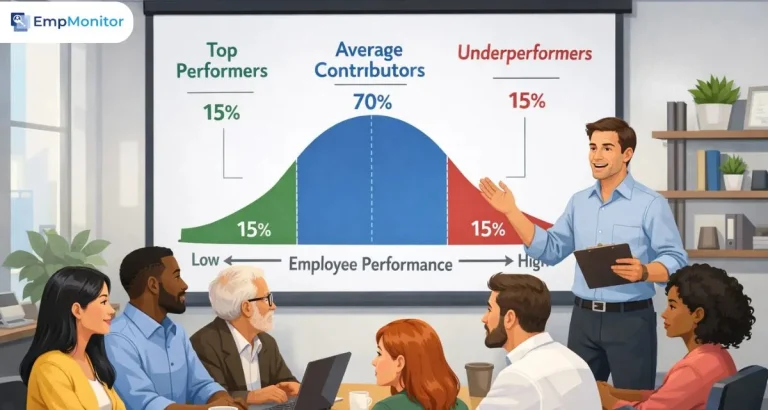
Performance appraisals help organizations measure employee contribution, reward high performers, and identify areas for improvement. Among various evaluation methods, the bell curve appraisal system is a structured approach that distributes employee performance ratings into predefined categories.
The idea behind the bell curve appraisal system is simple: not all employees can be rated equally. Instead of uniform ratings, performance is spread across levels such as top performers, average contributors, and underperformers. This method aims to reduce rating bias and bring consistency to performance reviews, especially in large organizations.
Despite its popularity, bell curve appraisal remains controversial. While some HR teams value its ability to differentiate performance clearly, others question its fairness and impact on employee morale. Understanding how this system works, along with its benefits and limitations, is essential before adopting it in modern performance management.
Listen to the podcast here.
What Is Bell Curve? (Concept & Origin)
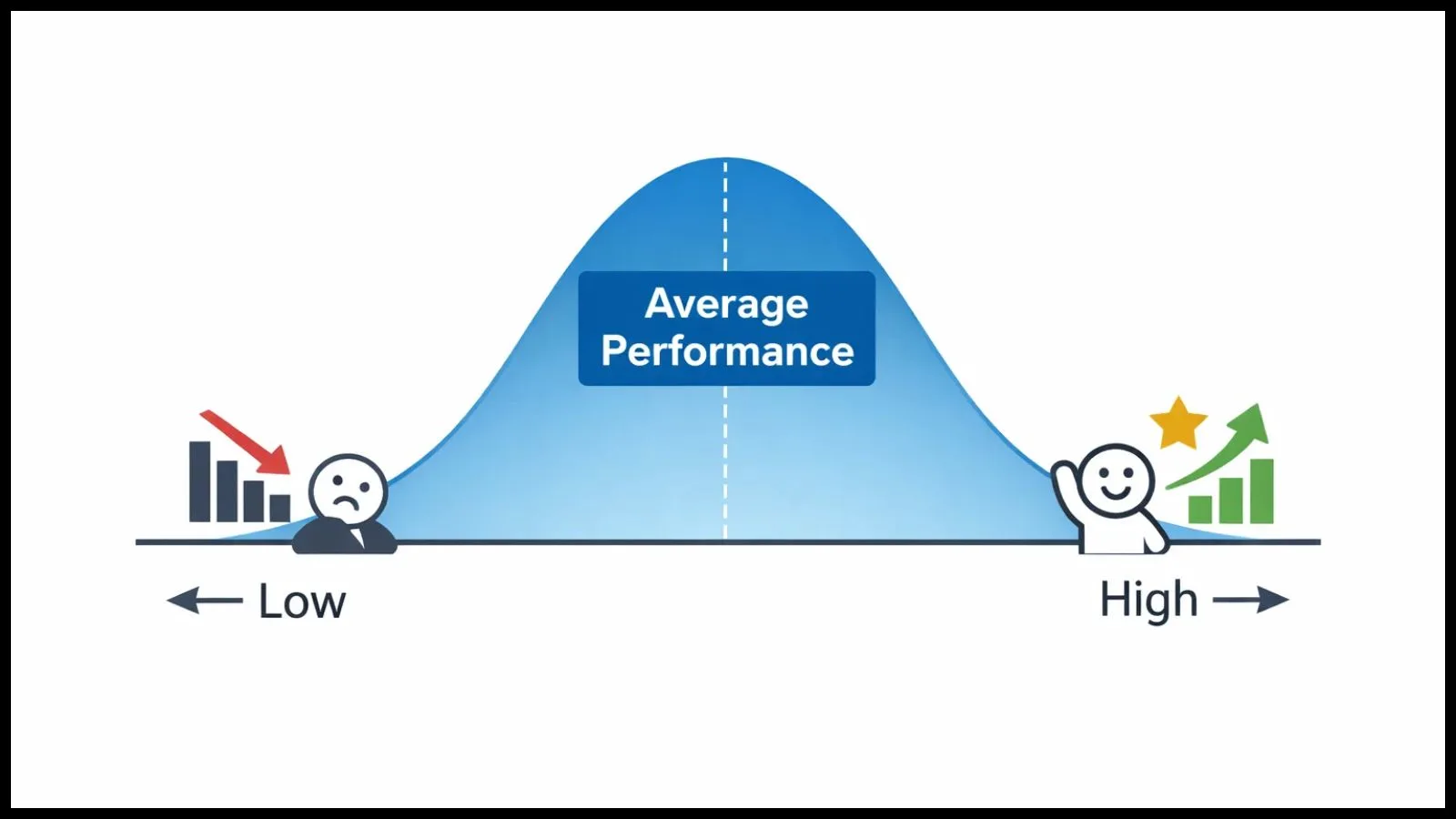
The bell curve is a statistical model that represents data distribution in the shape of a curve wide in the middle and narrow at both ends. In simple terms, it shows that most values fall near the average, while fewer values appear at the extremes.
To understand what is bell curve, imagine plotting employee performance on a graph. A small percentage perform exceptionally well, a majority deliver average results, and a few fall below expectations. This natural spread forms what is commonly known as the bell curve.
The bell curve meaning comes from statistics, specifically the normal distribution theory developed in mathematics. Over time, organizations adapted this concept for performance management, believing it reflected real-world differences in employee output.
In HR, the bell curve is not about mathematics alone it is about structuring evaluations to avoid inflated ratings and ensure visible performance differentiation.
What Is Bell Curve Appraisal in HR?
In human resource management, the bell curve appraisal system is a performance evaluation method that ranks employees based on relative performance rather than absolute achievement. Employees are grouped into categories such as high performers, average performers, and low performers.
This approach, often called bell curve hr appraisal, assumes that employee performance naturally follows a distribution pattern. Instead of rating everyone highly, HR teams allocate ratings across the curve to maintain balance and consistency.
A typical bell curve appraisal system includes defined performance bands, where only a limited percentage of employees can fall into the top or bottom categories. This structure helps organizations control rating inflation and make clearer decisions around promotions, increments, and training needs.
However, it’s important to note that bell curve appraisal focuses on comparison within a group, not just individual effort. This distinction is what makes the system effective in some organizations and controversial in others.
How Bell Curve Works in Performance Appraisal?
To understand how bell curve works in performance appraisal, organizations begin by evaluating employee performance using predefined metrics such as targets, productivity, skills, and behavioral factors. Managers first assess individual performance based on these criteria.
Once initial evaluations are complete, employees are placed into performance categories that follow a bell-shaped distribution. A small percentage are rated as top performers, the majority fall into the average category, and a smaller group is identified as low performers. This step ensures structured differentiation across teams.
HR teams then conduct calibration meetings to review ratings and reduce manager bias. Adjustments may be made to fit the curve while maintaining fairness. The final ratings are used for decisions related to compensation, promotions, and development plans.
This structured process is why many organizations rely on the bell curve appraisal system to bring consistency and discipline into performance management.
Bell Curve Performance Appraisal: Rating Structure Explained
In a bell curve performance appraisal, employees are distributed across predefined rating levels. These levels help organizations clearly separate exceptional, average, and underperforming employees.
Most companies use a 3-point or 5-point rating scale. For example, a small group may be labeled as top performers, a larger group as solid or average performers, and a limited number as low performers. The exact percentages can vary, but the structure always follows the bell curve pattern.
Some organizations apply forced distribution, where managers must fit employees into the curve, while others allow a more flexible approach. The key difference lies in how strictly the curve is enforced.
This rating structure supports consistent decision-making but also requires careful implementation to ensure employees feel evaluated fairly and objectively.
Benefits of the Bell Curve Appraisal System
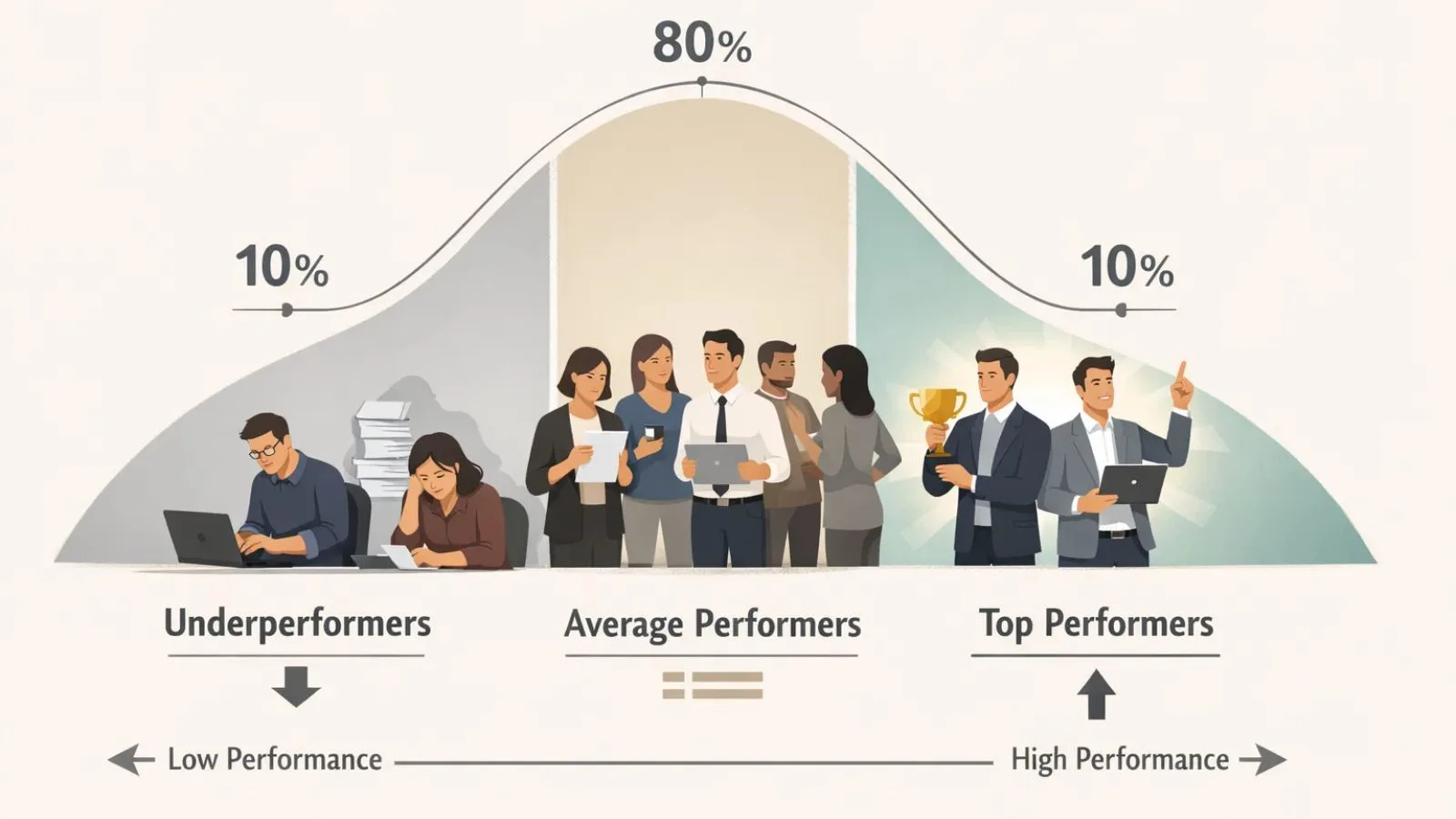
One of the key advantages of the bell curve appraisal system is that it encourages clear performance differentiation. By limiting how many employees can be rated as top performers, organizations reduce rating inflation and maintain realistic evaluations.
The system also helps HR teams identify high performers and underperformers more easily. This clarity supports better decisions around promotions, bonuses, training, and succession planning.
Another benefit is consistency. When applied across departments, the bell curve appraisal system creates a standardized approach to performance reviews, especially in large organizations with multiple teams.
Additionally, the structured nature of the bell curve pushes managers to justify ratings with evidence, making performance discussions more objective and data-driven.
Limitations and Criticism of Bell Curve Appraisal
Despite its advantages, the bell curve appraisal system has several limitations. One major concern is forced ranking. In high-performing teams, some employees may still receive average or low ratings simply to fit the curve, which can feel unfair.
This approach can also impact employee morale and collaboration. When employees are compared against each other rather than measured on individual goals, competition may increase while teamwork suffers.
Another criticism of bell curve hr appraisal is that it may ignore external factors such as role complexity, team maturity, or changing business conditions. Over time, this can lead to disengagement and higher attrition.
Because of these challenges, many organizations now question whether strict bell curve appraisal models align with modern, people-centric workplace cultures.
Bell Curve Appraisal vs Modern Performance Management
Traditional bell curve appraisal systems focus on ranking employees relative to one another. In contrast, modern performance management emphasizes continuous feedback, goal alignment, and individual growth.
Many organizations now use OKRs, regular check-ins, and real-time feedback instead of annual reviews. These approaches prioritize improvement over comparison and encourage open communication between managers and employees.
However, this doesn’t mean the bell curve is obsolete. In structured environments—such as large enterprises or sales-driven teams—the bell curve appraisal system still provides clarity and control in performance evaluation.
The key difference lies in flexibility. Modern systems are adaptive and employee-focused, while bell curve appraisal is more structured and comparative. Some organizations combine both approaches to balance fairness and accountability.
Use Cases – When Bell Curve Appraisal Works Best
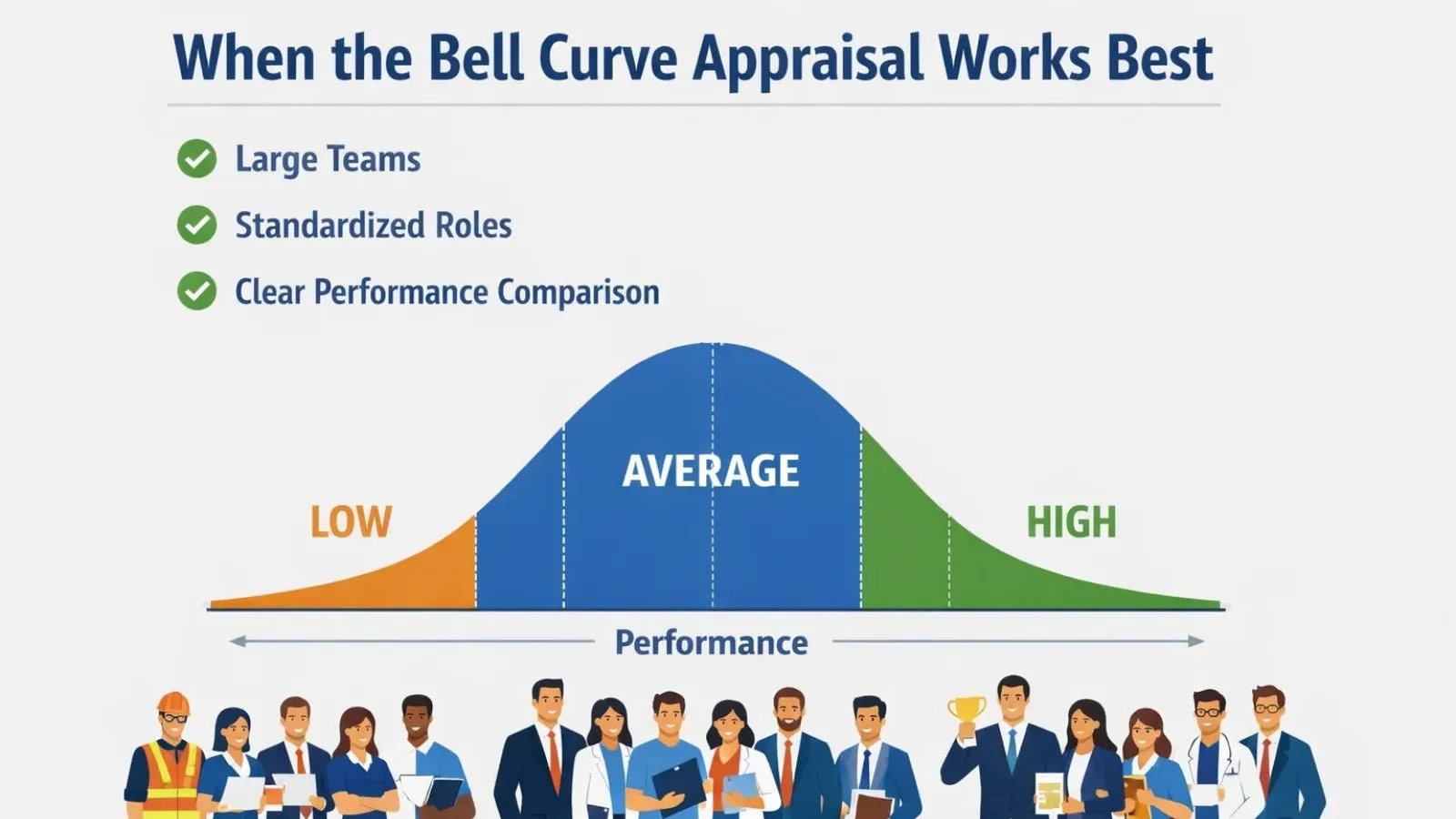
The bell curve appraisal system works best in organizations with large teams and standardized roles. When employees perform similar functions, comparing performance becomes more practical and consistent.
It is also effective in sales-driven or target-based environments where results are measurable and performance gaps are clear. In such cases, bell curve appraisal helps differentiate top achievers from average performers.
Companies with mature HR processes and strong data tracking systems benefit the most from this approach. When performance data is accurate and transparent, the bell curve appraisal system can be applied more fairly.
However, in small teams or creative roles, rigid performance distribution may not reflect actual contribution, making alternative appraisal methods more suitable.
Real-World Examples of Bell Curve Appraisal
To understand how the bell curve appraisal system works in practice, consider a mid-sized organization with 100 employees in a single department. After performance evaluations, employees are grouped based on results and behavioral metrics.
Typically, a small percentage are classified as high performers, the majority fall into the average category, and a limited number are identified as low performers. These groupings directly influence decisions related to salary increments, bonuses, and promotions.
In some cases, organizations use bell curve appraisal during annual reviews to control compensation budgets. In others, it helps HR teams identify employees who need additional training or performance improvement plans.
These examples show that when applied thoughtfully, the bell curve appraisal system can support structured and data-driven decision-making.
Best Practices for Implementing Bell Curve Appraisal Fairly
To apply the bell curve appraisal system effectively, organizations must combine quantitative data with qualitative insights. Relying solely on ratings without context can lead to biased outcomes.
Manager training is essential. When managers understand evaluation criteria and common rating biases, performance assessments become more consistent and fair. Calibration meetings also help align ratings across teams.
Transparency plays a critical role. Employees should clearly understand how the bell curve appraisal system works, how ratings are decided, and how outcomes affect growth and rewards.
Finally, organizations should review the system regularly. Adjusting performance bands and criteria ensures the appraisal process remains relevant as business needs evolve.
Tools That Support Bell Curve Appraisal Effectively
Accurate performance data is essential for a fair bell curve appraisal system. When appraisals rely on assumptions or incomplete information, the results can quickly become biased.
Manual tracking methods often fail to capture real employee output, especially in remote or hybrid work environments. This is where performance monitoring and analytics tools become valuable for HR teams.
By using data-driven tools, organizations can track productivity, task completion, and work patterns objectively. This information helps managers justify performance ratings and supports a more transparent appraisal process.
The right tools ensure that bell curve appraisal decisions are based on evidence rather than perception, improving trust and acceptance among employees.
How Empmonitor Enhances Bell Curve Appraisal Accuracy

Empmonitor is a productivity tracking and employee monitoring tool that complements the bell curve appraisal system by providing objective, data-driven insights. It captures detailed work metrics, including time spent on tasks, project progress, and overall productivity, allowing managers to make informed performance evaluations.
By linking real work output with appraisal ratings, Empmonitor helps eliminate subjectivity and reduces bias in bell curve evaluations. HR teams can see which employees consistently exceed expectations, who meet targets, and who may need support, making it easier to distribute ratings fairly across the bell curve.
Additionally, Empmonitor supports remote and hybrid teams, ensuring that employee contributions are visible regardless of location. This transparency builds trust in the appraisal process, promotes accountability, and aligns performance reviews with actual results.
Using Empmonitor alongside a bell curve performance appraisal ensures a more accurate, fair, and data-backed evaluation system, helping organizations recognize top talent while supporting employee growth.
Is Bell Curve Appraisal Still Relevant Today?
The relevance of the bell curve appraisal system is debated in modern HR practices. While it provides structure and differentiation, many organizations now favor continuous feedback, agile performance management, and goal-based evaluations.
However, in large enterprises, sales-driven teams, or highly standardized roles, the bell curve appraisal still offers value by providing clarity on top, average, and low performers. It helps maintain fairness in compensation and promotion decisions when applied carefully.
Some companies adopt a hybrid approach—combining bell curve distribution with regular feedback cycles—to balance structured evaluation with employee development. This ensures that performance appraisals remain objective while supporting growth and engagement.
Ultimately, the bell curve appraisal system can be relevant if used thoughtfully, with proper data, clear communication, and a focus on employee development rather than just ranking.
Also read,
The Performance Appraisal Process: A Complete Guide In 2026
What Is Performance Management Software? 5 Tips To Enhance Performance Management Systems
Final Verdict:
Deciding whether to implement a bell curve appraisal system depends on your organization’s size, structure, and performance management goals.
Benefits to consider:
- Provides clear differentiation between top, average, and low performers
- Supports fair allocation of promotions, bonuses, and development plans
- Encourages data-driven performance discussions
Limitations to keep in mind:
- Can lower morale if forced ranking is applied unfairly
- May create unnecessary competition among employees
- Less effective in small teams or creative roles
For organizations with large teams, measurable outputs, and strong HR processes, the bell curve appraisal can be a useful tool. Combining it with modern feedback practices and tools like Empmonitor ensures fairness, transparency, and alignment with actual performance.
In short, the bell curve works best as part of a balanced performance management strategy rather than as the sole method of evaluation.
{
“@context”: “https://schema.org”,
“@type”: “FAQPage”,
“mainEntity”: [{
“@type”: “Question”,
“name”: “What is Bell Curve Appraisal?”,
“acceptedAnswer”: {
“@type”: “Answer”,
“text”: “The bell curve appraisal system ranks employees based on relative performance, placing them into categories like top performers, average contributors, and low performers.
The system follows a normal distribution with most employees in the middle category.
It helps differentiate performance levels and avoid inflated ratings.
Used primarily in large organizations to standardize evaluations.”
}
},{
“@type”: “Question”,
“name”: “Benefits of Bell Curve Appraisal”,
“acceptedAnswer”: {
“@type”: “Answer”,
“text”: “The bell curve system provides clarity and structure in performance reviews, helping HR teams make fair decisions about promotions and bonuses.
Encourages clear differentiation between high, average, and low performers.
Reduces rating inflation and maintains consistency in performance reviews.
Helps HR identify development needs and succession planning.”
}
},{
“@type”: “Question”,
“name”: “Limitations and Criticism of Bell Curve Appraisal”,
“acceptedAnswer”: {
“@type”: “Answer”,
“text”: “Despite its advantages, the bell curve system can lead to forced rankings, which may feel unfair to high performers, negatively impacting morale.
Forced ranking can be unfair in high-performing teams, leading to dissatisfaction.
May increase competition at the cost of collaboration among employees.
Less effective in small or creative teams where individual performance varies greatly.”
}
}]
}
FAQ’s
- What is bell curve appraisal in simple terms?
It’s a performance evaluation method where employees are ranked relative to each other and placed into categories like top performers, average, and low performers, following a bell-shaped distribution. - Is bell curve appraisal fair?
It can be fair if implemented with accurate data, manager training, and transparency. However, strict forced ranking can feel unfair in high-performing teams. - Why do companies still use bell curve appraisal?
Large organizations use it to control rating inflation, make structured compensation decisions, and clearly identify top and low performers.