
Pressure does not reveal problems. It amplifies the ones already there.
For the head of a 25-person customer support team at a fast-growing SaaS company, the pressure had been building for months. Response times were climbing. Customer satisfaction scores were slipping. And despite hiring additional staff, the numbers were not improving.
The team leader was not short of effort or intention. What he was short of was clarity. He could see the outcomes clearly enough. What he could not see was the behaviour behind them, and without that, every intervention was a guess.
This is the story of how one support team stopped guessing and started rebuilding their productivity on a foundation of real data.
What Was The Team Dealing With Before Finding A Solution?
On paper, the team looked adequately staffed. Twenty-five agents. Staggered shifts covering extended hours. A ticketing system that logged every interaction. And yet, resolution times were consistently above target, and first-response windows were unpredictable enough to frustrate clients who expected fast turnaround.
The team leader had tried standard fixes. He adjusted shift structures. He ran refresher training sessions. He introduced a peer-review process for complex tickets. Each change produced a brief uptick before the numbers drifted back.
What nobody had examined yet was how the working day itself was actually being spent.
Why Did Productivity Keep Falling Despite A Full Team?
The team leader eventually asked the question that changed everything. Not “why is the team underperforming?” but “where is the time actually going between ticket assignments?”
Support work, by nature, involves bursts of high-focus activity followed by natural gaps. The question was whether those gaps were being used for preparation and recovery or whether they were quietly expanding into unproductive territory, unnoticed and unmeasured.
Without visibility into real-time behaviour, productivity could not be managed. It could only be hoped for.
How Did The Team Leader Find A Way Forward?
After researching workforce visibility tools, the team leader implemented EmpMonitor. The decision was straightforward. He needed objective data on how working hours were being distributed, which tools agents were using, how long they were active versus idle, and whether focus was being maintained during the hours that mattered most.
The rollout was transparent. The team was briefed clearly. The purpose was framed honestly: to understand where support for productivity improvement was needed, not to catch people out. Most agents responded positively once they understood that the data would also be used to address unfair workload distribution.
Within days, the picture that emerged was more detailed than anything the team leader had seen before.
Also Read:
Idle Time: The Silent (Productivity) Killer
What Features Of Empmonitor Made The Difference?

Real-Time Activity Dashboard:
EmpMonitor’s unified dashboard gave the team leader a live view of active and idle status across all 25 agents simultaneously. This single feature transformed how he started each shift, from reactive to informed.
App and Website Usage Tracking:
The tool captured exactly how time was being spent across applications during working hours. It became immediately visible which agents were consistently in their core support tools and which were regularly drifting to unrelated platforms during ticket queues.
Automated Screenshots:
Timestamped, interval-based screenshots provided objective context for daily activity without adding any reporting burden to the agents. This gave the team leader verifiable insight into focus patterns throughout the day.
Attendance and Time Logs:
Automatic records of login times, logout times, and idle periods replaced assumptions with facts. The team leader could now see, with precision, whether agents were present and active during the hours they were scheduled to handle peak ticket volumes.
Productivity Reports:
Visual breakdowns of active versus idle time per agent gave the team leader a consistent basis for identifying who needed support, who was overloaded, and where the team’s collective output was leaking.
Project and Task Tracking:
By linking time data to ticket categories and priority levels, EmpMonitor allowed the team leader to see not just whether agents were active, but whether their activity was aligned to the right work at the right time.
What Did The Data Reveal About The Team’s Real Behaviour?
The first two weeks of data told a clear story that no status report had ever captured.
- Focus gaps were widespread and consistent: Across the team, a pattern of regular drift away from support tools during active queue hours was visible in both the usage data and the screenshot records. These gaps were not long individually, but they were frequent enough to compound into significant lost capacity across a full shift.
- Workload distribution was deeply uneven: A small group of agents were handling a disproportionate share of complex, multi-step tickets. Others with similar scheduled hours were processing far lighter queues. The result was a team where some agents were stretched and others were under-utilised, with neither group aware of the imbalance.
- Peak hours were being undermined: Ticket volumes spiked predictably at certain points in the day. The data showed that agent focus and active tool usage did not always align with those peaks, meaning the moments of highest demand were not always being met with the team’s full available attention.
Also Read:
Top 10 Workforce Management Software 2022
How Did Things Change After EmpMonitor?
The numbers did not come from a single dramatic intervention. They came from a series of small, data-informed decisions made consistently over 30 days.
Average first response time dropped from 38 minutes to 19 minutes. Agent idle time during peak hours fell from 34% to just 11%. Workload distribution, previously a source of silent frustration across the team, moved from heavily skewed to balanced. Manager visibility into daily activity went from nothing to real-time.
The team productivity score climbed from 54% to 81%. Client satisfaction ratings, which had been sitting below target for months, returned to where they needed to be. And escalations per week fell from 22 down to 7.
Each of these shifts was a direct consequence of decisions that were only possible because the data was finally there to support them.
What Actions Did The Team Leader Take Based On The Data?
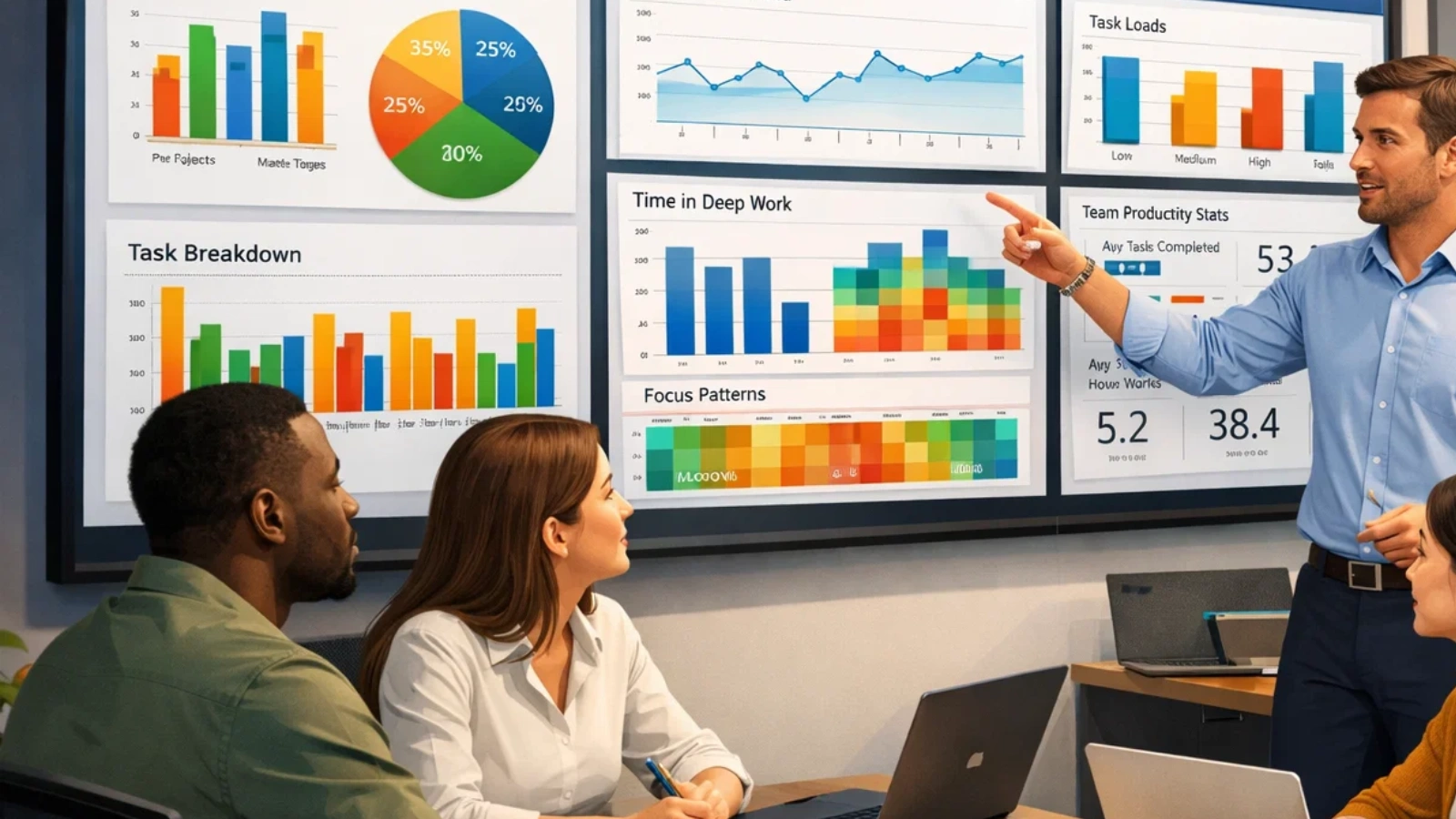
Three specific changes followed directly from what EmpMonitor revealed.
Workloads were rebalanced:
Agents who had been absorbing the heaviest ticket queues were redistributed. Agents with available capacity were assigned to higher-priority categories. For the first time, shift planning was based on actual usage data rather than assumed availability, and the team’s collective productivity reflected it immediately.
Focus protocols were introduced for peak hours:
With data showing exactly when focus drift was most likely to occur, the team leader introduced structured focus windows aligned to peak ticket volumes. Agents knew which hours required their full attention on support tools, and the data confirmed when that expectation was being met.
Performance conversations became factual:
With objective data replacing subjective impressions, one-on-one feedback sessions became straightforward. Agents who were genuinely working hard had their efforts confirmed and recognised. Agents who needed redirection received specific, evidence-based guidance rather than vague concerns.
What Were The Results After 30 Days?
The outcome within the first month was measurable across every indicator the team leader had been struggling to move.
First-response times dropped significantly. Escalations fell by more than half. Customer satisfaction scores returned to target levels for the first time in several months. And the team reported, almost unanimously, that the workload finally felt fair.
For the team leader, the shift was equally significant. Tracking productivity had gone from a manual, end-of-week exercise based on incomplete data to a real-time function that informed daily decisions. He was no longer reacting to problems after they had already affected clients. He was seeing them early enough to intervene.
What Does This Case Tell Us About Productivity In Support Teams?
Support teams operate under a particular kind of pressure. The work is reactive by nature, the volume is unpredictable, and the consequences of focus gaps are visible immediately in the form of delayed responses and frustrated clients.
In that environment, tracking focus is not optional. It is the foundation on which everything else rests. And tracking productivity without the right tools is not tracking at all. It is estimated, and estimates do not hold up when clients are waiting.
EmpMonitor gave this team leader something he had never had before: an honest picture of what his team was actually doing. Once that picture was available, the right decisions followed naturally and the results confirmed it.
If your support team is working hard but the numbers are not moving, the problem is almost certainly not effort. It is visibility.
EmpMonitor is where that visibility begins.
FAQs
- How Does EmpMonitor Help With Tracking Productivity in Support Teams Specifically? EmpMonitor provides real-time dashboards, app usage data, automated screenshots, and productivity reports that give managers an objective, continuous view of how working hours are being spent. This makes tracking productivity a daily management function rather than a weekly guess.
- Can EmpMonitor Identify When Agents Are Losing Focus During Peak Hours?
Yes. Through real-time activity monitoring and app usage tracking, EmpMonitor makes it visible when agents are active in their core tools versus drifting to unrelated platforms. This is particularly valuable during high-volume periods where focused attention has the most impact on response times. - Will Agents React Negatively to Being Monitored?
When introduced transparently and framed around fairness and support, monitoring typically improves team morale rather than harming it. Agents whose effort is objectively visible feel more recognised, and those who receive feedback have a clear, factual basis for understanding what needs to change.