Workplaces today rely heavily on speed, efficiency, and seamless collaboration. Yet as organizations grow, managers struggle to identify who is working on what, how much time tasks require, and whether deadlines align with capacity. That’s why employee task tracking has evolved into a fundamental strategic process, not just a management trend.
Modern businesses deal with distributed teams, complex workflows, and multiple priorities. Without structured tracking, confusion spreads, delays increase, and productivity shrinks. To eliminate guesswork, organizations are turning toward smarter task analytics, automated monitoring tools, and data-driven approval cycles.
This blog explores how structured task oversight transforms workplace efficiency, improves motivation, and fosters accountability while also introducing an advanced platform, EmpMonitor, that significantly enhances tracking capabilities.
In a hurry? Listen to the blog instead!
Why Employee Task Tracking Matters Today?
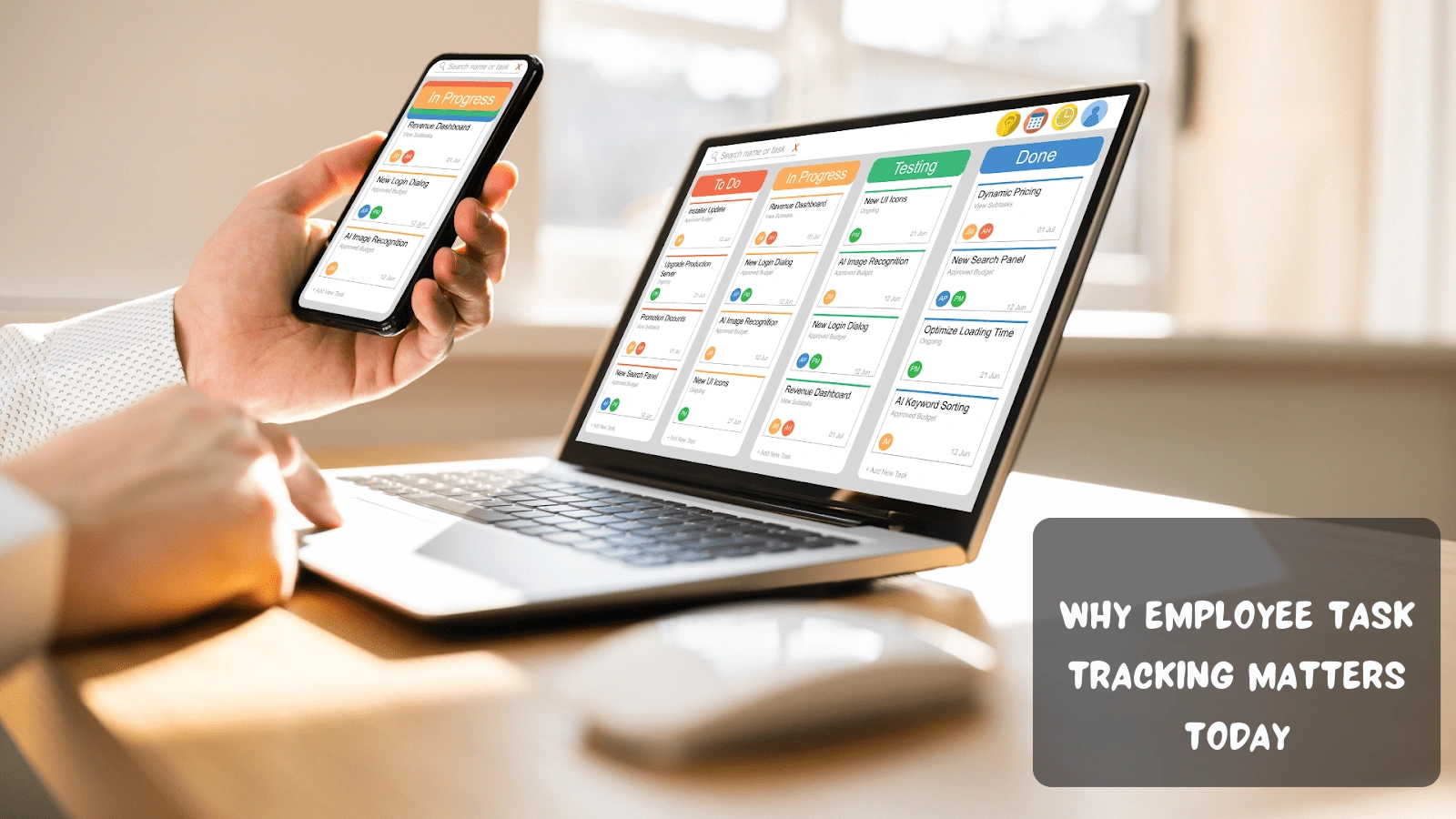
Managing tasks efficiently isn’t simply about watching employees, it’s about visibility, alignment, and clarity. Modern task management plays a crucial role here. When teams lack guidance or transparency, workload distribution becomes uneven. Some employees feel overwhelmed while others receive fewer responsibilities.
However, structured employee task tracking solves this gap by:
- Improving transparency into ongoing assignments
- Allowing managers to monitor progress effortlessly
- Supporting fair performance evaluations
- Eliminating repetitive check-in meetings
Companies that adopt effective tracking frameworks experience less confusion and higher engagement.
What Challenges Do Managers Face Without Employee Task Tracking?
Organizations encounter multiple barriers when they ignore structured task management and employee performance tracking, directly impacting efficiency, communication, and productivity:
Miscommunication:
Without a clear record of responsibilities, team members often assume someone else is handling a task. This leads to duplicated effort, missed deadlines, and confusion about priorities. As projects scale, these gaps become harder to recover from.
Poor Collaboration:
When teams lack shared visibility, individuals work in isolation. Employees are unaware of what others are doing, making task dependencies harder to align. This reduces team synergy and delays coordinated decision-making.
Inconsistent Workloads:
Managers cannot accurately distribute tasks when they don’t know who is overloaded or underutilized. While some employees struggle to meet unrealistic workloads, others remain idle, harming morale and productivity.
No Insight Into Project Bottlenecks:
Without tracking, it’s difficult to identify where tasks are stuck, which phase is slow, or who needs support. Bottlenecks remain hidden until deadlines are missed, increasing project risks and operational costs.
This is why managers require digital tools and well-defined strategies that bring workflow clarity, accountability, and real-time visibility.
Also Read:
How To Perform Employee Performance Tracking For Maximum Results In 2025?
The Impact Of Employee Task Tracking On Performance

When implemented properly, the effects of structured task oversight are transformational. Employees receive well-defined objectives, managers gain access to real-time activity, and both parties can have meaningful performance conversations.
Additionally, task tracking supports teams productivity tracking, helping leaders measure output trends and optimize workload distribution more effectively.
Benefits include:
Higher accuracy in deliverables:
With clear task assignments and deadlines, employees can understand requirements better and avoid errors or rework. This precision ensures projects move forward smoothly and meet expected quality standards.
Faster feedback loops:
Task tracking allows managers to monitor progress and share timely suggestions instead of waiting for end results. Continuous feedback helps employees improve faster, stay aligned with goals, and maintain consistent productivity.
Better stress-free working conditions:
When workloads are transparent and balanced, employees experience less confusion and fewer last-minute pressures. They can plan their schedules efficiently, which reduces burnout and supports a healthier work environment.
Stronger accountability culture:
Task tracking assigns ownership to every activity, making it easier to see who is responsible for what. This promotes responsibility, encourages proactive behavior, and prevents issues from being overlooked.
The beauty lies in clarity, when everyone knows what’s expected, progress accelerates and performance naturally improves.
How Real-Time Updates Strengthen Workflows?
Real-time task visibility improves operational flow by keeping teams informed, reducing delays, and ensuring quick decision-making across projects.
- Enable faster decision-making by showing immediate task progress
Managers can instantly see what’s done, what’s pending, and where support is needed, reducing delays. - Reduce the need for manual status checks and follow-ups
Instead of asking employees repeatedly, dashboards display live updates, saving time and effort. - Help managers reassign resources instantly when workloads spike
Teams can quickly shift priorities to avoid bottlenecks and ensure deadlines are met. - Improve coordination across distributed teams with shared visibility
Remote employees stay aligned on timelines and responsibilities regardless of location. - Prevent confusion by keeping everyone aligned on current priorities
Real-time clarity ensures tasks are handled in the correct order, boosting project flow.
By keeping information live and accessible, teams stay synchronized, reducing errors and accelerating overall output.
How Employee Task Tracking Enhances Productivity, Accountability, and Workflow Efficiency?
When organizations adopt structured task oversight strategically, overall operational performance improves significantly. Teams gain clearer visibility into responsibilities, managers can monitor progress without constant interference, and everyone works more confidently toward aligned goals.
Reduced micromanagement:
Employees update progress digitally, which removes the need for constant verbal check-ins. Managers spend less time following up, while employees feel trusted and independent in completing their tasks.
More accurate resource allocation:
By understanding how long tasks actually take, managers can distribute workloads fairly. This prevents overburdening employees and ensures teams operate at a realistic and sustainable capacity.
Stronger accountability:
Clear task ownership makes it easy to identify responsibilities. Employees develop a stronger sense of commitment, leading to thoughtful decision-making and mature professional behavior.
Higher workflow transparency:
Real-time visibility into work activities helps teams understand performance trends and identify where support is needed. This clarity strengthens collaboration and reduces misunderstandings.
Improved time management:
When employees track their hours, they quickly notice patterns of distraction or time waste. They can refine work habits, improve focus, and maintain consistent productivity levels.
Increased motivation and recognition:
Progress tracking turns effort into measurable data. When employees see their contribution visually, motivation rises and achievements can be celebrated objectively.
Data-driven performance reviews:
Managers can access visual timelines, productivity charts, and efficiency metrics. This reduces bias, supports constructive feedback, and makes appraisal discussions more meaningful.
Better identification of skill gaps:
Task trends reveal where employees struggle repeatedly. Managers can act early with targeted coaching or training programs to boost competence and eliminate recurring problems.
Elimination of work overlaps:
With task visibility, team members instantly know who is assigned to each activity. This prevents duplicated work, saves time, and streamlines coordination across departments.
Fewer missed deadlines:
Tracking tools send notifications, status updates, and reminders. Employees can prioritize effectively, stay organized, and deliver results within expected timeframes.
Optimized hybrid work performance:
When teams operate remotely and on-site, visibility becomes critical. Employee task tracking aligns everyone with project goals, prevents communication delays, and maintains workflow clarity regardless of location.
The true advantage lies in transparency. When expectations are visible and measurable, momentum increases, collaboration strengthens, and performance naturally rises.
The Need Of Digital Tools To Enhance Employee Task Tracking
Digital tracking tools have become mandatory. Managing tasks manually through spreadsheets is:
- Slow
- Error-prone
- Difficult to update
Automation improves accuracy instantly.
However, as organizations scale, managers often struggle to maintain real-time visibility into how employees utilize their work hours, how task progress evolves daily, and which areas require performance improvements. Manual evaluation increases errors, delays, and workload imbalance.
This is where modern digital solutions like EmpMonitor significantly simplify employee task tracking. EmpMonitor provides automated activity insights, productivity analytics, and real-time visibility across remote, hybrid, and office-based teams.
It simplifies decision-making, workload balancing, and task accountability through dashboards that centralize workforce insights.
What Are The Key Advantages Of Digital Employee Task Tracking Systems?
Digital tracking systems offer multiple operational benefits that streamline workloads and boost performance across departments:
Structured Priorities:
Employees always know which tasks are urgent and important, helping them plan their day efficiently and meet deadlines without confusion.
Workflow Automation:
Automated reminders, task assignments, and status updates reduce repetitive manual work, allowing teams to focus more on strategic responsibilities.
Instant Status Visibility:
Managers can view real-time progress through dashboards, quickly identify stalled tasks, and take corrective action without lengthy follow-ups.
Data Analytics:
Performance reports highlight productivity patterns, helping leaders spot bottlenecks, upskill employees, and optimize task distribution.
In short, digital transformation accelerates productivity by improving clarity, efficiency, and decision-making across the entire workflow.
How Employee Task Tracking Improves Remote Work Efficiency?

Remote work increases the demand for transparency. Employee task tracking helps optimize employee activity by ensuring:
- Tasks are completed properly
- Time zones don’t create delays
- Communication remains synchronized
Employees feel supported when they have clear instructions.
Reducing Work Stress Through Organized Schedules:
When employees know the exact order of work, stress decreases. Predictability enhances confidence, and confidence boosts productivity.
Employee Task Tracking Supports Fair Recognition:
Workers feel appreciated when recognized properly. Tracking records effort, allowing managers to appreciate consistent performers.
Fairness improves work culture.
Project Cost Optimization:
Accurately tracking tasks helps organizations budget resources and avoid unnecessary project expenses.
Boosting Customer Satisfaction:
Customers receive faster outputs because employees work more systematically. Accountability prevents missed deadlines and improves reliability
Better Decision-Making With Analytics:
Tracking data helps leaders evaluate:
- Team capacity
- Completion speed
- Skill proficiency
Organizations operate more strategically.
Also Read:
Employee Activity Tracker: Tips to Optimize Work Performance
How EmpMonitor Enhances Employee Task Tracking Efficiency?
EmpMonitor is not only an employee monitoring solution, but it also provides other complementary features like project and task management. Using this tool, you can allocate tasks to team members and keep track of ongoing tasks in real time.
Let’s check out some of the best project management features of this amazing tool.
1. Role-Based Access & Task Ownership:
EmpMonitor enables customized access levels and role assignments, ensuring employees see only the tasks relevant to their responsibilities. This clarity eliminates confusion, strengthens ownership, and improves accountability throughout the workflow.
2. Centralized Project & Task Management:
With a unified project module, managers can create, edit, search, and filter projects and tasks from a single dashboard. Downloadable reports (CSV/PDF) provide clear task insights, helping teams stay aligned and organized.
3. Advanced Task & Subtask Handling:
Tasks can be broken down into subtasks for precise tracking and better workload management. This structure ensures complex projects are executed smoothly while maintaining visibility into every stage of progress.
4. Timeline Monitoring for End-to-End Visibility:
EmpMonitor tracks the complete task lifecycle, from creation to completion, within project timelines. Managers can identify delays early, monitor progress patterns, and keep projects on schedule with confidence.
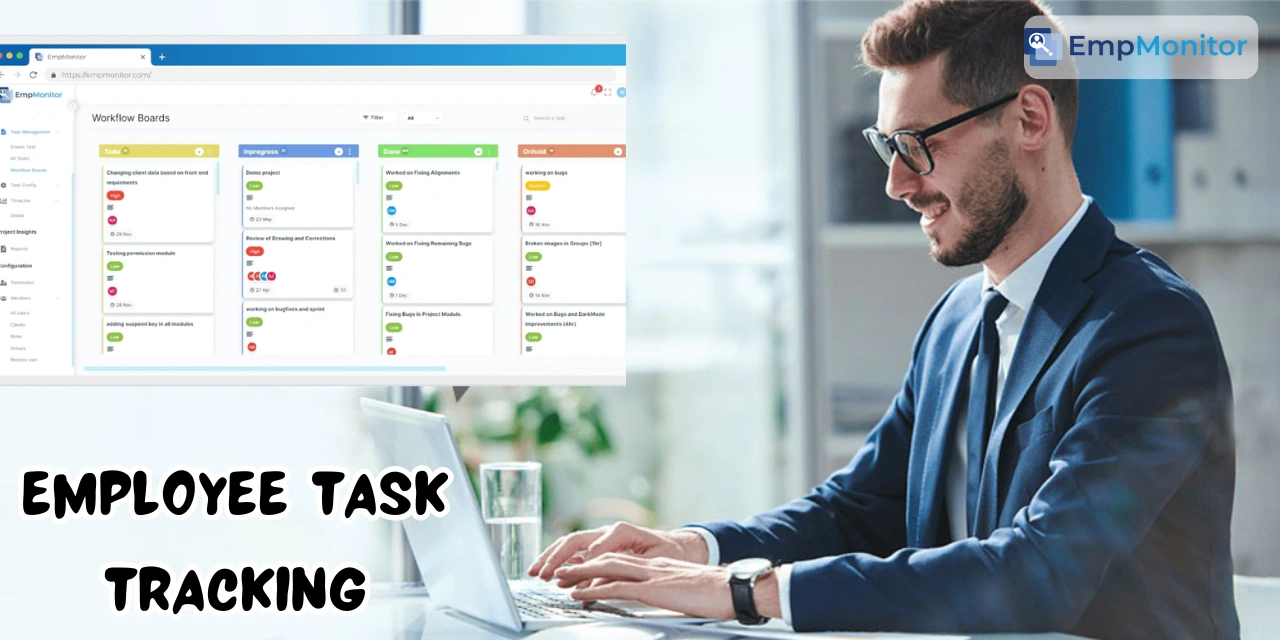
5. Kanban Boards & Gantt Charts:
Visual tools such as Kanban boards and Gantt charts make task progress easy to understand. Teams can track stages, manage dependencies, and align deadlines effectively, improving coordination and execution speed.
6. Team Grouping for Streamlined Collaboration:
Member groups allow managers to organize teams efficiently and assign tasks at a group level. This improves collaboration, reduces communication gaps, and ensures smoother task distribution across departments.
By focusing on structured task allocation, visual tracking, and timeline control, EmpMonitor delivers a powerful yet streamlined employee task tracking experience. Teams work with clarity, managers gain actionable insights, and organizations achieve consistent productivity through transparency and accountability.
What Are The Signs Your Organization Needs Employee Task Tracking Urgently?
Consider investing in tracking methods if you notice:
- Repeated deadline failures
Projects frequently run behind schedule because tasks aren’t properly prioritized, monitored, or updated in real time, causing avoidable delays. - Task duplication
Employees end up working on the same tasks due to poor communication and lack of central visibility, wasting time and resources. - Low productivity patterns
Overall output begins to drop as managers struggle to identify idle hours, workload imbalance, or performance gaps that need intervention. - Unclear accountability
When responsibilities aren’t assigned clearly, it becomes difficult to identify who should deliver what, leading to confusion and incomplete work.
These warning signs indicate deeper workflow inefficiencies that can impact deadlines, team morale, and overall operational success if not addressed promptly.
What Are The Best Practices For Employee Task Tracking?
To build efficient workflows, organizations should align employee task tracking with strong task and project management practices. Follow these guidelines:
Prioritize Tasks Clearly:
Highlight deadlines, importance levels, and task dependencies so employees can allocate time effectively and prevent last-minute stress.
Communicate Expectations:
Define goals, required outcomes, and timelines upfront to avoid misunderstandings and ensure everyone works toward the same objectives.
Use Dashboards:
Real-time visual dashboards make it easier to monitor progress, spot delays, and make data-driven decisions without constant check-ins.
Encourage Self-Evaluation:
Regular reflection helps employees recognize strengths, correct inefficiencies, and take ownership of their productivity.
These practices create structured workflows and promote consistent, high-quality output.
How Managers Should Respond To Task Reports?
Reports highlight improvement areas. Instead of criticism, use:
- Motivational feedback
- Process suggestions
- Strength recognition
Positive reinforcement encourages progress.
Integrating Automation Into Employee Task Tracking:
Automation reduces manual recording and eliminates human error. Organizations adopting automated workflows experience faster results and improved consistency.
Expanding Collaboration With Project Time Tracking Tools:
Integration with project time tracking analytics helps managers synchronize task durations with project milestones. This prevents scope creep and keeps teams aligned.
Forecasting Workload Capacity:
Managers can estimate future workloads better when they analyze previous task timelines.
Preventing Burnout:
When employee timelines are documented, overload becomes visible. Managers can rebalance responsibilities effectively.
Strengthening Company Culture Through Transparent Tracking:
Clarity promotes:
- Responsibility
- Respect
- Professionalism
Employees appreciate structured environments.
Choosing the Right Employee Task Tracking Software:
When selecting an employee task tracking software, organizations should evaluate:
- Ease of use
- Real-time analytics
- Monitoring capabilities
- Reporting features
- Security layers
- Integration ability
EmpMonitor is an excellent match for all these criteria.
Also Read:
Task And Project Management: Insider Tips For Success
What Are The Future Trends In Employee Task Tracking?
Upcoming improvements include:
- AI-based predictions
- Workflow automation
- Intelligent alerts
- Predictive performance modeling
These innovations will help organizations work smarter.
Final Thoughts
In an increasingly competitive business environment, employee task tracking enables companies to streamline workflows, improve productivity, and build healthier work cultures. Tracking offers employees clarity, reduces stress, eliminates confusion, and encourages fairness. Meanwhile, managers receive better oversight, analytical insights, and planning support.
Platforms like EmpMonitor strengthen organizational capability through real-time monitoring, attendance tracking, workflow intelligence, insider threat prevention, and intuitive analytics. With the right tool supporting your workforce, efficiency becomes inevitable.
When organizations adopt proper employee task tracking, they unlock:
- Higher productivity
- Better collaboration
- Faster deliveries
- Improved employee satisfaction
Success begins with clarity, and clarity begins with tracking.
FAQs
1. What metrics should businesses monitor when tracking employee tasks?
Businesses should monitor task completion time, priority status, workload balance, revision frequency, and productivity patterns to better understand efficiency and improve workflow optimization.
2. How can organizations ensure transparency when introducing employee task tracking?
Companies can ensure transparency by communicating the purpose clearly, defining boundaries, sharing access to reports, and focusing on improvement rather than surveillance.
3. Does employee task tracking benefit remote and hybrid teams?
Yes. It gives managers real-time visibility of work progress, reduces communication gaps, aligns deadlines, and ensures that distributed employees remain productive and accountable.