Work goals often sound simple, but most people approach them the wrong way.
They think effort alone leads to progress when in reality, clarity is what drives results.
You might be working hard every day, yet still feel like nothing meaningful is changing. That’s not a motivation problem – it’s a direction problem.
When your goals aren’t clearly defined, it becomes difficult to measure progress or make intentional decisions. You stay busy, but your effort gets spread across too many things that don’t move you forward in a meaningful way.
This is where it starts to matter. Once you define what success actually looks like, your actions become more focused, your priorities become clearer, and your progress becomes easier to track.
Read Aloud!
Quick Answer
Work goals are clear, measurable objectives that guide your performance, growth, and daily output. They connect your efforts to broader team or business priorities and give you a defined path to follow.
What Are Work Goals?
At a basic level, work goals are structured targets with a specific outcome and timeline.
They turn ideas into commitments.
There’s a difference between wanting something and defining it properly. Saying “I want to grow in my role” sounds positive, but it doesn’t tell you what to do next. A statement like “I will complete a project management certification by Q3” gives you direction and a clear finish line.
This applies to almost everyone. Early-career professionals use them to prepare for evaluations. Managers rely on them to guide teams. Freelancers use them to stay accountable. Even students benefit from learning how to think this way early on.
Without defined goals, effort spreads out. You may feel productive, but results remain unclear.
Once your direction is clear, progress becomes easier to measure. Decisions feel more intentional, and your time is used more effectively.
Vague Intention vs Effective Goal
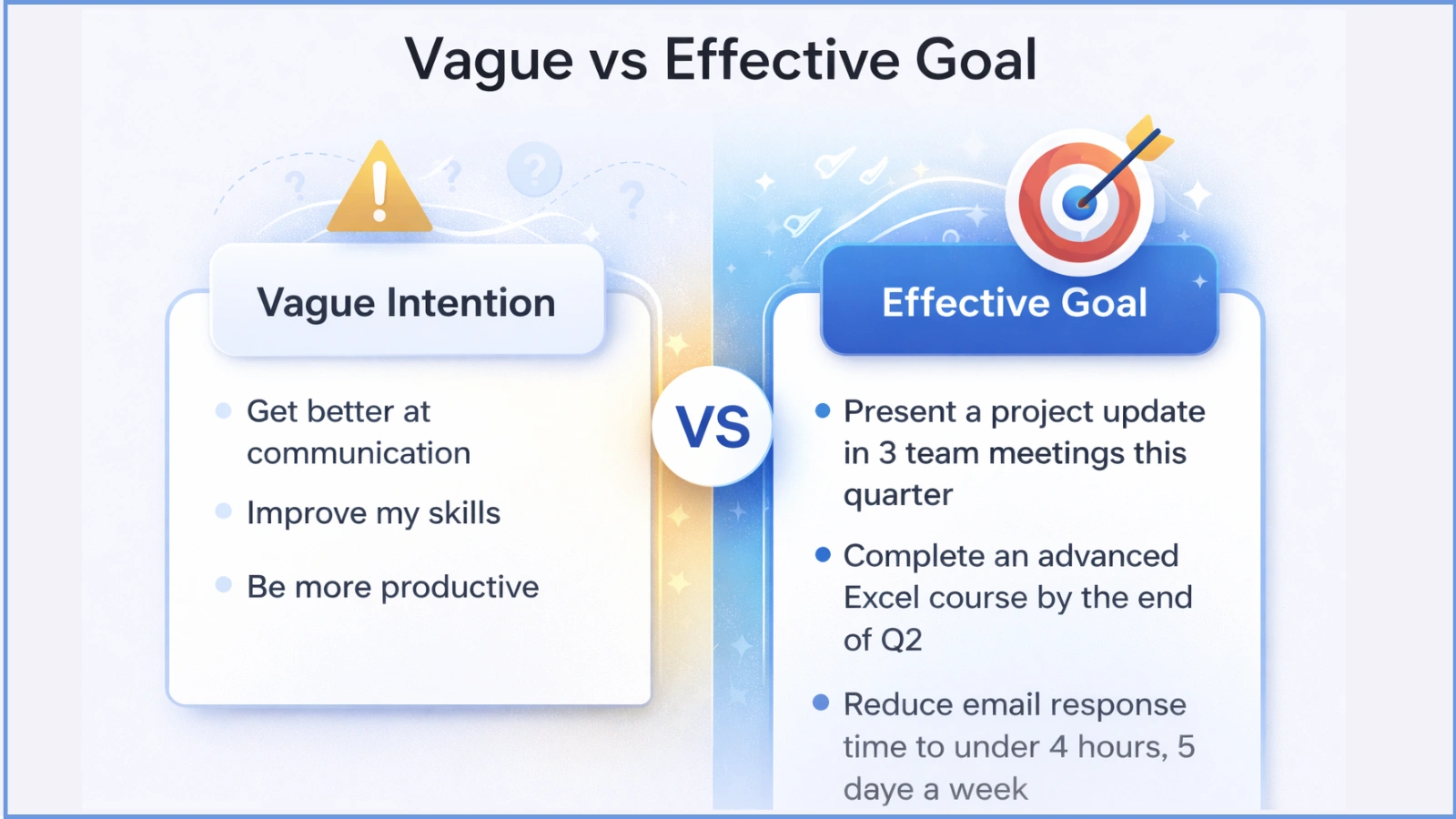
There’s a clear difference between wanting something and defining it properly.
A vague intention might sound like:
“I want to improve my skills.”
An effective goal looks like:
“I will complete a project management certification by September.”
The second version removes guesswork. It tells you exactly what to do and when you’re done.
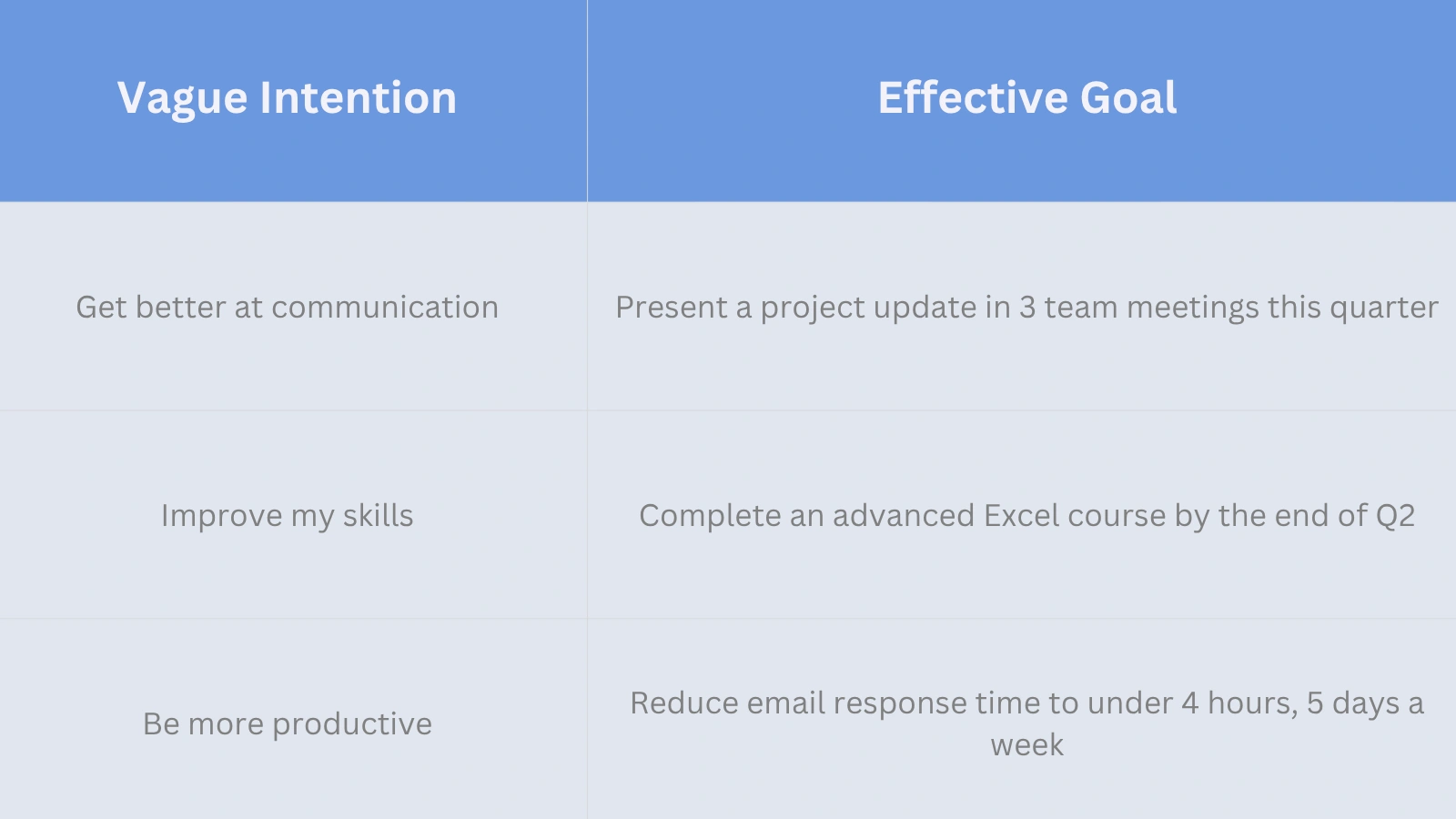
This shift is small, but it changes how you work. Instead of thinking about progress, you start executing it.
Types of Work Goals You Should Know
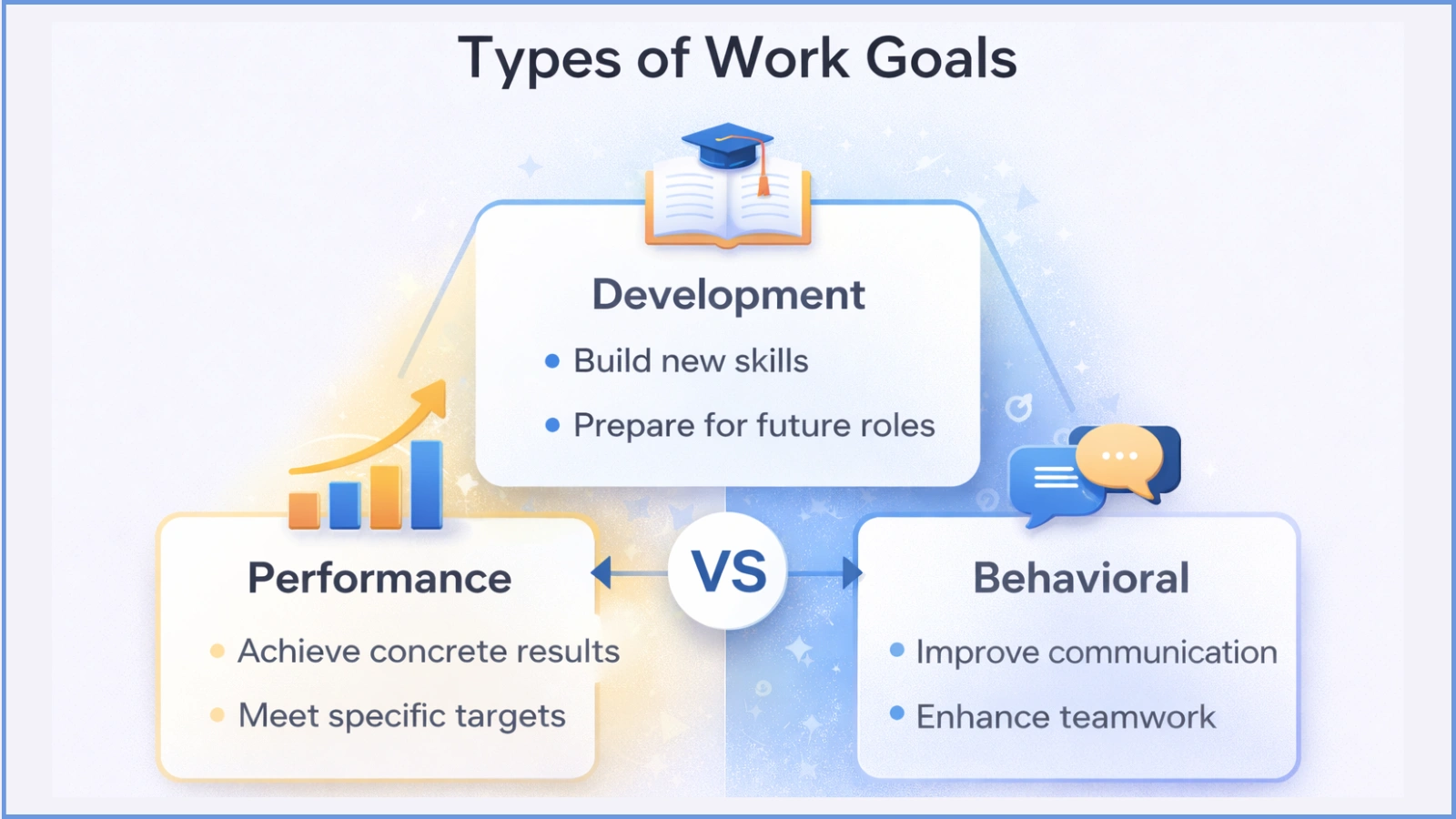
Not all goals serve the same purpose. Focusing on just one area can limit your overall growth.
Understanding different types helps you build a more balanced approach.
These focus on results. They are tied directly to your role and what you deliver. If your job has metrics, these goals define how success is measured.
For example, increasing sales by 15% or delivering projects on time for two quarters.
Most performance targets are set with input from your manager. They reflect both expectations and accountability.
Development Goals
These focus on future growth. Instead of immediate output, they help you build skills that will matter later. This could include learning new tools, earning certifications, or improving leadership ability. Many people overlook this category, even though it forms a critical part of well-rounded work goals. That often slows long-term progress.
In reality, development goals are what prepare you for your next role.
Behavioral Goals
These focus on how you work. They include communication, teamwork, adaptability, and how you handle feedback. While harder to measure, they strongly influence career growth.
For example, actively listening during meetings or improving how you respond to feedback.
Strong technical skills help you perform. Strong behavior helps you advance.
Short-Term vs Long-Term Goals
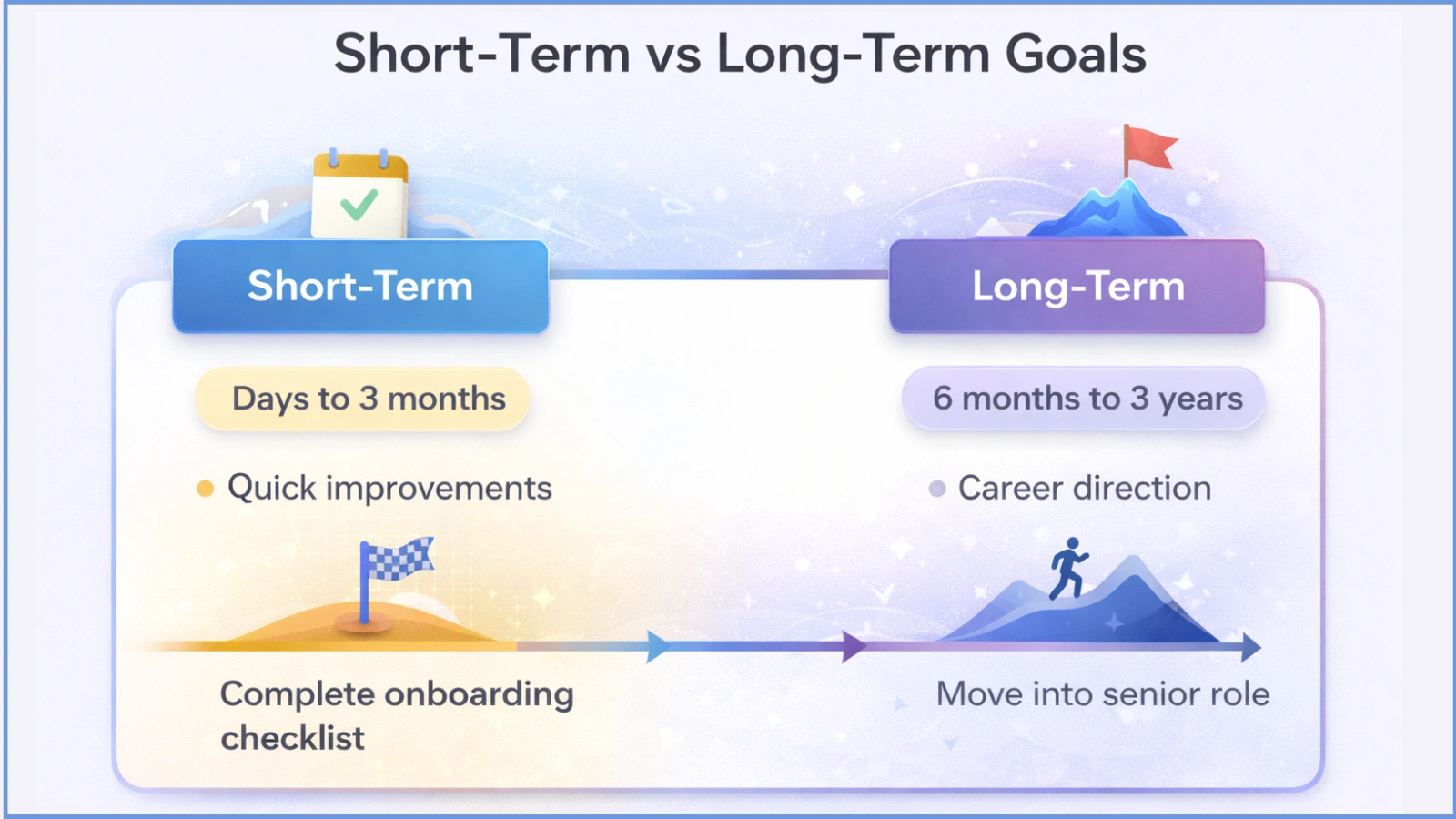
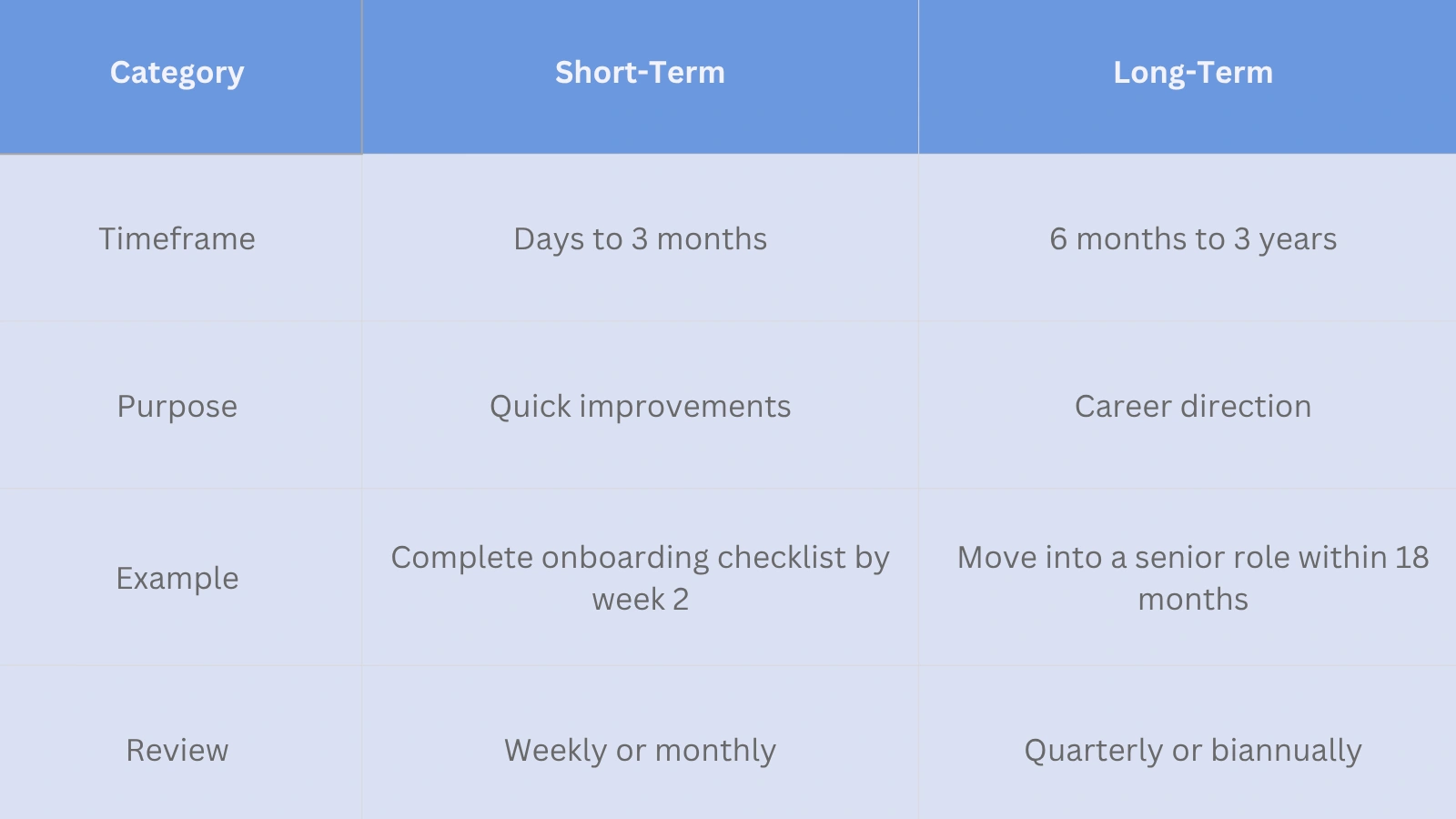
Short-term goals keep you moving. Long-term goals give your efforts direction.
The SMART Framework – A Practical Way to Define Goals
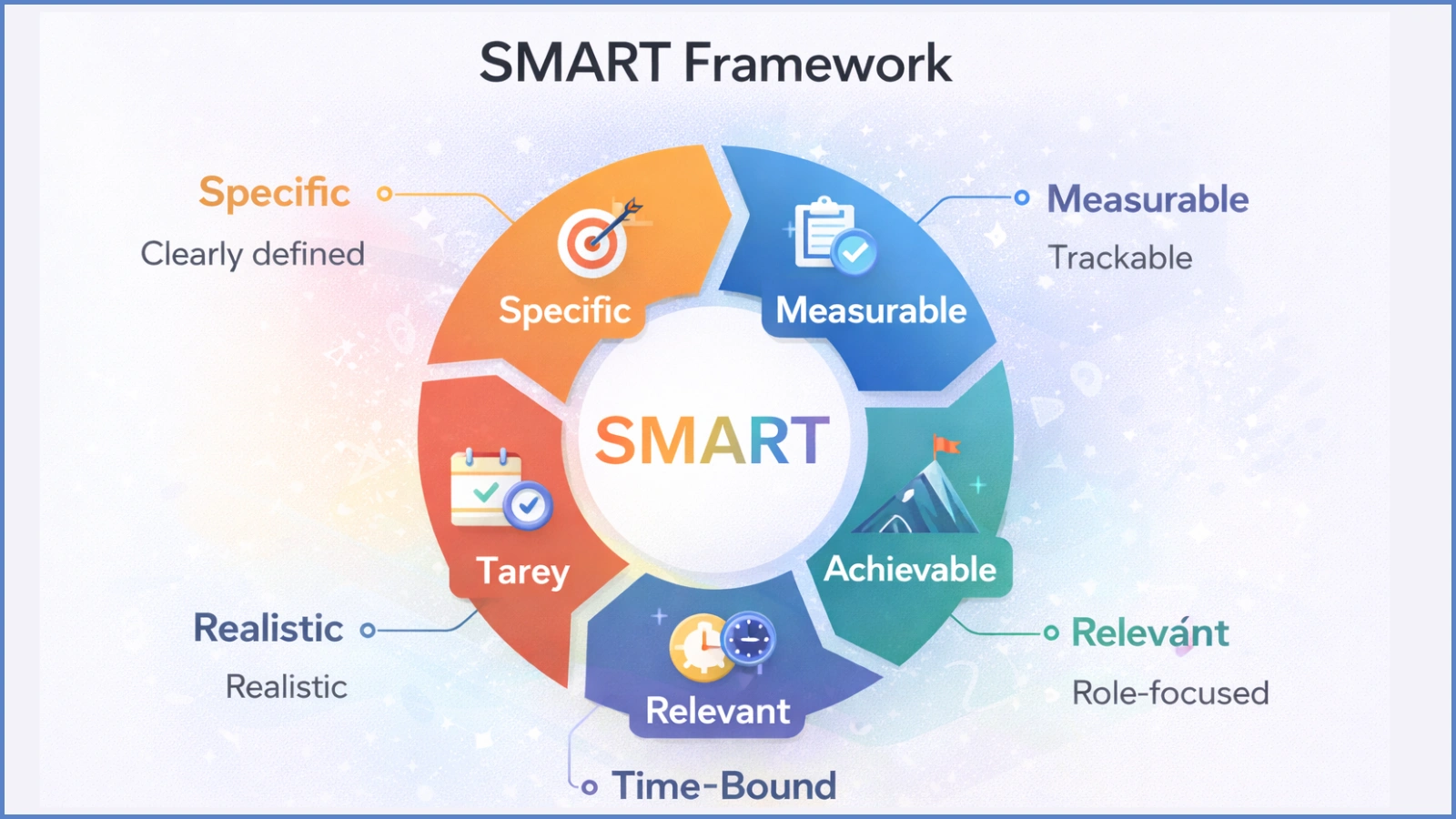
The SMART framework helps turn unclear ideas into structured plans. It works because it forces clarity at every step.
The SMART framework fixes that by adding structure:
- Specific: Clearly define what you want to achieve. Avoid general statements.
- Measurable: Add criteria to track progress and know when the goal is complete.
- Achievable: Set a goal that is realistic based on your current resources and constraints.
- Relevant: Make sure the goal aligns with your role, priorities, or long-term direction.
- Time-bound: Set a clear deadline to create urgency and focus.
Once a goal meets these criteria, it becomes easier to act on and much easier to evaluate.
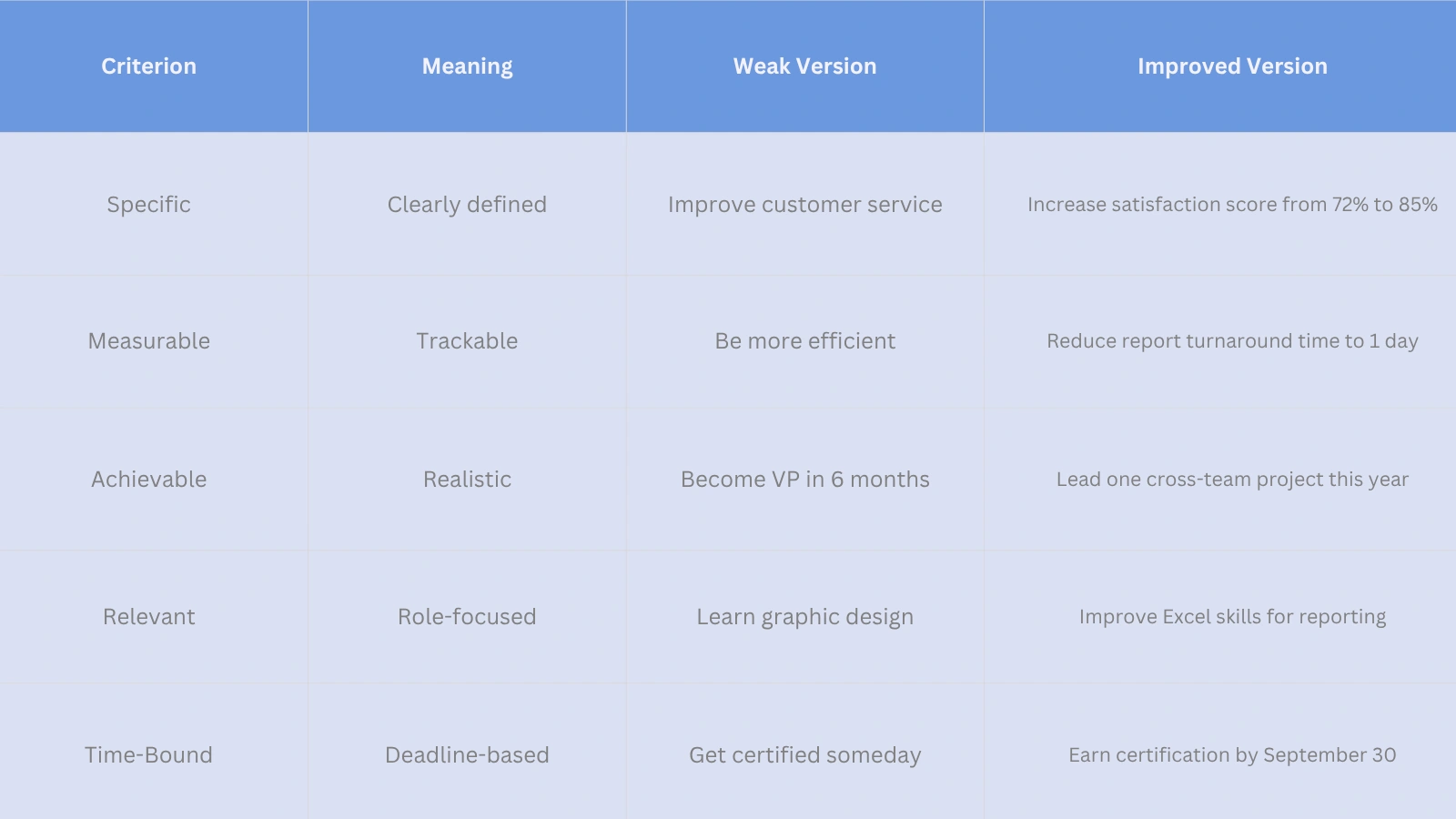
Most goals fail because they start too vaguely.
Once you refine them using these criteria, they become actionable and easier to track.
Work Goals Examples – Real Statements Across Roles
Examples make this easier to apply in real situations.
Smart Goals Examples for Work – By Career Stage
Early-Career Professional
Deliver a solo client presentation by the end of month 2, using feedback from a practice session.
Complete onboarding modules within 30 days and document key learnings.
Mid-Level Professional
Mentor a junior team member this quarter with regular check-ins.
Reduce project delays by 20% over two quarters.
Manager / Team Lead
Hold monthly one-on-one meetings and document development plans.
Improve team engagement scores within six months.
Freelancer
Secure three long-term clients within 90 days through consistent outreach.
Publish two case studies per month.
HR Professional
Launch an onboarding program by April 30 with a strong satisfaction score.
Strong examples remove guesswork. Anyone reading them should understand what success looks like.
How to Set Work Goals: A Step-by-Step Process
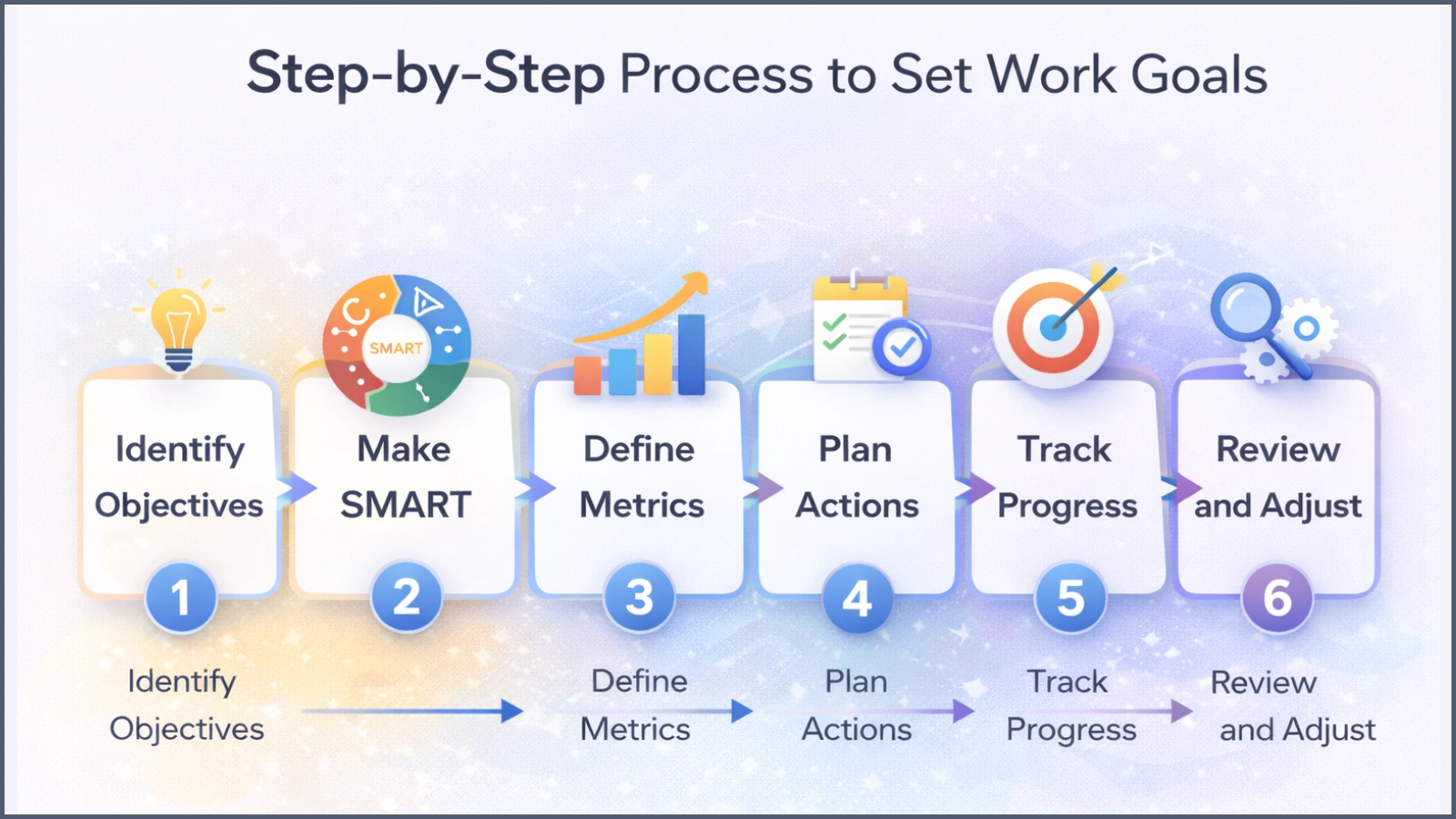
Knowing the concept is one thing. Building it correctly is where most people struggle.
Step 1: Start With Self-Assessment
Look at your current performance. Identify strengths and gaps.
Your past feedback becomes your starting point.
Step 2: Align With Your Role
Make sure your goals connect to team or company priorities.
If they don’t, they may not get support or recognition.
Step 3: Apply SMART Criteria
Start with a broad idea and refine it step by step.
A vague intention becomes a clear action plan once structured properly.
Step 4: Keep It Balanced
Include a mix of output, growth, and behavior.
This ensures well-rounded progress and helps you build effective work goals.
Step 5: Write It Down
Goals that stay in your head are easy to forget.
Write them somewhere visible and review them often.
Step 6: Review and Adjust
Check progress regularly.
Monthly reviews work well for performance. Quarterly reviews work for development.
Adjust as needed based on changing priorities.
How EmpMonitor Helps You Stay Consistent
Having a framework helps, but consistency often breaks down without visibility.
That’s where tools like EmpMonitor come in. Instead of relying on memory or scattered tracking, it gives you a clear view of how your time and effort are actually being used.
When your work goals are tied to daily activity, it becomes much easier to stay aligned and accountable.
Here’s how EmpMonitor supports that process:
Time Tracking and Activity Monitoring
Gives you a detailed breakdown of how your work hours are spent. This helps you see whether your time is aligned with your goals or getting lost in low-impact tasks.
Productivity Insights
Identify patterns in your work habits so you can adjust your focus. Instead of guessing what’s working, you can make decisions based on real data.
Goal Alignment Through Work Data
Helps connect your daily actions with your larger objectives. When you can see progress in terms of output, not just effort, your goals become more tangible.
Performance Visibility
Provides measurable insights into productivity, making it easier to evaluate whether you’re actually moving toward your targets.
Distraction and Idle Time Tracking
Highlights gaps in focus so you can correct them early instead of falling behind over time.
Team Monitoring and Accountability
For managers, it creates transparency across teams, ensuring that individual goals align with team outcomes.
With the right level of visibility, work goals stop being something you plan occasionally and become something you actively manage every day.
Read More!
Common Mistakes That Slow Progress
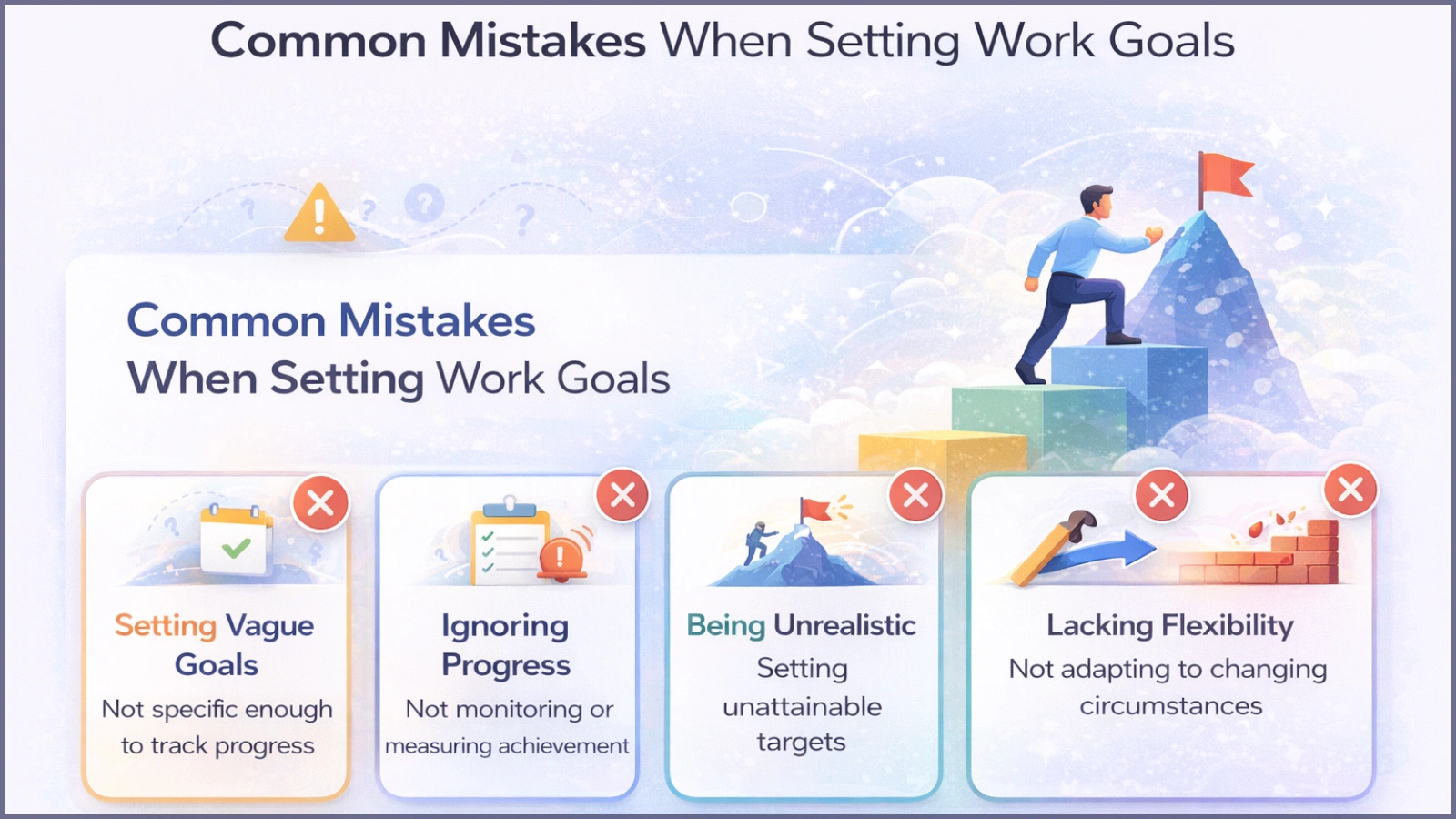
Even well-defined goals can fail if handled poorly. Most issues come down to how goals are managed, not how they’re written.
- Setting Too Many Goals at Once
Trying to manage too much divides your focus. Three to five meaningful goals work better than a long, scattered list. - Not Reviewing Regularly
Goals lose relevance when ignored. Regular check-ins keep them active and aligned with your priorities. - Confusing Activity With Progress
Being busy doesn’t always mean moving forward. Focus on outcomes, not just effort. - Lack of Alignment
Work goals that don’t connect to team or company priorities rarely gain support or recognition. - Playing It Safe
Growth requires some level of challenge. Safe goals may feel comfortable, but they often lead to average results.
Beyond SMART – Smarter Approaches
SMART is effective, but some professionals go further.
The SMARTER model adds evaluation and revision. This allows flexibility as situations change.
OKRs provide a broader structure. They combine direction with measurable outcomes and are widely used by organizations.
Many professionals use both. One for execution, the other for direction.
There’s also a shift in how goals are viewed. Skills are evolving quickly, which makes continuous learning essential.
Another approach focuses on identity. Instead of only tracking outcomes, you focus on the kind of professional you want to become.
That mindset often improves consistency over time.
Start With One Goal That Matters
Work goals turn ambition into action. Without them, effort feels scattered. With them, progress becomes clear and measurable.
The people who grow consistently are not always the most talented. They are the ones who act with intention.
Start simple.
Pick one goal that would make a real difference in the next 90 days. Define it clearly. Set a timeline. Review it regularly. That single step is enough to shift your direction.
Now it’s up to you.
Frequently Asked Questions
What are some work goals examples I can use right now?
You can complete a certification within 90 days, improve delivery speed, mentor a colleague, or increase client retention. Keep them specific and measurable.
What is the difference between performance and development goals?
Performance focuses on current output. Development focuses on future growth.
How often should I review them?
Monthly for performance and quarterly for development works well.
Can freelancers use SMART goals?
Yes. Freelancers benefit from structured targets for clients, skills, and output.
How many work goals should I set at one time?
Three to five is a practical range. It keeps your focus clear.
What makes a goal ineffective?
Anything vague, unmeasurable, or without a deadline. If you can’t track it, it won’t work.