Fatigue management is a critical strategy to ensure workplace safety, maintain productivity, and protect employee well-being. Excessive tiredness or overwork can lead to mistakes, accidents, and poor performance. Organizations that implement structured fatigue management programs can identify early warning signs, optimize schedules, and prevent burnout effectively.
By monitoring work patterns and employee energy levels, leaders can make data-driven decisions that enhance overall safety, efficiency, and satisfaction.
In a hurry? Listen to the blog instead!
What Is Fatigue Management And Why Does It Matter?

Fatigue management refers to strategies and systems designed to monitor and mitigate tiredness, stress, and workload overload in employees. Effective management ensures staff remain alert, focused, and safe while performing tasks. When organizations prioritize fatigue risk control in the workplace, they reduce errors, maintain consistent productivity, and protect employee health. Leaders gain insights into which tasks are high-risk for fatigue, allowing them to balance workloads, schedule breaks, and implement wellness measures. Implementing these strategies demonstrates a commitment to both safety and long-term organizational performance.
Common Causes Of Employee Fatigue In The Workplace
Employee fatigue occurs due to several factors, each contributing to reduced alertness and efficiency:
Long work hours and overtime: Excessive daily shifts increase mental and physical strain, reducing focus and elevating the risk of mistakes.
Irregular or rotating shifts: Poorly designed schedules disrupt sleep cycles, leading to chronic fatigue and decreased concentration during critical tasks.
Repetitive or high-pressure work: Continuous tasks that demand sustained attention can quickly exhaust employees, increasing the likelihood of errors.
Environmental stressors: Poor lighting, noise, and uncomfortable workstations worsen fatigue, lowering productivity and increasing health risks.
Personal health factors: Lack of proper sleep, stress, or poor nutrition outside work contribute to cumulative exhaustion affecting performance.
Recognizing these causes allows organizations to design effective employee fatigue management programs.
Benefits Of Employee Fatigue Management
Proper fatigue management in the workplace provides numerous advantages for both employees and organizations:
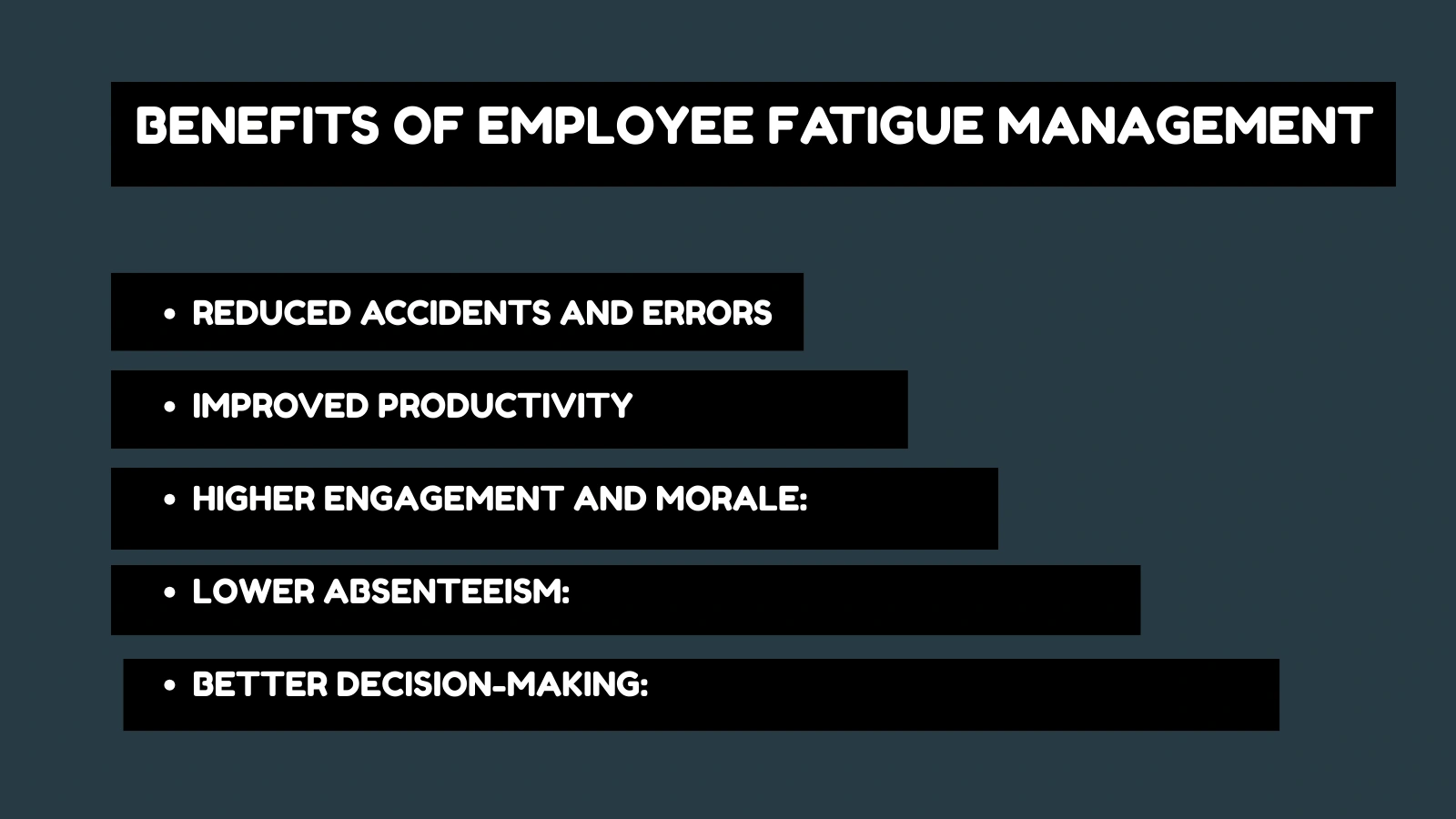
- Reduced accidents and errors: Monitoring fatigue ensures employees remain alert, preventing costly mistakes and workplace injuries.
- Improved productivity: Rested and focused employees complete tasks efficiently, contributing to better overall performance.
- Higher engagement and morale: Staff feel supported when employers prioritize their well-being, resulting in better motivation and commitment.
- Lower absenteeism: Preventing fatigue reduces burnout and fatigue-related leaves, keeping teams consistent and reliable.
- Better decision-making: Leaders can make informed staffing and scheduling decisions based on accurate data about employee energy levels.
Implementing these benefits demonstrates a proactive approach to workplace safety and organizational efficiency.
Understanding Fatigue Risk Management Systems (FRMS)
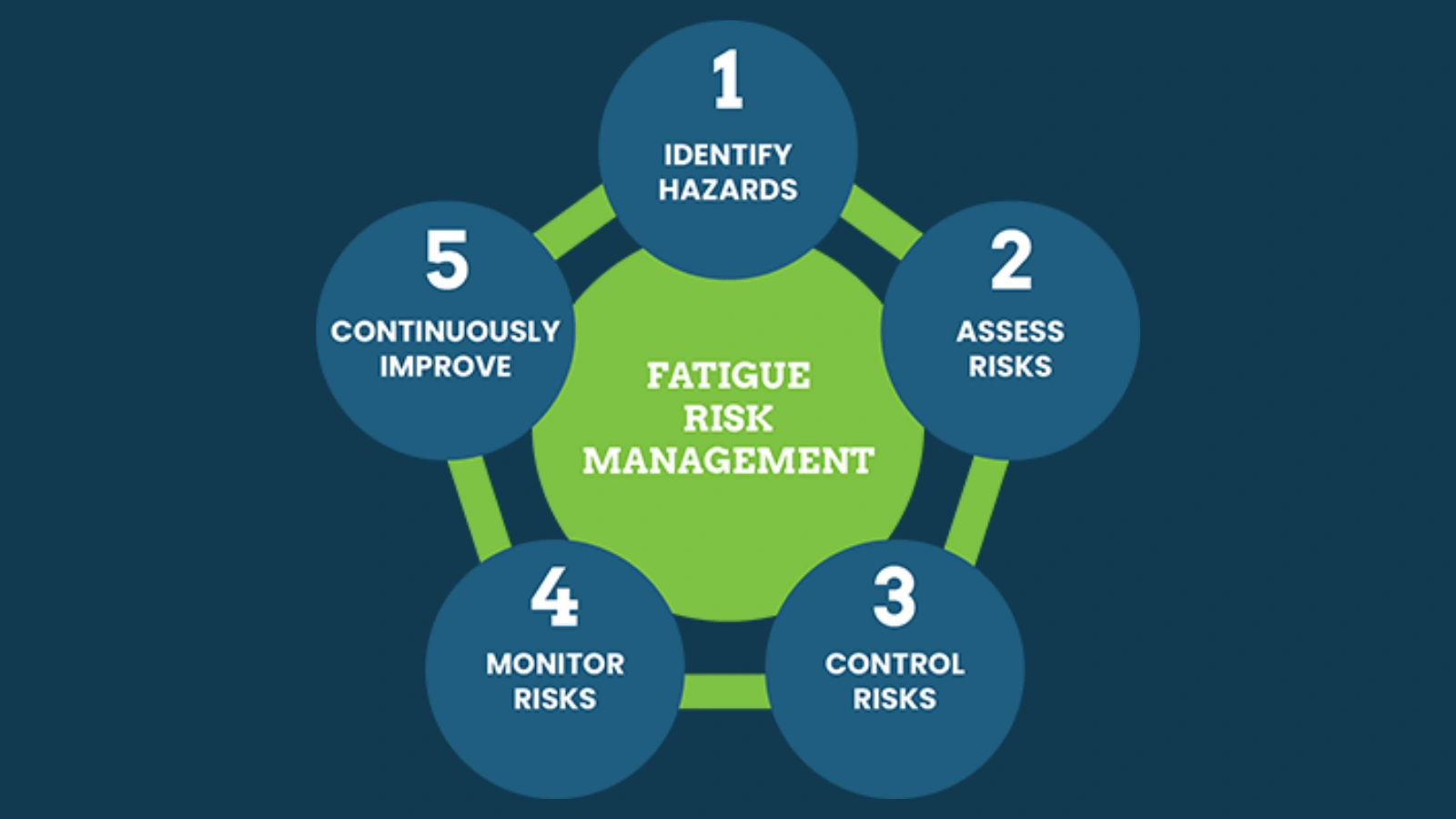
A fatigue risk management system (FRMS) is a structured and proactive approach to identifying, assessing, and controlling risks caused by employee fatigue, ensuring safer operations and preventing fatigue-related incidents before they occur.
Risk Identification
Organizations must identify tasks, shifts, and job roles that pose the highest risk for employee fatigue. This includes analyzing workloads, deadlines, and physical or mental demands to prevent errors or accidents effectively.
Monitoring Patterns
FRMS requires collecting detailed data on work hours, break schedules, and daily activity patterns. This productivity tracking allows managers to detect trends in fatigue, enabling timely intervention and workload adjustments to maintain safety.
Mitigation Strategies
Once risks and patterns are identified, mitigation strategies involve adjusting schedules, adding sufficient breaks, and providing supportive resources to reduce fatigue. These actions help employees remain alert and perform tasks efficiently.
Continuous Evaluation
A successful FRMS includes ongoing assessment and review of fatigue prevention measures. Regular evaluation ensures improvements in safety procedures, updates to policies, and long-term workforce efficiency, reducing errors and maintaining compliance.
FRMS is critical for industries where fatigue directly impacts safety, efficiency, and operational performance, helping organizations protect employees and ensure smooth, reliable operations.
Also Read!
How To Create Project Objectives That Drive Results?
Fein Definition: Hidden Dangers That Could Hurt Your Business
Basic Fatigue Management System: Key Components
Even a basic fatigue management system provides a strong foundation for employee safety, productivity, and operational efficiency across all workplace environments.
Clear Policies and Guidelines
Establish clear rules for working hours, scheduled breaks, and energy management expectations. These policies ensure employees maintain alertness and avoid fatigue-related mistakes.
Workload and Shift Planning
Organize work schedules to prevent prolonged strain, allowing employees sufficient rest between shifts. Proper planning reduces fatigue and maintains consistent productivity levels.
Activity Monitoring
Track employee work intensity, computer activity, and idle time. Monitoring helps identify potential fatigue risks and allows timely interventions to prevent errors or accidents.
Employee Training
Educate employees on recognizing early signs of fatigue and maintaining safe work practices. Training improves self-awareness, reduces risks, and supports overall workplace safety.
Open Communication
Encourage employees to report fatigue-related concerns promptly. Open communication ensures timely support, workload adjustments, and prevents fatigue from affecting performance or safety.
A basic fatigue management system provides the essential framework for developing advanced fatigue risk management systems, improving long-term safety and operational efficiency.
Effective Strategies For Fatigue Management In The Workplace
Implementing practical strategies helps employees stay alert, productive, and safe throughout the day. These strategies prevent fatigue accumulation and ensure long-term efficiency across teams and departments.
Scheduled Breaks
Allocate regular and structured rest periods throughout work shifts to restore focus and energy. These breaks reduce cumulative fatigue, improve concentration, and prevent errors caused by prolonged mental or physical exertion.
Shift Rotation Planning
Rotate high-intensity tasks among employees to prevent continuous overexertion. Strategic shift planning balances workload, reduces fatigue accumulation, and ensures that all employees maintain consistent performance and alertness.
Micro-Breaks and Physical Activity
Encourage employees to take short pauses or perform light physical activity during demanding tasks. These micro-breaks enhance alertness, relieve mental strain, and reduce the risk of fatigue-related mistakes.
Wellness Initiatives
Implement programs focusing on proper nutrition, hydration, and mental health. Promoting overall wellness helps employees recover energy, strengthens resilience against fatigue, and supports sustainable long-term productivity.
Education on Fatigue
Provide training that teaches employees to recognize early fatigue symptoms. Awareness empowers staff to manage energy effectively, maintain safe practices, and report fatigue concerns before performance declines.
Balanced Workload Distribution
Ensure that no employee handles excessive responsibilities continuously. Distributing work evenly prevents overburdening, reduces fatigue-related errors, and supports operational efficiency while maintaining employee engagement and well-being.
Consistently applying these strategies reduces workplace accidents, strengthens overall team performance, and helps organizations sustain a culture of safety, efficiency, and employee wellness.
Role Of Technology In Employee Fatigue Management
Modern technology plays a crucial role in supporting employee fatigue management by simplifying monitoring, providing actionable insights, and enabling proactive interventions to maintain safety and productivity across the workplace.
Real-Time Monitoring
Advanced tools track work hours, employee activity levels, break times, and engagement patterns continuously. Real-time monitoring allows managers to detect fatigue trends quickly and address potential issues before they impact performance.
Automated Alerts
Fatigue management software can notify managers immediately if employees exceed safe activity thresholds or skip essential breaks. Automated alerts prevent overwork, reduce errors, and ensure employees remain productive and alert throughout shifts.
Data Analytics
Analyzing long-term activity and workload patterns helps organizations optimize schedules, redistribute tasks, and prevent fatigue accumulation. Data-driven insights support better planning, efficient resource allocation, and consistent team performance over time.
Integration with Safety Protocols
Fatigue management technology integrates seamlessly with HR systems, safety protocols, and compliance measures. Integration ensures monitoring is accurate, interventions are timely, and safety standards are maintained without additional administrative effort.
By leveraging technology, organizations can proactively manage fatigue, protect employee well-being, improve operational efficiency, and maintain consistent workplace safety without overburdening managers or staff.
How EmpMonitor Supports Better Workload Visibility and Balance
EmpMonitor is designed to help organizations monitor employee activity and work patterns. While it is not a dedicated fatigue management system, it plays a valuable role in identifying workload imbalances and enabling healthier work distribution.
Monitors Work Patterns and Activity Levels
EmpMonitor tracks work intensity, idle time, and active hours across the day. This visibility helps managers understand how employees are working and identify cases where workloads may be uneven or excessive.
Highlights Workload Imbalances
By analyzing activity data, managers can spot employees who are consistently overworked or underutilized. This makes it easier to redistribute tasks and ensure a more balanced workload across teams.
Provides Actionable Workforce Insights
The platform generates detailed reports on work trends, productivity patterns, and time usage. These insights support better planning, helping organizations avoid overloading employees and maintain steady performance.
Enables Flexible Work Models
EmpMonitor supports remote team, in-office, and hybrid work setups. This flexibility allows employees to work in environments that suit them best, which can indirectly reduce stress and improve overall work efficiency.
Encourages Better Work Scheduling
With clear visibility into working hours and activity, managers can make informed scheduling decisions. This helps in avoiding excessive working hours and ensures tasks are distributed more effectively.
Supports Healthier Work Practices (Indirectly)
While it does not directly help in fatigue management, EmpMonitor helps organizations maintain transparency in workloads. This encourages fair task allocation and helps reduce the chances of burnout caused by uneven work distribution.
Best Practices For Implementing Fatigue Management
Organizations can achieve maximum results in workplace safety and productivity by adopting structured approaches, combining policies, monitoring, and employee support to effectively manage fatigue and maintain high performance standards.
Conduct Regular Fatigue Risk Assessments
Regularly assess tasks, shifts, and workloads to identify areas where fatigue may develop. These assessments allow managers to proactively address risks and implement measures that ensure safety and efficiency.
Combine Policies, Training, and Monitoring Tools
Integrate clear organizational policies with employee management and monitoring tools to create a comprehensive fatigue management approach. This ensures consistent tracking, adherence, and proactive intervention across all teams.
Encourage Open Communication
Promote a culture where employees feel comfortable reporting fatigue concerns. Open communication allows timely adjustments in schedules or workloads, preventing burnout and maintaining safe and productive work conditions.
Offer Flexible Scheduling
Provide flexible shifts and task allocation based on individual energy patterns and workload requirements. Flexibility helps employees manage their fatigue, maintain alertness, and deliver consistent performance without compromising safety.
Implement Wellness Initiatives
Introduce programs that focus on mental health, nutrition, and physical activity. Supporting overall wellness improves employee resilience, reduces fatigue risk, and ensures sustained productivity tools throughout shifts.
Review and Update Strategies Regularly
Continuously evaluate the effectiveness of fatigue management strategies. Regular reviews allow organizations to adapt policies, training, and monitoring tools to evolving workforce insights needs and operational demands.
Following these best practices helps organizations build a safe, resilient, and productive workplace, reduces fatigue-related incidents, and supports both employee well-being and long-term operational efficiency.
Conclusion:
Fatigue management is essential for safety, efficiency, and employee well-being. Combining employee fatigue risk control, basic fatigue management systems, and fatigue risk management systems ensures safe operations and higher productivity. Tools like EmpMonitor simplify monitoring, provide actionable insights, and enable proactive decision-making.
Prioritizing Fatigue risk control in the workplace protects employees, reduces errors, and supports consistent organizational performance. Organizations that act proactively can maintain a healthy, alert, and engaged workforce while reducing accidents and boosting overall efficiency.
FAQs
What is fatigue management, and why is it important?
Fatigue risk control involves monitoring and mitigating employee tiredness and overwork to maintain safety, productivity, and overall well-being. It prevents mistakes, accidents, and burnout in the workplace.
How does a fatigue risk management system (FRMS) work?
An FRMS identifies high-risk tasks and shifts, monitors employee activity and breaks, applies mitigation strategies, and continuously evaluates outcomes to reduce fatigue-related errors and improve workplace safety.
What are the key strategies for effective fatigue management?
Key strategies include scheduled breaks, shift rotation planning, micro-breaks, wellness initiatives, education on fatigue, and balanced workload distribution. These reduce fatigue and maintain alertness throughout work shifts.
How can technology like EmpMonitor help manage employee fatigue?
EmpMonitor tracks work intensity, idle time, and activity periods, provides reports, integrates with fatigue management systems, detects risks early, and supports structured programs, reducing fatigue-related errors and improving safety.
What are the best practices for implementing fatigue management in the workplace?
Best practices include conducting regular fatigue risk assessments, combining policies and training, encouraging open communication, offering flexible schedules, implementing wellness initiatives, and continuously reviewing strategies for effectiveness.