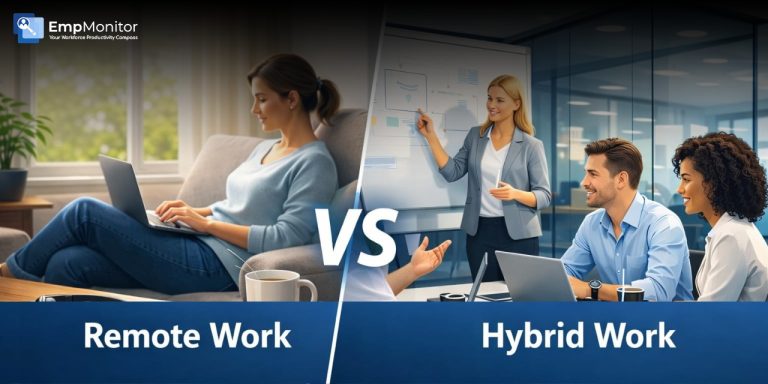
Does remote work actually mean lazy employees? Or does it translate to a better working environment? Both remote and hybrid work methods have impacted the work culture significantly. Companies that offer hybrid or remote work report cost savings, better productivity, and higher employee satisfaction. Though it is important for businesses and firms to pick the model that suits their workforce and needs, the decision often narrows down to one key factor: hybrid vs remote work.
Choosing a suitable work method not only enables a company in cost management but also makes things more effective and efficient. But of course, finding the best option depends on how much flexibility an employer can offer based on the business type and organizational goals.
So, what is hybrid vs remote work? Let’s break these two work models down, understanding their definitions and differences, including the benefits and challenges of both, to decide which model fits your business needs.
Listen To The Podcast Now!
What Is Hybrid Work?
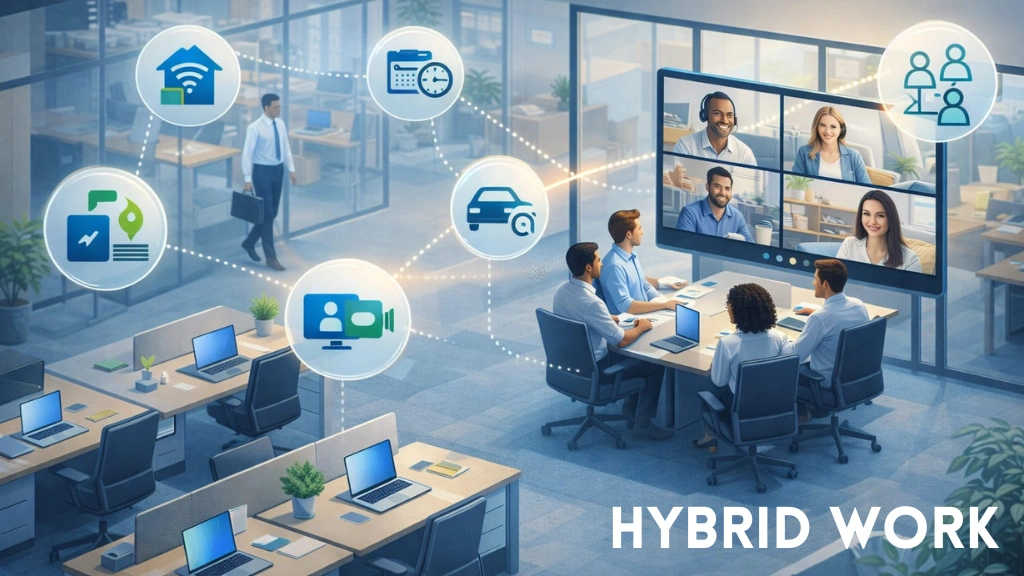
Hybrid work is employees working both remotely and from the office, often setting their schedules based on their own or the company’s needs.
This method of workforce has gained popularity in recent times as businesses adapt to the changing aspects of work, guided mostly by developments in technology and shifts in employee expectations.
What Is Remote Work?
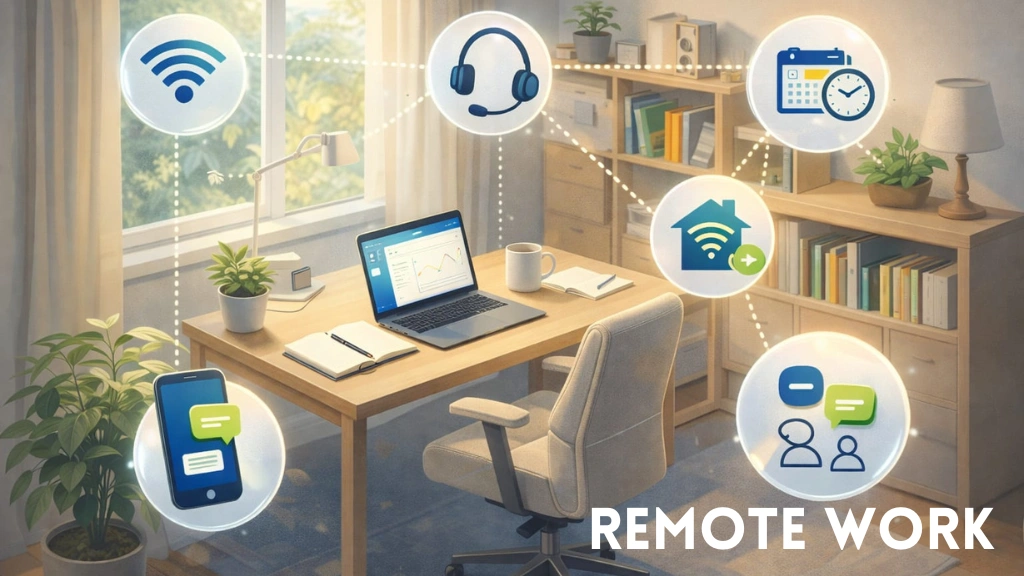
In the hybrid vs remote work spectrum, remote work refers to an employee working from any other work setup, like home or any other location. The digital tools mostly used for remote work are email, video conferencing, and employee management software.
There are many different ways of working remotely, such as working fully remote, freelancing, or having flexible jobs, enabling employees to work from any location, including their homes or co-working spaces.
Let’s go through the differences, advantages, and challenges of both working methods to understand this hybrid vs remote work discussion.
Understanding the key differences

Work Location
Work location plays a huge part in the hybrid vs remote work comparison; below is the differentiating factor.
Hybrid work: Mixes the office and home environments. In a hybrid work setup, some companies require employees to work from the office for a certain number of days, and the rest they can work from home. In some cases, workers may only be required to work from the office once per week or a few times per month.
Remote work: In a hybrid vs remote work landscape, remote work means employees predominantly work out of the office place where they live or any other location, sometimes in a dedicated home office. Working from anywhere means employees can work from any location—such as coworking spaces or coffee shops—in any city.
Flexibility
Hybrid work: Hybrid work offers limited flexibility; employees have to create a balance between working in the office and their preferred location.
Remote work: In this work method, employees get complete liberty to choose their work location, allowing them to work from anywhere.
Work habits and communication
Hybrid work: In this debate of hybrid vs remote work, this method encourages employees to have in-person collaboration on office days and supports working with digital tools on remote days.
Remote work: Remote work completely depends on digital tools and setups like email, video conferencing, and employee management software.
Employee monitoring and management
Hybrid work: this method requires an employer to use employee monitoring software in both the office setup and remotely. Let us see the other work method perspective in this hybrid vs remote work dynamic.
Remote work: this method relies heavily and majorly on the digital tools in order to maintain accountability and performance. Tools like EmpMonitor help in providing complete insights into employee computer working activities to make the workplace productive and secure, whether it be remote work or hybrid work. The next key factor in the hybrid vs remote work discussion is cost management.
Cost management
Hybrid work: the employer does not have to account for office space and overhead costs but still needs to maintain a physical working space.
Remote work: this method completely eliminates the need for a physical workspace or office to be provided by the employer, leading to effective cost savings.
Now let’s move further and discuss more about remote vs hybrid methods and find more points and structure for the hybrid vs remote work analysis.

Pros of Hybrid Work
Flexibility and structure
Hybrid work provides enough flexibility to the employee that they can enjoy the freedom of working remote days while still being able to maintain office connections.
This makes the work method ideal for both collaboration and autonomy.
Strong team connections
In-office days help the teams in face-to-face brainstorming, mentorship, and space building, which helps in preserving organic interactions.
Cost-effective
Companies can reduce the office space without having to eliminate the physical working space completely. The hybrid vs. remote work comparison tells us that the hybrid work method actually saves 30-50% more on real estate costs.
Easier for training and onboarding
It’s easier for the newly hired employees to train and learn in an office environment and then enjoy the perks of work flexibility later on.
Improved well-being
Hybrid helps employees beat isolation by working in the office and socializing while offering remote work-life balance. Studies show this work method boosts employees’ morale by 27% more than fully remote setups.
Cons of Hybrid Work
Schedule management
Coordination of managing office days across teams can be challenging and needs careful planning. This is a very practical obstacle for the hybrid vs remote work model.
Participation inequality
When in-person workers are present, remote employees can often feel like they have a harder time participating and contributing to the conversation. In turn, this may put undue pressure on them to come into the office, even when they’d prefer to work remotely.
Less flexibility
Sometimes the hybrid work model requires workers to come into the office one or more times a week; it won’t be able to compete with remote work’s flexibility. In fact, some employees may find the mix of coming in and staying home even more disorienting.
Inconsistent productivity
The hybrid vs remote work transition can affect workflows and efficiency negatively. Hybrid setup requires constant upgrades and adaptations.
Next in this analysis of hybrid vs remote work, we proceed to discuss the pros and cons of remote work.
Pros of Remote Work
Complete flexibility
Without an office to come into, employees can work wherever they feel most comfortable. This can make it much easier for them to start earlier or stay later if they want.
More advanced technology
Fully remote workplaces need the most up-to-date technology for their employees to work effectively. This may make them more flexible and adaptable.
Time and Cost Reduction
Working remotely can be a lot cheaper in the hybrid vs remote work comparison. It also helps to cut down on office space, which helps lower rent, utilities, and maintenance bills. Cutting down on these in-person work expenses can help a business cut down on extra costs.
Attracting and retaining top talent
By offering work-from-home or flexible working hours, organizations can attract the best talent in the market. This not only helps with recruiting from different areas but also aids in retaining employees by offering flexibility to meet personal needs.
Increased productivity
In the hybrid vs remote work conversation, due to employees working remotely and from the place of their comfort, the chances of leaves and absenteeism resulting in increased productivity and profit are higher. Also, the ability to create a personalized work environment and minimize distractions can lead to higher efficiency and output.
Cons of Remote Work
Lack of boundaries between personal and working life
One key issue in the hybrid vs remote work divide is that it becomes a significant issue when there’s no clear boundary between work life and personal life. This lack of separation often leads to longer working hours for employees. The absence of shifting from a physical workplace to home means work can infiltrate personal time, leading to burnout and decreased job satisfaction.
Data and security risks
Working in a remote setup introduces a significant amount of security risks and data privacy concerns that are less obvious in a controlled office environment. This is a key consideration in the hybrid vs remote work dilemma, which is why digital tools like EmpMonitor play a major role in helping and maintaining data from security breaches and thefts, offering a robust feature called “Data Loss Prevention (DLP),” which helps businesses secure sensitive data and prevent theft.
Health concerns
Working from a remote setup often lacks the setup and design of a professional workplace. This can lead to physical health issues for the employees, such as back pain, neck strain, and eye fatigue, especially if employees work long hours without proper furniture or equipment.
Which is the best fit for you?
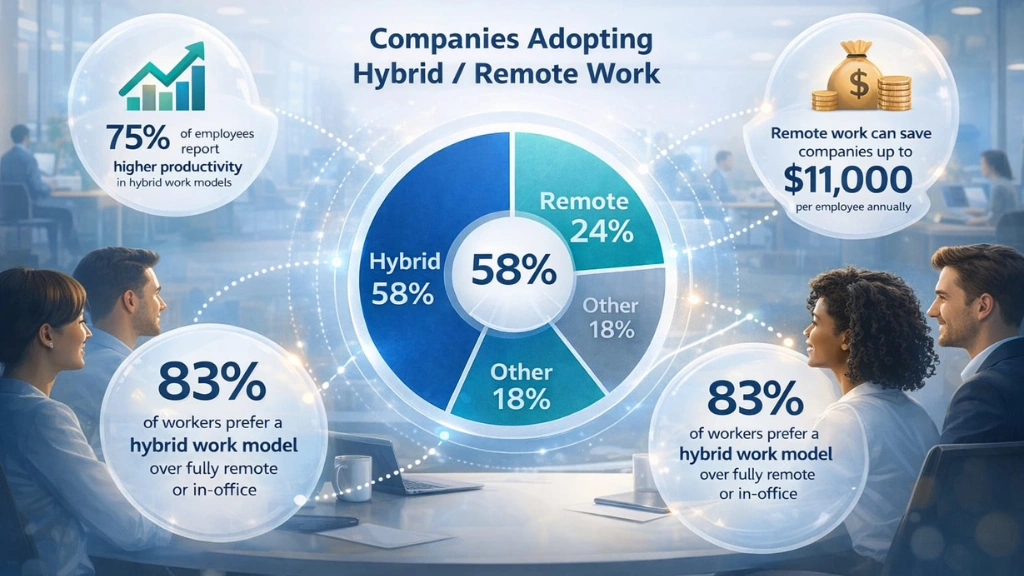
Now moving further in the discussion of hybrid vs remote work, let’s discuss the factors deciding which work method suits you better.
Company needs in the hybrid vs remote work analysis
Choosing a work model depends on the company’s needs and requirements. If the company can afford to appoint the employees remotely while still maintaining the productivity and profits, then the employer should consider remote work; otherwise, if it benefits the business to work in a hybrid setup, then they should opt for that.
Productivity
Companies should consider the long-term impact of office and remote work on productivity. A hybrid work model can be encouraging for companies during remote days and collaboration on in-office days, but switching between environments can be hard and disruptive.
Hybrid vs remote work analysis offers unique perspectives. Remote work can offer an uninterrupted and personalized setup for work, which increases the chances of higher efficiency, but it needs the employee to have strict discipline, work ethics, and effective employee monitoring software to ensure accountability.
Cost management
Cost management is very important for a company, and choosing a work that is suitable for your company is very crucial. Hybrid work reduces the cost of office space, but it still requires maintaining a physical workspace, while remote work may not need an official space, but there is still the need for digital tools like employee monitoring software. For the next point in the hybrid vs remote work discussion, we discuss security and compliance.
Security and compliance
It is important for a company to take measures to ensure security, and for that, choosing the right work model is a must. In hybrid work, it is easier to manage with controlled office environments and tools like EmpMonitor. And remote work can be an invitation for higher risk, which is why it needs features like Data Loss Prevention (DLP) to prevent breaches and theft.
Now that we have discussed the differences and which is the best fit, let us have a look at the digital tools, which are the backbone of this hybrid vs remote work argument.
Read More!
Hybrid Remote Meaning: How It Works & Why Companies Love It?
Digital tools are helpful for working remote and hybrid.
In the evolving world of hybrid vs remote work, businesses need some good and countable tools in order to thrive successfully, hence tools like EmpMonitor.
It is designed to offer complete visibility in a team’s activities; whether they’re working from home, the office, or in a hybrid setup, EmpMonitor ensures seamless performance tracking, efficient workflow management, and enhanced team collaboration across all work environments.
Here’s how EmpMonitor stands out:
Activity tracking
EmpMonitor gives features like employee monitoring software. This feature provides visibility into employee performance across different locations, encouraging accountability and productivity. Hybrid vs remote work offers flexibility no matter where employees are based.
Data Loss Prevention (DLP)
One of the biggest threats for companies adopting hybrid vs remote work methods is data breaches and theft. This feature of the EmpMonitor seamlessly blocks unauthorized websites, restricts access to specific applications, and prevents USB detection.
Stealth mode
Stealth mode helps in monitoring the employees with minimum software exposure. It neither appears in the programs list nor is recognized by the Task Manager.
Insightful reports
EmpMonitor provides a feature that helps an employer visualize employee engagement and perform a flawless team analysis with the graphic-rich analytical reports & automated timesheets.
GPS Tracking
Utilizes geolocation technology to track and display user information, including IP addresses for easy geo-positioning and monitoring. This feature is beneficial for both hybrid work and remote work.
Final thoughts on the hybrid vs remote work debate
These work cultures have significantly impacted how businesses operate, highlighting both challenges and opportunities. This discussion isn’t about which is better; it’s about what works best for your people and business goals. While remote work offers unmatched flexibility and cost savings, hybrid models bring structure and in-person collaboration.
The key to success lies in choosing a setup that aligns with your company culture and empowers employees to perform at their best. And digital tools like EmpMonitor are a boon to hybrid vs. remote work methods, helping and creating easier pathways to survive and thrive.
FAQs
Are remote workers more productive than those in the office?
Remote work productivity research conducted on hybrid vs remote work shifts suggests that yes, on the whole, employees who work remotely are more productive than they are/were in the office. Studies show that remote workers have logged 1.4 more days/month but face higher burnout.
Is working remotely cheaper than working in a hybrid environment?
Oftentimes yes, hybrid work requires tech costs and real estate costs, because it is necessary for a company to have a physical working space. However, remote work has the extra cost of cyber security and data protection.
Why do hybrid policies fail in some cases?
Yes, in some cases, hybrid work setups do fail, and the common causes are:
- No clear rules and regulations for office days. The chaotic scheduling can lead to a messy and failed hybrid work schedule.
- Poor tech facilities can affect a business gravely if not taken care of properly in the hybrid vs remote work aspect.