
The past few decades have seen a massive transformation in wireless communication. The transition from basic radio signals to high-speed mobile internet has not only redefined various sectors and economies but also our day-to-day work lives.
Currently, wireless technology is the backbone of smart gadgets like smartphones, smart homes, smart cars, and even sophisticated healthcare systems. For remote workers, wireless communication is now more crucial than ever, shaping how teams collaborate, how data is accessed, and how employees stay productive across geographies.
With the pace of innovation getting faster, the future of wireless communication will be more rapid, intelligent, and deeply embedded in the way we work than ever before.
From 4G to 5G: A Major Leap in Remote Work Connectivity
The upgrade of 4G to 5G is probably the most dramatic change in wireless communication. 4G was enough for basic streaming and browsing, but 5G enables ultra-low latency, fastest speeds, and massive device connectivity. For businesses, this translates into faster cloud access, seamless communication tools, and more efficient workflow across remote teams.
Due to the extremely high-speed (up to 10 Gbps) and very low latency (as low as 1 millisecond), 5G will make possible even the most demanding real-time applications. Autonomous vehicles, smart manufacturing, remote surgery, and AR/VR experiences are just some of these applications.
This also means faster video conferencing, smoother collaboration on cloud-based platforms, and more efficient virtual project management tools, all driving productivity for remote teams.
Regardless, 5G is only the starting point.
The Development of 6G Networks

6G technology development is already underway globally with researchers debating the expected implementation around 2030. The likely use of 6G is the terahertz (THz) bands which will provide data rates 100 times higher than those of 5G.
Envisioned 6G technologies include:
- Hologram-based communication
- Immersive XR experiences
- AI-integrated networks
- Automated advanced robotics
These advancements will allow virtual team meetings to feel more real-time with 3D holographic representations, enhance team collaboration in training, presentations, and product development, provide smarter connectivity that boosts productivity, and enable companies to remotely manage production, logistics, or client service. Together, they’ll drive significant improvements in workforce productivity, remote work, and business operations across various sectors.
Employing AI at the core of the 6G network infrastructure will be a key differentiator of 6G from previous wireless generations.
Artificial Intelligence in Wireless Infrastructure
Artificial Intelligence is playing an increasingly important role in wireless communication systems. For example, AI-powered networks can effectively manage a typical scenario of heavy traffic by studying the situation and then automatically rerouting the bandwidth allocation so that the users will almost never notice. In the context of remote work can ensure uninterrupted productivity for remote workers.
AI can also be used to enhance cybersecurity by instantly detecting any malware signs from the behavior of the users. Thus, as the wireless networks get more and more complicated, AI will be a key factor in their successful management with respect to performance, scalability, and security.
Expansion of the Internet of Things (IoT)

IOT is continuously growing, connecting an ever-increasing number of devices around the planet. Smart thermostats, fitness trackers, sensors for the industry, and the smart appliances are the major examples of wireless communication.
There exist new networking standards that are specifically meant for the future wireless networks supporting the massive machine-type communication (mMTC) vision which seeks to accommodate billions of devices efficiently without creating network congestion.
IoT will play a key role in workplace automation, and will be vital for remote monitoring of employee health and productivity. For instance, wearables that monitor employee wellness or real-time location tracking will help businesses stay informed on their team’s well-being, ensuring they stay productive and healthy while working from home or across multiple locations.
Some other areas that will benefit from innovations brought about by this growth include:
- smart cities
- healthcare monitoring
- farm automation
- logistics/supply chain management
Hence, wireless connectivity is fast becoming the nervous system of smart infrastructure.
Satellite Internet and Global Access
Delivering internet access to rural and remote places in a trustworthy manner has always been a difficult task. Satellite Internet has the ability to change this through its connectivity capability.
SpaceX, Amazon, and OneWeb are a few of the current players launching constellations of low Earth orbit (LEO) satellites to provide global broadband coverage at high speed.
While traditional satellites have a much longer round-trip time, thus higher latency, LEOs have the advantage of being much quicker and consequently more efficient, thus making them a better option for worldwide connectivity. This particular advancement is expected to close the gap between the digitally connected and disconnected and facilitate communication in the most remote places.
These advancements will improve connectivity significantly , which will enabe businesses to effortlessly deliver services and maintain seamless communication with employees, no matter where they are. Companies can break down connectivity barriers, allowing remote teams in even the most remote areas to stay productive and easily access critical systems and applications. This ensures that distance is no longer an obstacle to effective collaboration and service delivery.
Edge Computing and Ultra-Low Latency

Wireless technology continues to be influenced by yet another vital trend, namely edge computing. In sharp contrast to cloud computing, edge computing is the process of taking the data input or output and then processing the data starting from the point of the user or device and then gradually going outward.
By doing this, latency gets really low and thus real-time performance enhances greatly, which is extremely helpful for the following industries:
- driverless cars
- Industry 4.0
- VR and AR
- telemedicine
The joining of 5G and edge computing will bring about the ability to make decisions instantly and enjoy uninterrupted digital experiences.
Security in Future Wireless Systems
The downside of increased connectivity is that there is a higher risk of security breaches. The new-age wireless networks must be equipped with the latest encryption technology supported by AI-driven threat detection and quantum-resistant security protocols.
Wireless security will be taken to a new level with the adoption of blockchain technology and zero-trust architectures. The protection of the user data and the network integrity will be one of the major issues in the next phases of the communication technologies.
The Rise of eSIM Technology
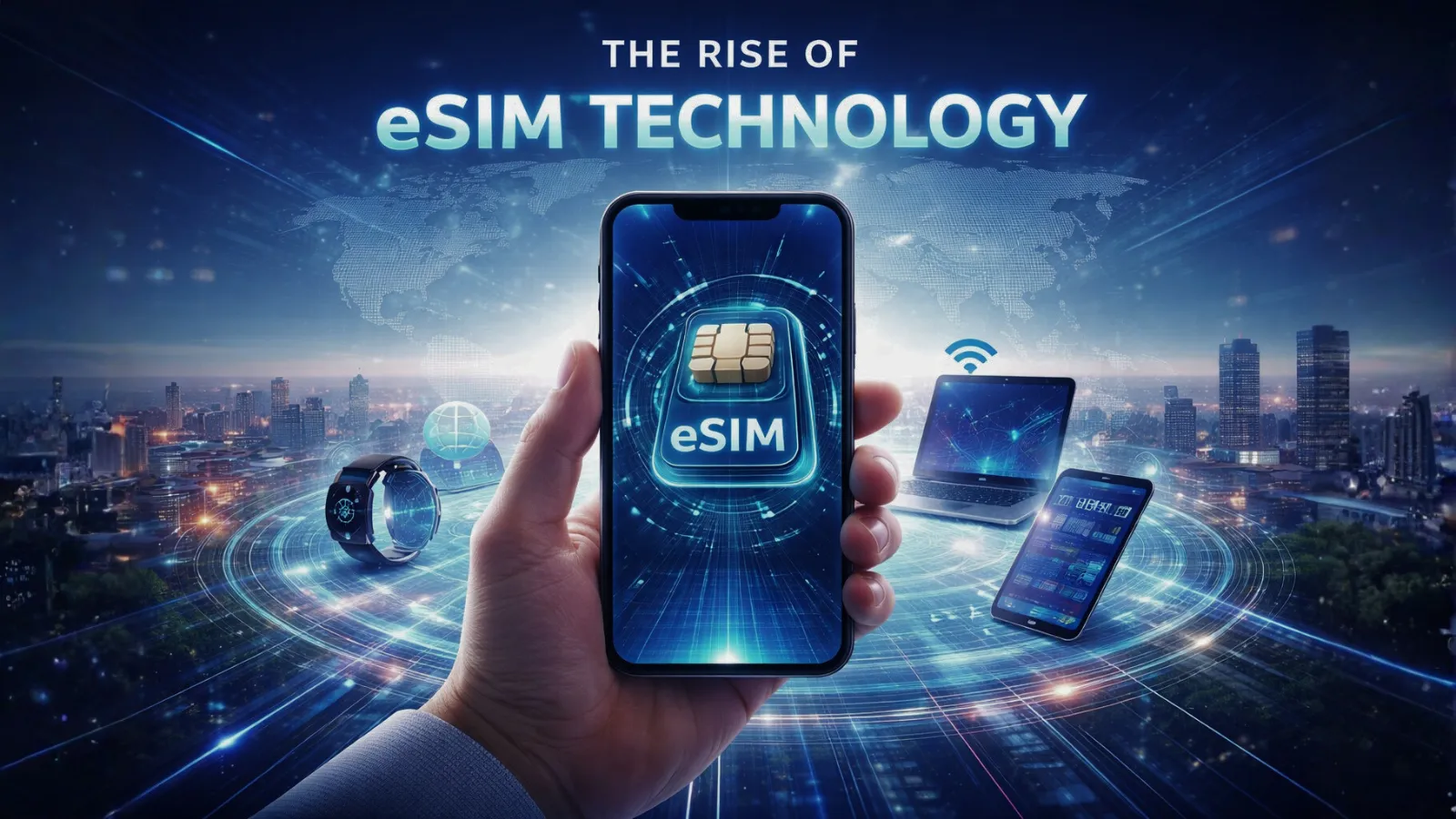
Among the wireless communication innovations, the growth of the eSIM has probably been the most game-changing development. Unlike traditional SIM cards that must be physically inserted into a device, eSIMs are built directly into smartphones, tablets, laptops, and IoT devices, allowing users to switch carriers digitally within minutes.
eSIM for the United States
eSIM is particularly useful for travelers to the United States, offering the convenience of activating a US data plan before arrival, avoiding international roaming charges, and connecting to major networks without visiting a physical store. Whether in large cities or rural areas, eSIM ensures reliable coverage across different locations, providing users with seamless internet access.
Why eSIM is Ideal for the US Market
With the U.S. having advanced telecom infrastructure and rapidly expanding 5G networks, eSIM technology is an ideal solution for those looking to stay connected without the hassle of traditional SIM cards. It’s especially beneficial for digital nomads, business travelers, international students, and remote workers who require consistent and flexible connectivity while moving across locations.
As more devices become eSIM-compatible, choosing an eSIM for the United States is becoming the smartest and most convenient way to stay connected across different locations without hassle. If you want there are various eSIM providers to select from.
Smart Cities and Connected Ecosystems
Wireless networks will be the backbone for the cities of tomorrow. Smart traffic systems, automated waste management, connected surveillance, and energy-efficient infrastructure all depend on reliable wireless communication.
It will create more efficient urban environments that improve the quality of life for remote workers, both at home and in their workspace.
Low-latency, high-speed networks will make it possible for remote teams to collaborate in real-time, even from different parts of the world, by providing seamless communication and intelligent data handling.
Sustainable and Green Wireless Networks
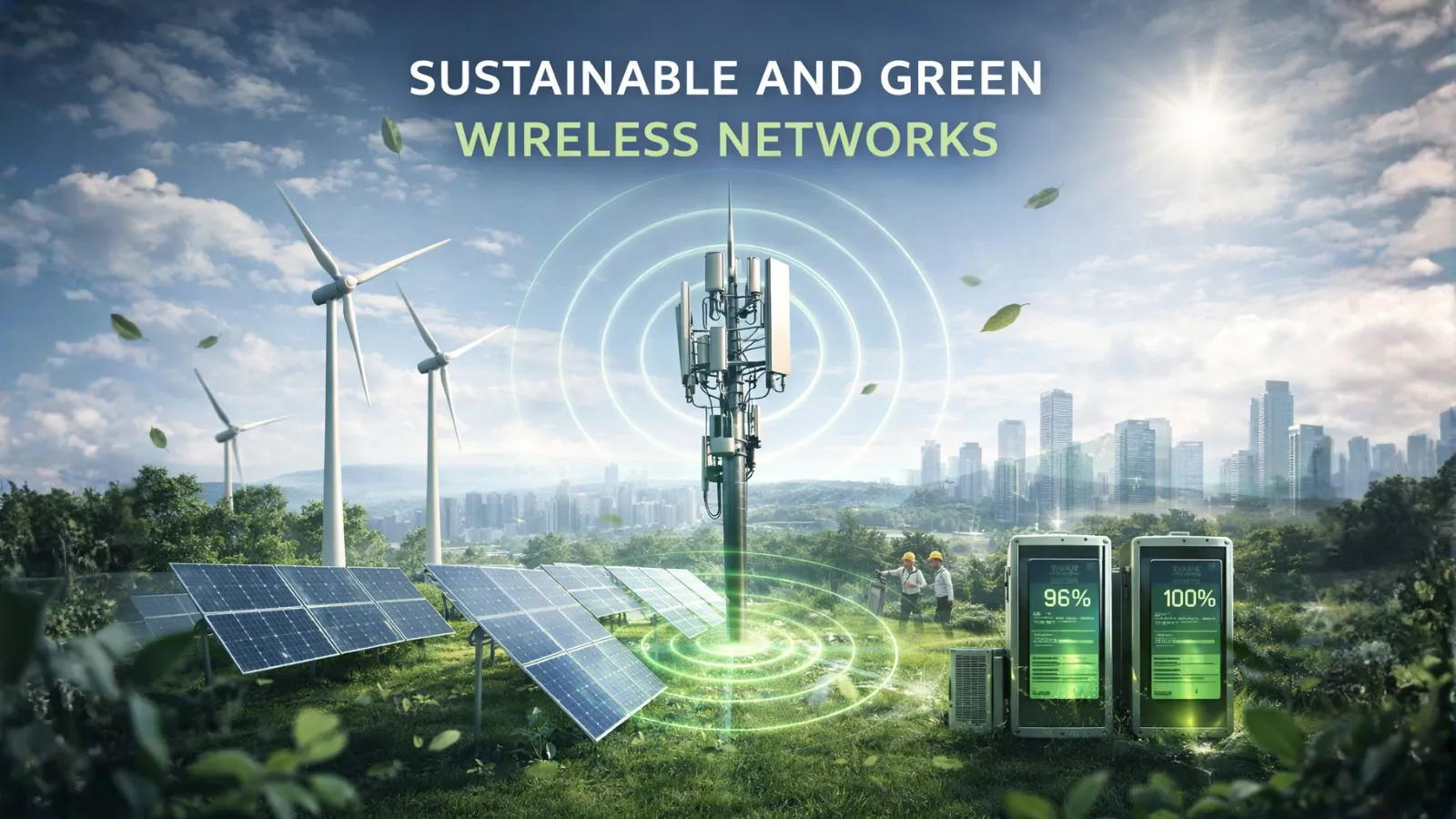
The future of wireless technology must be energy-efficient and sustainable. As data consumption increases, green wireless networks will focus on using intelligent power management, energy-saving equipment, and clean energy to reduce the energy demand of next-generation networks.
For businesses with remote teams, sustainability and green technologies will help reduce the environmental impact of global communication systems while supporting remote work that doesn’t rely on energy-intensive data centers.
Conclusion
The future of wireless communication technology will be defined by speed, intelligence, and universal accessibility. The industry is evolving rapidly with the expansion of 5G and upcoming 6G networks, AI-powered optimization, satellite internet, and massive IoT adoption.
For businesses, especially those with remote teams, staying connected and productive will be easier and more efficient than ever. Whether it’s through eSIM technology, IoT devices, or edge computing, the future of wireless communication will empower remote work to thrive seamlessly across the globe.
If you’re planning to travel, this guide on the best eSIM options can help you choose the right provider https://cybernews.com/best-esim-providers/best-esim-for-united-states/