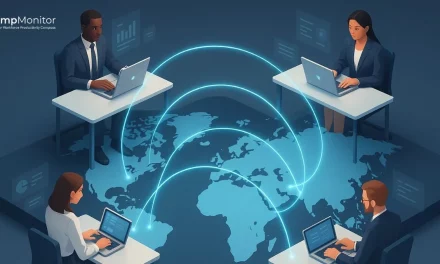
Remote and hybrid work have changed the expectations placed on senior HR leaders. Leading people across locations is not simply traditional HR delivered through video calls. It requires more deliberate systems for communication, performance, culture, technology, and employee experience when people do not share the same office every day. The most valuable HR leadership skills now combine established people expertise with the ability to build trust, use data well, influence remotely, and create consistency across distributed teams. For employers, that changes both how HR leaders operate and how they should be assessed.
Why Remote-First Work Changes the HR Leadership Role
A remote-first organization designs communication, access to information, and everyday processes around remote participation, even when some employees also use an office.
Office-based organizations benefit from informal mechanisms that are easy to overlook: quick conversations, visible leadership, spontaneous problem-solving, and daily exposure to how teams are working. Distributed organizations cannot depend on those mechanisms to the same degree.
That makes senior HR leadership more intentional. Policies, communication standards, management expectations, onboarding, development, and employee feedback all need to work across locations. HR leaders also have to help managers lead people they may rarely see in person while keeping the employee experience consistent. Distributed work makes it especially important to turn people strategy into processes that managers and employees can use consistently across locations.
Trust and Accountability Matter More Than Physical Presence
Physical presence is a poor substitute for performance. In a remote-first organization, leaders need clearer ways to define what good work looks like and whether it is being delivered.
That puts greater emphasis on clear goals, measurable outcomes, employee autonomy, and regular performance conversations. Effective remote workforce management also requires managers to understand when intervention is necessary and when employees need space to do their jobs. Constant checking, online-status monitoring, or unnecessary meetings can create activity without improving results.
Performance management should assess agreed outcomes alongside work quality, collaboration, and role-specific responsibilities. When that works, employees know what they are responsible for, managers have agreed measures for assessing progress, and both sides can discuss obstacles before they become larger problems. Trust and accountability reinforce each other when expectations are explicit and performance is judged consistently.
Communication Has to Become Deliberate
Distributed teams cannot rely on being in the same room to fill information gaps. Senior HR leaders therefore need to help the organization decide how communication works, not simply encourage everyone to communicate more.
That means setting expectations for which conversations belong in meetings, which can happen asynchronously, how quickly different channels require a response, and where important decisions are documented. It also means creating predictable feedback loops so employees can raise concerns without needing an informal hallway conversation.
Leadership visibility matters too. Remote employees need access to senior leaders, organizational context, and decisions that affect their work. Recorded updates and documented decisions also allow employees in different time zones to access the same context.
Hiring for the New Remote-First HR Leadership Profile
Traditional HR experience remains important, but it does not automatically show that an executive can lead effectively in a distributed organization. Employers need evidence that candidates have built trust across locations, influenced leaders without depending on physical proximity, managed organizational change, and created performance systems based on outcomes rather than presence.
The interview process should also test how candidates communicate across functions and cultures, use workforce data, and handle disagreements over flexible-work policies. Specific examples matter more than broad claims about being “good with people.” A strong candidate should be able to explain what changed, how they measured success, and what they learned when a people initiative did not work as planned.
When a search requires experience that is scarce in the employer’s existing network, specialist HR executive recruitment can extend the search to candidates who are not actively applying. Employers should still assess those candidates against the same evidence-based criteria used throughout the process.
Senior HR Leaders Need Digital and Data Fluency
Remote-first organizations generate much of their employee experience through digital systems. Senior HR leaders therefore need to understand the technology that supports recruitment, onboarding, communication, performance, learning, engagement, and workforce planning.
Digital HR is not about adopting every new platform. It is about knowing which systems improve decisions or employee experience and which simply add complexity. The same applies to people analytics. Engagement data, retention patterns, performance trends, hiring metrics, and workforce movement can help leaders identify issues that are harder to see when teams are dispersed.
Data still needs interpretation. A dashboard can show that turnover is rising in one group, but it cannot explain the full cause on its own. Strong HR leaders combine quantitative evidence with employee feedback, manager input, and business context before deciding what action to take.
Culture, Inclusion and Wellbeing Need Intentional Design
Culture still develops in distributed organizations, but it is shaped less by shared physical routines and more by systems, management behavior, communication, and access to opportunities. HR leaders have to design for consistency instead of assuming employees will absorb culture by being in the office.
One risk in hybrid organizations is proximity bias: employees who are more visible in person may receive more informal access, recognition, or development opportunities. HR can reduce that risk by making promotion criteria clearer, tracking access to high-value projects, and encouraging managers to evaluate contribution rather than office presence.
A remote-first workplace culture also needs healthy boundaries. Employees need clear expectations around availability, time zones, meetings, and after-hours communication. Managers need to recognize signs of isolation or overload and know how to respond. The goal is not to make remote and office work identical, but to avoid creating separate classes of employee experience based on location.
Also Read
What Are HR Policies? Types, Examples & Importance
10 Leadership Skills for Organizational Growth (With Examples)
Applying Adaptability and Business Judgment Across Locations
Remote and hybrid working practices continue to evolve alongside technology, employee expectations, and business priorities. Senior HR leaders need to make decisions even when there is no perfect policy or established playbook.
That requires more than comfort with change. It requires judgment: understanding the commercial consequences of a people decision, balancing flexibility with operational requirements, and knowing when a policy needs to vary by role or team. HR leaders also need enough influence to challenge senior executives constructively and enough business knowledge to explain the tradeoffs involved.
The strongest leaders adjust people strategies as conditions change without treating every new workplace trend as a reason to redesign the organization. Their focus stays on what helps the workforce perform and what supports the wider business.
The New Standard for HR Leadership
Remote-first work changes how senior HR leadership capabilities need to be demonstrated. Traditional HR knowledge still matters, but it now sits alongside trust-based leadership, intentional communication, digital and data fluency, inclusive culture building, commercial judgment, and adaptability.
Organizations hiring for these roles need to evaluate candidates against the realities of distributed work rather than relying mainly on job titles, years of experience, or success in office-centered environments. The best HR leaders can build systems that work when employees are not in the same place and keep people decisions connected to business results.