

Have you considered how many pay periods in a year your business should have? The frequency of pay periods can significantly affect your payroll efficiency, employee satisfaction, and overall financial planning.
In fact, choosing the wrong pay period can lead to administrative challenges, tax miscalculations, and even dissatisfaction among employees. The right pay schedule ensures that payroll runs smoothly, taxes are calculated correctly, and employees receive timely compensation.
There’s no one-size-fits-all solution, and understanding the differences between weekly, biweekly, semi-monthly, and monthly pay periods is crucial. In this blog, we’ll explore the various pay period options, backed by facts, and help you determine why a biweekly pay cycle might be the best fit for your company’s needs.
Listen To The Podcast Now!
What Is a Pay Period?

A pay period is a recurring interval of time for which an employee is compensated. Each business selects a pay period schedule that works best for its operational needs, employee preferences, and compliance with local labor laws. The pay period length plays a significant role in how employees manage their personal finances and affects the operational efficiency of your business.
Understanding the number of pay periods in a year is essential not just for smooth payroll management but also for ensuring you meet compliance regulations and keep employees satisfied. Whether you are running a small business or managing a larger workforce, this is one decision that can impact your payroll processing, employee retention, and overall organizational efficiency.
How Many Pay Periods in a Year?
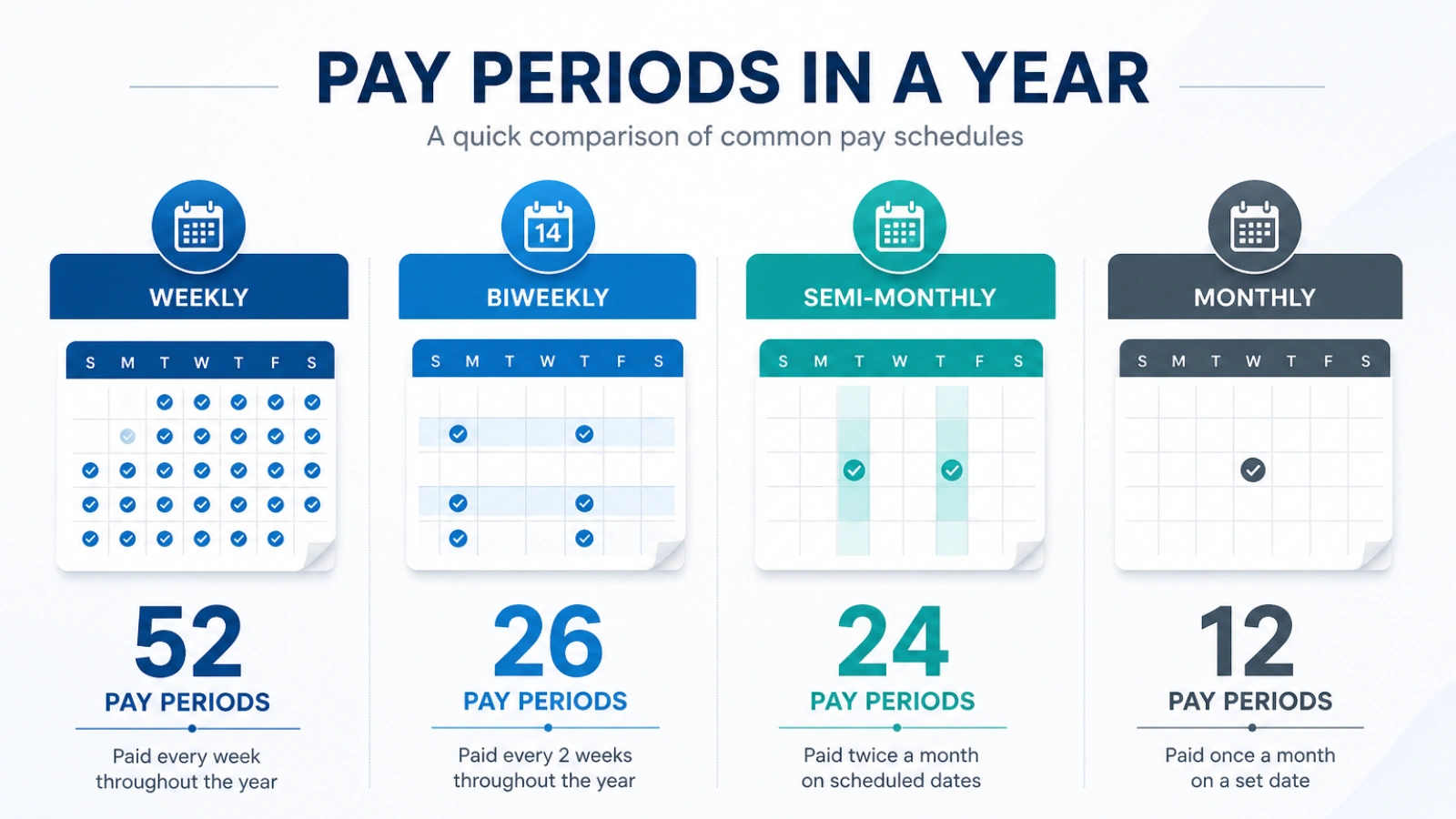
The number of pay periods in a year depends on the payroll schedule your business chooses. Here’s a breakdown of the most common payroll frequencies:
- Weekly Pay Period: 52 pay periods in a year
- Biweekly Pay Period: 26 pay periods in a year
- Semi-monthly Pay Period: 24 pay periods in a year
- Monthly Pay Period: 12 pay periods in a year
In some cases, businesses using bi weekly pay periods in a year may experience a 27th pay period. This does not happen specifically because of leap years. Instead, it occurs because 26 biweekly pay cycles cover 364 days, leaving a one- or two-day difference each year that gradually accumulates. Approximately every 11 years, this drift can create an extra pay period depending on the calendar and your scheduled payday.
Each payroll structure has distinct advantages and challenges, and the right option depends on your company’s operations, employee expectations, and compliance requirements.
Types of Pay Periods
Weekly Pay Period (52 Pay Periods in a Year)
A weekly pay period is a straightforward option, where employees are paid once every week, usually on the same day (e.g., every Friday). This option is common for industries like hospitality, construction, or gig-based jobs where workers have varying hours or fluctuating pay.
Pros:
- Frequent payments help employees manage their weekly expenses.
- Easier to track overtime based on weekly limits.
Cons:
- Increases administrative workload due to weekly payroll processing.
- More costly for payroll processing and reporting.
- Complicates tax and benefits calculations, as there are more frequent pay cycles.
Biweekly Pay Period (26 Pay Periods in a Year)
The biweekly pay schedule is one of the most widely used payroll structures. Employees are paid every two weeks, usually on the same weekday, such as every other Friday. This results in 26 regular pay periods each year.
How Many Pay Periods in a Year Biweekly?
A standard biweekly payroll schedule produces 26 pay periods annually. However, because 26 biweekly cycles equal 364 days, the remaining one or two days accumulate over time. Approximately every 11 years, this drift can create a 27th pay period depending on how the calendar aligns with your company’s payday schedule.
Pros
- Balances employee satisfaction with manageable payroll administration
- Predictable and consistent employee income
- Works well for businesses with both hourly and salaried employees
- Easier overtime tracking compared to semi-monthly payroll
Cons
- Does not align perfectly with calendar months
- Benefit and tax deductions may require payroll adjustments
- An occasional 27th pay period requires salary planning and budget forecasting
Semi-monthly Pay Period (24 Pay Periods in a Year)
The semi-monthly pay period involves paying employees twice a month, typically on fixed dates, such as the 15th and the last day of the month. This results in 24 pay periods per year.
Pros:
- Aligns well with monthly expenses like rent and loan payments, making it easier for employees to manage their budget.
- Reduces the administrative time compared to weekly or biweekly pay cycles.
- Easier to manage for salaried employees with predictable schedules.
Cons:
- Can be confusing for hourly workers, as the number of days in each pay period can vary (e.g., some months have 31 days, others have fewer).
- Overtime calculations can be more complex.
- May create confusion for employees switching from biweekly or weekly schedules, as the cycle is fixed but not aligned with a standard workweek.
Monthly Pay Period (12 Pay Periods in a Year)
The monthly pay period is the least frequent pay structure, where employees receive their pay once a month, typically on the last day of the month or the first business day of the following month. This is common for salaried employees in higher-level positions.
Pros:
- Easiest for employers to manage and budget, as payroll processing occurs only once a month.
- Simplifies benefit contributions and deductions.
- Ideal for organizations with low administrative capacity or for senior salaried employees.
Cons:
- The long gaps between paychecks can lead to financial challenges for employees, especially those who live paycheck to paycheck.
- Not ideal for hourly workers or those with variable work schedules.
- Employees may struggle with cash flow management due to the long wait between paychecks.
Why Choose a Biweekly Pay Period?

Biweekly pay periods are often chosen because they strike a perfect balance between employee satisfaction and manageable administrative work. Whether you’re wondering how many pay periods in a year biweekly or simply exploring options, biweekly pay has distinct advantages:
- Employee Satisfaction: Employees appreciate receiving regular paychecks, as it helps them manage their finances better, leading to higher job satisfaction and retention.
- Reduced Payroll Processing: While still more frequent than monthly pay periods, biweekly schedules help reduce administrative burden compared to weekly payroll.
- Overtime Tracking: Biweekly pay is ideal for businesses that need to track overtime accurately and consistently.
How Pay Periods Affect Payroll Taxes and Benefits
Your chosen payroll schedule affects how taxes are withheld and how employee benefits are distributed throughout the year. More frequent payroll schedules, such as weekly or biweekly, spread deductions more evenly, while less frequent schedules may create larger deductions per paycheck.
For businesses using biweekly pay, consistent payroll intervals often simplify tax withholding calculations and improve deduction accuracy. However, employers should prepare carefully during years with an additional pay cycle to ensure salary distributions and benefit calculations remain accurate.
Read More
How to Transition Between Pay Periods
Changing payroll schedules requires careful planning, system updates, and clear employee communication. Whether moving from monthly to biweekly payroll or adjusting another schedule, follow these steps:
1. Notify Employees Early
Provide advance notice explaining the reason for the change, updated pay dates, and how the transition affects future paychecks.
2. Update Contracts and Payroll Policies
Revise employee agreements, internal payroll documentation, and compensation schedules to reflect the new payment structure.
3. Reconfigure Payroll Systems
Update payroll software settings to ensure deductions, tax withholding, and reporting align correctly with the new cycle.
4. Review Compliance Requirements
Confirm your new payroll frequency complies with state labor laws and wage payment regulations.
5. Monitor the First Payroll Cycle Closely
Review calculations carefully during the first transition period to catch errors before they affect employees.
Pay Periods During Holidays and Weekends
Paydays that fall on weekends or holidays require adjustments to maintain employee satisfaction and comply with legal obligations. Most businesses choose to either pay employees before the holiday or move the payday to the next business day. This ensures timely compensation and avoids any legal complications.
Improve Payroll Accuracy with EmpMonitor

While payroll software processes employee payments, workforce management tools like EmpMonitor help improve payroll accuracy by ensuring clean attendance and time-tracking data.
EmpMonitor supports payroll operations by helping businesses maintain reliable employee work records through:
- Time Tracking: Capture accurate work hours for payroll calculations
- Attendance Monitoring: Track leaves, shifts, and absences efficiently
- Productivity Insights: Monitor workforce performance trends
- Project Visibility: Align tracked hours with project timelines
- Operational Accuracy: Reduce payroll discrepancies caused by incomplete work records
Used alongside payroll platforms, accurate workforce tracking improves payroll efficiency and reduces calculation errors.
Conclusion
Choosing the right payroll schedule directly affects your company’s financial planning, compliance, and employee satisfaction. Whether you’re evaluating how many pay periods in a year, exploring biweekly pay, or comparing other payroll structures, the best decision depends on your business operations, workforce needs, and applicable labor laws.
Understanding the strengths and limitations of each pay schedule helps businesses create efficient payroll systems, maintain compliance, and improve long-term workforce satisfaction.
FAQ
How many biweekly pay periods are in a year?
A standard biweekly payroll schedule includes 26 pay periods per year.
Can there ever be 27 biweekly pay periods?
Yes. Approximately every 11 years, calendar alignment may create a 27th pay period because 26 biweekly cycles total 364 days, allowing a small annual drift to accumulate.
What’s the difference between weekly and biweekly pay?
Weekly payroll includes 52 paychecks annually, while biweekly payroll includes 26. Biweekly schedules reduce payroll processing frequency while still providing regular employee payments.
Can a company switch payroll schedules?
Yes, but it requires careful communication, payroll system updates, contract adjustments, and compliance review.
Why do some companies prefer semi-monthly payroll?
Semi-monthly schedules align well with monthly expenses and simplify fixed salary payments.
What happens if payday falls on a holiday or weekend?
Employers usually process payment on the previous business day or the next business day, depending on company policy and legal requirements.
How do pay periods affect tax deductions?
The payroll schedule determines how taxes and benefit deductions are distributed throughout the year, affecting withholding consistency.
Can employees choose their pay schedule?
Some businesses offer flexibility, but payroll frequency is usually determined by company policy and state labor regulations.