Businesses often start with simple tools to track work hours. A basic dashboard and a timer seem enough in the early stages. Teams log hours, export reports, and manage payroll without much trouble. As operations expand, cracks begin to show. Leaders search for Free alternatives to Clockify because basic systems no longer support deeper visibility, structured workflows, or strong control over employee activity.
Many organizations explore Free alternatives to Clockify to reduce cost. Others want better project management support or stronger monitoring. Some seek improved time clocking accuracy. Whatever the reason, the search usually begins when productivity gaps start to appear.
This guide explains why companies look beyond basic systems, what to expect from Free alternatives to Clockify, and what businesses lose when they rely only on no-cost tools.
In a hurry? Listen to the blog instead!
Why Businesses Start Looking Beyond Clockify?
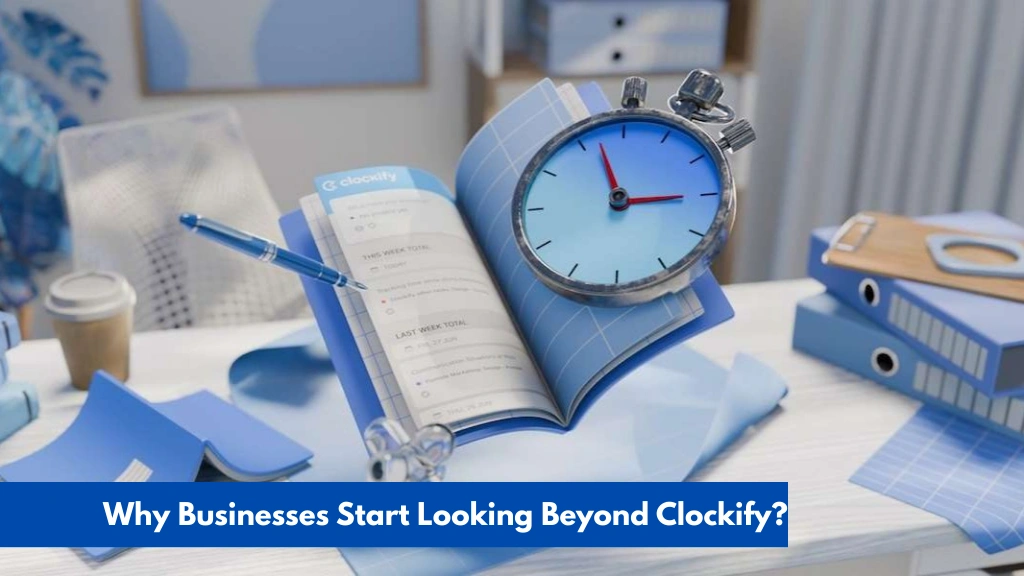
Growth changes operational needs. A small team can rely on manual time clocking and simple time tracking software. A growing organization requires structured project management, workforce visibility, and performance clarity.
Leaders often choose Free alternatives to Clockify for three main reasons:
- Limited reporting depth
- Weak project tracking software integration
- Lack of employee monitoring tools
Free systems often track hours but fail to connect those hours to real project progress. Managers want more than numbers. They want insight.
Common Limitations Of Free Time Tracking Software
Free time tracking software often includes:
- Basic timers.
- Manual time entry.
- Limited reports.
- Restricted integrations.
Many Free alternatives to Clockify offer similar features. They track hours but stop short of advanced analytics. Teams cannot always break down productive versus idle time. Managers struggle to connect time clocking data with project output.
When basic time clocking tools stop being enough?
Manual time clocking works for freelancers. It does not work for complex teams. As projects grow, leaders require real-time data, accountability, and proof of performance. Simple time tracking software lacks depth.
The growing need for deeper project management visibility
Project management demands structure. Leaders must see task progress, resource allocation, and milestones. Basic systems rarely integrate with project tracking software in a meaningful way. Many Free alternatives to Clockify lack these deeper functions.
What To Look For In A Free Clockify Alternative?
Choosing among Free alternatives to Clockify requires clarity. Teams should evaluate tools based on operational needs, not just cost.
Key evaluation areas include:
- Accuracy in time clocking
- Strong time tracking software features
- Integration with project management systems
- Reporting clarity
- Monitoring capabilities
Essential features in time tracking software
Effective time tracking software should provide:
- Real-time dashboards
- Automated timesheets
- Productive vs idle hour breakdown
- Exportable reports
Many Free alternatives to Clockify provide timers but restrict deeper insights.
Importance Of Project Tracking Software For Growing Teams
Project tracking software connects hours to results. Without it, time clocking data remains isolated. Growing teams need visibility into:
- Task completion
- Milestone progress
- Resource allocation
- Budget alignment
Why Modern Project Management Requires More Than Manual Time Clocking?
Manual time clocking creates gaps. It relies on employee input. Project management requires structured workflows, automated tracking, and consistent oversight.
Security, compliance, and monitoring capabilities
Many Free alternatives to Clockify overlook security. Organizations require:
- Data protection
- Access control
- Monitoring visibility
- Compliance records
Free tools rarely prioritize these areas.
Quick Overview: What Clockify Offers And Where It Falls Short
Many companies use Clockify because it provides free time tracking software with simple time clocking features. It allows manual entry and project tagging.
However, users often look for Free alternatives to Clockify due to certain gaps.
Core time clocking features
- Start/stop timer
- Manual timesheet entry
- Basic project assignment
Reporting and analytics limitations
Reports remain surface-level. Managers may not gain full productivity insight.
Missing advanced project tracking software tools
Clockify does not function as full project tracking software. It lacks milestone tracking, workflow visibility, and structured task management depth.
Gaps in employee monitoring and security
It does not offer:
- Live screen monitoring
- Screen recording
- Detailed app usage tracking
- Insider threat prevention
These gaps drive teams toward Free alternatives to Clockify.
Also Read:
Is Cloud-Based Timecard Software Efficient For The Growth of Businesses?
Clock In and Out App: Top Features to Look For
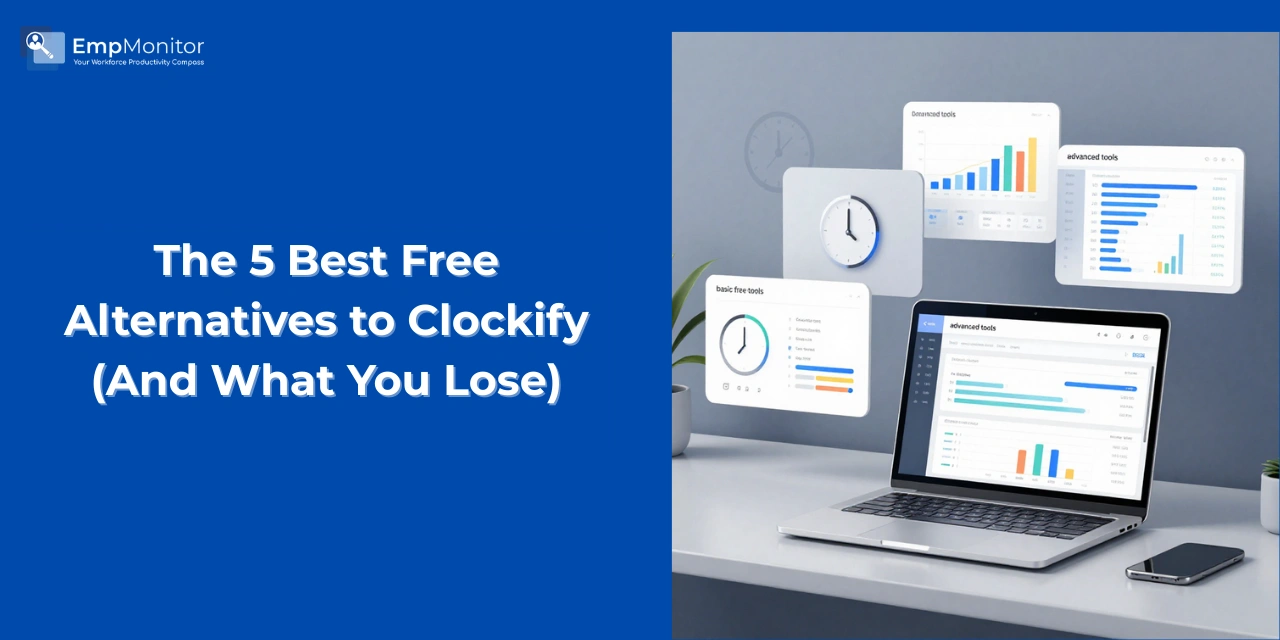
The 5 Best Free Alternatives To Clockify
Organizations typically encounter five broad categories when exploring Free alternatives to Clockify.
1. Simple Time Clocking Tools for Freelancers
Freelancers often choose simple time clocking tools to track billable hours quickly without complex project management features.
Best suited for individuals and small teams
Freelancers often prefer lightweight tools. Simple time clocking systems track hours without complexity.
Strengths in basic time tracking software
These tools offer:
- Quick timers
- Manual edits
- Simple reporting
What you lose without advanced project management systems
You lose structured project management. You lose strong project tracking software integration. You lose workflow clarity.
Many Free alternatives to Clockify in this category lack scalability.
2. Monitoring-Focused Time Tracking Software
Monitoring-focused time tracking software provides deeper workforce visibility by tracking activity, improving accountability, and supporting structured project management decisions.
Built-in productivity tracking features
Several free tools emphasize monitoring capabilities. They track application usage, active hours, idle periods, and basic behavioral patterns to improve visibility and accountability.
Activity visibility and workforce insights
These systems offer clearer oversight than simple time clocking tools by showing how employees spend time and where productivity gaps may appear.
Where free plans restrict project tracking software capabilities
Free tiers often limit:
- User count
- Reporting access
- Advanced project management modules
Users who rely on Free alternatives to Clockify in this category often face feature caps.
3. Automated Time Clocking Platforms
Automated platforms simplify workforce oversight by reducing reliance on manual input and improving overall accuracy in daily time clocking records.
Automatic time capture systems
Some time tracking software detects activity automatically, records active hours in real time, and minimizes errors caused by forgotten or delayed manual entries.
App and website usage insights
These tools show:
- Application use
- Website access
- Time distribution
Limitations in structured project management functions
Despite automation, many Free alternatives to Clockify lack advanced project management tools such as milestone tracking, task dependencies, workload balancing, and detailed project tracking software dashboards needed for growing teams.
4. Budget-Friendly Project Tracking Software
Budget-focused platforms aim to support small teams by combining essential time tracking software functions with limited project management tools at minimal or no upfront cost.
Basic project tracking software integration
These tools attempt to merge time clocking with project tracking software, allowing teams to assign hours to tasks and monitor simple project progress.
Affordable time tracking software options
They attract startups and small businesses that seek a balance between operational efficiency and budget control without committing to expensive enterprise solutions.
Missing enterprise-level reporting and controls
Free tiers restrict advanced dashboards, deep analytics, role-based permissions, compliance controls, and detailed workforce monitoring required for structured project management growth.
5. Productivity-Centered Time Tracking Solutions
These platforms prioritize behavior analysis and performance measurement over traditional task coordination, focusing more on activity patterns than full project management execution.
Passive time clocking approach
These tools monitor user behavior automatically, capture activity data in the background, and reduce reliance on manual time clocking entries.
Productivity scoring and reports
They assign focus levels to applications and websites, generate performance summaries, and help managers identify productivity trends across teams.
Lack of comprehensive project management tools
They do not replace structured project management systems, as they lack milestone tracking, workload planning, and complete project tracking software functionality.
Many companies test such Free alternatives to Clockify to control costs initially, but upgrade later when structured time tracking software and advanced project management needs increase.
What You Lose With Free Time Tracking Software?
Free time tracking software looks attractive at the start. It reduces upfront costs and helps small teams record work hours quickly. However, as operations expand, hidden limitations begin to affect productivity, reporting accuracy, and overall business control.
Here’s what organizations often sacrifice when relying only on free solutions:
1. Limited Project Management Structure
Free tools focus mainly on logging hours. They rarely provide structured dashboards for task allocation, milestone tracking, workload balancing, or deadline forecasting. Without integrated project management, leaders struggle to connect time data with project progress.
2. Surface-Level Reporting
Most free plans generate basic reports that show total hours worked. They lack advanced analytics, performance comparisons, productivity trends, and department-level insights. Decision-making becomes reactive rather than strategic.
3. No Real-Time Visibility
Many free systems do not offer live monitoring. Managers cannot see ongoing activity, application usage, or active work sessions. This delay reduces accountability and prevents quick intervention when productivity drops.
4. Weak Security Controls
Free versions often exclude features like data loss prevention, insider threat alerts, role-based access controls, and detailed activity logs. As teams grow, these missing protections increase operational risk.
5. Limited Scalability
User caps, restricted integrations, and feature limitations prevent smooth team expansion. Businesses outgrow free systems quickly and must migrate later, which disrupts workflow continuity.
6. Minimal Customization
Free tools provide fixed settings with limited flexibility. Organizations cannot tailor workflows, permissions, or reporting structures to match evolving business needs.
Why Time Clocking Alone Is No Longer Enough?

Recording work hours used to solve most workforce management needs. Businesses only needed proof of attendance and total hours for payroll. Today, operations demand far more than simple clock-in and clock-out records.
Modern teams work remotely, across time zones, and on multiple projects simultaneously. Leaders need visibility into productivity patterns, task allocation, and workload distribution. Time clocking alone does not reveal whether hours translate into meaningful output.
Project complexity has also increased. Managers must connect time data with milestones, budgets, and deliverables. Without structured project tracking, logged hours remain disconnected from actual performance results.
Security expectations have changed as well. Organizations now require activity monitoring, data protection controls, and compliance safeguards. Basic time clocking tools rarely offer these protections.
Decision-making also depends on analytics. Companies need productivity trends, department comparisons, and efficiency insights. A simple hours report cannot guide strategic growth.
Time clocking remains important, but it only answers one question: “How long did someone work?” Modern businesses must also ask, “What was achieved during that time?”
How Empmonitor Helps In Monitoring?
Modern businesses need more than basic time clocking. EmpMonitor provides structured monitoring, visibility, and workforce intelligence that support both time tracking software and project management goals.
1. Real-Time Activity Tracking
EmpMonitor captures live user activity across systems. Managers view active and idle time, application usage, and overall work patterns without manual intervention.
2. Automatic Time Clocking
The platform records work hours automatically. It reduces manual errors and ensures accurate attendance records for payroll and compliance.
3. Application and Website Tracking
EmpMonitor monitors which apps and websites employees use during work hours. It helps leaders identify productive tools and detect time-wasting platforms.
4. Productivity Analysis Reports
The system categorizes activities as productive or unproductive. It generates detailed performance reports that support data-driven workforce decisions.
5. Screenshot Monitoring
EmpMonitor captures periodic screenshots to provide visual proof of work activity. This feature strengthens accountability and transparency across remote teams.
6. Insider Threat Detection
The software identifies unusual behavior patterns that may signal data risks. It supports organizations in reducing internal security threats.
EmpMonitor bridges the gap between basic time tracking software and advanced workforce monitoring. It delivers deeper control, stronger visibility, and structured oversight that free tools rarely provide.
Free vs Advanced: When Should You Upgrade?
Teams often begin with Free alternatives to Clockify because they appear cost-effective and simple. As operations expand, workflow complexity increases, and accountability demands rise, free systems start limiting growth and visibility.
Signs your team has outgrown free time tracking software
- Missed deadlines
- Inaccurate time clocking data
- Poor project visibility
When project management complexity increases
As organizations handle multiple clients, departments, and parallel projects, they require structured project tracking software. Advanced systems offer task dependencies, workflow mapping, resource planning, and centralized reporting that free versions cannot support.
When security risks become serious
Growing teams handle sensitive data, financial records, and client information. Free alternatives to Clockify rarely include insider threat detection, data loss prevention, or advanced monitoring controls. Upgrading becomes necessary when security, compliance, and workforce accountability directly impact business stability.
Upgrading from free time tracking software is not just about adding features. It supports operational clarity, stronger project management, and long-term scalability.
Conclusion:
Free tools support early growth. They provide basic time clocking and simple time tracking software features. However, they limit structured project management, detailed project tracking software integration, and workforce monitoring depth.
Organizations that rely only on Free alternatives to Clockify often face reporting gaps, visibility issues, and security concerns.
Growth demands more than timers. It demands clarity, structure, accountability, and protection. Businesses that recognize this shift early position themselves for stronger performance and long-term success.
FAQs
1. Can businesses use a free tool like Clockify if they are growing?
Ans: A free alternative to the Clockify time-tracking tool might be fine for very small teams early in their company; however, as a business grows, it will likely require a more complete project management system with more advanced tools to manage projects, facilitate structured project tracking, and provide greater accuracy in time-tracking software.
2. Besides just delivering basic time clocking capabilities (i.e., keeping track of employees’ hours), what else should I look for in an employee time clocking system?
Ans: Look for an employee time clocking system that provides an integrated project management dashboard; automated time clock accuracy; productivity analytics; the depth of reporting; and workforce monitoring, to provide better transparency and control of your employees’ activities.
3. When should a company upgrade from free time-clocking software?
Ans: You should upgrade when you have experienced delays in meeting deadlines, lack clarity with your project management or tracking system, have an increasing number of time clocking errors, or when you start to see security or compliance risks that directly affect your operation and data.