A healthy team shapes strong performance, stable growth, and long-term success. Every organization wants employees who feel energetic, confident, and mentally focused. Stress levels rise fast, workloads feel heavy, and distractions pull attention away from productive work. Leaders want clarity, structure, and a practical way to care for their teams. Here comes the real importance of employee wellness programs.
These programs support employees, guide healthier behavior, improve morale, and build a positive work culture. When teams feel supported, they stay loyal, they give their best performance, and they bring long-term value to the company.
In a hurry? Listen to the blog instead!
What Is An Employee Wellness Program And Why Do Companies Need It?

A strong employee wellness program supports the physical, mental, emotional, and social health of workers. Companies need it because employees face daily stress, tight work schedules, and constant performance pressure. When organizations fail to care for employees, productivity drops and attrition rises. With employee wellness programs, companies show real commitment toward their teams. Workers receive care, guidance, and clear support systems. Trust grows stronger, and the workplace turns into a supportive space instead of a stressful one.
Businesses need employee wellness programs because they lead to better focus, fewer sick leaves, and stronger engagement. Teams love to work in places that value people over only output. That single factor helps companies attract talent and retain strong performers.
Understanding Employee Health and Wellness Programs: What Do They Really Include?
Many organizations misunderstand employee health and wellness programs. These programs do not just organize physical fitness activities. They cover mental balance, stress control, emotional stability, lifestyle improvement, and a healthy work culture. Strong employee health and wellness programs include structured health checkups, mental support systems, counseling access, stress reduction plans, diet awareness, safe workplace initiatives, and balanced work policy frameworks.
The goal goes beyond health improvement. The real goal focuses on building confident teams who feel supported and encouraged. When employees believe that their organization truly cares, they stay committed and maintain strong performance levels. This deeper support creates powerful, reliable teams.
Also Read:
07 Wellness Programs To Fosters Employee Productivity
How To Achieve Workplace Wellness In 2025?
Key Elements That Make Employee Wellness Programs Successful
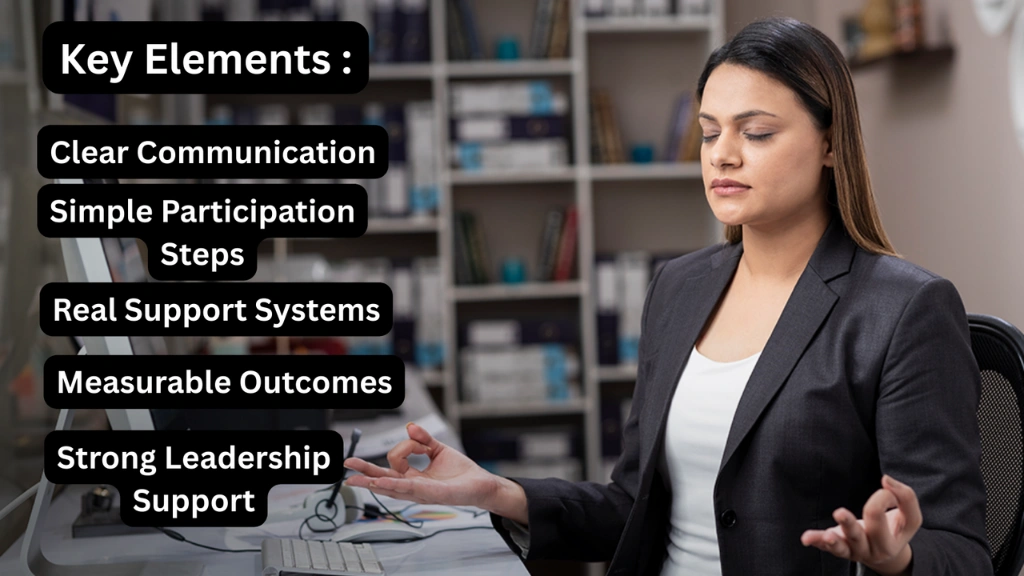
Successful employee wellness programs always follow a strong foundation. Every organization must ensure a few powerful elements:
Clear Communication:
Clear communication explains program goals, benefits, rules, and participation steps in a simple way. It avoids confusion, builds awareness, improves understanding, and encourages employees to trust and join wellness initiatives.
Real Support Systems:
Real support systems provide counseling access, health guidance, mental wellness help, and workplace assistance. They make employees feel valued, emotionally secure, and confident while participating in wellness activities with genuine comfort.
Simple Participation Steps:
Simple participation steps remove difficulty and hesitation. Easy registration, flexible engagement options, and accessible resources motivate employees to take part confidently. Smooth processes increase response rates and overall involvement in wellness programs.
Strong Leadership Support:
Strong leadership support inspires confidence and commitment. When leaders actively promote programs, employees feel motivated, respected, and encouraged to engage. Leadership involvement strengthens trust and proves the organization cares about employee well-being.
Measurable Outcomes:
Measurable outcomes help organizations track participation, progress, productivity impact, health improvements, and engagement levels. Clear data guides better decisions, strengthens strategies, and proves the real effectiveness of employee wellness initiatives.
Transparent communication ensures that employees understand every program benefit. Direct support helps workers feel safe and valued. Easy participation removes hesitation. Leadership involvement builds trust and motivation. Strong tracking helps organizations measure the real impact of their employee wellness programs.
When companies structure programs with clarity and purpose, employees show higher interest and stronger participation. That single mindset shift drives successful outcomes.
Top Benefits Of Employee Wellness Programs For Organizations and Employees
The benefits of employee wellness programs extend far beyond physical fitness. These initiatives help organizations improve productivity, engagement, attendance, healthcare costs, morale, and retention. When employees feel supported mentally, physically, and emotionally, they work with greater focus, enthusiasm, and reliability. This directly boosts organizational growth, cultural strength, and long-term stability.
Employee wellness programs also help companies shape a positive corporate identity. Organizations that care about employee health automatically build a reputation of responsibility and trust. Clients, candidates, and industry professionals admire companies that value their workforce. This results in stronger brand credibility, better hiring attraction, and consistent business trust. Ultimately, wellness programs create a workplace where employees feel valued, protected, and motivated to perform consistently.
Key Benefits of Employee Wellness Programs
For Organizations
- Higher productivity and work efficiency due to mentally and physically healthy employees
- Reduced absenteeism and sick leave, ensuring stable work continuity
- Lower healthcare and insurance costs through preventive wellness initiatives
- Stronger employee engagement and job satisfaction levels
- Improved team collaboration and workplace morale
- Higher employee retention and reduced turnover expenses
- Enhanced organizational reputation and employer branding
- Better compliance with health and safety standards
- Stronger organizational resilience and workforce stability
For Employees
- Better physical health and energy levels
- Improved mental clarity, focus, and emotional balance
- Reduced workplace stress and burnout risks
- Stronger motivation and confidence in work performance
- Healthier work–life balance and personal satisfaction
- Increased sense of belonging and organizational support
- Opportunities for lifestyle improvement and personal wellness growth
- Better social interaction and positive work relationships
Types Of Corporate Employee Wellness Programs You Can Implement
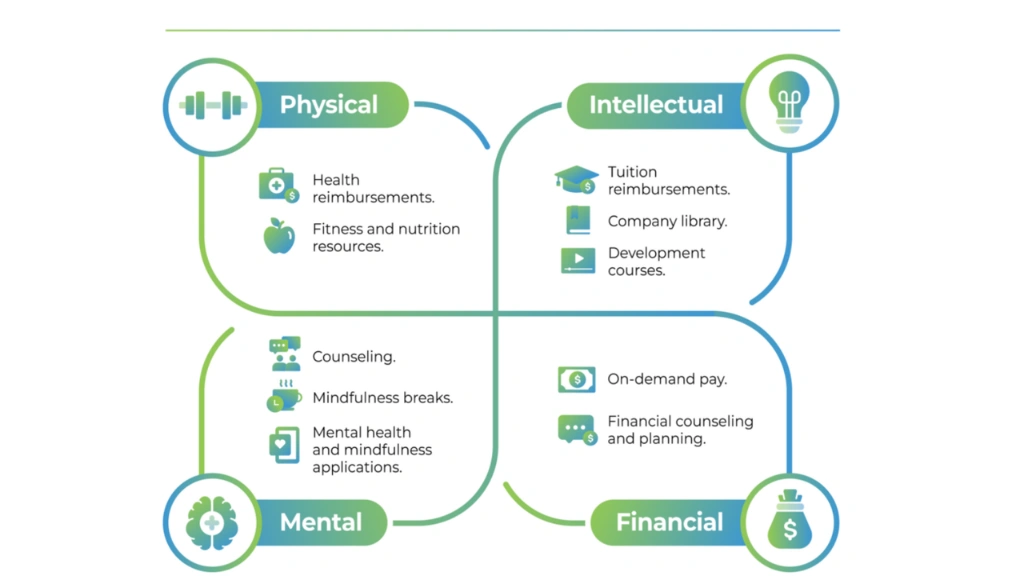
Every corporate employee wellness program must align with workforce needs. Different organizations adopt different strategies based on team structure and work style.
Here are effective forms of a corporate employee wellness program:
Every corporate employee wellness program must align with workforce needs. Different organizations choose strategies based on team structure, work culture, and employee expectations. Below are the most effective forms:
Physical Fitness Initiatives:
These programs encourage employees to stay active through gym memberships, fitness challenges, exercise sessions, yoga, or sports activities. They improve stamina, reduce fatigue, and enhance overall physical health.
Stress Relief Plans:
Stress relief initiatives reduce workplace pressure through relaxation workshops, mindfulness activities, access to counseling, and support for work-life balance. They help employees remain calm, focused, and emotionally stable.
Mental Health Support Programs:
These programs provide professional counseling, therapy access, emotional well-being sessions, and psychological support. They help employees manage anxiety, burnout, and emotional struggles while supporting a healthy mindset.
Healthy Lifestyle Guidance:
Healthy lifestyle programs educate employees about nutrition, sleep habits, hydration, preventive care, and balanced living. They support better daily habits that lead to long-term wellness and stronger productivity.
Remote Workforce Wellness Support:
Remote wellness programs support employees who work from home or hybrid setups. They include ergonomic guidance, mental wellness care, activity tracking, engagement sessions, and structured well-being assistance.
Preventive Healthcare Initiatives:
These programs focus on regular health checkups, medical screenings, vaccination support, and early risk detection. They help employees avoid major health issues and maintain long-term health security.
Each category plays a major role in making employee wellness programs truly impactful. A company must adopt a balanced mix that suits its workforce. Structured planning ensures clear impact and better participation.
How To Develop Effective Employee Wellness Programs Step-By-Step?
Development of employee wellness programs requires clarity, commitment, and structure. Companies must move through these steps:
Understand Workforce Needs:
Analyze employee challenges, preferences, workloads, stress levels, and health risks to identify what support, initiatives, and resources truly matter most.
Set Clear Goals:
Define specific wellness objectives, participation targets, productivity improvements, retention outcomes, and health results so programs stay focused, measurable, and meaningful.
Design Strategic Health and Wellness Plans:
Create structured wellness plans with activities, timelines, budgets, policies, and responsibilities that align with company priorities and employee well-being needs.
Introduce Tools and Resources:
Provide digital platforms, wellness apps, training support, professional guidance, health services, and monitoring systems so employees can access reliable assistance consistently.
Encourage Engagement:
Promote participation through communication, leadership advocacy, rewards, recognition, feedback opportunities, and inclusive activities, so employees feel motivated, valued, and involved.
Measure Performance Impact:
Track participation rates, productivity trends, wellness outcomes, and employee feedback to evaluate success, refine strategies, and improve program effectiveness overall.
When leaders understand employee expectations, they can create more effective employee wellness programs. Employees must feel motivated to take part. Programs must offer real value and not just formal activities. With structured execution, employee wellness programs drive productivity, focus, and long-term health stability.
How EmpMonitor Helps In Monitoring Workforce Productivity?
A strong monitoring system helps organizations manage workloads, productivity balance, and stress indicators. EmpMonitor supports organizations in this journey. It delivers clarity, transparency, and actionable insights. Managers understand how employees work, how workloads affect them, and where efficiency gaps appear.
EmpMonitor offers:
Real-time activity tracking:
Real-time activity tracking shows active tasks, productivity flow, and workload pressure so managers can balance responsibilities and reduce unnecessary stress effectively.
Accurate attendance monitoring:
Accurate attendance monitoring records work hours, leaves, and presence patterns, which support fair scheduling, payroll accuracy, accountability, and workforce discipline.
Detailed productivity reports:
Detailed productivity reports highlight trends, efficiency gaps, idle time, and improvement areas, helping leaders optimize workload distribution and strengthen results.
Behavior analytics:
Behavior analytics study work patterns, focus levels, application usage, and engagement signals to detect burnout risks and support timely action.
Insider threat alerts:
Insider threat alerts identify suspicious behavior, data misuse, or risky actions, protecting company assets, confidential information, and overall workplace security.
Centralized dashboard monitoring:
Centralized dashboard monitoring combines attendance, productivity, and activity insights in one place, enabling data-driven leadership decisions and stronger workforce management.
These capabilities help organizations align employee wellness programs with real workplace conditions. EmpMonitor supports a healthier work environment by helping leaders maintain fair workloads, reduce burnout risks, and strengthen productivity balance. With structured monitoring and meaningful data insights, organizations create a supportive workplace that truly benefits every employee wellness program.
Common Challenges In Employee Health And Wellness Programs And How To Overcome Them
Even strong employee health and wellness programs experience challenges. Many employees hesitate to participate because they feel uncertain, shy, or uninterested. Some believe wellness programs look complicated or irrelevant to their personal needs. Many organizations also face budget limitations or low awareness, which weakens participation and reduces impact.
Overcoming these challenges requires practical solutions such as:
- Simple participation methods that make involvement easy and comfortable
• Clear communication to help employees understand benefits and purpose
• Regular encouragement to keep motivation strong and consistent
• Incentives and recognition to reward active participation
• Leadership support to build trust and inspire confidence
• Consistent evaluation to improve strategies and remove weak areas
When organizations remove confusion, fear, and complexity, employees start trusting employee wellness programs with confidence. This positive shift increases engagement, strengthens every initiative, and ensures long-term program success.
Conclusion
Strong companies value their people first. Employee wellness programs shape healthier teams, stronger morale, and higher productivity. Every organization must create structured wellness strategies, clear communication, balanced execution, and measurable outcomes. With strong support tools like EmpMonitor, companies gain real clarity over workforce balance and productivity.
A healthy workplace does not happen by chance. It grows through care, support, planning, and commitment. When organizations invest in strong employee wellness programs, success follows naturally.
FAQs
1. What does an employee wellness program include?
It includes physical health initiatives, mental wellness assistance, stress-management activities, lifestyle guidance, preventive healthcare support, counseling access, ergonomic help, and workplace resources that keep employees healthy, emotionally balanced, and productive.
2. Why do companies need employee wellness programs?
They are essential because they increase productivity, raise morale, strengthen engagement, and improve loyalty while reducing stress, absenteeism, fatigue, and health risks, helping organizations maintain a stable and reliable workforce.
3. How do employee health and wellness programs support performance?
They improve performance by helping employees feel healthier, mentally focused, confident, and energized. With reduced stress, employees work smarter, stay consistent, make better decisions, and deliver results for the organization.
4. What are the main benefits of employee wellness programs?
They provide higher productivity, reduced stress levels, improved retention, stronger engagement, fewer sick days, lower healthcare costs, better morale, and a supportive culture where employees feel valued, motivated, and committed.
5. How does EmpMonitor support employee wellness efforts?
EmpMonitor supports wellness by showing productivity trends, workload distribution, attendance accuracy, behavior insights, and real-time activity visibility, helping leaders balance tasks, prevent burnout, reduce stress, and maintain healthier workforce performance.