
An employee monitoring policy tells your team what you track at work, why you track it, and how that information is handled. Without one, people fill the silence with guesses. Managers wonder whether screenshots are acceptable. Remote staff wonder whether anyone watches them after hours.
Clear workplace monitoring rules end that guessing game. They protect trust as much as they protect company data.
Here you will find what the document should contain, how to build it, how to handle remote work and privacy, and what a sensible clause looks like.
Read Aloud!
What Is an Employee Monitoring Policy?
An employee monitoring policy explains what workplace activities an organization monitors, why it collects that information, who can access it, and how employee data is protected and used. In plain terms, it is the written rulebook for monitoring. Employees can read it, and managers can follow it.
It differs from documents you may already have. An acceptable-use policy covers how people may use company systems. The employee handbook sets broader expectations. A privacy notice explains how personal data is processed. Monitoring touches all three, but it deserves its own page.
Why Do Businesses Need an Employee Monitoring Policy?
Monitoring without explanation breeds suspicion. A written policy fixes that in four practical ways:
- Clear expectations: employees know which activities are tracked.
- Data security: you can explain monitoring that protects company systems and information.
- Consistent management: every manager reviews activity under the same rules.
- Accountability: defined access, retention, and review steps reduce ambiguity.
Picture a remote employee who receives an idle-time report. She spent that hour in a client meeting away from her laptop. Without a policy, the report looks like a failure. With one, the document explains how such data is reviewed and corrected.
A policy does not make monitoring lawful on its own, though. It records good practice but never replaces legal compliance.
What Should an Employee Monitoring Policy Include?
Think of the document as answers to questions your employees will ask. Why are you monitoring me? What exactly do you see? Who looks at it? What happens to it afterward?
A solid draft covers these essentials:
- Purpose and scope
- Monitoring methods in use
- Who can access the data
- Security and retention rules
- Employee rights and complaint steps
- A schedule for reviewing the policy
Purpose and scope of monitoring
State the business reasons for monitoring. Then name who is covered, including employees, contractors, devices, systems, and working arrangements.
Types of employee monitoring
List only the methods you really use, such as time tracking, application and website usage, screenshots, email monitoring, or CCTV. Copying every possible category into the document creates fear without reason.
Data access, security, and retention
Say who can view records, how they are protected, how long each type is kept, and when it is deleted.
Employee rights and complaint procedures
Provide privacy information, a contact for questions, a way to challenge inaccurate records, and any rights that local law grants.
How to Write an Employee Monitoring Policy That Fits Your Workplace
Writing the document is easier when you treat it as four separate jobs.
Start with what you actually use
Audit the tools run by HR, IT, security, and operations. Note what data each one collects.
Define boundaries and safeguards
Decide when monitoring happens, what is excluded, who sees the records, and how employees can raise concerns.
Check the law before rollout
Employment, privacy, electronic-monitoring, and data-protection rules differ by location. Some places require notice, consultation, or an impact assessment.
Test and communicate
Here is the step most teams skip. Confirm that software settings match the written words. Then share the document, name a contact, and record acknowledgments.
A policy that says one thing while the tool does another is worse than having nothing.
Read More!
Employee Monitoring Policy Example: What Should It Look Like?
Seeing real wording helps. The clause below is illustrative only, so adapt it to your actual setup and local law.
Our organization monitors specified work-related activity on approved systems for defined operational, security, and productivity purposes. The monitoring methods, working periods, data access rules, and retention practices are explained in this policy. Monitoring information is reviewed in context and is not treated as the sole measure of employee performance. Employees may contact [designated department or contact] with questions or concerns.
Four parts need your own details: the real methods and scope, the working periods and privacy limits, the reviewers and retention periods, and the contact and notices. Treat this wording as a starting point for your own employee monitoring policy, not a finished document.
How Should the Policy Address Remote Work and Employee Privacy?

Set boundaries for monitoring remote employees
Clarify which work devices and apps are covered and when routine monitoring runs. Explain how breaks, leave, flexible schedules, and after-hours work are handled. If you adapt a sample employee monitoring policy for remote work, check that every line reflects your team’s real schedules.
Protect personal activity and sensitive information
Address personal devices, private accounts, and incidental capture of personal data. Limit who can open screenshots, and exclude sensitive screens where possible.
Explain how monitoring data affects performance reviews
Activity records give context, not the full picture. Quality of work, completed tasks, workload, and the employee’s own explanation all matter.
The UK Information Commissioner’s Office stresses proportionality and transparency in worker monitoring. Its guidance applies to the UK, so check the rules wherever your people work.
Common Employee Monitoring Policy Mistakes to Avoid
Four errors show up again and again:
- Vague language, such as “all activity may be monitored.”
- Phantom methods, meaning tools listed that the company never uses.
- Confusing acknowledgment with consent. A signature proves receipt, not compliance.
- Endless retention or access granted far more widely than needed.
One more habit helps. Review the document whenever tools, working arrangements, or relevant laws change.
How EmpMonitor Can Support a Clear Monitoring Policy
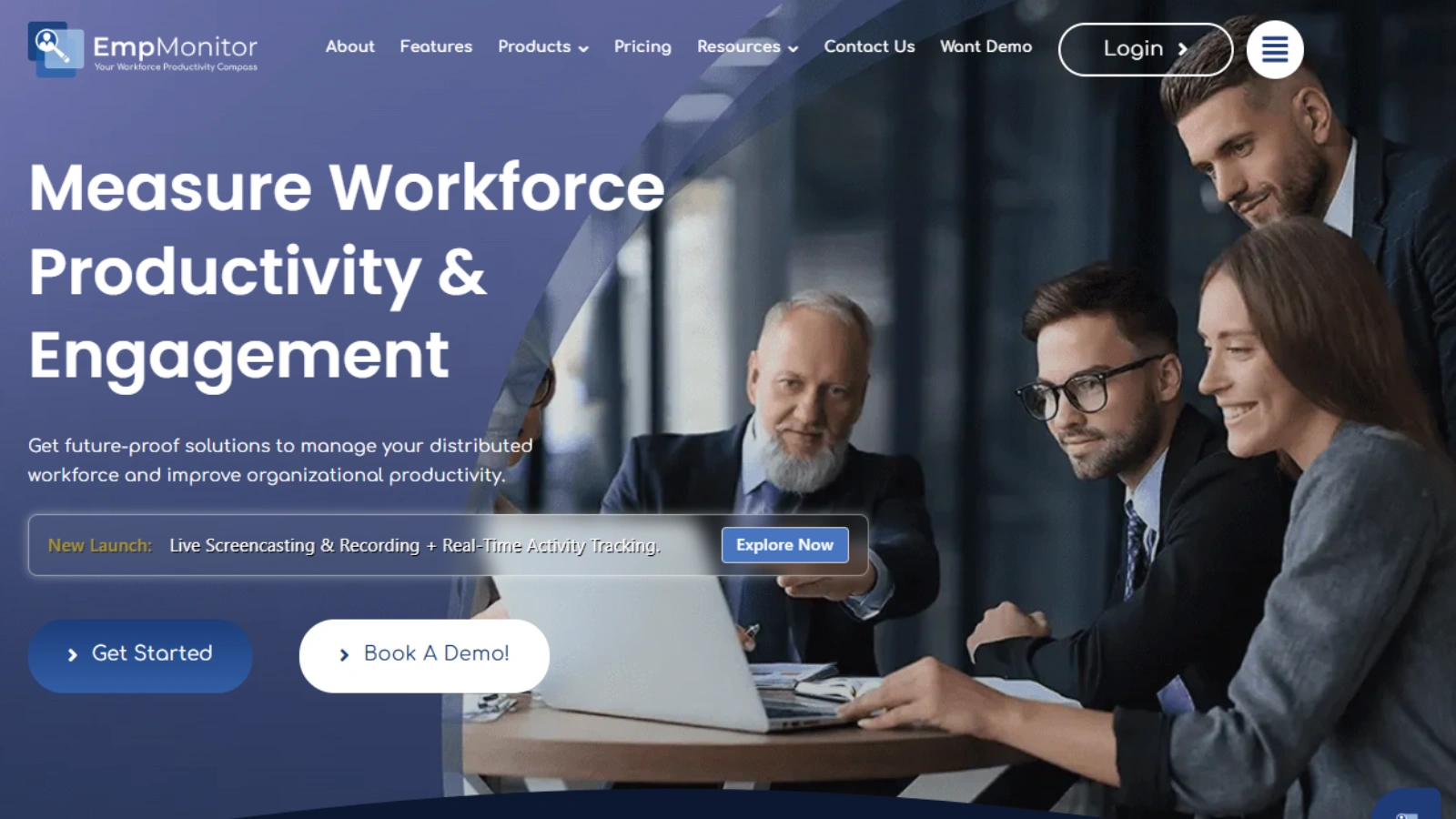
A clear employee monitoring policy sets expectations, while the right software helps managers follow those guidelines. EmpMonitor offers tools to review work activity, track attendance, and understand productivity patterns.
Key EmpMonitor Features
- Employee Activity Monitoring: Review application usage, website activity, and work patterns.
- Time Tracking: Understand active, idle, and productive hours through activity reports.
- Attendance Management: Track employee login and logout times and maintain attendance records.
- Screenshot Monitoring: Capture screen activity at configured intervals for relevant reviews.
- Productivity Reports: Use reports and activity summaries to understand team performance.
- Alerts and Notifications: Receive alerts about selected activities or potential issues.
EmpMonitor can help organizations put their monitoring processes into practice while giving managers clearer visibility into work activity. Configure its features according to your written policy, employee privacy expectations, and applicable laws.
A Better Approach to Employee Monitoring: Transparency Over Surveillance

More data does not automatically mean better decisions. A narrower process that people understand often works better than a broad one they fear.
When employees know the purpose and managers read results fairly, visibility, trust, and accountability stop pulling against each other.
Conclusion: Make Monitoring Clear, Fair, and Accountable
Define the purpose, explain the boundaries, and handle employee data responsibly. Review your current practices, update your employee monitoring policy, and ask whether your approach supports both business needs and employee trust.
Frequently Asked Questions About Employee Monitoring Policies
Is an employee monitoring policy legally required?
It depends on your jurisdiction, the monitoring method, and the circumstances. Some locations impose specific notice or other obligations, so check local rules.
Can employers monitor employees working from home?
Often yes, subject to applicable law, a clear purpose, transparency, and privacy safeguards. Remote work does not remove these duties.
Do employees need to sign a monitoring policy?
A signature usually confirms receipt, not consent. Legal requirements differ, so confirm what applies in your location.
What should an employee monitoring policy say about screenshots?
Cover the purpose, capture scope, working periods, access, storage, and safeguards against capturing sensitive information.
How long should employee monitoring data be stored?
Retention should follow documented purposes, applicable requirements, and the type of record. Delete data once it is no longer needed.
Can monitoring data be used for performance reviews?
It may inform reviews where appropriate, provided the data is accurate, fairly interpreted, and used within applicable rules.