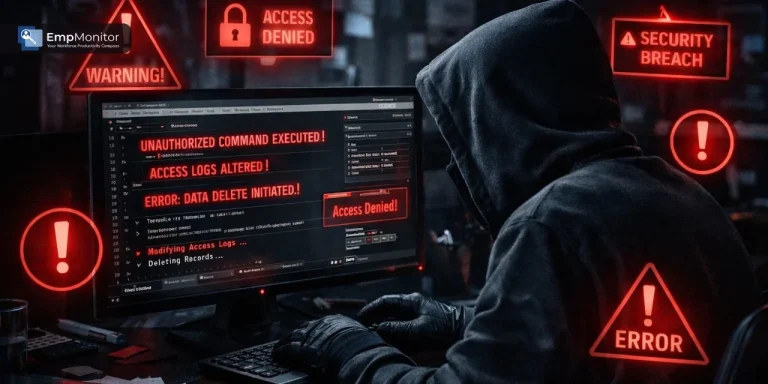
Every organization trusts its admins with elevated access, and most of the time, that trust is well-placed. But what happens when it isn’t? The ability to detect privileged account abuse has never been more critical than it is today. Insider threats are on the rise, and the most dangerous ones don’t come from outside; they come from people who already have the keys to your systems.
Whether it’s a disgruntled employee, a compromised account, or a careless admin making unauthorized changes, failing to detect privileged account abuse early can cost businesses millions. This blog walks you through the warning signs, detection strategies, and tools that can help you stay one step ahead of rogue admin actions before serious damage is done.
Listen To The Podcast Now!
What Is Privileged Account Abuse?
Privileged accounts, think system administrators, IT managers, database operators, and C-suite executives, hold access rights that go far beyond a regular employee’s login. They can modify system configurations, access sensitive data, create or delete users, and bypass security controls with ease. Account abuse happens when these elevated rights are misused, whether intentionally or accidentally. This misuse can range from subtle unauthorized data access to full-scale data exfiltration. In many cases, organizations don’t even realize it’s happening until significant damage has already been done.
To effectively identify and mitigate these risks, it’s essential to use UEBA to detect insider threats. Understanding what constitutes abuse is the first step toward building a solid detection framework and your ability to detect privileged account abuse before it spirals. It’s not always about malicious intent; sometimes it stems from negligence, poor access hygiene, or a complete disregard for internal policy. Either way, the risk to the business is very real and demands serious attention.
Why Privileged Accounts Are High-Value Targets?
Cybercriminals and malicious insiders both know that privileged accounts are the crown jewels of any IT environment. Once someone gains access to an admin account, they can move laterally across your network, cover their tracks, and exfiltrate data without triggering basic security alerts. The urgency to detect privileged account abuse at this level simply cannot be overstated.
To detect privileged account abuse effectively, you need to understand why these accounts are so attractive to bad actors. They often operate with minimal oversight, are excluded from standard monitoring policies, and can access systems that regular accounts simply cannot reach.
This combination of high power and low visibility makes them a prime target and a prime risk. Organizations that rely only on perimeter security consistently fall short when it comes to protecting these critical assets from within. Internal threats are frequently more costly and harder to detect than external attacks, which makes proactive monitoring all the more essential.
Common Signs That Help You Detect Privileged Account Abuse:
Knowing the red flags is essential. Here are the most telling behavioral signs that should prompt a closer look and help you detect privileged account abuse early:
- Unusual Login Times: An admin accessing sensitive systems at 2 AM on a weekend, when no change window is scheduled, is a classic warning sign. Legitimate admin activity usually follows predictable patterns. When those patterns break consistently, it’s time to investigate without delay.
- Bulk Data Downloads: When a privileged user suddenly starts downloading large volumes of data they don’t typically access, this is a strong indicator worth examining closely. To detect privileged account abuse in this context, monitor data transfer volumes and flag anomalies against each user’s historical baseline activity.
- Lateral Movement Across Systems: Admins moving through systems they don’t normally touch, especially production servers, financial databases, or HR records, may be exploring far beyond their designated responsibilities without any valid business justification.
- Account Creation or Permission Escalation: New accounts being created without a change ticket, or existing accounts receiving elevated permissions without proper approval, are clear signals that something may be off and warrant immediate review by your security team.
- Disabled Audit Logs: One of the most telling signs is when an admin disables or clears audit logs. Legitimate users don’t need to erase their tracks. This action alone should trigger an immediate security response from your team.
The Role of Abuse Awareness and Accountability in Prevention:
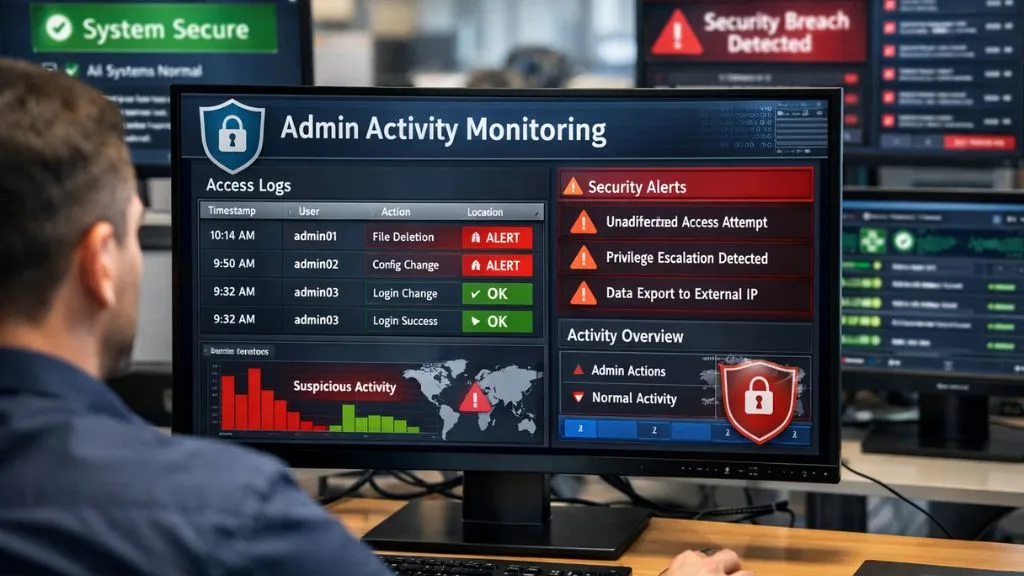
Prevention starts long before a breach occurs. Building a culture of abuse awareness and accountability means educating your IT staff on what constitutes acceptable use, what access they’re permitted to exercise, and what the consequences are for policy violations. This isn’t just about ticking compliance checkboxes.
True accountability means every admin action is logged, every access is justified, and every anomaly is reviewed promptly. Organizations that invest in awareness training alongside technical controls are far better equipped to catch issues early and deter them from happening at all. When employees know their actions are tracked and reviewable, it naturally discourages misuse. Transparency and oversight work together to create an environment where rogue behavior is much harder to sustain without being noticed by someone in your team.
How to Hold an Abuser Accountable: A Step-by-Step Approach?
Understanding how to hold an abuser accountable requires both solid technical evidence and a clear internal process. Without a structured approach, even the most obvious cases of abuse can fall apart during investigation or disciplinary proceedings. Here’s a practical framework every security team should follow:
Step 1 – Document Everything:
Before any action is taken, gather comprehensive audit logs, screenshots, access records, and a detailed timeline of all events. Evidence integrity matters, especially if legal action may follow down the line.
Step 2 – Escalate Through Proper Channels:
Alert your security team, HR, and legal counsel simultaneously. Avoid confronting the individual directly before the right stakeholders are involved, as this can compromise the entire investigation.
Step 3 – Revoke Access Immediately:
As soon as suspicious activity is confirmed, disable the account and change all shared credentials the user had access to. Containing the incident before investigating further prevents any additional damage from occurring.
Step 4 – Conduct a Formal Investigation:
Work with an internal or external forensic team to determine the full scope of the breach. Knowing how to hold abusers accountable means identifying exactly what was accessed, modified, or exfiltrated, and building a clear, defensible record of it.
Step 5 – Enforce Policy Consequences:
Follow your organization’s disciplinary process consistently and transparently. This reinforces the culture of accountability and sends a clear message to every member of your team about the seriousness of these violations.
Technical Controls That Enable You to Detect Privileged Account Abuse:

Having the right technical stack in place makes it significantly easier to detect privileged account abuse before it escalates into a full-blown incident. Organizations that fail to detect privileged account abuse at the technical layer often find themselves reacting to breaches rather than preventing them.
Core controls every security team should implement start with Privileged Access Management (PAM) solutions, which restrict who can access what and when. They enforce least-privilege principles and require admins to check out credentials for time-limited sessions, leaving a full audit trail.
Session recording tools capture admin activity in real time, allowing security teams to replay sessions and identify exactly what was done. Role-based access controls ensure that admins only hold the permissions they actually need for their job function, nothing more.
User and Entity Behavior Analytics (UEBA) builds behavioral profiles for each privileged user and flags deviations automatically in real time. SIEM platforms aggregate logs from across your environment to correlate suspicious events and surface patterns that would otherwise go completely unnoticed by a stretched security team working through manual processes.
The Hidden Cost of Failing to Detect Privileged Account Abuse:
Many businesses underestimate just how expensive undetected insider abuse can truly be, both financially and reputationally. Every day that passes without the ability to detect privileged account abuse is another day a bad actor has free rein inside your most sensitive systems. Industry research consistently shows that insider threat incidents cost organizations several million dollars on average when you factor in investigation costs, regulatory fines, remediation work, and reputational damage with customers and partners who trusted you with their data.
Beyond the financial impact, there’s a significant operational disruption to consider. When a privileged user goes rogue, the aftermath often involves taking critical systems offline, auditing months of logs, and rebuilding access frameworks from scratch. Customer trust erodes quickly when data breaches make the news.
For regulated industries like healthcare, finance, and legal services, a single failure to detect privileged account abuse can trigger serious compliance penalties under frameworks like HIPAA, GDPR, or SOX. The cost of prevention is always a fraction of the cost of recovery, which makes proactive monitoring a business-critical investment and not an optional extra that can be postponed indefinitely.
Also Read:
How EmpMonitor Helps You Detect Privileged Account Abuse?
EmpMonitor is a comprehensive employee monitoring and workforce productivity platform that gives organizations the visibility they need to detect privileged account abuse before it causes serious damage. Trusted by over 15,000 companies across 100+ countries and monitoring 500,000+ employees worldwide, EmpMonitor brings real-time activity tracking and deep behavioral insights into a single, easy-to-use dashboard.
Here’s how EmpMonitor supports your insider threat prevention strategy:
- Real-Time Activity Monitoring: Track every action taken by privileged users as it happens, with no delays and no blind spots across your workforce.
- Screenshot Capture & Live Screencasting: Automatically capture screen activity at defined intervals, giving you clear visual evidence of what admins are doing.
- URL & Application Tracking: Know exactly which websites and applications are being accessed by privileged accounts during any work session.
- Insider Threat Prevention Module: Specifically designed to flag high-risk behaviors and unauthorized access patterns before they escalate further.
- Productivity & Idle Time Reports: Detect anomalies in work patterns that may indicate unauthorized access occurring outside normal operating hours.
- Detailed Audit Logs: Maintain tamper-evident logs of all user activity for compliance, HR investigations, and forensic review purposes.
EmpMonitor makes it practical and affordable for businesses of all sizes to detect privileged account abuse and maintain airtight accountability across their entire workforce.
Building a Sustainable Privileged Account Monitoring Strategy:
A one-time audit won’t protect you long-term. To truly detect privileged account abuse on an ongoing basis, organizations need a living, evolving monitoring strategy that keeps pace with the constantly shifting threat landscape. Security teams that consistently work to detect privileged account abuse tend to catch issues weeks earlier than those relying on reactive measures alone.
This means reviewing access rights on a quarterly basis, retiring dormant privileged accounts, rotating credentials regularly, and running tabletop exercises to test your incident response plan under realistic conditions. It also means keeping your detection tools current and well-tuned. Threat actors constantly refine their tactics, and your monitoring capabilities need to evolve in step.
Equally important is creating a structured feedback loop between your security operations team and HR, because some of the most valuable signals about potential insider threats are behavioral, not purely technical in nature.
Consistent policy enforcement, regular access reviews, and strong cross-departmental communication are what ultimately make the difference between a contained incident and a catastrophic breach that could have been prevented with the right strategy in place from the beginning.
Conclusion:
Privileged account abuse is one of the most serious and underestimated risks in enterprise security today. The ability to detect privileged account abuse early is what separates organizations that recover quickly from those that face devastating long-term consequences. By combining technical controls, behavioral monitoring, and a genuine culture of abuse awareness and accountability, businesses can significantly reduce their exposure to rogue admin actions.
FAQ’s:
Q1. What is the most common form of privileged account abuse?
Ans: Unauthorized data access and privilege escalation without approval are among the most common forms. Many incidents go undetected for months due to inadequate monitoring practices within the organization.
Q2. How do you detect privileged account abuse in real time?
Ans: Using a combination of UEBA tools, session recording, and real-time employee monitoring software like EmpMonitor allows security teams to flag suspicious activity the moment it occurs on your network.
Q3. How to hold an abuser accountable within an organization?
Ans: Document all evidence thoroughly, involve HR and legal immediately, revoke access at once, and follow your organization’s formal disciplinary process consistently and transparently every time.
Q4. Can small businesses afford privileged account monitoring?
Ans: Yes. Solutions like EmpMonitor offer scalable pricing starting at just $3/user/month, making robust insider threat monitoring accessible for teams of every size across industries.