
Workforce productivity is a term that often comes up in business discussions, but it’s commonly misunderstood. Many organizations mistakenly equate productivity with long hours or pushing employees harder. However, true productivity isn’t about working more; it’s about working smarter.
When productivity takes a dip, the effects aren’t always immediately obvious. It can show up as missed deadlines, delayed projects, or disengaged employees, all of which gradually chip away at a company’s success. Recognizing when performance is slipping is only part of the equation; what truly matters is how well you measure it and take action to improve it.
In this guide, we’ll explore what workforce-productivity really means, how to measure it, what factors influence it, and practical ways to improve team performance without burning out your people. In simple terms, workforce productivity is the ratio of output (work completed, value generated) to input (time, effort, and resources). By tracking key workforce productivity metrics, businesses can assess efficiency, identify areas for improvement, and enhance performance while reducing costs.
In a hurry? Listen to the blog instead!
What is Workforce Productivity?

Workforce-productivity refers to how effectively employees use their time, skills, and resources to generate value for the company. It’s about maximizing the output of every workday and achieving meaningful results with minimal wasted time or effort.
While productivity is often confused with efficiency, they are not the same. Efficiency focuses on how quickly tasks are completed, but productivity looks at both speed and quality. In other words, you can be efficient without being truly productive, but real productivity requires achieving worthwhile results with the right level of effort.
Understanding this concept is essential for various stakeholders:
1. Businesses want to maximize resources and output.
2. Managers need to align teams with broader business goals.
3. HR teams focus on improving employee performance and morale.
Why Does Workforce Productivity Matter?
Workforce productivity is closely tied to profitability. When employees are productive, businesses can deliver more value, driving higher revenue without needing to scale operations. On the other hand, low productivity can result in higher costs, slower growth, and a disengaged workforce.
There’s also a delicate balance between productivity and employee well-being. Overworked employees may seem productive in the short term, but burnout, disengagement, and turnover can undermine long-term success. Maintaining a healthy work-life balance and supporting sustainable performance is key to both profitability and employee retention.
Measuring Workforce Productivity
Evaluating workforce productivity requires a multifaceted approach. Below are some common metrics used to gauge employee performance and overall efficiency:
Output per Employee: Measures the value produced by an employee relative to their working hours or resources. This metric is useful for comparing performance across teams or roles.
Revenue per Employee: Assesses the total revenue generated per employee, offering insights into financial efficiency and overall business health.
Task Completion Rate: Tracks how many tasks are completed on time compared to the number expected. This helps measure execution, accountability, and consistency.
Utilization Rate: Examines the proportion of time spent on productive tasks versus idle time. It is particularly useful for service-based industries with billable hours.
Time-to-Completion: Measures the average time taken to complete specific tasks or projects. It helps identify delays and areas for process improvement.
Here’s a quick reference table for each metric:
| Metric | What it Measures | Why it Matters |
|---|---|---|
| Output per Employee | Value produced per employee | Compare performance across teams |
| Revenue per Employee | Revenue generated per employee | Indicates financial efficiency |
| Task Completion Rate | % of tasks completed on time | Tracks execution and deadlines |
| Utilization Rate | Time spent on productive work | Shows the efficiency of time use |
| Time-to-Completion | Time taken to finish tasks | Identifies bottlenecks |
Quantitative vs. Qualitative Workforce Productivity
Productivity isn’t solely about numbers; quality also plays a crucial role. While quantitative metrics like revenue per employee or task completion rates provide valuable insights, qualitative factors such as creativity, innovation, collaboration, and work quality should not be overlooked. Both sides contribute to an organization’s overall success, and relying too heavily on one can give an incomplete picture.
Key Factors Affecting Workforce Productivity

Various factors influence how productive employees are. These can be grouped into four categories: individual, organizational, environmental, and technological.
Individual Factors: An employee’s skills, motivation, and focus are vital. Highly skilled, motivated employees tend to accomplish more, while disengaged workers can slow down even efficient workflows and reduce output.
Organizational Factors: Leadership, communication, and company culture play a major role in performance. Employees need clear guidance, strong team communication, and a supportive environment to thrive. Poor leadership often leads to confusion, delays, and inconsistent results.
Environmental Factors: The physical and virtual work environments can either enhance or detract from productivity. A cluttered office, poor lighting, or constant distractions can reduce output significantly. A well-organized, distraction-free workspace supports better focus and performance.
Technology and Automation: Productivity can be improved through tools that automate repetitive tasks or streamline workflows. Adopting the right workforce productivity tools for project management, communication, and data processing can free up time and reduce errors.
How to Improve Workforce Productivity: A Step-by-Step Guide
Improving productivity requires a thoughtful, systematic approach. Here’s a practical framework for improving performance across teams:
Measure Current Workforce Productivity: Start by evaluating your team’s current performance using key workforce productivity metrics. Knowing your baseline allows you to track progress and identify areas for improvement.
Identify Bottlenecks: Review workflows to spot inefficiencies or tasks that take longer than necessary. Look for patterns where delays or resource drains occur, such as manual processes, redundant steps, or communication breakdowns. Identifying bottlenecks is essential for improving results.
Optimize Processes: Once bottlenecks are identified, streamline processes. Simplify workflows, eliminate unnecessary steps, or automate repetitive tasks. The goal is to create a smoother process that minimizes wasted time and effort.
Use the Right Tools: Invest in productivity tools that help manage work efficiently, such as project management platforms, time-tracking software like EmpMonitor, and automation tools. These tools can streamline communication, keep teams on track, and provide real-time performance data for better productivity monitoring.
Improve Employee Engagement: Engaged employees are more productive. Regular feedback, recognition programs, and a positive work culture can boost morale and motivation. When employees feel valued and supported, they are more likely to perform at their best.
Monitor and Iterate: Improving productivity is an ongoing process. Regularly monitor the metrics you’ve set, track progress, and adjust strategies as needed. Continuous iteration is key to sustaining long-term improvements.
Common Mistakes to Avoid in Workforce Productivity

In the quest to improve productivity, businesses often make some missteps that can hinder progress:
Equating Productivity with Hours Worked: Many companies mistakenly believe that more hours worked equals more productivity. In reality, longer hours often lead to burnout and diminishing returns. Focus on the quality of output, not just the quantity of time worked.
Ignoring Employee Well-being: Overworking employees or neglecting their well-being can result in stress, disengagement, and burnout. Prioritize work-life balance and create a healthy work environment that supports long-term performance.
Measuring the Wrong Metrics: It’s easy to focus only on quantitative metrics, such as the number of tasks completed. However, neglecting qualitative factors like work quality, creativity, and employee satisfaction can give you a skewed picture of performance.
Over-relying on Monitoring Tools: While productivity monitoring software can be helpful, it should never replace meaningful leadership and communication. Over-relying on monitoring systems without fostering trust can alienate employees and harm morale.
Lack of Clear Goals: Without clear, defined goals, employees may struggle to stay focused and productive. Ensure that your team understands the company’s objectives and how their efforts contribute to business success.
Tools to Boost Workforce Productivity
To truly optimize workforce productivity, having the right tools in place is essential. These tools not only streamline day-to-day operations but also provide valuable insights that help businesses make data-driven decisions. Whether you’re managing a hybrid team, tracking employee attendance, or simply looking for ways to improve task management, leveraging the right technology can make a significant difference.
One such tool is EmpMonitor, an employee monitoring software designed to help businesses track and manage workforce productivity more effectively.
Also read –
How To Increase Workforce Productivity In 2025 | 05 Best Practices
Productivity- Definition, Considerations, Some Tips & More
How EmpMonitor Can Help Improve Workforce Productivity
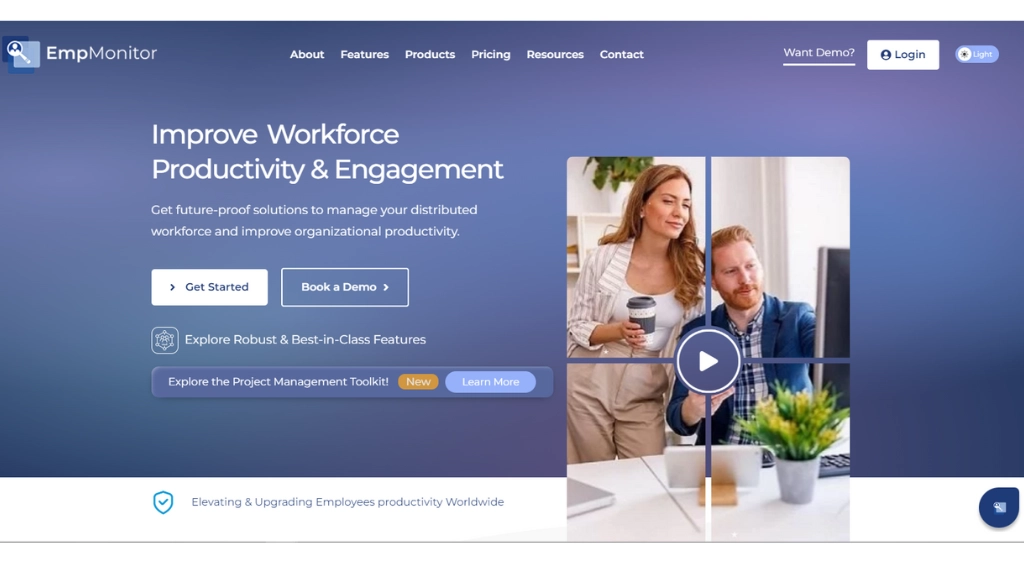
EmpMonitor is designed to support businesses in optimizing workforce productivity by providing tools that streamline employee monitoring and management. Here are some ways it can be beneficial:
Efficient Hybrid Team Management
Managing hybrid teams comes with its own set of challenges, but EmpMonitor simplifies the process. With features like active time tracking and activity monitoring, businesses can track how time is spent across remote and in-office teams. This supports consistency and makes team management more effective.
Employee Attendance Tracking Made Easy
EmpMonitor’s attendance management feature eliminates the need for manual tracking, reducing time-consuming administrative tasks. By automating attendance tracking, the software allows HR teams to focus on more strategic responsibilities while maintaining accurate records.
Data-Driven Insights
EmpMonitor offers real-time insights into employee performance, helping businesses understand where improvements can be made. By providing data on work patterns and output, it supports informed decision-making and better operational efficiency.
Task and Project Management Simplified
EmpMonitor’s platform allows teams to assign, track, and manage tasks and projects more seamlessly. With real-time updates, it helps ensure deadlines are met and projects are progressing as planned. This makes collaboration smoother and supports stronger team performance.
Ensuring Data Security and Privacy
EmpMonitor includes data security features to help protect employee information. This allows businesses to focus on productivity and operational improvement without adding unnecessary concerns around data protection.
By providing practical solutions for managing hybrid teams, attendance, tasks, and performance visibility, EmpMonitor can support businesses looking to improve efficiency in a thoughtful, non-intrusive manner.
Conclusion
Productivity isn’t about working harder; it’s about achieving more with less effort and time. By measuring the right metrics, identifying bottlenecks, optimizing processes, and providing the right tools and support, businesses can create an environment where employees thrive and produce valuable results. Focus on quality, balance, and continuous improvement, and stronger performance will naturally follow.
This guide provides a comprehensive approach to understanding and improving workforce productivity. It is designed to equip businesses with the insights and tools they need to boost performance in a sustainable and effective way, including the use of the best workforce productivity monitoring software when appropriate.
FAQ
- How can you improve workforce productivity without increasing employee workload?
You can improve workforce productivity by identifying workflow bottlenecks, automating repetitive tasks, and using the right productivity tools. Focusing on employee engagement, clear communication, and realistic goals helps boost output without increasing stress or working hours. - What are the most effective workforce productivity metrics to track?
The most effective productivity metrics include output per employee, revenue per employee, task completion rate, utilization rate, and time-to-completion. Tracking a combination of these metrics helps businesses measure efficiency, identify gaps, and improve overall performance. - Why do businesses struggle to measure workforce productivity accurately?
Businesses often struggle because they rely too heavily on a single metric or focus only on quantitative data. Ignoring qualitative factors like work quality, creativity, and collaboration can lead to an incomplete view of productivity. A balanced approach is essential for accurate measurement. - How does productivity monitoring software improve team performance?
Productivity monitoring software improves team performance by providing real-time insights into time usage, task progress, and employee activity. It helps managers identify inefficiencies, optimize workflows, and make data-driven decisions to improve productivity without micromanaging. - What should you look for in the best workforce productivity monitoring software?
The best productivity monitoring software should include features like time tracking, activity monitoring, reporting, and analytics. It should also support hybrid teams and provide actionable insights that help businesses sustainably improve productivity.