The same announcement can land completely differently depending on who reads it. A policy update sent to the whole company as a single document rarely works for everyone. The legal team reads for liability. The sales team reads for what it means on Monday morning. New hires don’t have enough context to understand either version. Writing for different audiences is one of those skills that looks simple until you’re the one who sent the wrong version to the wrong group and spent the afternoon answering confused replies.
Audience adaptation is a practical problem, and workplaces generate it constantly. Policy updates, project briefs, performance reviews, client-facing reports, and internal announcements – all of these hit different readers with different backgrounds, goals, and tolerances for detail.
What Audience Adaptation Actually Means
What is audience adaptation in a workplace context? It’s the process of taking the same core information and presenting it in a way that fits the knowledge level, priorities, and reading context of a specific group. The content doesn’t change. The framing, vocabulary, level of detail, and tone do.
Writers who move between audience types regularly often use an AI tool to generate an initial version and then adapt it. Getsolved’s AI paraphraser handles the mechanical part of this – producing a version at a different reading level, in a different register, or with different emphasis. This gives the writer a working draft to refine rather than starting the adaptation from scratch. The human judgment still decides which version goes to whom and whether the tone is right. That combination of AI speed and editorial judgment is where the real efficiency is.
The mistake most writers make is adapting tone without adapting depth. A simplified version that still assumes background knowledge isn’t actually simpler – it’s just friendlier.
The Four Audience Types in Most Workplaces
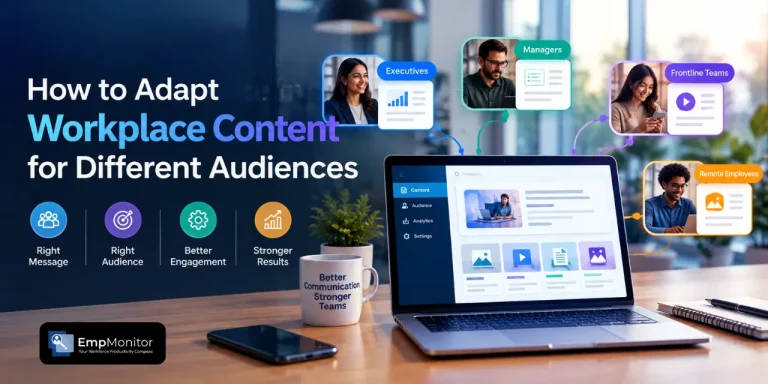
Types of audiences in writing vary by context, but workplace content tends to cluster around four groups. Each requires a different approach.
- Executives and senior leadership: want conclusions first. They read for decisions, not explanations. A report for this audience leads with the recommendation, then supplies the evidence. Background goes in the appendix. Every sentence should pass the test: does this help someone make a decision?
- Subject-matter experts: want precision. Cutting technical detail for this audience doesn’t simplify – it frustrates. A marketing analytics team reading a data report doesn’t need the methodology explained. They need the findings presented accurately, with the right caveats.
- General employees: need context before conclusions. They’re reading company-wide communications, policy updates, and announcements. Plain language matters here. Jargon from other departments lands as noise. The practical “What does this mean for me on Tuesday” has to be answered explicitly.
- External audiences: clients, partners, regulators – require the most controlled version of any message. What’s written internally with casual shorthand needs a full translation before it goes outside the organisation. Assumptions about shared context need to be spelled out.
The Same Message, Four Ways
Here’s a concrete example. Suppose a company is implementing a new time-tracking system. Here’s how audience adaptation of that message looks in practice:
| Audience | Lead sentence | What to include | What to skip |
| Executive team | “The new system will reduce reporting time by an estimated 40%.” | ROI, rollout cost, timeline | Setup steps, login details |
| IT and project team | “Rollout begins March 3 across three departments.” | Technical specs, integration notes, error handling | Business case, cost data |
| All employees | “Starting next week, you’ll log your hours in a new system.” | What changes for them, who to contact, deadline | Technical specs, financials |
| External client | “Our reporting process is being updated to improve accuracy.” | Impact on deliverables, timeline | Any internal details |
The same decision, four completely different documents. All of them are accurate. Each one is useful to its audience.
Writing Style and Tone by Context
What tones to use when developing content is one of those questions with a more mechanical answer than it seems. Tone is not just about being formal or informal – it’s about the relationship the writing assumes between the writer and the reader.
- Direct report to manager: This should be efficient and action-oriented. Skip social preamble. Lead with status, then blockers, then what’s needed. A manager reading ten of these in a row will appreciate the writer who gets to the point in the first sentence.
- All-hands announcement: Warm, plain, and specific. The goal is alignment, not authority. Jargon from any specific department should be cut. The practical implication for each person’s day-to-day life should be stated clearly. Vague reassurance (“we’re committed to excellence”) does less than a concrete next step.
- Performance review: This is the most audience-sensitive workplace document. The reader is the subject of the document, which changes everything. Specific examples over general assessments. Concrete outcomes over personality observations. Future-focused language lands better than retrospective judgment.
- Cross-department brief: The challenge here is that the types of audiences in writing within a single brief can vary widely. An IT project that touches finance, operations, and HR will be read by people with very different mental models of what’s important. The solution is layered documents: a one-page summary for everyone and detailed sections that each department can read independently.
When AI Helps and When It Doesn’t
AI tools are good at mechanical adaptation – changing reading level, shifting from formal to conversational register, producing multiple versions of the same paragraph. What they’re less reliable on is context-specific judgment: knowing that the sales team at this particular company bristles at corporate language or that the client relationship requires a specific level of formality.
The practical workflow that tends to work:
- Write the primary version for the most technical or detailed audience first
- Use an AI paraphrasing tool to generate simplified or differently-toned versions
- Edit each version for the specific context and relationship it’s going into
- Read each version from the perspective of that audience before sending
How does audience affect writing is most visible when the same document goes to the wrong group. The question that prevents this is simple: what does this person need to know, and what do they already know? Starting from that question produces better adapted content than starting from the document itself.
Final Thoughts
Audience adaptation in the workplace is a daily task, not an occasional one. Every email, brief, and announcement carries an implicit choice about who it’s written for. Writers who make that choice explicitly – who ask “who is actually reading this?” before they start – produce content that’s clearer, more useful, and less likely to generate follow-up questions. The skill compounds. The more deliberately it’s practiced, the faster the right version comes.