A professional training organization that delivered certification programs in IT and business skills was facing an unexpected operational challenge.
The company had recently expanded its online learning programs and introduced remote work for many team members. Its workforce included instructors, course coordinators, and administrative staff responsible for managing enrollments, student communication, and training schedules.
At first, everything seemed to be running smoothly. Courses were delivered on time, and the number of enrolled learners continued to grow.
However, internally, managers began noticing something unusual.
Administrative tasks were taking longer than expected, course preparation timelines varied widely among instructors, and coordination between departments was becoming slower.
The leadership team suspected that workflow inefficiencies were developing, but they lacked the data to confirm it. Without clear insights into daily work patterns, it was difficult to understand where time was being spent.
This situation led the organization to explore productivity monitoring as a way to gain better visibility into team performance and operational workflows.
You can listen to the podcast here.
The Operational Challenges

As managers investigated the issue further, several operational gaps started to appear.
Instructors were following different preparation schedules. While some trainers prepared course materials well in advance, others completed their preparation shortly before the training sessions. This inconsistency created pressure on coordinators who had to manage course timelines.
Administrative teams were also struggling with increasing workloads. Tasks such as student enrollments, responding to learner queries, and managing training schedules often overlapped, which slowed down response times.
Another major challenge was the growing remote workforce. With team members working from different locations, supervisors had limited visibility into daily activities. They relied heavily on meetings and status updates to track progress.
At this point, management realized they needed a more reliable way to understand how to monitor productivity without interrupting employee workflows.
Common Productivity Challenges in Educational Institutions
To gain better operational insights, the organization decided to implement a structured monitoring system.
Before deploying the platform, leadership held internal discussions with employees to explain the purpose of the initiative. The focus was on improving workflow visibility and task management rather than micromanaging staff.
After evaluating several solutions, the organization selected EmpMonitor to support its productivity monitoring strategy.
The platform was installed on work systems used by instructors, coordinators, and administrative staff. Once activated, it began collecting insights related to work hours, application usage, and task activity.
Within a few weeks, managers started gaining clearer insights into how daily operations were functioning.
Understanding Workflows Through User Activity Monitoring
One of the most useful capabilities of the platform was user activity monitoring.
The system provided insights into how employees interacted with different applications throughout the workday. Managers could see which tools were being used for course preparation, communication, and administrative work.
This information helped supervisors identify how much time was spent on specific tasks and where workflow interruptions were occurring.
In some cases, administrative staff were switching between multiple systems while handling student queries. This process added unnecessary time to routine tasks.
Similarly, some instructors were spending longer than expected preparing course materials due to unclear content guidelines.
These insights helped management identify operational bottlenecks that had previously gone unnoticed.
Workflow Improvements Based on Data
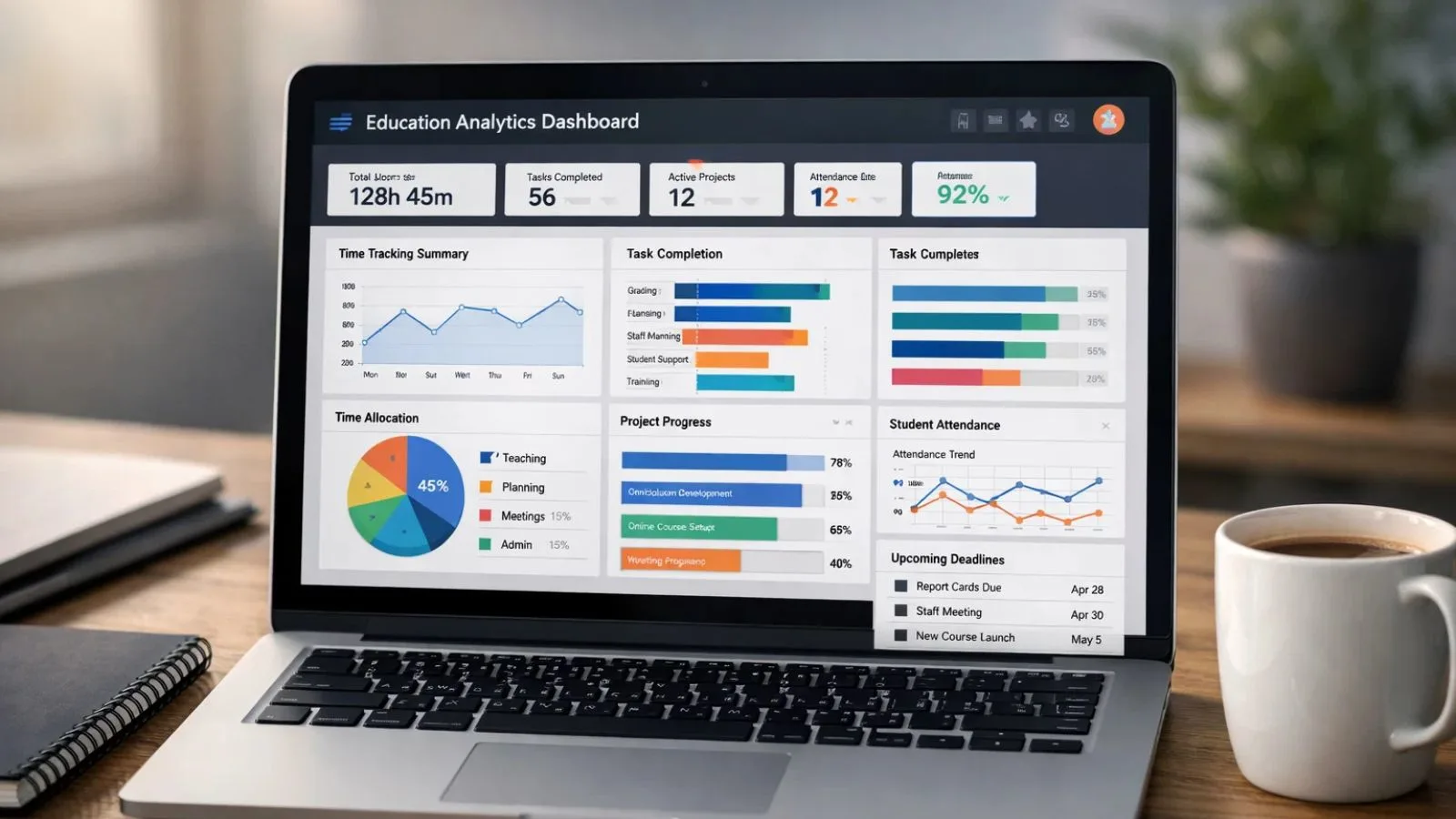
Once the organization had reliable productivity insights, managers began making targeted improvements.
Administrative tasks were redistributed to balance workloads across coordinators. This helped reduce delays in handling student requests.
Course preparation processes were also standardized. Instructors were given clearer timelines and structured guidelines for preparing training materials.
Managers continued reviewing productivity reports regularly to ensure that workloads remained balanced and workflows stayed efficient.
Results After Implementation
Within a few months of implementing the monitoring framework, the organization began experiencing noticeable improvements.
Administrative response times improved significantly, allowing student inquiries to be handled more quickly. Course preparation became more consistent across instructors, which improved coordination with training schedules.
Managers also spent less time requesting manual updates from employees. Instead, they could review operational insights directly through monitoring dashboards.
These improvements helped the organization maintain smoother workflows while supporting its expanding online training programs.
Before and After Implementing EmpMonitor
To clearly understand the operational changes, the organization compared its workflows before and after introducing EmpMonitor. The comparison highlighted how structured productivity monitoring helped improve visibility, coordination, and overall efficiency across teams.
Before Implementing EmpMonitor
- Managers had limited visibility into how employees spent their work hours, making it difficult to identify productivity gaps or workflow inefficiencies.
- Course preparation schedules varied among instructors. Some trainers prepared materials well in advance, while others completed preparation shortly before sessions, which created coordination challenges.
- Administrative teams often struggled with overlapping responsibilities such as student enrollments, responding to learner queries, and scheduling training sessions.
- Supervisors relied heavily on meetings, emails, and manual status updates to track work progress across departments.
- Without structured user activity monitoring, it was difficult for leadership to understand how tasks were distributed or which processes were slowing down operations.
After Implementing EmpMonitor
- Managers gained clear visibility into daily workflows through centralized dashboards and activity reports.
- Productivity monitoring allowed leadership to analyze how time was being spent across instructors, coordinators, and administrative teams.
- Course preparation became more consistent after managers introduced structured timelines based on workflow insights.
- Administrative workloads were redistributed more effectively, which helped reduce delays in responding to student inquiries.
- With better insights into team performance, managers could identify operational bottlenecks earlier and resolve them quickly.
- The impact of monitoring was visible in improved task coordination, faster administrative processes, and more balanced workloads across departments.
Key Features of EmpMonitor That Helped Improve Productivity
After implementing the monitoring system, the organization began using several EmpMonitor features to better understand employee workflows and improve efficiency across departments. These tools provided clear insights into daily operations and supported more effective task management.
- Time Tracking
Managers were able to monitor how much time employees spent on specific tasks and projects throughout the day. This helped identify processes that were consuming excessive time and revealed opportunities to streamline certain workflows. - User Activity Monitoring
Through detailed activity reports, supervisors could observe how employees interacted with different tools and systems during working hours. This visibility helped the organization understand real work patterns and evaluate how tasks were being performed. - Application and Website Usage Tracking
The platform allowed managers to review which applications and websites employees used most frequently. This helped determine whether work hours were being focused on productive tools or if time was being spent on non-work-related platforms. - Productivity Analytics and Reporting
EmpMonitor generated visual dashboards and performance reports that highlighted productivity trends, active work hours, and overall team performance. These reports made it easier for leadership to evaluate efficiency and identify areas that required improvement. - Workflow Insights for Better Decision-Making
By combining activity data with productivity analytics, managers gained a clearer understanding of how workflows operated across departments. These insights helped leadership make more informed operational decisions and improve overall productivity monitoring within the organization.
The Impact of Monitoring on Team Performance
The impact of monitoring extended beyond operational improvements.
Employees gradually became more aware of their work habits and time allocation. This encouraged better time management and reduced unnecessary distractions during work hours.
Managers also gained the ability to identify workflow bottlenecks earlier. This allowed teams to resolve issues before they affected course delivery or administrative processes.
Over time, the organization developed a more structured and efficient work environment.
Conclusion
This case study demonstrates how a growing training organization addressed operational inefficiencies by implementing a structured productivity monitoring system.
By combining workflow insights, user activity monitoring, and data-driven decision-making, the company gained better visibility into its operations and improved overall efficiency.
As education and training institutions continue expanding digital and remote learning programs, having reliable systems to understand how to monitor productivity can play a critical role in maintaining consistent performance and delivering better learning experiences.
FAQs
1. What is productivity monitoring in education organizations?
Productivity monitoring involves tracking and analyzing how employees spend their work time to improve efficiency and performance. In educational institutions, it helps administrators understand staff workflows and optimize operational processes.
2. How to monitor productivity in training organizations?
Organizations can monitor productivity by using monitoring tools that track work hours, application usage, and task completion. These insights help managers evaluate performance and improve workflow management.
3. What is user activity monitoring?
User activity monitoring refers to tracking how employees interact with applications, websites, and systems during work hours. This helps organizations understand work patterns and identify productivity trends.