Many companies that shifted to remote work leaned heavily on monitoring software to keep tabs on productivity. Screen recorders, keystroke loggers, and activity trackers promised managers visibility into what employees were doing during work hours. While these tools can offer some reassurance, they address only a narrow slice of what makes distributed teams actually function well.
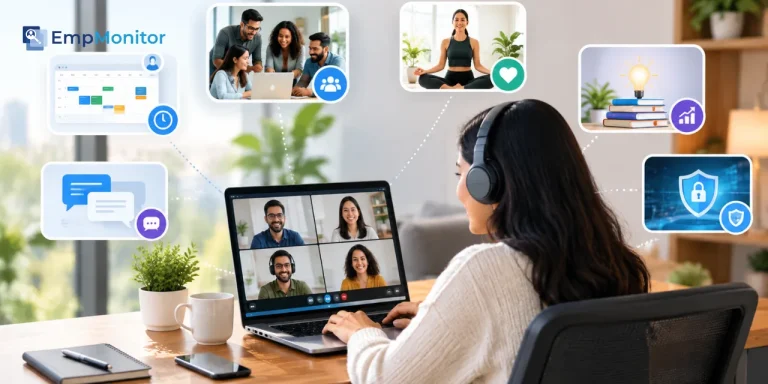
Remote work success depends far more on trust, clear communication, secure infrastructure, and thoughtful processes than on surveillance. Teams that rely solely on monitoring often find that morale drops while genuine productivity barely improves. The real question isn’t whether employees are active on their screens, but whether they have the tools, structure, and security to do meaningful work from wherever they are.
Secure Connections That Protect Company Data
One of the most overlooked needs in remote setups is a reliable way to protect sensitive information as it travels across home networks, coffee shop wifi, and personal devices. A business vpn creates an encrypted tunnel between an employee’s device and company systems, making it far harder for outsiders to intercept data or exploit weak home router security. This matters because remote employees often connect from networks that IT departments have no control over, unlike a traditional office where the network itself is secured centrally.
Beyond encryption, a business VPN typically allows companies to restrict access to internal tools and servers so that only verified devices and users can reach them. This reduces the attack surface significantly compared to leaving internal systems exposed to the open internet. For companies handling client data, financial records, or proprietary code, this kind of protection isn’t optional; it’s a baseline requirement for operating responsibly outside a controlled office environment.
Some VPN solutions also include features like split tunneling, which lets non-work traffic bypass the company network entirely while business traffic stays protected. This keeps performance reasonable for employees while still securing what matters. Combined with strong password policies and multi-factor authentication, a well-configured VPN forms one of the foundational layers of remote work security.
Clear Communication Norms That Reduce Friction
Remote teams often struggle not because people are unreachable, but because expectations around communication are vague. Without agreed norms, some employees feel pressured to respond instantly to every message, while others go quiet for hours, leading to confusion about availability. Establishing simple guidelines, such as which channel to use for urgent matters versus routine updates, prevents both burnout and missed information.
Asynchronous communication deserves particular attention because remote teams frequently span different time zones or simply prefer flexible schedules. Writing detailed updates instead of relying on quick verbal check-ins forces clarity and creates a record that others can reference later. Teams that document decisions and context in shared, searchable spaces tend to lose less institutional knowledge when someone is out sick or transitions to a new role.
Trust Built Through Outcomes Rather Than Activity
Monitoring tools measure activity, not results, and this distinction matters more than it might seem at first. An employee who appears constantly active on their screen isn’t necessarily producing good work, while someone who takes breaks to think through a problem might deliver far better output. Shifting management focus toward clear deliverables and deadlines gives employees room to work in the way that suits them best.
This approach requires managers to get comfortable setting specific, measurable goals rather than assuming presence equals productivity. A software developer might be evaluated on completed features and code quality rather than hours logged, while a customer support representative might be measured by resolution rates and client satisfaction. When expectations are outcome-based, employees have less reason to feel watched and more reason to feel accountable for what actually matters.
Reliable Tools for Collaboration and Access
Remote employees need dependable access to the same files, applications, and systems their in-office counterparts use, without unnecessary friction. Cloud storage platforms, shared project management tools, and video conferencing software form the backbone of daily remote work, but only when they’re set up thoughtfully rather than bolted together haphazardly. Poorly configured permissions or scattered file storage across multiple platforms create daily headaches that compound over time.
Equally important is ensuring that these tools integrate with each other so employees aren’t constantly switching contexts or manually transferring information between systems. A well-integrated stack, where messaging, task tracking, and document storage connect smoothly, saves time and reduces the small errors that happen when data has to be copied by hand. Companies that invest in this integration upfront tend to see fewer support tickets and less frustration reported by remote staff.
Support for Mental Health and Boundaries
Working from home blurs the line between personal and professional life in ways that office environments naturally prevent. Without a commute or physical separation from the workspace, some employees find it difficult to switch off at the end of the day, leading to longer hours and eventual burnout. Companies that actively encourage boundaries, such as discouraging after-hours messages or promoting actual use of vacation time, see better long-term retention than those that simply track output.
Isolation is another challenge that monitoring software does nothing to address and can actually worsen. Employees who feel watched rather than supported often report lower job satisfaction, even when their performance metrics look fine. Regular one-on-one check-ins focused on wellbeing rather than task status, along with optional virtual social time, help maintain a sense of connection that purely digital oversight cannot replicate.
Also Read
Website and App Usage Monitoring for Remote Teams 2026
Building a Remote Culture That Lasts
Monitoring software might offer a false sense of control, but the teams that thrive remotely are the ones supported by secure infrastructure, clear communication habits, outcome focused management, integrated tools, and genuine attention to employee wellbeing. None of these elements work in isolation, and together they create an environment where people can do their best work without feeling like they’re being watched over a shoulder that isn’t even in the room. Companies that recognize this shift are the ones building remote cultures that hold up over time, rather than ones held together by anxiety and surveillance.