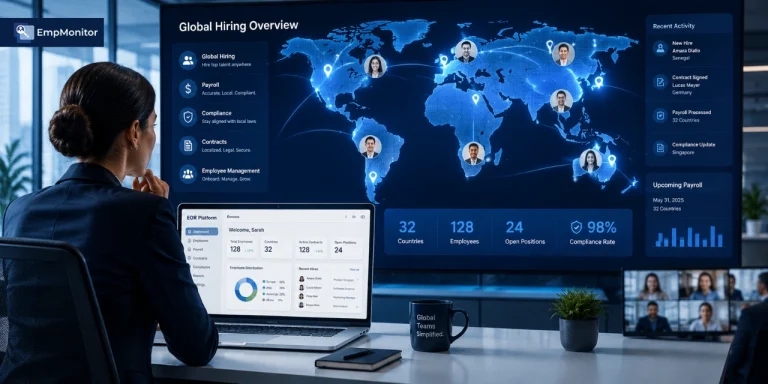
Expanding your workforce across borders sounds straightforward until the paperwork arrives. Every country carries its own employment law, tax structure, and compliance burden; get even one wrong, and you’ve exposed your business to serious legal and financial risk. That’s where EOR (Employer of Record) software comes in. It’s the infrastructure that makes global hiring possible without requiring a local legal entity in every market.
What EOR Software Actually Does and Why It Matters
Before comparing providers, it helps to understand what EOR software actually does. Comparison resources such as HR.software, which covers more than 350 platforms across EOR, HR, and global payroll, can help you see how many options are available in this growing market.
An Employer of Record acts as the legal employer for your workers in another country. Companies bringing foreign professionals into the United States should evaluate employment-based immigration support separately, since EOR coverage alone may not address visa sponsorship. It manages local employment contracts, payroll, statutory benefits, tax filings, and compliance requirements on your behalf. This allows your business to hire employees in countries such as Germany or Singapore without first establishing a local legal entity.
The main benefit is speed and flexibility. Setting up a foreign entity can be expensive and may take several months, while an EOR gives you access to local payroll and employment expertise without building an internal team. Employees also receive contracts and benefits that follow local laws. This makes EOR software especially useful for growing companies, international teams, and businesses testing a new market before creating a permanent presence.
The Difference Between EOR Software and a Standalone EOR Provider
Not every EOR solution works the same way. Some are pure-service providers: a team of legal and payroll specialists managing everything manually. Others are software-first platforms where technology does the heavy lifting; human support backs it up. The best options for most businesses sit somewhere in between, combining a solid platform with real automation and backed by in-country legal and payroll expertise. This distinction matters because it affects pricing, speed, and what kind of support you get when something unusual happens, and it will.
Why Compliance Coverage Determines Your Shortlist
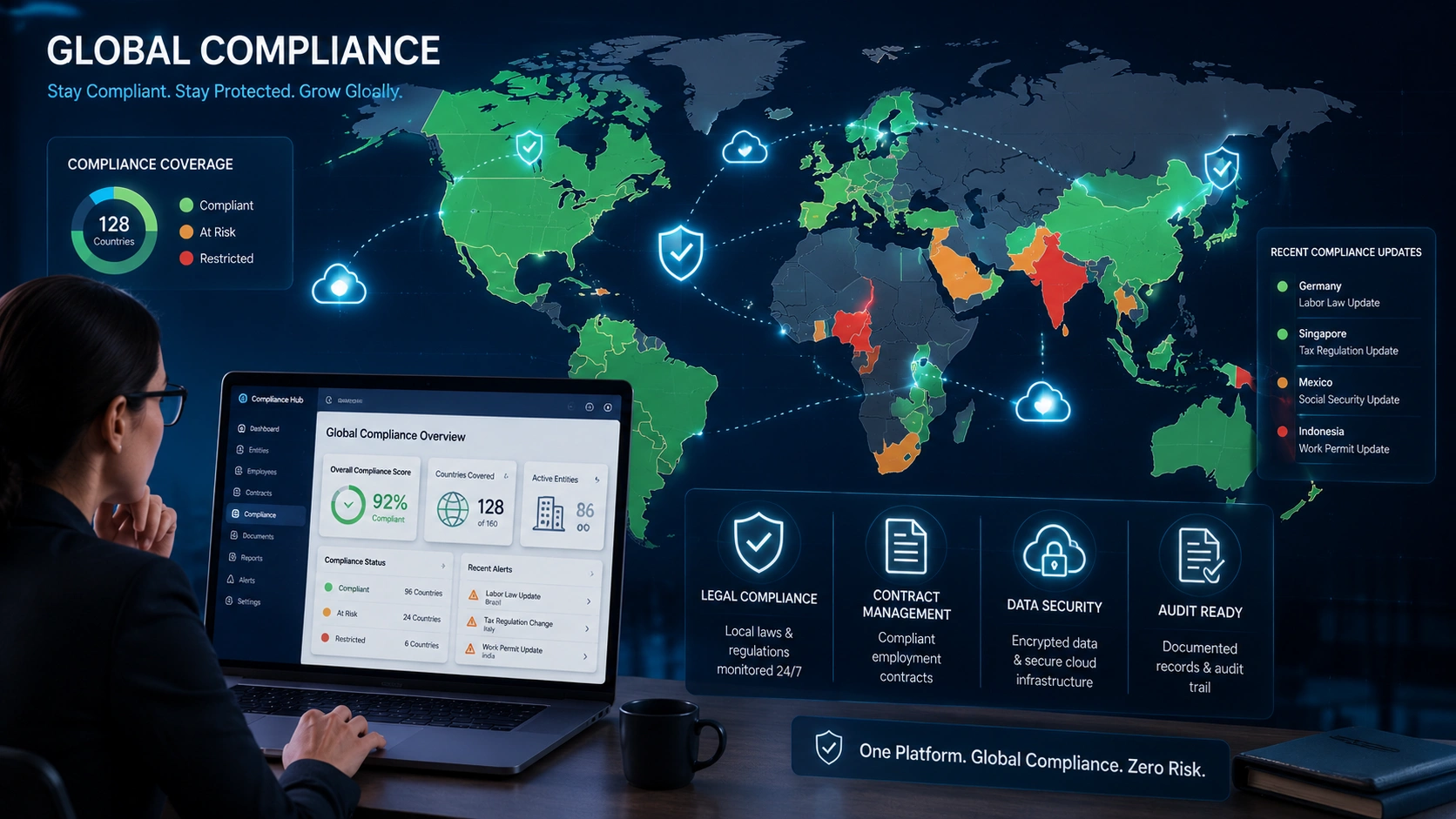
Here’s the thing: the single biggest differentiator between EOR platforms is the depth and accuracy of their compliance coverage. A platform might support 50 countries on paper but rely on third-party partners in 40 of them. That introduces variability in contract quality, processing times, and support responsiveness. Before you shortlist any platform, ask directly how it operates in each country you need. Does it maintain its own legal entities, or does it sub-contract? Platforms with owned entities in your target markets carry less risk because they control the compliance chain end to end. Country coverage is the foundation; everything else builds on it. Get a clear answer before moving forward.
Features to Evaluate Before You Sign
Understanding how to choose the best EOR software for global hiring comes down to matching platform capabilities against your actual operational needs. Generic feature lists won’t help much; what matters is how those features perform in the markets where you actually plan to hire.
An Employer of Record takes care of the legal side of international hiring, but businesses still need efficient tools to manage employees once they’re on board. Many companies complement their EOR with HR administration software for UK companies to organize employee records, streamline onboarding, manage leave, and keep everyday HR processes running smoothly. Using both solutions together helps create a more consistent experience for employees while reducing administrative work for HR teams as they grow across multiple countries.
Payroll Accuracy and Local Currency Support
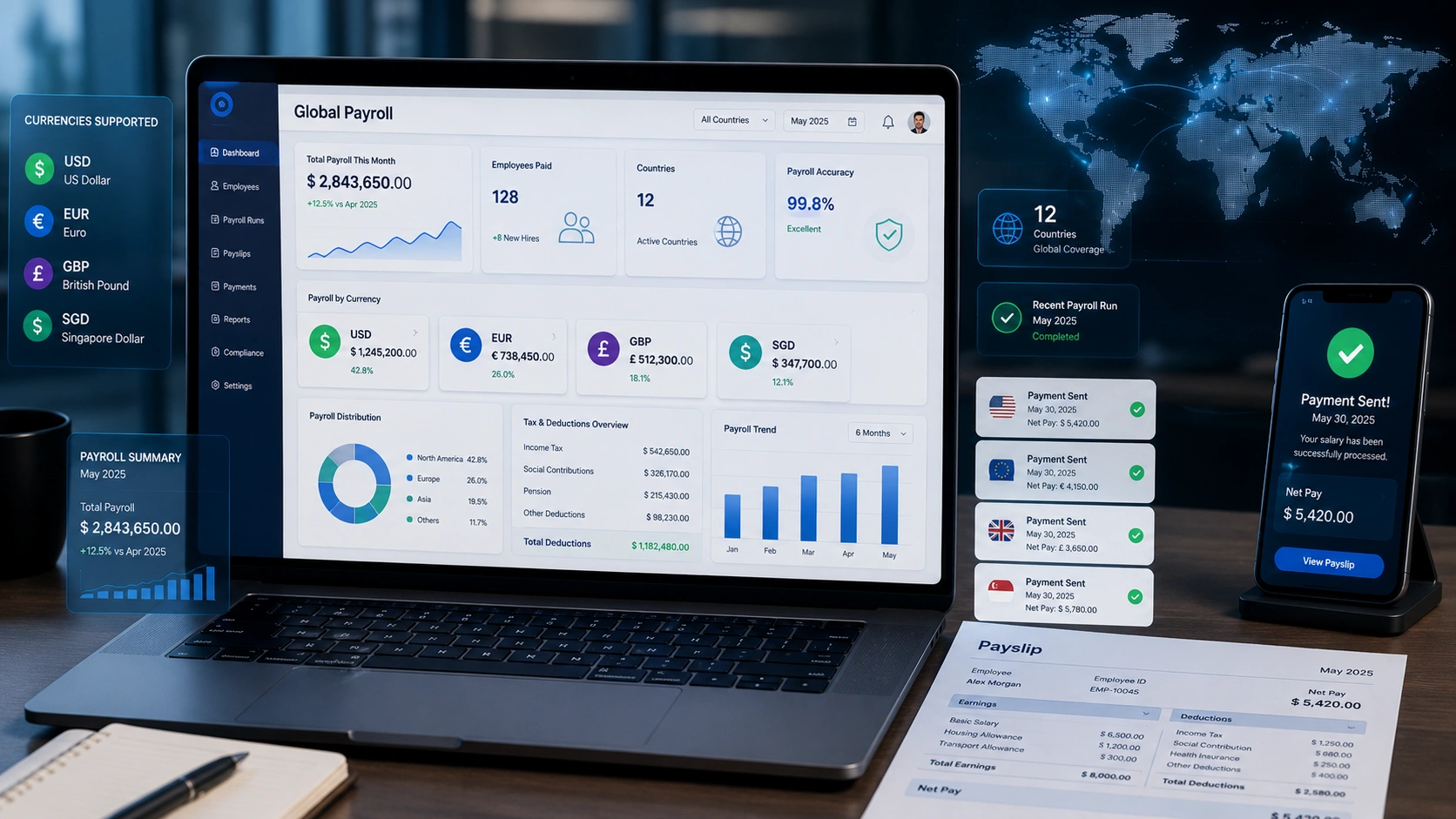
Payroll is the one process your employees notice immediately if it goes wrong. Any EOR platform you evaluate seriously should demonstrate a clear payroll processing cycle, local currency payment in the employee’s home country, and accurate calculation of all mandatory deductions (income tax, social contributions, pension schemes, and any country-specific levies). Ask vendors for their error rate data. What’s their remediation process when a payroll mistake occurs? Some platforms also support multi-currency reporting for your finance team, which simplifies consolidation across markets. This isn’t optional if you’re managing payroll in five or more countries simultaneously.
Speed and Employee Experience in Hiring
The time from offer letter to employment contract varies dramatically between platforms; some complete it in 48 hours, others take two weeks. That gap matters more than you’d think, particularly in competitive hiring markets where slow contracting can cost you and candidates. Beyond speed, pay attention to the setup experience for the employee. A clunky, confusing portal creates a poor first impression of your business, even if the underlying compliance work is solid. Request a demo of the employee-facing interface. If possible, speak to a current customer about the day-to-day experience their hires have had.
Read More!
HR Tracking Software: Your 2026 Guide To Smarter Workforce Management – Empmonitor Blog
The Ethical Guide To Employee Monitoring Policy (That HR Will Love) – Empmonitor Blog
Pricing Models and What to Watch Out For
EOR software pricing is less transparent than most software categories, which makes direct comparisons harder than they should be. Most platforms price per employee per month, but the base fee rarely tells the whole story. You’ll often find separate charges for:
- Country activation fees (a one-time cost to allow hiring in a new market)
- Benefits administration above a standard package
- Off-cycle payroll runs
- Termination support or severance processing
- Fees for connecting to your existing HR stack
The total cost of an EOR can be two to three times the headline monthly fee once all those additions land. Request an itemized quote based on your actual use case, a specific number of employees, in specific countries, with the benefits and connections you need, and compare that number across vendors. Don’t compare the base rate. Some platforms charge a percentage of employee salary rather than a flat fee, which scales badly as you hire more senior roles.
It’s also worth asking about contract terms. Annual contracts with limited exit provisions are common, and switching EOR providers mid-contract is operationally disruptive. If you’re not certain about your hiring volume or country requirements, push for shorter initial terms. At minimum, look for a clear process for adding and removing countries without additional charges.
Conclusion
The right EOR platform saves your business time, reduces compliance risk, and creates a smoother experience for the people you hire internationally. Get clear on your target countries before you start; prioritize platforms with owned legal entities in those markets; and test the real cost of each option with an itemized quote. Payroll accuracy, speed to hire, and the quality of employee-facing tools should carry more weight than a long feature list. Take the time to understand what you’re comparing. That discipline is what separates a confident buying decision from an expensive mistake.