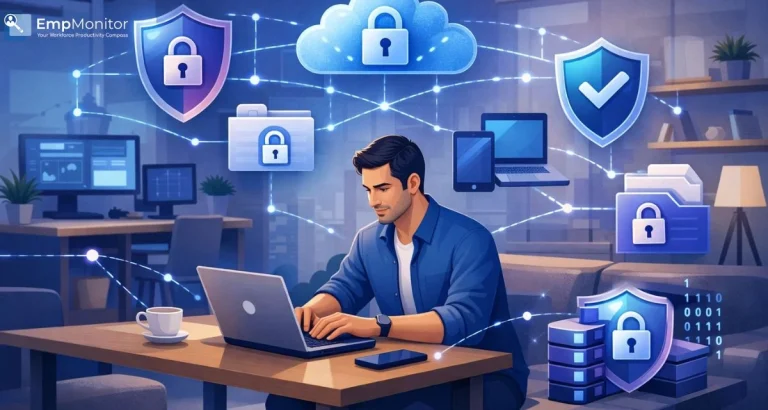
Remote work has transformed how businesses operate, but it has also created new data security challenges. When employees access company files from home networks, personal devices, and cloud platforms, the risk of accidental leaks and intentional data theft increases significantly.
That’s why having clear data loss prevention best practices in place is no longer optional. For remote companies especially, protecting sensitive information requires structured policies, smart monitoring tools, and continuous employee awareness.
A strong Data Loss Prevention (DLP) strategy helps organizations:
- Protect confidential business data
- Prevent unauthorized file sharing
- Detect suspicious activity early
- Maintain regulatory compliance
- Reduce financial and reputational risks
This guide provides a practical, actionable DLP checklist tailored specifically for remote teams. Whether you’re a startup managing distributed employees or an enterprise handling financial records, implementing the right data loss prevention best practices can dramatically reduce your risk exposure.
Identify And Classify Sensitive Data
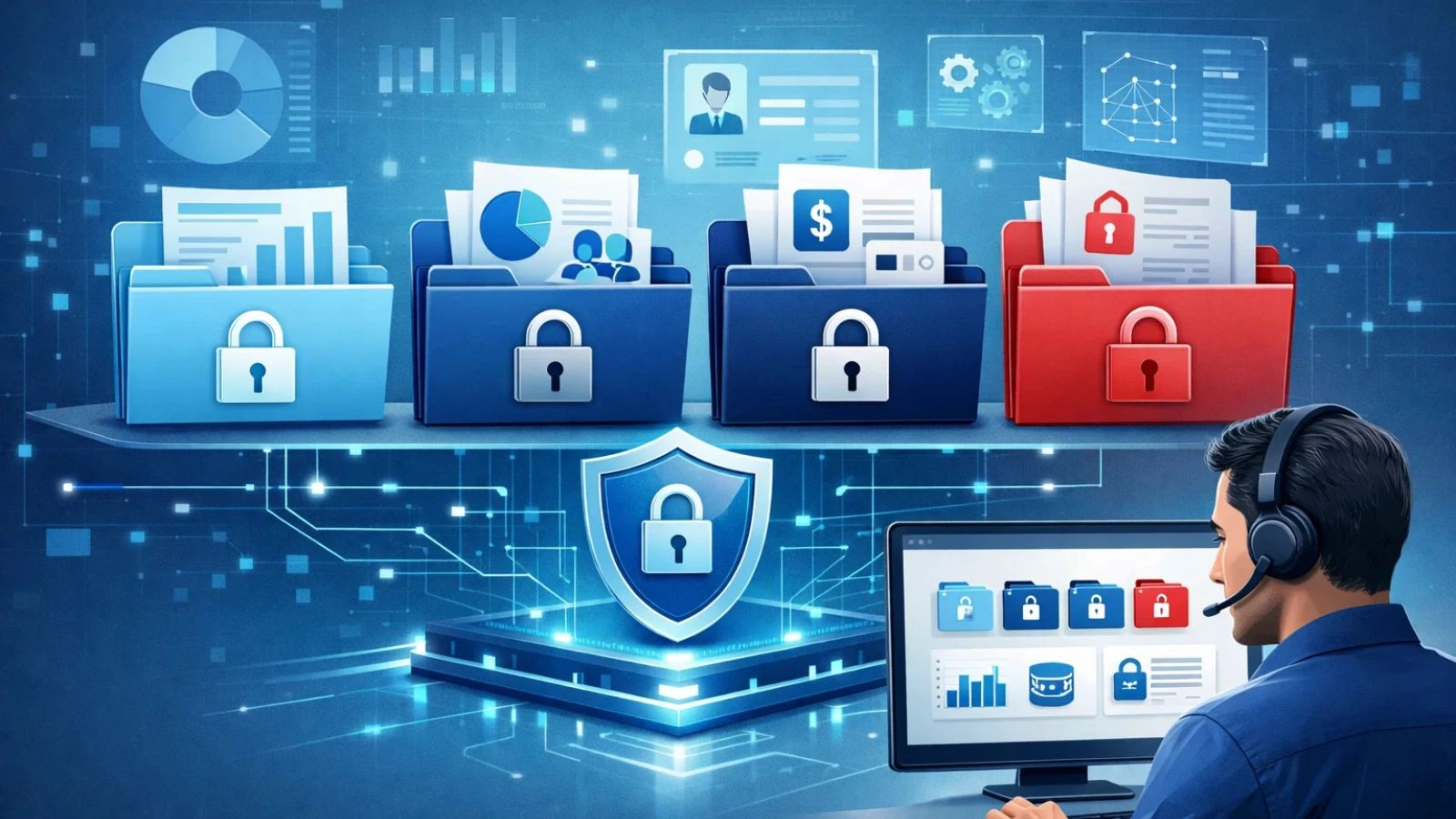
You cannot protect what you don’t understand.
The first step in applying effective data loss prevention best practices is identifying what data actually needs protection. This includes:
- Customer information
- Financial records
- Intellectual property
- Employee HR data
- Strategic business documents
Once identified, classify data based on sensitivity levels (e.g., public, internal, confidential, highly confidential). This ensures stronger controls are applied where necessary.
For industries like banking, classification is critical. In fact, many best practices for data loss prevention DLP in banking emphasize strict data categorization as the first line of defense.
Clear data visibility sets the stage for every other security control.
Implement Strong Access Controls
Once sensitive data is identified, the next step in applying effective data loss prevention best practices is controlling who can access it.
Remote environments often create “access sprawl” — where employees have more permissions than they actually need. Over time, this increases risk.
Follow the principle of least privilege (PoLP):
- Employees should only access the data necessary for their role
- Admin privileges should be limited and monitored
- Access rights should be reviewed regularly
Multi-Factor Authentication (MFA) is also critical. Even if credentials are compromised, additional authentication layers reduce the likelihood of data misuse.
Many compliance frameworks, including data loss prevention best practices, NIST, recommend continuous access reviews and strict identity management to reduce insider and external threats.
For remote companies, centralized access management ensures you’re not relying on outdated manual processes. When permissions are tightly controlled, your exposure shrinks significantly.
Monitor User Activity in Real Time
Even with strong access controls, visibility is essential. One of the most practical data loss prevention best practices for remote companies is continuous user activity monitoring.
Why? Because authorized access doesn’t guarantee safe behavior.
Remote employees may:
- Download sensitive files to personal devices
- Share confidential data via personal email
- Upload company documents to unauthorized cloud storage
- Transfer files using USB drives
Without monitoring, these actions often go unnoticed.
Real-time tracking allows organizations to:
- Detect unusual file transfers
- Flag large or bulk downloads
- Identify after-hours system access
- Monitor external storage usage
Modern DLP strategies go beyond blocking; they analyze behavioral patterns and generate alerts when activity deviates from normal.
In highly regulated industries like finance, monitoring plays a crucial role in maintaining compliance. That’s why best practices for data loss prevention DLP in banking strongly emphasize ongoing activity tracking and anomaly detection.
For remote-first companies, real-time visibility transforms DLP from reactive to proactive.
Secure Endpoints and Remote Devices
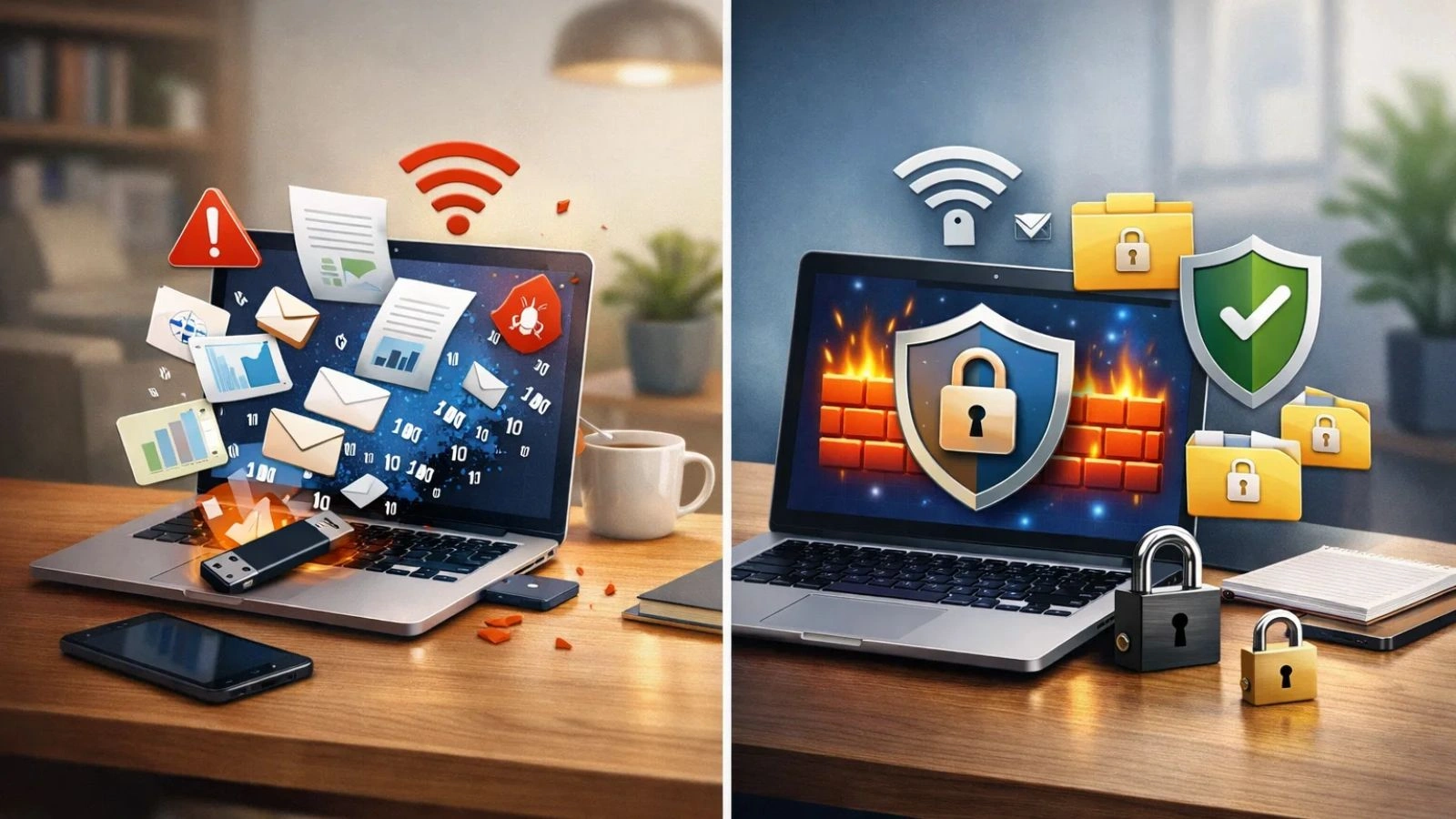
In remote companies, every laptop becomes a potential risk point. That’s why securing endpoints is a core part of data loss prevention best practices.
Employees often work from:
- Home Wi-Fi networks
- Shared family devices
- Public networks
- Personal smartphones
Without proper endpoint controls, sensitive data can be copied, downloaded, or transferred without oversight.
Here’s what strong endpoint protection should include:
- Device encryption
- Remote wipe capability
- USB and external device control
- Automatic screen lock policies
- Regular security patch updates
Many organizations overlook endpoint security, assuming cloud systems are enough. But even the best cloud protections fail if data is downloaded locally and mishandled.
Frameworks like data loss prevention best practices, NIST highlight endpoint monitoring as a critical layer in any DLP strategy.
For remote teams, securing devices is just as important as securing servers. When endpoints are protected, data remains protected no matter where employees work.
Implement Data Encryption and Secure Sharing Policies
Encryption is one of the most fundamental data loss prevention best practices for remote companies.
Sensitive data should be encrypted:
- At rest (stored files)
- In transit (email, cloud sharing, messaging apps)
This ensures that even if data is intercepted or accessed without authorization, it remains unreadable.
In addition:
- Restrict sharing to approved platforms only
- Disable public file links by default
- Set expiration dates for shared documents
Clear sharing policies reduce accidental leaks, one of the most common remote-work risks.
Also Read:
How To Use Data Loss Prevention Tools To Safeguard Data?
How To Choose The Best DLP Solution For Your Business?
Create Clear Remote Work Security Policies
Technology alone isn’t enough. Strong data loss prevention best practices must be backed by documented policies.
Your remote security policy should define:
- Acceptable device usage
- Approved collaboration tools
- Password standards
- Reporting procedures for suspicious activity
Employees should understand what is allowed — and what isn’t.
Regulated sectors, especially finance, follow strict frameworks. That’s why best practices for data loss prevention DLP in banking include detailed policy documentation and regular reviews.
When expectations are clear, risk decreases.
Conduct Regular Employee Training
Human error remains one of the biggest causes of data leaks.
Even the most advanced systems fail if employees:
- Click phishing links
- Share credentials
- Use weak passwords
- Upload sensitive files to personal drives
A key part of sustainable data loss prevention best practices is continuous training.
Short, practical training sessions help employees:
- Recognize phishing attempts
- Follow safe file-sharing methods
- Report suspicious activity quickly
Security awareness transforms employees from risk points into defense assets.
Perform Regular DLP Audits and Risk Assessments
Even the strongest strategy needs regular evaluation. One of the most overlooked data loss prevention best practices is conducting periodic audits.
Remote environments evolve quickly — new tools, new devices, new workflows. Without reviews, gaps appear.
Regular audits help you:
- Identify excessive access permissions
- Detect policy violations
- Review file transfer patterns
- Assess compliance alignment
Many organizations align their reviews with frameworks like data loss prevention best practices NIST, which emphasize continuous assessment and risk analysis.
For industries handling financial data, audits are even more critical. Strong oversight is central to best practices for data loss prevention DLP in banking, where compliance requirements are strict.
Quarterly or bi-annual risk assessments keep your DLP strategy effective and up to date.
Use Monitoring Tools to Strengthen DLP Strategy (EmpMonitor)

Policies and encryption are essential, but visibility completes the picture.
This is where EmpMonitor supports modern data loss prevention best practices for remote companies.
EmpMonitor helps organizations:
- Monitor file transfers and downloads
- Track USB and external device usage
- Detect unusual employee activity
- Generate detailed reports for compliance
- Maintain centralized oversight of remote teams
By combining monitoring with behavioral insights, businesses can identify potential risks early before data is lost.
For distributed teams, proactive monitoring tools reinforce every other security layer. When you can see what’s happening, you can act quickly.
Conclusion
Remote work has permanently changed how organizations operate — and how data must be protected.
Implementing strong data loss prevention best practices isn’t about restricting productivity. It’s about building a structured system that protects sensitive information while supporting flexible work environments.
From data classification and access controls to monitoring, encryption, training, and audits — every layer matters.
For remote companies especially, combining clear policies with intelligent monitoring tools like EmpMonitor creates a practical, proactive DLP strategy.
Because in a distributed workplace, visibility and prevention go hand in hand.
FAQs
1. Why are data loss prevention best practices important for remote companies?
Remote teams access company data from multiple devices and locations, increasing risk exposure. Implementing strong data loss prevention best practices ensures sensitive information remains secure even outside traditional office environments.
2. How often should companies review their DLP strategy?
Companies should review and audit their DLP strategy at least quarterly or biannually. Regular reviews align with frameworks like data loss prevention best practices, NIST, which emphasize continuous monitoring and risk assessment.
3. What are best practices for data loss prevention DLP in banking?
Best practices for data loss prevention DLP in banking include strict data classification, real-time monitoring, identity-based access controls, encryption, and detailed audit logging. Because financial institutions handle highly sensitive information, compliance and monitoring standards are much stricter.