
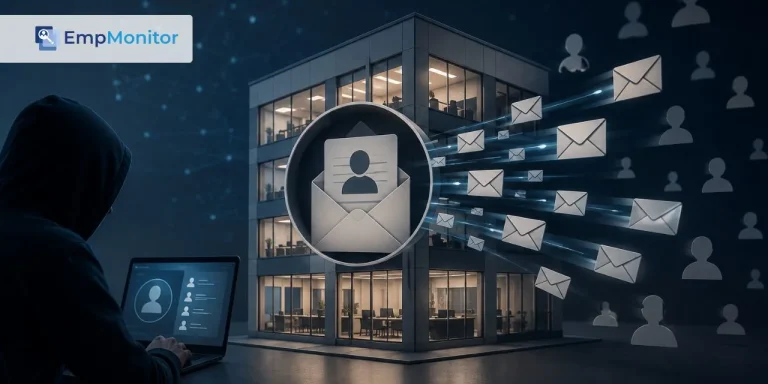
Have you ever thought how phishing emails seem to find their way into the correct inbox, addressed to the correct person, along with the correct email format that your organisation uses internally? Turns out, that’s not luck. It’s public data, and it takes someone 10 seconds or so to get this.
SignalHire type of tools, which are considered contact intelligence tools, can help you verify your company email format in seconds. They’re not hacking anything. They merely continue to cross-reference publicly available professional data until it becomes blindingly obvious which side the pattern occupies. When this is confirmed, the secrecy of a format ceases to be an actual defense at all, if it ever was.
Get the emails and how actually this works, then try to divide between your security implementation and how you will match it with the emails, between monitoring and division of lapitimation.
How Email Format Discovery Actually Works
This is where most people get confused; you do not need the inside information to spot a company email pattern. Scams require only a few verified addresses, and contact platforms are full of them.
Take a large, well-known organization as an example. Search for OpenAI’s confirmed email format on a platform like SignalHire, and it returns the exact pattern the company uses across its domain, whether that’s first.last@, f.last@, or some other convention, along with a confidence score based on how many verified records support it.
When that cycle has been confirmed for just one worker, it is confirmed for all staff members. That’s the uncomfortable part.
Step 1: Accept That Format Secrecy Isn’t a Real Control
Anyone with a phishing or business email compromise campaign can obviously confirm your naming convention just as a legitimate B2B tool can, with no more than public data. I mean, in essence, the barrier to entry here is near zero.
This indicates that your security posture should begin with a different premise: that an attacker already has the correct format of any of your employees they set their sights on. Not “might have.” Already have.
Step 2: Understand Who’s Most Exposed
Contact discovery platforms are designed with role and seniority filtering in mind; your executives and finance team are the most likely to be able to identify people accurately, not the toughest. This is why business email compromise frequently and directly targets the CFO or a senior finance contact.
A breakdown of best contact finders used across sales, recruiting, and outreach teams shows just how mainstream this capability has become. These are legitimate business tools used daily for entirely legitimate purposes. But the same capability that helps a recruiter reach a candidate helps an attacker reach your CFO.
Step 3: Shift Your Defenses to Assume Exposure
The solution, after you admit to yourself that the anonymity of email format protects nothing, is not to create a more obscure format. This is controls of buildings that don’t depend on knowing the format.
- Enforce SPF, DKIM, and DMARC properly, not in monitor mode. If an attacker can also successfully perform a domain spoof of your domain, a correctly guessed format is only dangerous. Strict authentication protocols drop spoofed mail before anywhere near an inbox.
- Watch for reconnaissance patterns, not just delivered threats. A cluster of correctly formatted login attempts or password reset requests can signal that someone has already compiled a format-accurate target list, often before any phishing email actually goes out.
- Train employees to verify through a second channel, especially for anything financial or credential-related. “This email looks properly formatted” should never be treated as a legitimacy signal, since that’s precisely the part that’s now trivial to get right.
Where Monitoring Fits Into This
This is where internal monitoring tools genuinely earn their place. Email format exposure is a B2B reconnaissance problem happening entirely outside your walls, but your response happens inside them. Centralizing authentication failures, unusual login attempts, and reset request spikes into a single alerting view, feeding into your SIEM or monitoring dashboard, is what turns “we assume our format is known” into an actual, actionable defense rather than a resigned shrug.
If your monitoring setup already tracks unusual account activity, extending it to flag reconnaissance-pattern behavior specifically (a wave of near-identical login attempts across correctly formatted addresses, for instance) closes the gap between knowing you’re exposed and actually catching the attempt before it turns into a breach.
The Bottom Line
The format of your email has never really been hidden. Automatic commercial contact intelligence tools have merely made that fact unmissable. The best organizations at this are far from the ones that disguise their naming convention better. Instead, the ones who’ve given up on secrecy altogether, and built in habits of authentication and verification, and monitoring so that they expect (and are prepared for) an attack that knows precisely who to target with an email, and what that address is going to look like.
This change in assumption is marginal. However, the impact of this on your true exposure is less so.