Managing employee performance used to be simple.
Managers conducted annual reviews, employees received ratings, and everyone moved on until the next cycle. But modern workplaces don’t function that way anymore. Teams are remote, projects move faster, and employees expect continuous feedback instead of once-a-year conversations.
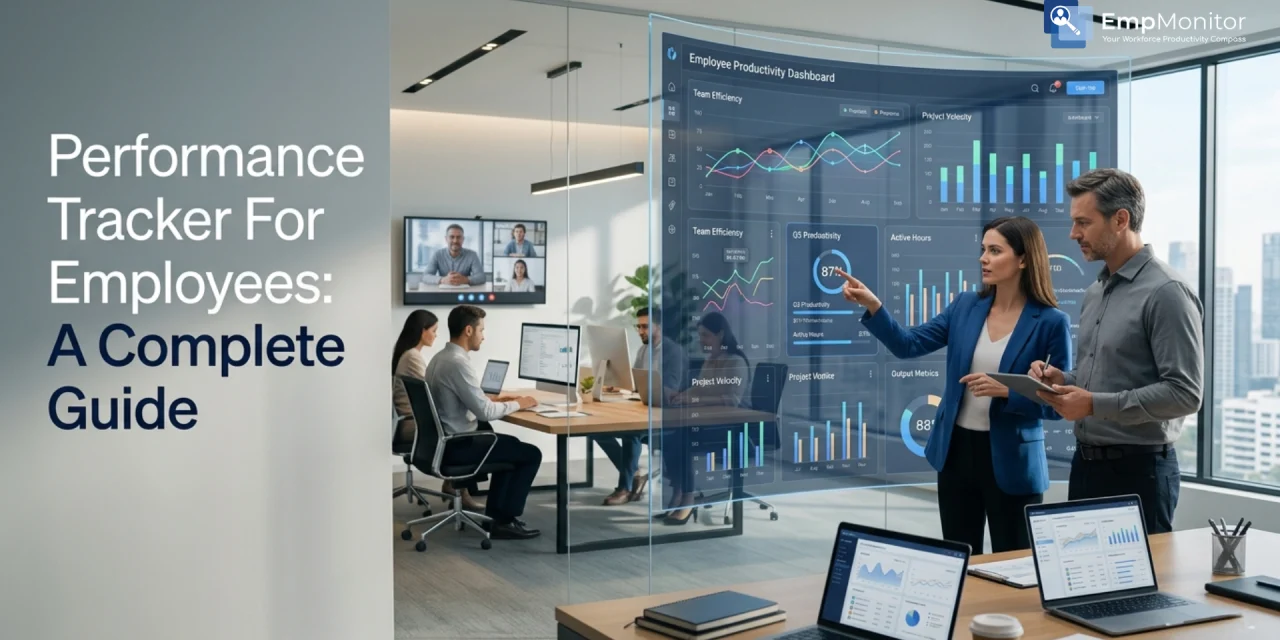
That’s exactly why businesses are shifting toward a more consistent and data-driven approach using a performance tracker for employees to monitor progress, improve productivity, and support employee growth in real time.
Today, organizations don’t just want to know who worked. They want to understand:
- Which tasks are moving forward?
- Where are employees getting stuck?
- Are teams productive without burning out?
- Which employees need support or recognition?
- How can managers improve performance proactively?
A smart performance tracking system answers all of these questions without creating a culture of surveillance.
In this guide, you’ll learn how employee performance tracking works, why it matters, the best practices to follow, and how to choose the right tools for your business.
In a hurry? Listen to the blog instead!
What Is A Performance Tracker For Employees?
A performance tracker for employees is a system or software solution that helps businesses monitor employee productivity, work progress, goals, efficiency, and overall contribution to organizational success.
Instead of relying on assumptions or occasional reviews, companies use performance tracking tools to gain ongoing visibility into how teams operate.
A performance tracker for employees typically help managers:
- Track employee activity and performance
- Monitor project completion rates
- Analyze productivity patterns
- Review attendance and work hours
- Identify workflow bottlenecks
- Measure goal achievement
- Improve accountability across teams
Modern tracking systems are especially useful for hybrid and remote workplaces where visibility can often become a challenge.
But effective performance tracking isn’t about micromanagement.
The real goal is to create clarity, improve communication, and help employees perform at their best.
Why Employee Performance Tracking Matters More Than Ever
The workplace has changed dramatically over the last few years.
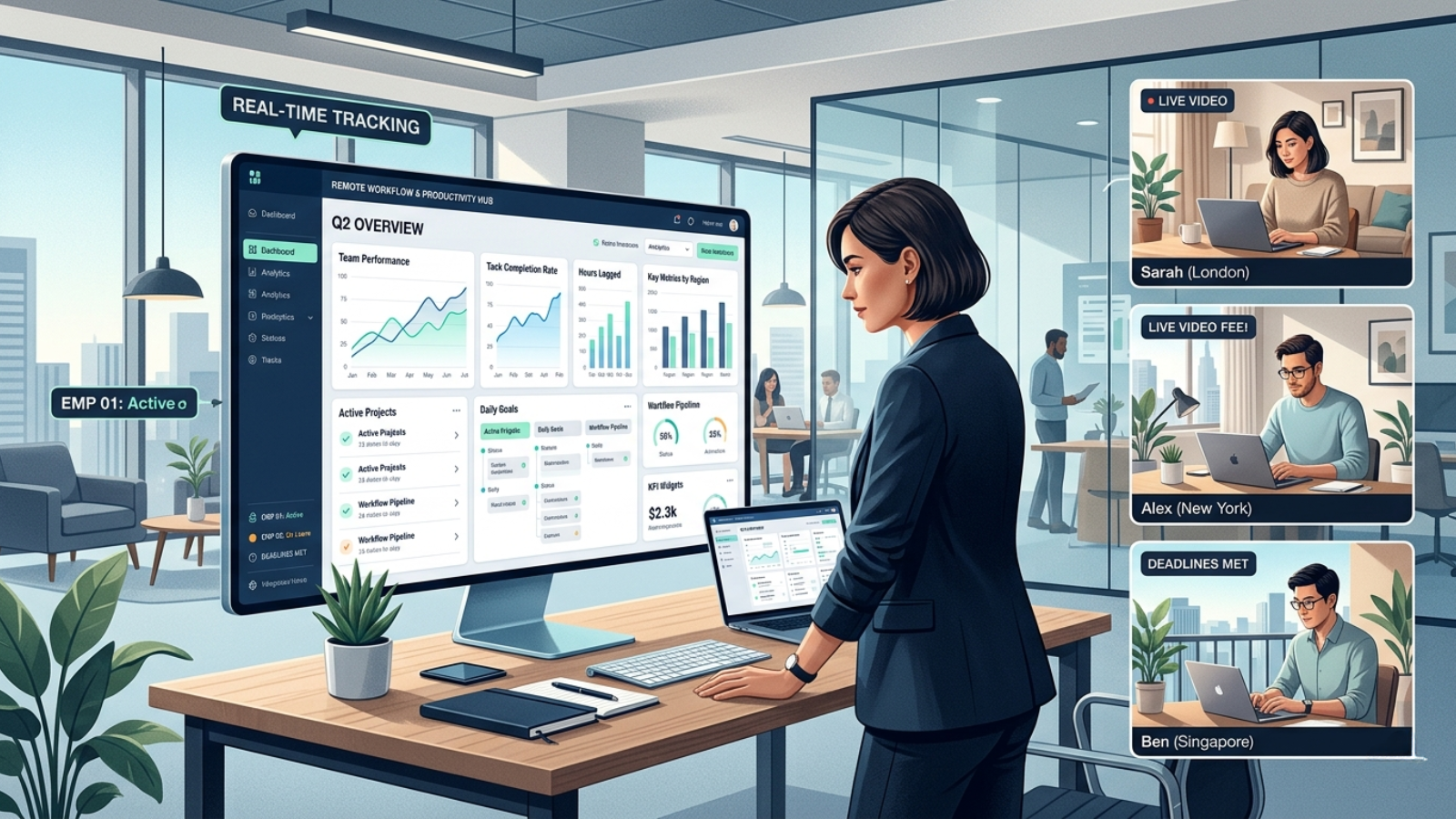
Employees now work across different locations, time zones, and collaboration platforms. Managers can no longer rely on physical presence to measure productivity.
That’s why businesses are investing in smarter tracking systems and employee productivity monitoring tools that provide meaningful insights instead of guesswork.
Here’s why performance tracking has become essential.
1. It Creates Clear Expectations
Employees perform better when they understand exactly what success looks like.
Without measurable goals, teams often struggle with confusion, inconsistent priorities, and misaligned expectations.
A structured tracking system helps employees understand:
- What they’re responsible for
- Which goals matter most
- How their performance is measured
- Where they can improve
This level of clarity improves accountability while reducing unnecessary stress.
2. It Improves Employee Engagement
One of the biggest reasons employees disengage is feeling unnoticed.
When managers only communicate during annual reviews, employees often feel disconnected from their growth and contributions.
Consistent tracking allows managers to:
- Recognize achievements faster
- Provide timely feedback
- Celebrate milestones
- Offer coaching before problems escalate
Employees feel more supported when performance conversations become continuous rather than occasional.
3. It Helps Identify Productivity Gaps Early
Every business experiences workflow bottlenecks.
The problem is that many companies discover them too late.
Using workforce performance tracking software, managers can quickly identify:
- Missed deadlines
- Delayed projects
- Workload imbalances
- Repetitive inefficiencies
- Underutilized resources
This allows businesses to fix problems before they impact larger business goals.
4. It Supports Remote Workforce Management
Remote work offers flexibility, but it also introduces new management challenges.
Business leaders often struggle with how to monitor remote employee productivity without damaging trust or employee morale.
The solution isn’t constant surveillance.
Instead, smart tracking focuses on:
- Output and results
- Task completion
- Work patterns
- Collaboration efficiency
- Time management
This creates transparency while still respecting employee autonomy.
Key Metrics To Track Employee Performance
Not every productivity metric is valuable.
Tracking too many numbers often creates confusion instead of clarity.
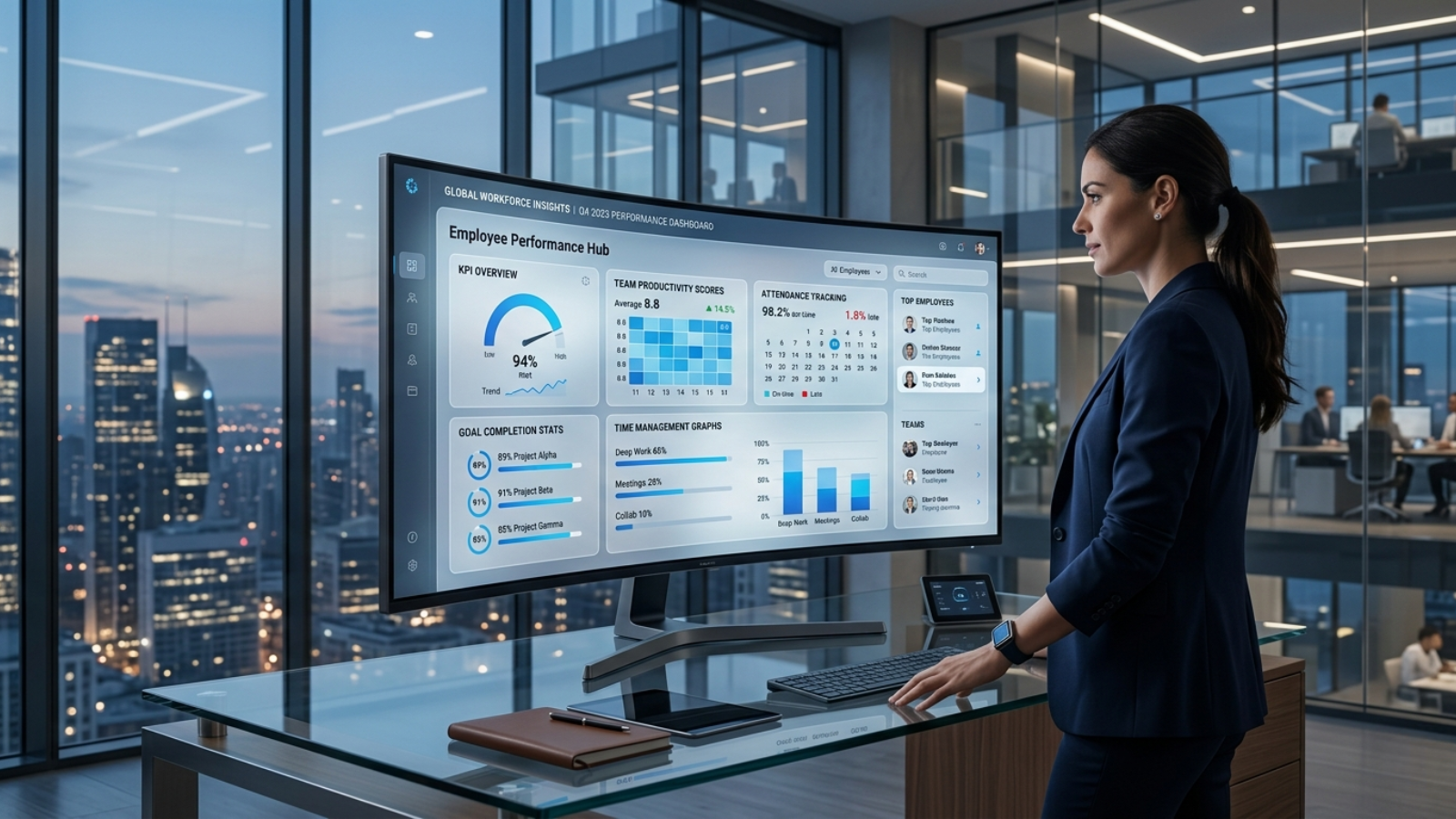
The best performance tracker for employees focus on metrics that directly impact business goals and employee development.
Here are the most important performance indicators businesses should monitor.
Productivity Levels
This measures how efficiently employees complete their tasks within a given timeframe.
Examples include:
- Tasks completed
- Projects delivered
- Sales closed
- Tickets resolved
- Output per work hour
Productivity metrics help managers understand overall efficiency without relying solely on work hours.
Goal Completion Rates
Performance tracking becomes far more effective when tied to measurable goals.
Managers should regularly review:
- Quarterly targets
- OKRs
- Individual KPIs
- Team objectives
- Project milestones
Goal-based tracking creates stronger alignment between employee performance and company growth.
Time Management
Time tracking isn’t just about attendance anymore.
Modern businesses use software to track:
- Productive hours
- Idle time
- Overtime trends
- Time spent on projects
- Workload distribution
This is especially useful when using software to track work hours of remote employees across different teams and locations.
Collaboration & Communication
Strong teamwork directly affects productivity.
Businesses should also evaluate:
- Team participation
- Communication consistency
- Task coordination
- Cross-functional collaboration
- Responsiveness
Employees who collaborate effectively often contribute more to long-term business success.
Quality Of Work
High output means little if work quality suffers.
Managers should assess:
- Error rates
- Customer feedback
- Rework frequency
- Accuracy levels
- Client satisfaction
A balanced performance system measures both speed and quality together.
How To Build An Effective Employee Performance Tracking System
Successful performance tracker for employees don’t happen by accident.
Businesses need a clear structure that balances accountability, transparency, and employee support.
Here’s how to build a performance tracker for employees that actually works.
1. Set Clear & Achievable Goals
Performance tracking without goals is meaningless.
Employees need measurable objectives that define success clearly.
Strong goals should be:
- Specific
- Realistic
- Time-bound
- Relevant to business outcomes
- Easy to measure
For example:
Instead of saying:
“Increase productivity.”
Use:
“Improve customer response time by 20% within the next quarter.”
Specific goals create stronger focus and motivation.
2. Use Real-Time Tracking Instead Of Annual Reviews
Annual reviews alone are outdated.
Employees need regular guidance and continuous feedback throughout the year.
Modern tracking systems allow managers to:
- Review progress weekly
- Monitor project updates
- Conduct monthly check-ins
- Share real-time feedback
- Adjust priorities quickly
Continuous tracking helps employees improve consistently instead of waiting months to hear about performance issues.
3. Focus On Outcomes Not Surveillance
One major mistake businesses make is confusing tracking with monitoring every second of employee activity.
Excessive surveillance damages trust quickly.
Instead of tracking every click or screenshot, focus on:
- Deliverables
- Project completion
- Work quality
- Collaboration
- Goal achievement
Employees perform better when they feel trusted rather than watched.
Learn More:
How productivity Tracker Can Improve The Work Performance Of The Employees In 2025?
How a Workflow Tracker Can Streamline Your Daily Operations?
4. Encourage Employee Self-Tracking
The best performance systems empower employees to monitor their own growth.
Self-tracking improves:
- Accountability
- Time awareness
- Goal ownership
- Motivation
- Productivity habits
Employees become more engaged when they can see their own progress clearly.
5. Schedule Consistent 1:1 Meetings
Performance data alone isn’t enough.
Managers still need meaningful conversations with employees.
Regular 1:1 meetings help businesses:
- Discuss challenges
- Provide coaching
- Align priorities
- Review progress
- Offer support
The combination of tracking data and human communication creates a much stronger performance culture.
However, building an effective performance tracking system manually can become complicated as teams grow, especially in hybrid and remote work environments. Businesses need a solution that not only tracks employee productivity but also simplifies workforce management, attendance monitoring, reporting, and real-time visibility.
This is where tools like EmpMonitor help organizations streamline employee performance tracking while improving operational efficiency and team accountability.
Why Choose EmpMonitor As Performance Tracker For Employees?
Managing employee productivity becomes much easier when businesses have the right workforce monitoring system in place. EmpMonitor helps companies track employee performance, monitor productivity, manage attendance, and streamline workforce operations through a centralized dashboard designed for modern teams.
Whether you’re managing remote employees, hybrid teams, or in-office staff, EmpMonitor provides real-time visibility into workflows without adding unnecessary complexity.
Real-Time Activity Tracking
Monitor live employee activity, productive hours, idle time, and workflow patterns through an easy-to-use dashboard.
Time Tracking & Attendance Monitoring
Track employee work hours, attendance logs, shifts, and automated timesheets without manual effort.
Live Screencasting & Screen Recording
Access employee screens in real time and review recorded sessions for better collaboration, troubleshooting, and compliance monitoring.
Productivity Monitoring Insights
Analyze app usage, website activity, productivity trends, and employee performance with detailed reports.
Project & Task Management
Assign tasks, monitor project progress, and improve team coordination from one unified platform.
Enterprise-Level Data Security
Protect business data with insider threat prevention, cloud-secured storage, role-based access, and activity alerts.
EmpMonitor helps businesses improve workforce visibility, streamline operations, and create a more productive work environment with smarter employee monitoring solutions.
Ready To Improve Workforce Productivity?
Explore EmpMonitor to simplify employee performance tracking, boost operational efficiency, and manage your workforce with greater clarity and control.
Challenges Businesses Face With Performance Tracking
While performance tracker for employees offer major benefits, they can also create problems when implemented incorrectly.
Understanding these challenges helps businesses avoid common mistakes.
Over-Monitoring Employees
Employees don’t want to feel constantly watched.
Tracking systems become harmful when companies:
- Record excessive screenshots
- Track personal behavior
- Monitor unrelated activities
- Use productivity scores unfairly
Performance tracking should improve productivity not create workplace anxiety.
Tracking Too Many Metrics
More data doesn’t always mean better insights.
Tracking unnecessary metrics often overwhelms both employees and managers.
Focus only on KPIs that genuinely support business objectives.
Lack Of Transparency
Employees should always understand:
- What is being tracked
- Why it’s being tracked
- How data will be used
- What success looks like
Transparency builds trust and improves adoption rates.
Ignoring Employee Feedback
Performance systems work best when employees are involved in the process.
Businesses should regularly ask:
- Are the metrics fair?
- Are goals realistic?
- Is the workload manageable?
- Are employees receiving enough support?
Tracking should feel collaborative rather than forced.
Features To Look For In The Best Performance Tracking Software
Choosing the right platform plays a major role in long-term success.
The best performance tracker software for employees should simplify management instead of creating additional complexity.
Here are the most important features to look for.
Real-Time Productivity Monitoring
Managers should be able to view:
- Active work hours
- Project progress
- Productivity trends
- Task completion rates
Real-time visibility helps teams stay aligned.
Goal & KPI Tracking
Strong software should support:
- OKRs
- KPIs
- Performance benchmarks
- Department goals
- Employee milestones
Goal tracking keeps employees focused on measurable outcomes.
Attendance & Time Tracking
Reliable time tracking is essential for hybrid and remote teams.
Look for features like:
- Attendance monitoring
- Shift tracking
- Break management
- Timesheets
- Remote work hour tracking
This is particularly useful for companies searching for enterprise workforce monitoring solutions that manage larger teams efficiently.
Analytics & Reporting
Data is only valuable when it’s easy to understand.
Good platforms should provide:
- Productivity reports
- Team performance insights
- Trend analysis
- Performance comparisons
- Custom dashboards
Visual reporting helps managers make faster decisions.
Employee-Friendly Interface
Complicated systems reduce adoption.
Employees should find the software easy to use without requiring constant training.
A clean, simple interface improves engagement significantly.
Best Practices For Monitoring Remote Employee Productivity
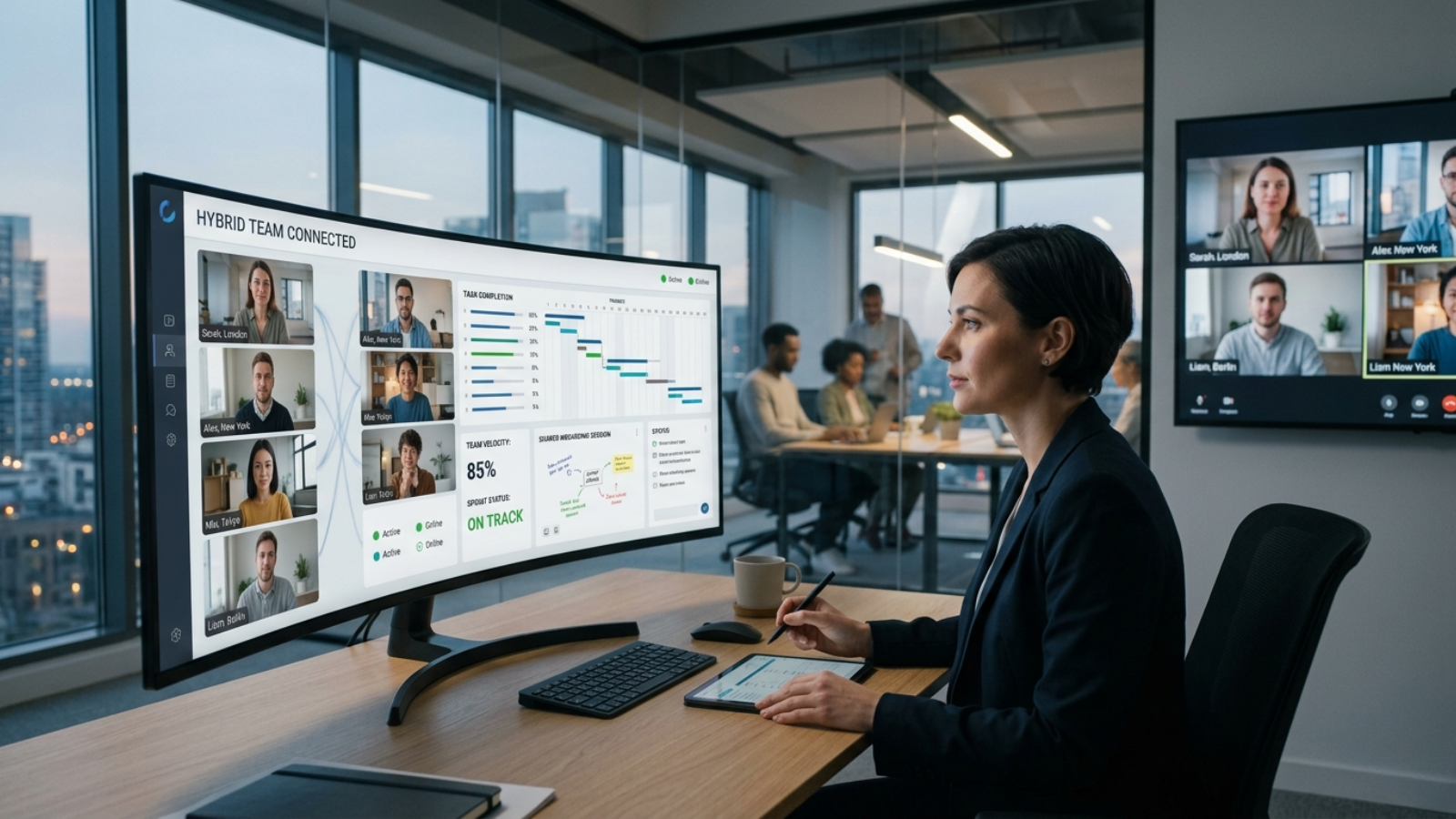
Remote teams require a different management approach.
Businesses often struggle to balance visibility with employee trust.
Here are some practical strategies for how to monitor remote employee productivity effectively.
Prioritize Communication
Remote employees need consistent communication to stay aligned.
Managers should:
- Conduct regular check-ins
- Clarify priorities
- Use collaboration tools
- Encourage open discussions
Clear communication reduces confusion and isolation.
Measure Results, Not Online Presence
Being online doesn’t always equal productivity.
Instead of focusing on activity alone, track:
- Completed tasks
- Project deadlines
- Work quality
- Team contributions
Outcome-based tracking creates healthier remote work environments.
Use Automated Tracking Tools Wisely
Automation simplifies workforce management, but businesses should avoid intrusive practices.
The goal is visibility — not pressure.
The right employee productivity monitoring tools help managers identify work patterns without disrupting employee trust.
Support Work-Life Balance
Burnout is common in remote workplaces.
Tracking systems should also help managers identify:
- Excessive overtime
- Work overload
- Irregular schedules
- Productivity decline
Healthy employees perform better over time.
How Performance Tracking Improves Business Growth
A strong performance tracker for employees doesn’t just help employees.
It directly impacts business performance as well.
Companies that implement structured tracking often experience:
- Better operational efficiency
- Faster project completion
- Stronger employee accountability
- Reduced workflow bottlenecks
- Improved workforce planning
- Higher employee retention
Performance data also helps leaders make smarter strategic decisions backed by real insights instead of assumptions.
Final Thoughts
The modern workplace demands more than occasional performance reviews.
Businesses need continuous visibility into productivity, employee growth, and operational efficiency. That’s why implementing a reliable performance tracker for employees has become essential for companies of all sizes.
When done correctly, performance tracking creates a healthier workplace culture built on transparency, accountability, and growth.
The key is balance.
Employees should feel supported — not controlled.
Managers should use tracking data to coach, guide, and improve workflows rather than micromanage daily activity.
And most importantly, businesses should choose performance tracker for employees that simplify performance management instead of complicating it.
As remote and hybrid work continue evolving, organizations that invest in smarter tracking systems will be better positioned to build productive, engaged, and high-performing teams.
FAQs
1. What is a performance tracker for employees?
A performance tracker for employees is a tool or system that helps businesses monitor productivity, attendance, goals, task completion, and overall employee performance.
2. Why is a performance tracker for employees important?
A performance tracker for employees helps businesses improve productivity, identify workflow issues, support employee development, and maintain better accountability across teams.
3. How can companies monitor remote employee productivity?
Businesses can monitor remote employee productivity by tracking task completion, work hours, project progress, communication, and performance metrics using productivity monitoring software.
4. What are the benefits of workforce performance tracking software?
A performance tracker for employees helps businesses improve efficiency, reduce bottlenecks, manage remote teams, analyze productivity trends, and support better decision-making.
5. What features should businesses look for in Performance Tracker For Employees?
Businesses should look for features like real-time tracking, attendance monitoring, goal management, analytics dashboards, reporting tools, and remote workforce management capabilities.