
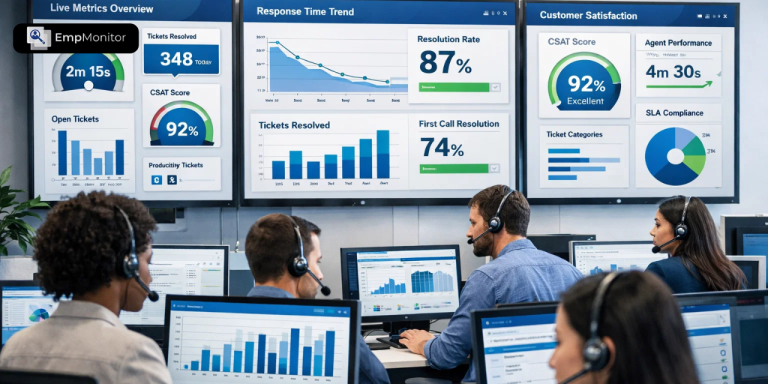
Customer support is often measured by ticket volume, the number of inquiries handled by the team. While ticket counts provide a basic sense of activity, they do not reflect the true efficiency or effectiveness of a support team. Modern organizations are shifting their focus toward real productivity metrics to gain actionable insights, optimize workflows, and enhance customer satisfaction.
Tracking meaningful metrics helps managers identify bottlenecks, reward high-performing agents, and ensure that teams are delivering quality support rather than just handling high volumes of tickets.
Relying solely on ticket numbers can even create unintended consequences, such as rushed responses, incomplete resolutions, or agent burnout. A more balanced approach evaluates response quality, resolution speed, collaboration, and customer experience.
By adopting comprehensive performance measurement strategies, organizations can align support operations with long-term business goals while maintaining consistent service excellence.
Why Traditional Metrics Are Not Enough?
Relying solely on ticket volume can be misleading:
- Volume vs. Quality: A high number of closed tickets doesn’t necessarily indicate effective problem-solving. Customers may need repeated follow-ups if issues are not resolved correctly the first time.
- Agent Overload: Agents handling excessive tickets may experience burnout, which reduces both Productivity metrics and quality of support.
- Hidden Inefficiencies: Without deeper insight, managers may miss workflow inefficiencies, training gaps, or underutilized resources.
To truly understand team performance, organizations need a more comprehensive approach that focuses on productivity metrics rather than simple ticket counts.
Key Productivity Metrics For Customer Support
Understanding the right performance benchmarks is essential for evaluating service quality and operational effectiveness. These customer support performance indicators provide actionable insights into how well a team delivers value beyond basic ticket counts:
1. First Response Time (FRT):
This measures the average time taken to respond to a customer query. A shorter FRT indicates that agents are promptly acknowledging tickets, leading to higher customer satisfaction.
2. Resolution Time:
Resolution time measures how long it takes to completely solve a customer issue. Tracking this metric helps identify training needs, workflow bottlenecks, and potential areas for automation.
3. Customer Satisfaction (CSAT) Scores:
CSAT scores provide direct feedback on the quality of support provided. While ticket volume shows activity, satisfaction scores reveal whether the support was effective and helpful.
4. Ticket Reopen Rate:
Tickets reopened after initial closure highlight recurring issues or incomplete solutions. Monitoring this metric ensures that problems are fully resolved the first time, reducing wasted effort and improving efficiency.
5. Agent Productivity Metrics:
Beyond tickets handled, measure the quality and consistency of agent performance. Consider metrics such as average handling time, adherence to workflow, and accuracy in providing solutions.
How To Measure Support Team Efficiency Effectively?

Support team efficiency goes beyond speed; it reflects how effectively agents resolve issues while using time, tools, and resources wisely. Measuring support agent output requires a balanced evaluation of productivity, quality, and consistency rather than focusing on ticket volume alone.
To evaluate performance accurately, managers should focus on the following areas:
Task Distribution:
Analyze how tickets are assigned across agents to ensure workload balance. Uneven allocation can lead to burnout for some team members while others remain underutilized. Balanced distribution improves response consistency and prevents backlogs during peak hours.
Time Utilization:
Assess the ratio of active working time versus idle time to understand Productivity metrics patterns. Monitoring how much time agents spend on ticket handling, research, collaboration, or non-work activities highlights opportunities for coaching and workflow adjustments.
Workflow Adherence:
Review whether agents follow established processes such as proper documentation, escalation protocols, and resolution standards. Consistent workflow adherence reduces errors, enhances service quality, and ensures compliance with internal policies.
Cross-Channel Support Performance:
Evaluate how agents manage multiple communication channels, including email, live chat, phone, and social media. Measuring response time, resolution rate, and quality across channels ensures consistent customer experience and prevents performance gaps.
Resolution Quality and First-Contact Resolution:
Examine whether issues get resolved correctly the first time. High first-contact resolution rates indicate effective problem-solving skills and reduce repeat tickets, saving both time and resources.
Using tools like EmpMonitor, managers can access centralized dashboards that display real-time agent activity, application usage insights, and task-to-ticket mapping. These data-driven insights help leaders make informed decisions and continuously refine their support team efficiency measurement strategies.
The Role of Real-Time Analytics
Real-time data is critical for actionable insights:
- Identify trends in ticket resolution, idle times, and response patterns.
- Detect top performers and areas needing additional training.
- Allocate resources dynamically based on live workload and priorities.
With real-time analytics, teams can respond to high ticket volumes proactively, address bottlenecks quickly, and ensure that productivity is maintained even during peak periods. EmpMonitor enables this by providing instant dashboards, activity monitoring, and detailed reports on agent performance.
How Can Productivity Metrics Be Integrated With Effective Team Management?

Tracking productivity metrics for customer support delivers the best results when organizations align data insights with structured team management practices. Metrics alone do not drive improvement; leaders must translate insights into action.
Regular Performance Reviews:
Use performance data to conduct structured one-on-one reviews. Instead of relying on assumptions, managers can reference measurable outcomes such as resolution time, quality scores, and collaboration patterns. This approach encourages accountability while creating clear development goals.
Coaching and Skill Development:
Analyze trends to identify knowledge gaps or recurring challenges. Targeted coaching sessions, skill workshops, and micro-training modules help agents strengthen weak areas and refine their problem-solving abilities. Data-backed coaching improves confidence and consistency.
Recognition and Incentive Programs:
Highlight top performers based on measurable achievements such as high first-contact resolution or excellent customer feedback. Recognizing achievements fosters motivation, builds healthy competition, and reinforces positive work habits across the team.
Continuous Process Optimization:
Leverage performance insights to refine workflows, eliminate bottlenecks, and simplify escalation paths. When managers consistently adjust processes based on data trends, teams operate more efficiently and deliver higher-quality support.
By integrating measurement with structured leadership practices, organizations create a performance-driven culture where agents feel supported, valued, and aligned with broader business objectives.
Common Challenges In Tracking Productivity Metrics
Even with the best intentions, measuring support team Productivity metrics can face challenges:
- Data Overload: Collecting too many metrics can overwhelm managers. Focus on KPIs that directly impact efficiency and customer satisfaction.
- Inconsistent Tracking: Manual processes or non-standardized reporting can lead to errors and incomplete data.
- Agent Resistance: Employees may feel micromanaged if metrics are not introduced transparently. Clear communication is essential.
- Misaligned Metrics: Tracking irrelevant metrics can lead to wasted effort and misinformed decisions.
Addressing these challenges ensures that productivity metrics reflect actual performance and help achieve operational excellence.
Also Read:
How To Track Employee Output With Productivity Metrics?
Top 5 Tools To Measure Employee Productivity Metrics
Best Practices For Maximizing Support Team Productivity
To make the most of your customer support team, consider the following best practices:
- Focus on Quality Over Quantity: Prioritize resolving tickets correctly rather than simply handling a high volume.
- Automate Repetitive Tasks: Reduce manual work with ticket routing, canned responses, and automated follow-ups. AI tools such as best chatbot software can also help automate routine customer queries.
- Monitor Real-Time Activity: Track agent performance and ticket flow to adjust workloads instantly.
- Analyze and Optimize Workflows: Regularly review metrics to identify inefficiencies and streamline processes.
- Leverage Technology: Use platforms like EmpMonitor for integrated time tracking, activity monitoring, and Productivity metrics reporting.
These strategies help ensure that the team is productive, efficient, and capable of providing excellent customer experiences consistently.
How EmpMonitor Enhances Customer Support Productivity?
EmpMonitor provides a comprehensive and centralized solution that helps organizations move beyond surface-level tracking and gain meaningful visibility into helpdesk productivity metrics.
By combining time intelligence, activity insights, and workflow integration, the platform enables managers to optimize agent performance while maintaining transparency and accountability.
Advanced Time Tracking:
EmpMonitor records working hours, active time, and time spent on specific tickets or tasks. Managers can analyze how long agents take to resolve issues, compare resolution patterns across team members, and identify opportunities to reduce delays without compromising quality.
This structured visibility improves workload planning and ensures balanced task distribution.
Detailed Activity Monitoring:
The platform captures application usage, website activity, and idle periods in real time. These insights help managers understand how agents allocate their time during shifts. By identifying distractions or repetitive processes, teams can refine workflows and focus more on high-impact support activities.
Comprehensive Attendance Management:
EmpMonitor tracks login times, shift schedules, and leave records through a centralized dashboard. Accurate attendance data supports accountability and ensures proper staffing during peak support hours. It also simplifies compliance reporting and payroll coordination.
Real-Time Performance Dashboards:
Interactive dashboards provide instant visibility into team performance trends. Managers can monitor productivity levels, track ongoing tasks, and compare individual contributions. Real-time data enables faster decision-making and proactive intervention when performance gaps appear.
Project and Workflow Integration:
EmpMonitor connects tasks directly to tickets, projects, or client accounts. This integration ensures that every activity is traceable and measurable. Linking work output with specific support cases improves reporting accuracy and strengthens performance evaluation processes.
By leveraging these capabilities, organizations can monitor meaningful performance indicators, encourage accountability, and create a data-driven support environment. The result is improved efficiency, higher service quality, and a more engaged customer support team.
Conclusion
Moving beyond ticket volume allows organizations to focus on real productivity metrics, measure agent effectiveness, and improve customer satisfaction. By monitoring first response time, resolution rates, CSAT scores, ticket reopen rates, and agent activity, managers gain actionable insights that drive operational excellence.
Platforms like EmpMonitor simplify this process by providing integrated time tracking, activity monitoring, workflow integration, and real-time analytics. Teams can optimize performance, identify training needs, and maintain accountability without administrative overhead.
By adopting a metrics-driven approach, support teams can enhance efficiency, improve service quality, and ensure that every agent’s effort translates into meaningful business outcomes.
FAQs
- Why is ticket volume alone not enough to measure customer support success?
Ticket volume only reflects workload, not quality or effectiveness. Teams may close many tickets quickly but fail to resolve root issues or satisfy customers. A broader evaluation approach that includes resolution quality, response time, and customer satisfaction provides a more accurate performance picture. - What are the most important KPIs for customer support teams?
Key KPIs include first response time, first contact resolution rate, average resolution time, customer satisfaction (CSAT), escalation rate, and agent utilization. Together, these indicators help managers understand both efficiency and service quality. - How can managers ensure fair performance evaluation across support agents?
Managers should use a combination of quantitative data and qualitative assessments. Reviewing ticket complexity, customer feedback, collaboration efforts, and adherence to processes ensures fair and balanced evaluations. - How does employee engagement influence support performance?
Engaged support agents respond more attentively, communicate more effectively, and resolve issues faster. Regular feedback, recognition programs, and professional development opportunities significantly enhance overall Productivity metrics. - What role does technology play in improving customer support efficiency?
Modern tools provide real-time dashboards, automate repetitive tasks, and generate detailed reports. These insights allow managers to identify bottlenecks, allocate resources effectively, and continuously refine operational strategies.