
Remote work has opened new possibilities for flexibility, global collaboration, and productivity, but it has also introduced a growing threat: digital overload. With nonstop notifications, constant messaging across multiple platforms, and long hours of screen time, employees are experiencing unprecedented levels of cognitive fatigue. This overload affects not only work quality but also mental well-being, emotional stability, and long-term job satisfaction.
Recent studies reveal that remote workers switch apps more than 1,200 times per day on average. This digital fragmentation creates mental exhaustion and prevents employees from maintaining consistent focus. To build sustainable, high-performing remote teams, organizations must take digital overload seriously and implement strategies that protect employees’ cognitive resources.
Why Digital Overload Happens In Remote Teams?

Digital overload stems from multiple overlapping issues—not a single cause. Over time, these stressors compound and overwhelm employees:
- Too many communication channels competing for attention
- Pressure to respond instantly, even outside work hours
- Long strings of virtual meetings with no mental recovery time
- Constant notifications and alerts across multiple devices
- Difficulty separating work and personal life
- Frequent context switching between tools
- Unclear priorities or poorly structured workflows
Even the most disciplined worker struggles under these conditions, making burnout more common in remote teams.
Clarifying Tasks And Reducing Cognitive Clutter
One of the largest contributors to digital overload is the constant demand for written communication, status updates, documentation, emails, project summaries, and reports. Remote workers often spend more time writing about their work than doing the work itself. This increases mental load and reduces productivity.
When the volume of writing requirements becomes too high, tasks begin to feel overwhelming. This is why some professionals turn to external professional support for writing-heavy assignments or tasks, relying on a best capstone project writing service when documentation or reports threaten to overload their schedule. The concept behind this is simple: reducing unnecessary cognitive burden helps individuals focus better on their core responsibilities while still ensuring that required written work is handled professionally and completed properly.
Organizations can support employees in a similar way by streamlining documentation processes, clarifying expectations, eliminating redundant reports, and automating written updates where possible. When workflows are simplified, employees regain control of their mental space.
How Managers Can Reduce Digital Overload Effectively?
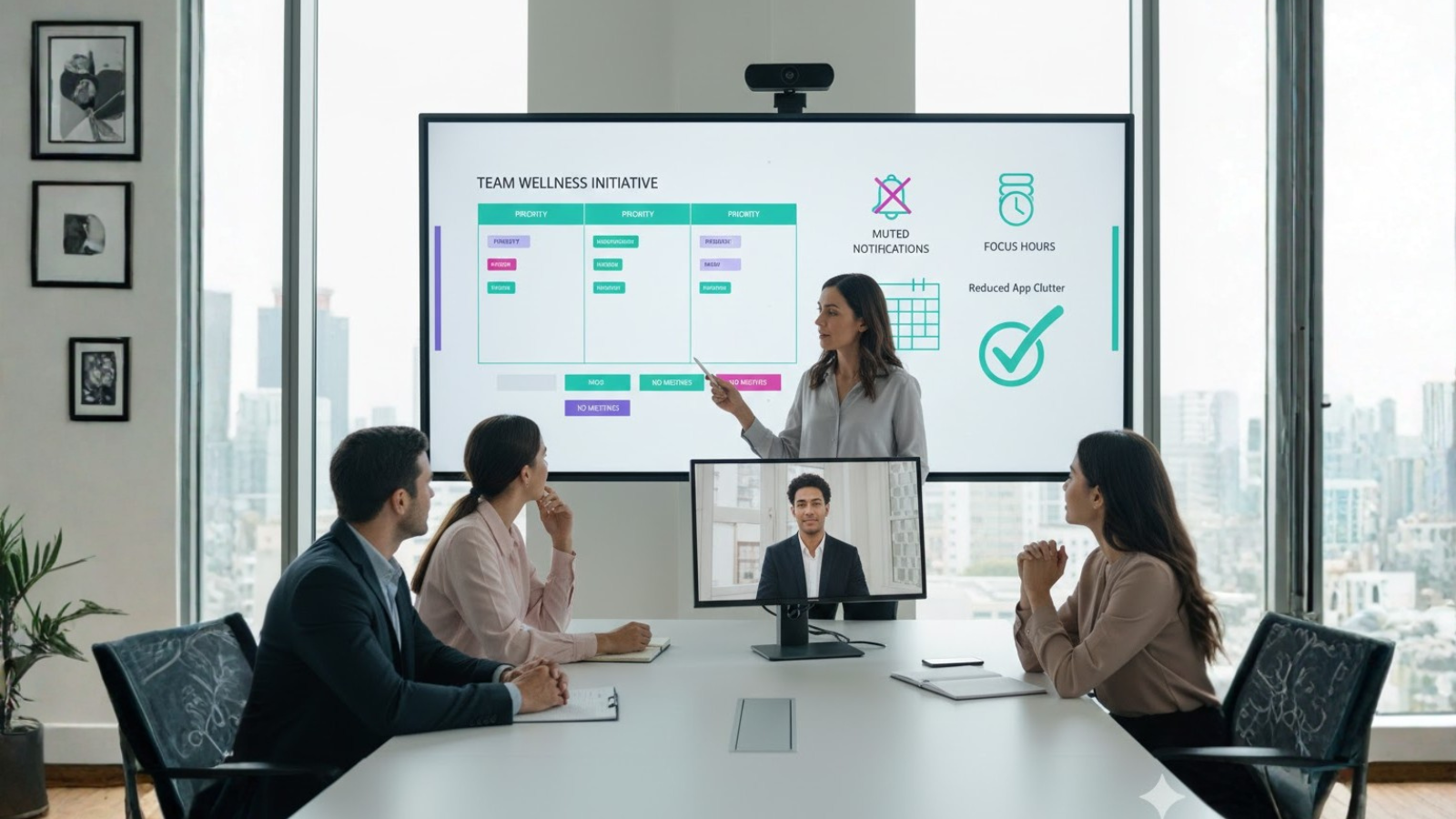
Reducing digital overload isn’t about eliminating digital tools; it’s about using them intentionally. The following strategies help remote teams operate with more clarity and less stress.
Tools such as EmpMonitor can support managers by highlighting workload imbalance, excessive screen time, and productivity trends, making it easier to intervene thoughtfully before digital overload leads to burnout.
1. Establish Clear Communication Norms
Not every message requires an immediate response. Teams should define:
- When synchronous communication is necessary
- Expected response times for different channels
- Guidelines for using urgent vs. non-urgent communication
- Deep-work hours where employees are not expected to reply
These norms drastically reduce interruptions and restore focus.
2. Cut Down on Meeting Fatigue
Excessive meetings drain focus and create burnout. Harvard Business Review found that reducing weekly meetings by 40% significantly boosts productivity.
Teams can reduce fatigue by:
- Replacing routine meetings with async updates
- Creating no-meeting days
- Shortening meeting lengths
- Ensuring each meeting has a clear purpose
Fewer, better meetings help employees reclaim uninterrupted work time.
3. Consolidate Tools and Reduce App Switching
Context switching is one of the biggest drains on mental energy. Studies show it can take up to 23 minutes to regain focus after switching between tasks.
Organizations can help by:
- Auditing their tech stack
- Removing redundant or underutilized tools
- Integrating platforms to streamline workflows
- Providing one centralized digital workspace
Fewer tools lead to less confusion and less cognitive exhaustion.
4. Encourage Digital Breaks and Micro-Restoration

Remote workers often spend more hours in front of screens than in-office employees. Incorporating restorative habits is essential.
Helpful practices include:
- The Pomodoro technique
- Micro-breaks throughout the day
- The 20-20-20 rule to reduce eye strain
- Moving or stretching once per hour
- Setting screen-free times during lunch or transitions
Even brief resets improve clarity, mood, and concentration.
5. Provide Training on Healthy Digital Workflows
Digital well-being is not intuitive—it’s a learned skill. Offering training helps employees build sustainable habits.
Training should include:
- Managing notifications effectively
- Prioritizing tasks using structured frameworks
- Organizing digital workspaces
- Reducing distractions
- Creating a productive home-work environment
Organizations known for remote success, like GitLab and Automattic, provide these guidelines internally and see major performance benefits as a result.
Building Emotional Resilience In Remote Teams
Digital overload isn’t just a logistical problem—it has an emotional and psychological impact as well. When employees are bombarded with notifications, requests, and shifting priorities, they’re more likely to experience irritability, reduced patience, difficulty concentrating, and decision fatigue. These symptoms often go unnoticed because they build gradually, yet they can have a major effect on team performance and morale.
To counter this, organizations should focus not only on reducing digital noise but also on strengthening emotional resilience within teams. This can include short mindfulness practices, optional well-being check-ins, or access to mental health resources. Even small habits, like starting meetings with one minute of quiet breathing, encouraging workers to step outside during breaks, or promoting weekly no-technology downtime, can make a measurable difference in mental clarity.
Emotional resilience doesn’t eliminate digital overload on its own, but it helps employees recover more quickly and approach digital tasks with a calmer, more balanced mindset. When workers feel supported emotionally as well as technically, they respond better to stress, collaborate more effectively, and maintain healthier long-term work habits.
The Benefits Of Reducing Digital Overload
Companies that prioritize digital well-being experience measurable improvements:
- Higher productivity and efficiency
- Better focus and decision-making
- Reduced burnout and turnover
- Stronger collaboration and communication
- Greater innovation due to clearer mental space
- Improved employee satisfaction and retention
Remote work thrives not on more technology, but on smarter and healthier digital practices.
Final Thoughts
Digital overload is not an unavoidable consequence of remote work—it’s a signal that systems and expectations need improvement. By setting communication boundaries, reducing unnecessary meetings, consolidating tools, supporting recovery breaks, and strengthening emotional resilience, organizations create a healthier digital environment where employees can truly excel.
Remote teams don’t succeed because they work constantly—they succeed because they work intentionally, with protected mental space and clear priorities. By prioritizing digital well-being, companies can ensure sustainable performance and a happier, more focused workforce.