
Workplace investigations are never easy. Whether it’s suspected data theft, policy violations, or insider misconduct, organisations often face situations where gathering accurate information is critical. In some cases, openly announcing monitoring efforts can interfere with the investigation itself.
This is where stealth monitoring becomes relevant. Conducted carefully and within legal boundaries, it allows businesses to collect objective evidence without alerting individuals who may alter their behaviour if they know they’re being observed.
However, covert monitoring is not something companies should use casually. It requires clear purpose, proper authorisation, and strict compliance with privacy regulations. When implemented responsibly, it can help organisations uncover risks, protect sensitive data, and resolve serious concerns efficiently.
You can listen to this blog here.
What Is Stealth Monitoring?

Stealth monitoring refers to the discreet tracking of employee activity without visible notifications or obvious indicators on their devices. Unlike transparent monitoring, where employees are informed and aware of tracking tools, covert monitoring operates in the background during specific investigations.
The goal of stealth monitoring is not constant surveillance but controlled evidence gathering. For example, if there are suspicions of data exfiltration, intellectual property theft, or serious policy violations, overt monitoring may cause the individual involved to change behaviour, delete evidence, or shift tactics.
Modern stealth employee monitoring software typically captures activity logs, application usage, file transfers, login attempts, and sometimes screenshots. The collected data is stored securely and accessed only by authorized personnel. This ensures that investigations are based on facts rather than assumptions.
It’s important to understand that it should always comply with local labour laws and company policies. Many jurisdictions require organizations to include monitoring clauses in employment agreements or internal policies. Used responsibly, it can be a focused and temporary investigative tool rather than a long-term surveillance strategy.
When Should Businesses Consider Covert Investigations?
Covert investigations should never be the first step. They are typically reserved for situations where there is credible suspicion and other methods have failed to provide clarity. When handled responsibly, stealth monitoring can help uncover facts without escalating the situation prematurely.
Here are common scenarios where a discreet investigation may be justified:
1. Suspected Data Theft
If sensitive files are being accessed, copied, or transferred without authorization, gathering quiet evidence can prevent further damage. Sudden resignations combined with unusual file activity may raise red flags.
2. Insider Threat Concerns
Not all threats come from outside the organization. Employees with legitimate access may misuse privileges. In such cases, carefully deployed stealth monitoring software can help identify unusual behaviour patterns.
3. Serious Policy Violations
Repeated breaches of company policies, especially those involving confidential information, financial systems, or client data, may require deeper investigation when initial warnings don’t resolve the issue.
4. Workplace Misconduct Investigations
Allegations involving harassment, fraud, or misuse of company resources sometimes require discreet evidence collection to ensure fairness and objectivity.
The key is proportionality. It should be limited in scope, targeted to a specific concern, and conducted for a defined period. It is an investigative measure, not a replacement for transparent workplace monitoring practices.
Risks and Ethical Considerations
While stealth monitoring can be an effective investigative tool, it carries significant ethical and legal responsibilities. Misuse can damage employee trust, create legal exposure, and negatively impact workplace culture.
1. Legal Compliance
Laws governing workplace monitoring vary by country and region. Some jurisdictions require prior disclosure in employment contracts or internal policies, even if monitoring is conducted discreetly. Before implementing stealth monitoring, organizations should consult legal counsel to ensure full compliance with labour and data protection regulations.
2. Employee Privacy
Even during investigations, employees retain privacy rights. Monitoring should focus strictly on work-related systems and activities. Overreaching into personal communications or off-hours behaviour can cross legal and ethical boundaries.
3. Maintaining Trust
Trust is one of the most valuable assets in any organization. If covert investigations become routine or excessive, morale may suffer. That’s why it should remain limited, targeted, and temporary, not a standard operating practice.
4. Clear Documentation
Every covert investigation should have a documented justification, a defined scope, authorized approval, and a clear end date. Using structured stealth employee monitoring software helps maintain proper audit trails and ensures accountability.
5. Data Security
Collected investigation data must be stored securely and accessed only by authorized personnel. Mishandling sensitive logs can create additional risks.
When used carefully and ethically, it can protect the organization without compromising its values. The key lies in balancing security needs with respect for privacy and compliance standards.
How Stealth Monitoring Software Works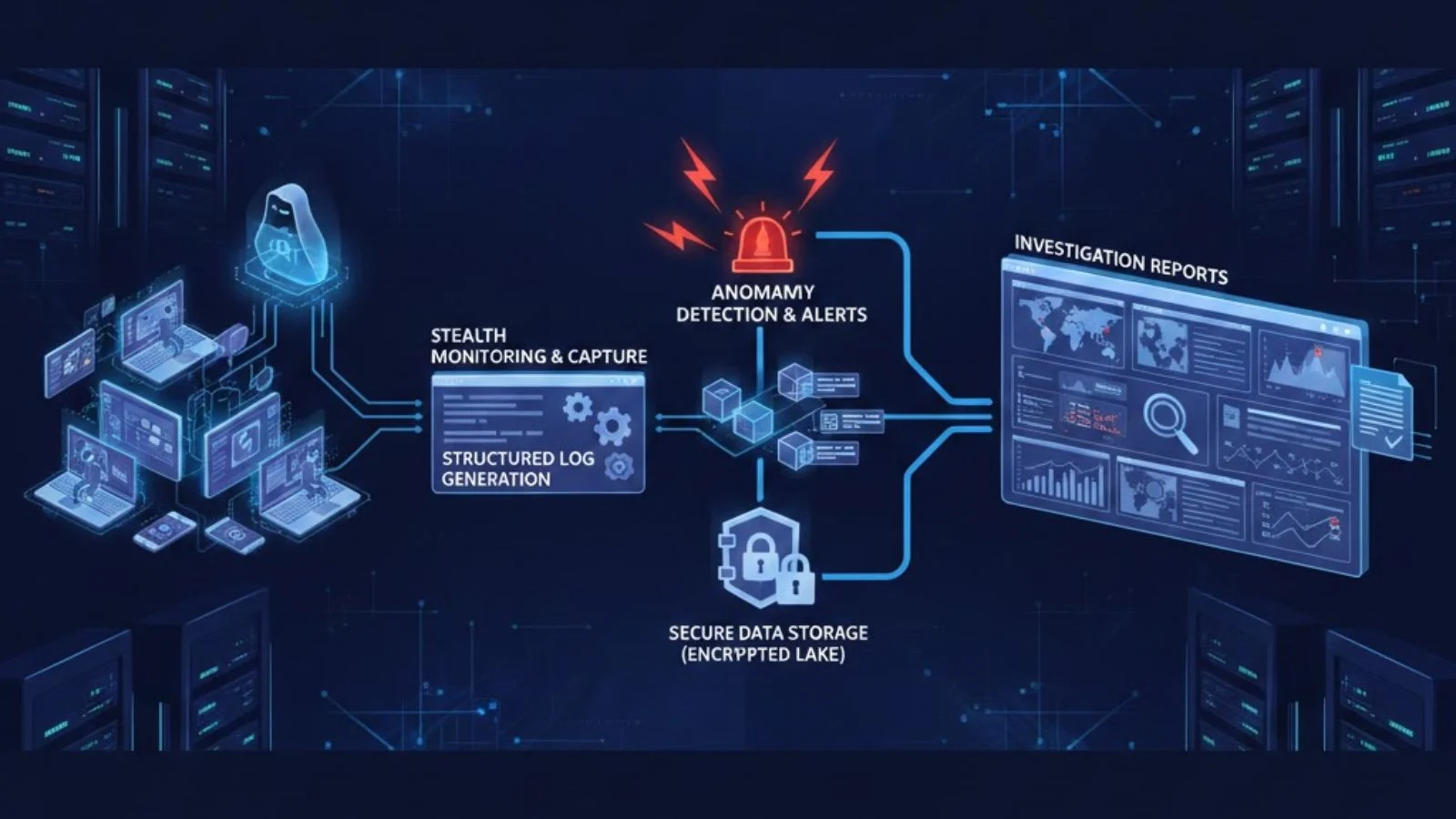
Modern investigation tools are designed to operate quietly in the background while capturing relevant workplace activity. When deployed for legitimate investigative purposes, stealth monitoring collects objective data without disrupting daily operations.
Here’s how it typically works:
1. Background Activity Tracking
Once installed on authorized company devices, the system runs silently without visible pop-ups or notifications. It records work-related activity such as application usage, website visits, login attempts, and file interactions.
2. Detailed Logging
A reliable stealth monitoring software solution creates structured logs with timestamps, user details, and device identifiers. This helps investigators reconstruct events accurately and identify patterns.
3. Event-Based Alerts
Administrators can configure triggers for specific behaviours like large file transfers, access to restricted folders, or repeated failed login attempts. These alerts allow security teams to act quickly if suspicious behaviour continues.
4. Secure Data Storage
Captured data is stored securely and accessible only to authorized personnel. Audit trails ensure that every review action is documented, supporting accountability.
5. Reporting and Evidence Collection
The software generates exportable reports that can support internal reviews or legal proceedings if necessary. Clear documentation ensures investigations remain fact-based.
When implemented responsibly, stealth monitoring focuses only on relevant work-related concerns and avoids unnecessary intrusion. It provides clarity in situations where transparency alone may not uncover the truth.
Choose the Right Stealth Monitoring Solution
Selecting the appropriate tool for covert investigations is important; not just for capturing relevant data, but for doing so ethically, securely, and within compliance requirements. Not all monitoring tools are created the same, so here are key features to consider:
1. Comprehensive Activity Logs
A good solution should record detailed logs of application usage, file interactions, web activity, and login events. This level of visibility helps investigators piece together accurate timelines.
2. Silent Operation Mode
For legitimate investigation purposes, the software must run discreetly without obvious notifications or visible interfaces. This ensures that subjects under investigation do not alter their behaviour prematurely.
3. Secure Storage and Access Control
Data collected during covert investigations is sensitive. Choose a solution that encrypts logs and restricts access to authorized personnel only, maintaining strict audit trails.
4. Configurable Alerts
The ability to trigger alerts based on specific thresholds or behaviours such as access to restricted folders or unusual activity patterns—can speed up investigation workflows without manual monitoring.
5. Compliance Support
The best tools help organizations align with internal policies and legal standards. Look for features like customizable retention policies, exportable reports, and clear documentation for audits.
6. Ease of Integration
Whether connecting with compliance dashboards, security platforms, or HR systems, a flexible solution makes it easier to integrate data into your broader operational workflows.
By prioritizing these features, companies can choose a stealth employee monitoring software that supports discreet investigations while respecting privacy and compliance requirements.
How EmpMonitor Supports Discreet Investigations
EmpMonitor provides structured activity tracking that helps organizations conduct focused internal investigations when necessary. It captures application usage, file access, login activity, and web behavior across company devices, giving decision-makers reliable data.
For situations that require stealth monitoring, the platform can operate discreetly on authorized systems while maintaining secure access controls and audit trails. This ensures investigations remain controlled, documented, and compliant.
With clear reports and configurable tracking, EmpMonitor helps organizations move from suspicion to evidence responsibly and professionally.
Best Practices for Conducting Covert Monitoring
Covert investigations should always be handled with care. While stealth monitoring can provide clarity in sensitive situations, it must be applied responsibly to protect both the organization and its employees.
1. Consult Legal Guidance First
Before initiating any investigation, confirm compliance with local labour laws and data protection regulations. Legal oversight ensures the monitoring process is defensible and properly documented.
2. Define a Clear Scope
Limit monitoring to specific individuals, devices, or timeframes related to the concern. Broad or indefinite tracking can raise ethical and legal issues.
3. Focus Only on Work-Related Activity
Monitoring should remain strictly tied to company-owned systems and professional responsibilities. Avoid unnecessary intrusion into personal data.
4. Document Authorization and Purpose
Record why the investigation was initiated, who approved it, and how long it will run. Structured documentation strengthens accountability.
5. Secure the Collected Data
All logs gathered through stealth monitoring software should be encrypted and accessible only to authorized personnel. Sensitive information must be handled carefully.
6. Review and Close the Investigation Properly
Once sufficient evidence is gathered, conclude the monitoring period. Take appropriate action based on findings and ensure records are archived according to policy.
When applied selectively and ethically, stealth monitoring becomes a targeted investigative measure rather than a routine surveillance practice. The goal is clarity and fairness—not control.
Conclusion
Conducting covert investigations in the workplace is a serious decision, one that should never be taken lightly. While transparency is the foundation of a healthy workplace culture, there are rare situations where discretion becomes necessary to uncover the truth and protect organizational assets.
When applied responsibly, stealth monitoring can help businesses gather factual evidence, prevent data loss, and address misconduct without escalating the situation prematurely. The key lies in balance: clear authorization, defined scope, legal compliance, and secure handling of collected information.
Rather than becoming a routine management tool, covert tracking should remain a targeted response to credible risks. With the right policies and the right technology in place, organizations can protect sensitive information while maintaining professionalism and fairness.
Also Read,
The Role Of Employee Monitoring Software In Successful Workplaces
How To Get The Most Out of Your Stealth Monitoring App in 2025?
FAQs
1. Is covert employee monitoring legal?
It depends on local labour laws and data protection regulations. Many regions require employers to disclose monitoring policies in employment agreements, even if certain investigations are conducted discreetly. Legal consultation is strongly recommended before initiating any covert review.
2. When should a company consider using discreet monitoring tools?
Discreet monitoring is typically considered when there is credible suspicion of serious misconduct, data theft, insider threats, or repeated policy violations that require objective evidence.
3. How long should covert monitoring last?
It should be temporary and limited to the duration necessary to gather relevant information. Open-ended monitoring can raise compliance and ethical concerns.