


How a leading IT services company used EmpMonitor to eliminate visibility gaps, build genuine team transparency, and recover nearly $100K in annual operational losses.
Industry: IT Services & Digital Transformation
Company Size: 620 employees across 6 locations
Work Model: Hybrid – Distributed offices + Remote teams
Challenge: Zero team transparency across locations, inconsistent reporting, invisible remote productivity
Solution: EmpMonitor – Workforce Productivity & Employee Monitoring Suite
Results: 63% improvement in team transparency | 44% reduction in missed deadlines | $98K saved annually
The Background: A Business Built Across Borders
One of the leading IT services and digital transformation companies in Southeast Asia operates from a model most modern businesses aspire to: a distributed workforce spanning six locations across three countries, supported by an additional layer of fully remote project consultants and delivery managers. With over 620 employees, the company had built a strong reputation for delivering complex software implementation and managed services engagements on time and within scope.
But as the organisation expanded from a single headquarters into a genuinely multi-location business, something quietly broke: team transparency. Not the kind leadership could point to immediately in a board meeting, but the operational kind. The daily, granular visibility into whether distributed teams were aligned, active, and accountable. The kind that determines whether a project hits its deadline or misses it by a week.
“We had built great processes on paper,” reflects the company’s Head of Delivery Operations. “But paper processes assume everyone is in the same room. We were in six cities, three time zones, and two continents. The transparency we had at 80 people didn’t scale to 620.”
The Problem: Three Ways Opacity Became an Operational Liability


-
Managers Were Flying Blind Across Locations
For the company’s delivery managers overseeing cross-location project teams, remote work transparency was built almost entirely on trust and self-reporting. Weekly status updates arrived in varying formats. Workforce Productivity data was either absent or impossible to verify. When a project milestone slipped, the root cause — whether an individual contributor’s underperformance, a team-wide distraction, or a systemic workload imbalance — was nearly impossible to identify in time to course-correct.
Managers across locations were spending upward of twelve hours per week on manual check-ins: calls, messages, and status report reviews. They weren’t managing. They were chasing information. And even after all that effort, the picture they assembled was incomplete and often stale by the time it reached them.
-
Remote Work Team Transparency Had Collapsed to Near Zero
The company’s remote workforce, approximately 40% of total headcount, operated with almost no systematic visibility into how working hours were being spent. Transparency in remote work relied on attendance logs that captured login and logout times but said nothing about whether those hours contained genuine productive activity.
Internal audits revealed that remote employees’ self-reported productive hours averaged 7.1 hours per day. When cross-referenced against project output volumes and client-facing deliverable timestamps, the actual productive output suggested average active hours closer to 4.8. The gap was significant, and no one had the data infrastructure to close it.
-
Cross-Location Handoffs Were Producing Invisible Errors
With teams in multiple time zones collaborating on shared deliverables, handoffs between location-based sub-teams were a daily reality. A development team in one city would pass work to a QA team in another. A client account manager in one country would brief a delivery consultant in another.
These handoffs had no systematic tracking. When issues slipped through, the company’s incident logs pointed to the same pattern repeatedly: the receiving team lacked context, the outgoing team had not fully documented their status, and nobody had a tool that could verify whether the handoff had genuinely been completed. Workplace transparency in handoff moments was entirely dependent on individual discipline, and individual discipline, without structural support, is unreliable.
“We weren’t failing because of bad people. We were failing because accountability without visibility is just hope with a deadline.”
The Turning Point: Why This Organisation Chose EmpMonitor
After a particularly difficult quarter, three enterprise client escalations, two of which were directly tied to cross-location visibility failures, the company’s leadership commissioned a formal review of their transparency and workforce management infrastructure. Four platforms were evaluated over six weeks.
EmpMonitor emerged as the clear selection for reasons that mapped directly to the company’s specific operational gaps.
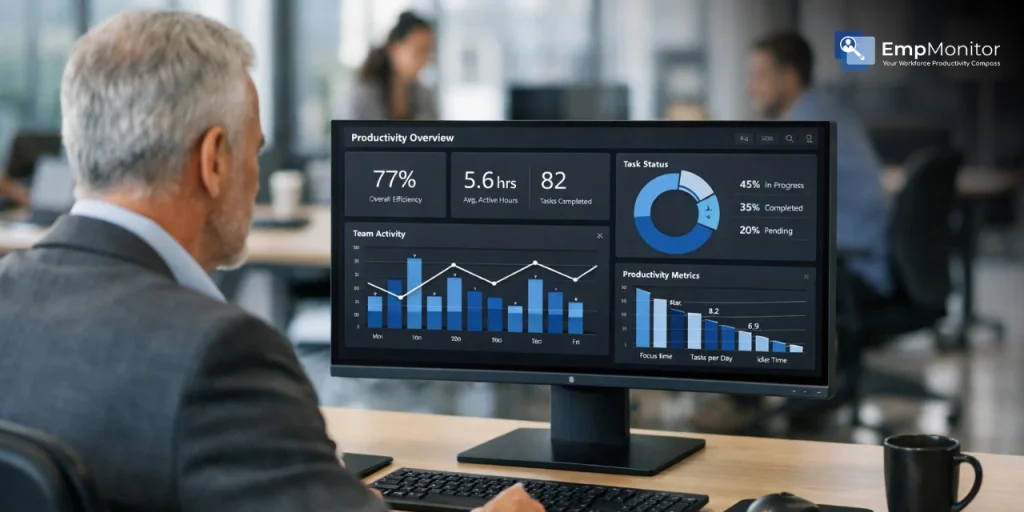
The real-time activity dashboard gave delivery managers live visibility into every team member’s work status across all locations simultaneously — active, idle, or offline — without requiring a call or a message thread. For managers responsible for teams they could not physically see, this was a structural change, not a cosmetic one.
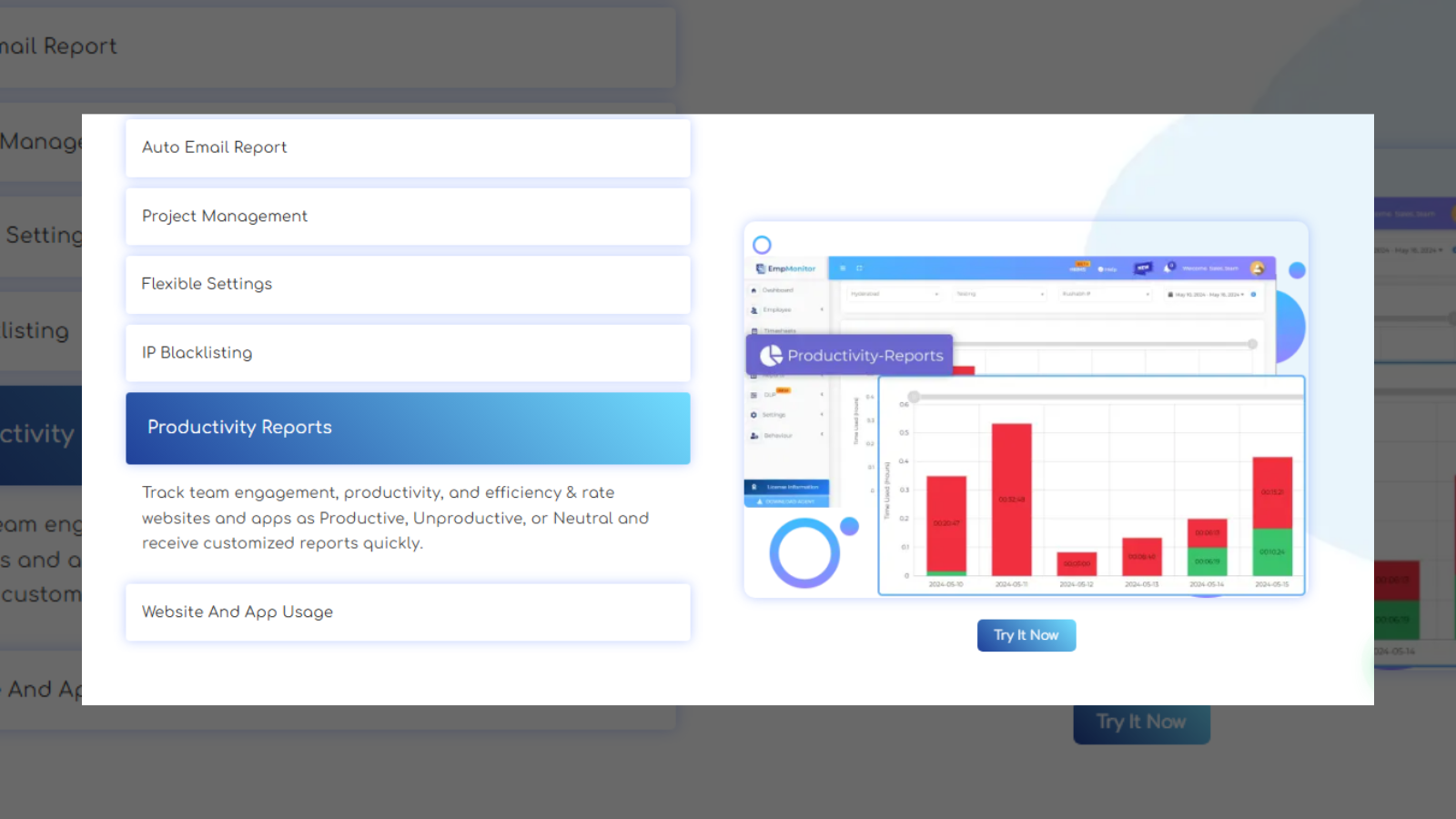
The URL and application tracking capability addressed the remote work transparency problem directly. Rather than relying on self-reported hours, managers could see exactly how remote employees were spending their time: which applications were open, which websites were being accessed, and how that time mapped against productive versus non-productive activity categories.
Finally, EmpMonitor’s automated alert and reporting system created a framework for cross-location handoff accountability that did not depend on individual memory or goodwill. Activity logs, task completion verification, and idle-time detection built a verifiable paper trail across every team transition.
Deployment began across all six locations in Q3 2024.
The Implementation: Building Team Transparency Systematically
Weeks 1 to 2: A Transparent Rollout That Earned Buy-In
Leadership chose a fully open deployment approach. Every team member across all six locations received a briefing that explained what EmpMonitor tracked, what it did not track, and how the data would and would not be used. The emphasis was clear: this was about improving team transparency and operational fairness, not surveillance.
The framing landed well, particularly among remote workers who had long felt their contributions were invisible to leadership. For them, EmpMonitor was not a threat. It was an opportunity to make their work visible in a system that had never given them that visibility before. Transparency in remote work, many noted, cuts both ways, and they welcomed it.
Weeks 3 to 4: Establishing Baselines Across All Locations
The first four weeks of data produced a picture that was both clarifying and uncomfortable. Location-level active hour averages ranged from a high of 6.6 hours per 8-hour workday at the headquarters site to a low of 4.2 hours at the most recently opened regional office. Remote workers averaged 5.1 hours of genuinely active work, against the self-reported 7.1, a 28% gap that had been silently inflating payroll and overstating project capacity for months.
Application usage data revealed that non-work browsing and social media access was highest in the two hours following lunch across all locations: a consistent pattern that could be addressed through structural changes rather than disciplinary action.
Month 2: Redesigning Workflows Around Real Data
With reliable baseline data in hand, the company made a series of targeted structural changes. Cross-location project teams were given standardised handoff checklists tied directly to EmpMonitor’s activity log verification. A handoff was not considered complete until the platform confirmed the relevant activity had been logged.
Automated alerts were configured to notify project managers when any team member’s idle time exceeded 30 minutes during core collaboration hours. This did not trigger disciplinary action automatically. It triggered a check-in, turning what had been a reactive complaint process into a proactive support loop.
Location-level productivity dashboards were made visible to team leads at each site, giving local managers the same quality of real-time information that central leadership had previously reserved for itself. Workplace transparency, in this model, was distributed, not concentrated at the top.
Month 3: Reinforcing Accountability With Recognition
The company introduced a monthly transparency and productivity report generated directly from EmpMonitor data. High-performing teams across locations were recognised in internal communications. Underperforming teams received coaching conversations grounded in objective data, not managerial impressions or second-hand reports.
The cultural shift was measurable. Employees at every level reported that they felt the system was fairer than what had existed before. For the first time, work output could be discussed in concrete terms rather than abstract assessments.
The Results: Team Transparency by the Numbers
| Metric | Before EmpMonitor | After 90 Days |
| Cross-Location Visibility | Ad hoc, phone-based | Real-time dashboard |
| Missed Project Deadlines | Baseline | 44% reduction |
| Remote Work Reporting Accuracy | ~58% | 94% |
| Manager Check-In Time (hrs/week) | 12+ hrs | 3 hrs |
| Employee Payroll Accuracy | ~69% | 96% |
| Annual Savings | — | $98,000 |

Team Transparency Improved Across All Locations
Within 90 days, cross-location visibility scores improved by 63%. The gap between the highest and lowest performing locations, which had been a 2.4-hour difference in average active work time, narrowed to under 0.8 hours. Teams that had previously operated as isolated units began functioning as a coherent distributed workforce.
Remote Work Transparency Became a Structural Asset
Remote work reporting accuracy improved from approximately 58% to 94%. The gap between self-reported and actual productive hours closed significantly, with remote workers averaging 6.3 genuinely active hours per day within three months of deployment. Far from resenting the visibility, the majority of remote employees reported in a post-deployment survey that they felt more recognised and fairly evaluated than before. Transparency in remote work, it turned out, benefited employees as much as managers.
Missed Deadlines Dropped Sharply
Project deadline adherence improved markedly, with missed delivery milestones falling 44% in the 90-day window following full deployment. Leadership attributed this directly to improved cross-location handoff accountability and the elimination of the information gaps that had been causing work to fall through at team transition points.
The Financial Case
Payroll accuracy improved from 69% to 96%, recovering significant overpayment that had accumulated through the gap between reported and actual hours. Manager check-in time fell from 12+ hours per week to approximately 3 hours, recovering productive management capacity that could be redirected to strategic work. Combined with reduced client escalation costs and lower deadline-miss penalties, the annualised financial impact was calculated at $98,000, approximately 35x the cost of the EmpMonitor subscription.
“EmpMonitor didn’t just give us data. It gave us a shared language for accountability that works across six locations, three time zones, and hundreds of people.”
The Takeaway: Transparency Cannot Be Assumed at Scale
For organisations managing distributed, multi-location, or hybrid workforces, team transparency is not a cultural value that emerges on its own. It is an operational infrastructure requirement that must be deliberately built, systematically measured, and consistently maintained. At small scale, trust and informal communication can substitute for structured visibility. At scale, they cannot.
This company’s experience demonstrates what becomes possible when workplace transparency stops being an aspiration and becomes a measurable operational standard. The changes EmpMonitor enabled were not punitive or invasive. They were structural. Better data led to better decisions. Better decisions led to better processes. And better processes led to better outcomes for the business and its employees alike.
In multi-location environments especially, the question is never whether team transparency matters. It always does. The question is whether you have the tools to create it, measure it, and build on it, consistently, across every location, every shift, and every team.
EmpMonitor Features That Drove Team Transparency
Real-Time Activity Dashboard: live, location-agnostic visibility into every employee’s active, idle, or offline status
URL & Application Tracking: replaced self-reported hours with verifiable, granular data on how time was actually spent
Idle Time Detection: exposed the gap between logged-in time and genuine productive activity across remote and on-site workers
Automated Alerts: notified managers of extended idle periods in real time, enabling proactive support rather than reactive investigation
Cross-Location Reporting: generated site-level and individual productivity reports, creating a fair and consistent standard across all locations
Ready to bring real team transparency to your distributed workforce? Visit empmonitor.com to start your free trial or book a personalised demo.
FAQs: Team Transparency and EmpMonitor
Q1. How does EmpMonitor improve team transparency in a multi-location organisation?
It provides a single, real-time dashboard that shows every employee’s activity status regardless of their physical location. Managers gain live visibility into who is active, who is idle, and how time is being spent, without relying on self-reporting or manual check-ins.
Q2. How does EmpMonitor support transparency in remote work specifically?
By replacing self-reported hours with objective, system-generated data. URL tracking, application usage logs, and idle time detection produce an accurate picture of how remote employees spend their working day, creating genuine transparency in remote work for both managers and employees.
Q3. Will employees resist monitoring? Does it damage trust?
When deployed transparently and framed correctly, EmpMonitor typically improves perceived fairness rather than undermining it. Remote employees in particular often welcome the visibility because it allows their genuine contributions to be recognised. Transparency in remote work, when reciprocal, builds trust rather than eroding it.
Q4. Can EmpMonitor track handoffs and task completion across teams?
Yes. Activity logs provide a verifiable record of what was completed during any given period. When handoff checklists are tied to this activity data, completion becomes trackable, and gaps surface before the incoming team inherits an undocumented problem.
Q5. What results can a multi-location business realistically expect?
Based on real-world deployments, measurable improvements in workplace transparency and active work hours typically appear within the first 30 days. Significant gains in deadline adherence, reporting accuracy, and payroll precision generally follow within 60 to 90 days of consistent use.