


Managing workplace behaviour is one of the most challenging responsibilities for HR professionals and business leaders. When employees don’t follow company policies or behave inappropriately, you need a structured approach to address the situation. This is where understanding how to handle a disciplinary infraction becomes critical.
It refers to any violation of company policies, workplace rules, or professional standards that warrants corrective action.
The way you respond to these situations can determine whether your team becomes more productive or whether you face legal complications and damaged morale. Learning how to manage it effectively is essential for creating a healthy workplace culture where rules are respected and consequences are consistent.
In a hurry? Listen to the blog instead!
Understanding Disciplinary Infractions in the Workplace:


Before diving into management strategies, it’s essential to clarify what constitutes a disciplinary in a workplace setting. It is essentially any deviation from established workplace conduct standards that requires formal intervention from management or HR. This broad definition encompasses everything from minor behavioural issues to serious misconduct. The key characteristic of any disciplinary is that it violates written or understood organizational policies.
Without clear definitions and documentation, your response to a disciplinary becomes subjective and potentially unfair. Different organizations classify infractions differently based on their industry, size, and culture. However, most workplaces categorize issues into levels of severity, which also helps employees understand How To Identify A Fireable Offense At Work And Avoid It? by recognizing what actions cross the line.
Understanding these levels helps you respond appropriately when addressing a disciplinary and ensures consistency across your organization. The importance of recognizing it early cannot be overstated. Many HR professionals and managers struggle because they don’t have a clear framework for identifying what a disciplinary infraction is.
Some behaviours exist in grey areas where judgment is required. The distinction between a one-time mistake and a pattern that requires intervention is crucial. When an employee misses a deadline, is that automatically a disciplinary infraction? What if they had a legitimate emergency?
Context matters tremendously when evaluating any disciplinary. This is why documentation and investigation become so vital before taking any corrective action regarding a disciplinary.
Common Disciplinary Infraction Examples You’ll Encounter:

Real-world scenarios help illustrate what constitutes a disciplinary infraction. Here are typical examples you might encounter in any organization. A minor infraction might include tardiness, incomplete timesheets, informal dress code violations, or missing non-critical meetings.
While not ideal, these issues are usually addressed through verbal warnings or informal counselling. These examples represent the most common workplace challenges managers face.
Moderate infractions include repeated minor violations, insubordination, poor work quality despite training, or minor policy breaches. These disciplinary violation situations typically warrant written warnings and corrective action plans.
More serious infractions might involve harassment, violence, theft, substance abuse, or gross negligence. These often result in suspension or termination.
Some behaviours, like fraud, violent threats, or serious safety violations, require immediate investigation and potential legal involvement. These represent the most serious end of the spectrum. Understanding these examples helps you calibrate your response appropriately.
An employee late to work requires different handling than an employee who steals company property. A minor infraction caught early can often be corrected quickly, while serious violations demand immediate action.
The Progressive Discipline Approach:
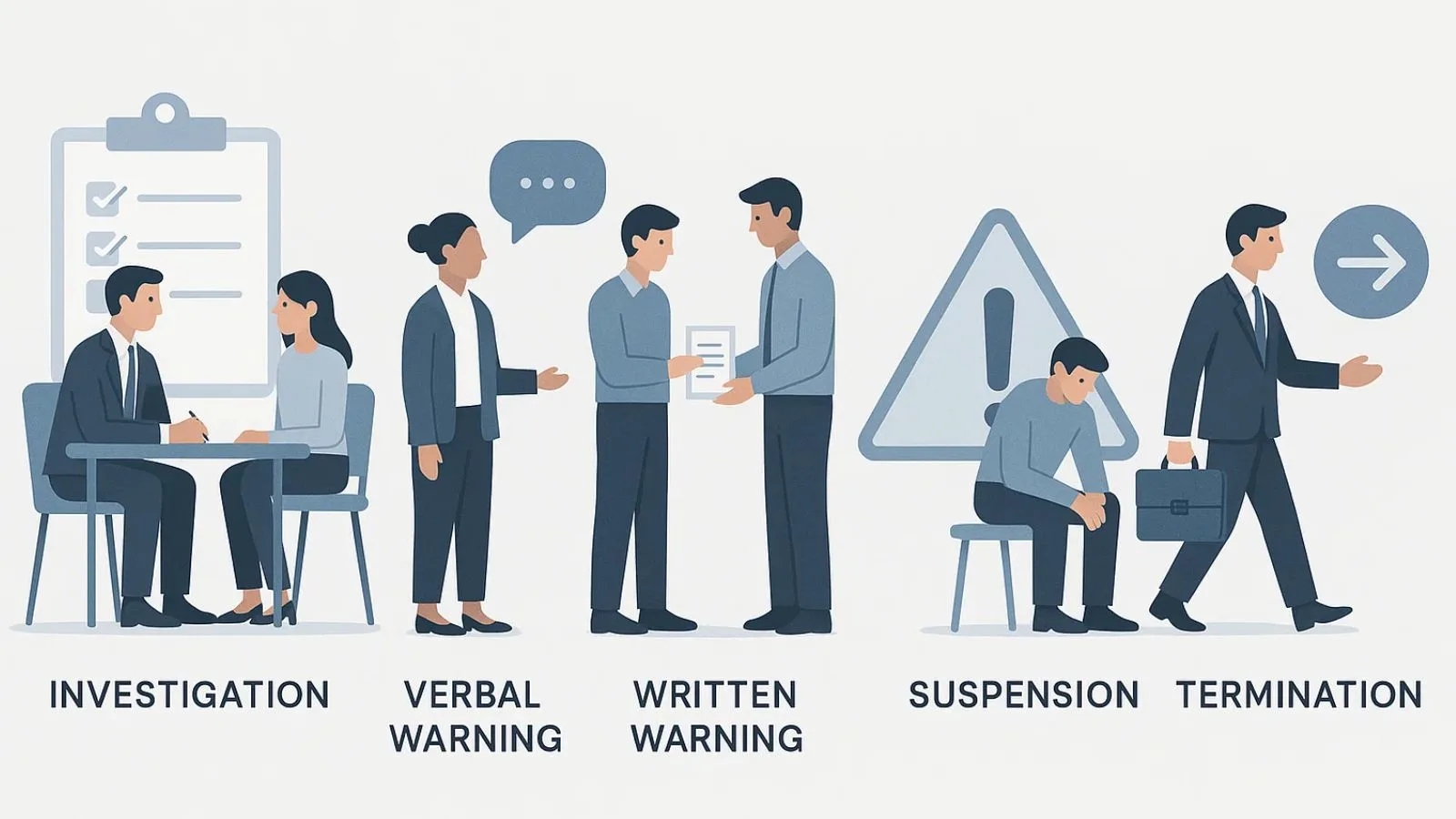
One of the most effective frameworks for handling a disciplinary is progressive discipline. This methodology provides structure, fairness, and documentation while giving employees opportunities to improve. The progressive approach ensures that every disciplinary infraction receives appropriate attention without jumping straight to termination.
Step One: Documentation and Investigation:
When you identify a potential, your first responsibility is thorough investigation. Gather facts, speak with witnesses, and document everything.
This protects both the employee and your organization. Never assume; verify. The investigation phase of addressing a disciplinary sets the tone for everything that follows. Hasty conclusions about a disciplinary can lead to legal liability and unfair treatment.
Step Two: Verbal Warning:
For first-time disciplinary of moderate severity, a verbal warning often suffices. This is an informal conversation where you clearly explain what policy was violated, why it matters, and what behaviour you expect moving forward.
Document this conversation in writing, including the date and what was discussed. Even informal warnings should be recorded in the employee’s file as part of their disciplinary history.
Step Three: Written Warning
If a disciplinary infraction repeats or if it’s moderately serious initially, issue a formal written warning.
This document should clearly state the infraction, the policy violated, previous corrective actions, and expectations for improvement. The employee should sign and receive a copy.
Written warnings become part of the permanent record and serve as documentation if you need to address a future disciplinary by the same employee.
Step Four: Suspension or Final Warning
For serious or repeated disciplinary, temporary suspension or final written warning may be necessary.
At this stage, the employee should understand that further violations could result in termination. This is the time to consider offering additional support if relevant.
Step Five: Termination
When a disciplinary is egregious or when previous steps haven’t resulted in behavioural change, termination becomes appropriate.
Always consult with legal counsel before terminating employment to ensure you’re following all applicable laws and that your handling of the disciplinary is legally sound.
Why Fair Handling of Disciplinary Infractions Matters:

How you manage a disciplinary infraction sends powerful messages to your entire organization. If you’re inconsistent, employees lose trust in leadership.
If you’re too lenient, behavioural standards erode. If you’re too harsh without cause, you risk legal action and talent loss. Fairness in addressing disciplinary isn’t just about ethics; it’s about business performance.
Employees who see fair treatment of disciplinary are more likely to respect policies themselves. Consistency in how you handle infractions builds a stronger organizational culture.
When team members observe that everyone faces similar consequences for similar violations, they’re more likely to follow rules. This creates an environment where a disciplinary becomes something employees actively try to avoid rather than something they risk casually.
Legal Considerations When Addressing Disciplinary Infractions:
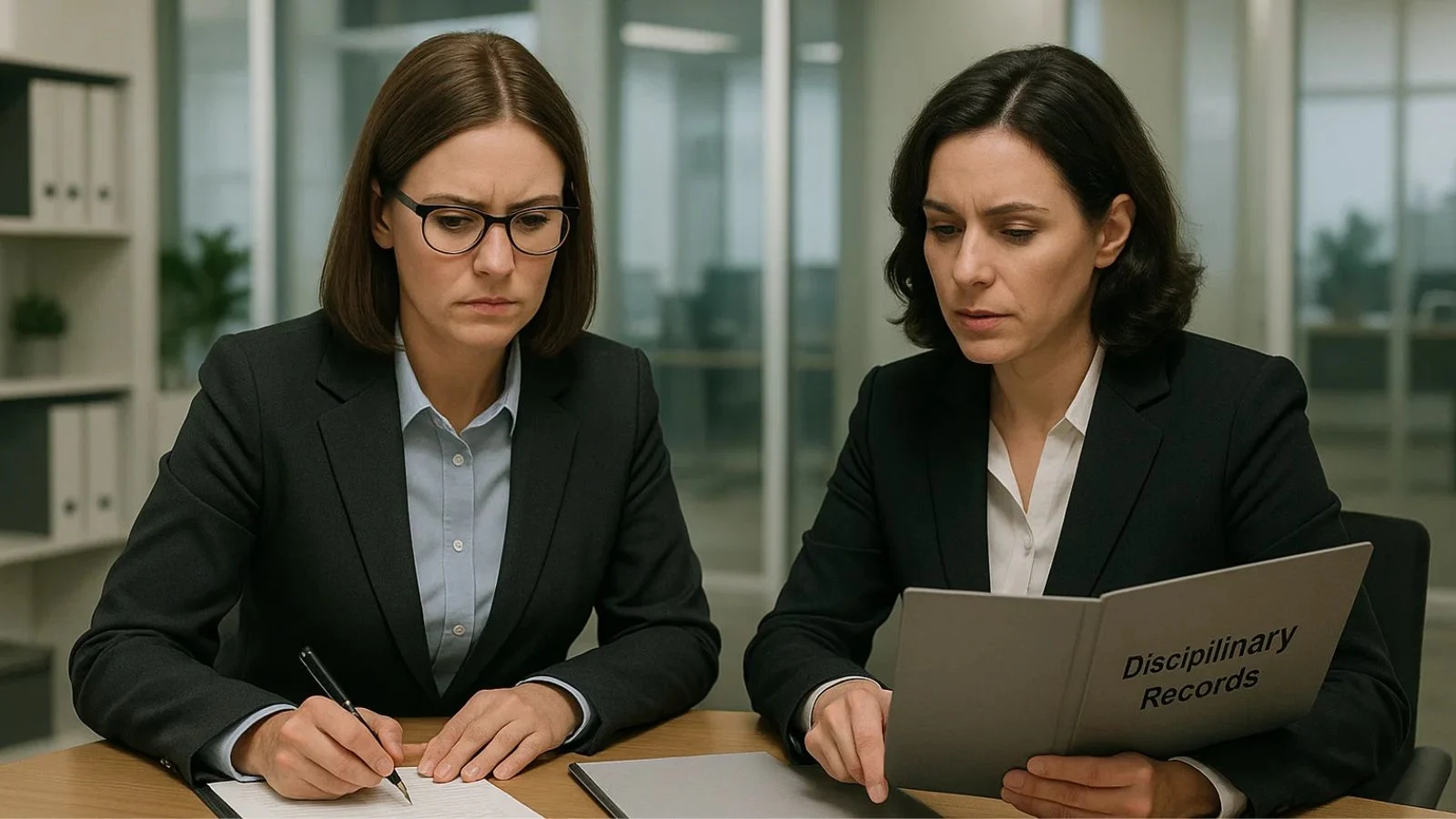
Employment law varies by location and industry, but several principles apply broadly. When handling a disciplinary, ensure you have documented evidence of the violation.
Provide the employee with an opportunity to explain their side of the story before taking action. Avoid discrimination, ensure that similar disciplinary receive similar responses regardless of the employee’s protected characteristics.
At-will employment provides flexibility, but it doesn’t eliminate your legal obligations. Wrongful termination claims can arise if you handle a disciplinary improperly.
Always maintain detailed records and consult HR and legal teams when serious infractions occur. Documentation becomes your best defense if a disciplinary infraction ever leads to litigation.
Creating Clear Policies to Prevent Infractions:

Prevention is always better than correction. The best way to reduce disciplinary infractions is through crystal-clear policies distributed to all employees.
Your employee handbook should define what constitutes a minor infraction versus serious misconduct. Provide specific examples. Explain the progressive discipline process. Make it clear that policies apply consistently to everyone.
When employees understand expectations up front, the number of disciplinary infractions naturally decreases. Additionally, provide training on policies during onboarding.
Some organizations require annual policy review and acknowledgment. This creates a clear record that employees were informed about company policies and understand what could trigger a disciplinary infraction.
The Role of Management Training:
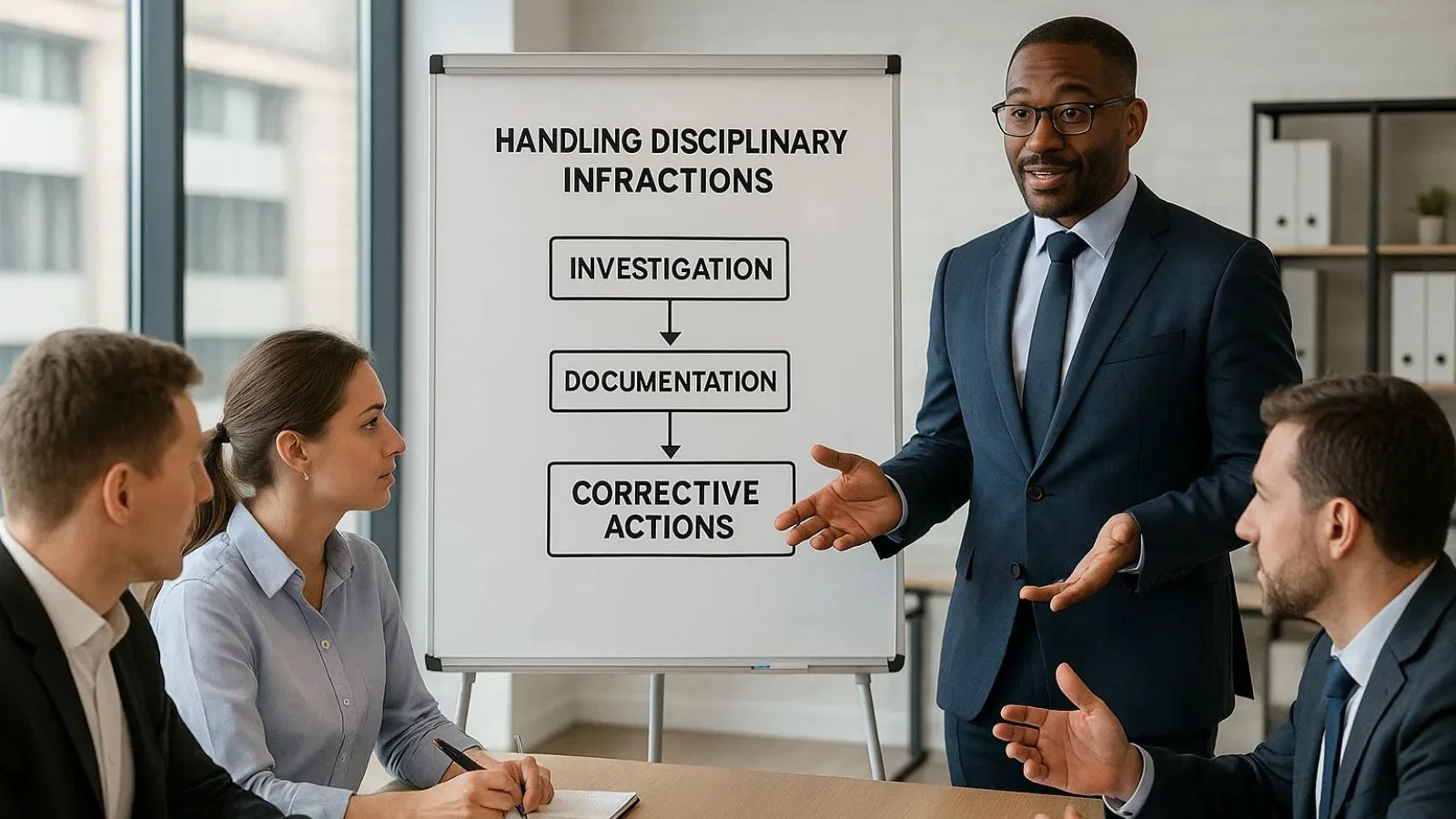
Managers are often on the front lines of identifying and addressing disciplinary infractions. Yet many receive little formal training on how to handle these situations.
This training gap leads to inconsistent responses and sometimes illegal handling of infractions. Invest in management training focused on recognizing disciplinary infractions, conducting fair investigations, and applying consistent corrective actions.
Managers should understand their biases and how these might influence their interpretation of whether something constitutes a disciplinary infraction.
Well-trained managers handle infractions more fairly and document better, reducing organizational risk.
When managers understand the framework for addressing a disciplinary infraction, they become your organization’s first line of defense in maintaining consistent standards.
Using Technology to Improve Disciplinary Infraction Management:
Modern HR technology can significantly improve how organizations track and manage disciplinary infractions. Digital record-keeping ensures documentation isn’t lost and is easily retrievable if needed for legal proceedings. Workflow systems can ensure that all disciplinary infractions follow the same process, reducing inconsistency and ensuring fairness.
Also Read:
How To Identify A Fireable Offense At Work And Avoid It?
How To Build Employee Attendance Policy That Actually Works In 2025?
How EmpMonitor Promotes Fair Discipline?

EmpMonitor’s comprehensive employee monitoring and management platform helps organizations handle disciplinary infractions more effectively. The platform provides detailed activity logs and performance metrics that serve as objective evidence when addressing a disciplinary infraction.
When you need to document a disciplinary infraction, having clear, timestamped records proves invaluable. EmpMonitor tracks productivity, internet usage, application activity, and time management, all critical data when investigating potential infractions.
Rather than relying on manager perception or incomplete information, you have documented evidence supporting how you handled the disciplinary infraction. The platform also facilitates consistent discipline application. EmpMonitor’s centralized dashboards allow HR teams to see patterns across the organization.
With EmpMonitor, you can quickly see if certain disciplinary issues occur more often in specific departments. This data-driven insight helps you address the actual root causes instead of reacting only to visible problems.
The platform also supports proactive prevention. Its risk assessment and DLP features alert management to any suspicious or risky work behaviour early on. This makes it easier for managers to spot employees who may be struggling and offer guidance before small issues turn into major violations.
Overall, EmpMonitor helps shift your workplace from a reactive disciplinary approach to a preventive, supportive culture, strengthening employee relations and reducing how often disciplinary infractions occur.
Best Practices When Addressing Disciplinary Infractions:

Stay calm and professional throughout the process. Emotions complicate situations, so approach every disciplinary infraction with a problem-solving mindset. Listen actively, always hear the employee’s perspective before deciding how to address the infraction.
Be specific about the conduct that constitutes the disciplinary infraction and how it violated policy. Focus on behaviour rather than character. Address the specific action that constitutes the disciplinary infraction without attacks on the person’s character or competence.
Maintain confidentiality by discussing infractions privately to protect the employee’s dignity. Document thoroughly; every conversation regarding a disciplinary infraction should be written and filed. Provide support whenever possible by helping employees understand how to avoid future infractions through training or mentoring.
Another critical best practice is timing. Address a disciplinary infraction as soon as possible after discovering it. Delays can make the employee forget details and suggest that the issue wasn’t serious enough to warrant immediate attention. However, don’t sacrifice thoroughness for speed. You need to investigate properly before responding to any disciplinary infraction.
Communication is equally important. Clearly communicate expectations before, during, and after addressing a disciplinary infraction. Let employees know how their behaviour was problematic and what changes you expect. Provide them with resources or training to help them succeed.
Follow up to ensure that the corrective action related to the disciplinary infractions is actually working. If the behaviour continues, you may need to escalate your response to address the ongoing disciplinary infractions.
Conclusion:
Handling a disciplinary infractions fairly and effectively requires structure, consistency, and clear documentation. By implementing progressive discipline, training managers thoroughly, and using tools like EmpMonitor to gather objective evidence, organizations can address infractions professionally while maintaining employee morale.
The goal isn’t punishment, it’s accountability and continuous improvement. When employees understand expectations and see fair treatment of infractions, workplace culture strengthens and performance improves.
FAQ’s:
Q1: How long should disciplinary records be kept?
Ans: Most organizations retain disciplinary records for 3 to 7 years, but the exact duration can vary. Factors include local labour laws, the company’s internal policies, and the seriousness of the issue. Minor infractions may be removed earlier, while serious violations, like safety breaches or misconduct, may be kept for the full retention period for legal and compliance reasons.
Q2: Can an employee be fired for a first disciplinary infractions?
Ans: Yes. While many companies follow a progressive discipline process for minor or moderate issues, a first offense can lead to immediate termination if the violation is severe. Examples include workplace violence, theft, fraud, harassment, or any form of gross misconduct. In such cases, employers are legally allowed, and sometimes obligated, to take swift action.
Q3: Should disciplinary infractions appear on employee references?
Ans: Generally, no. Most employers avoid mentioning disciplinary issues in references unless the violation directly led to termination and the requesting employer specifically asks for clarification. To avoid legal risks, companies typically provide neutral references, sharing only factual information such as employment dates, job title, and final role.