


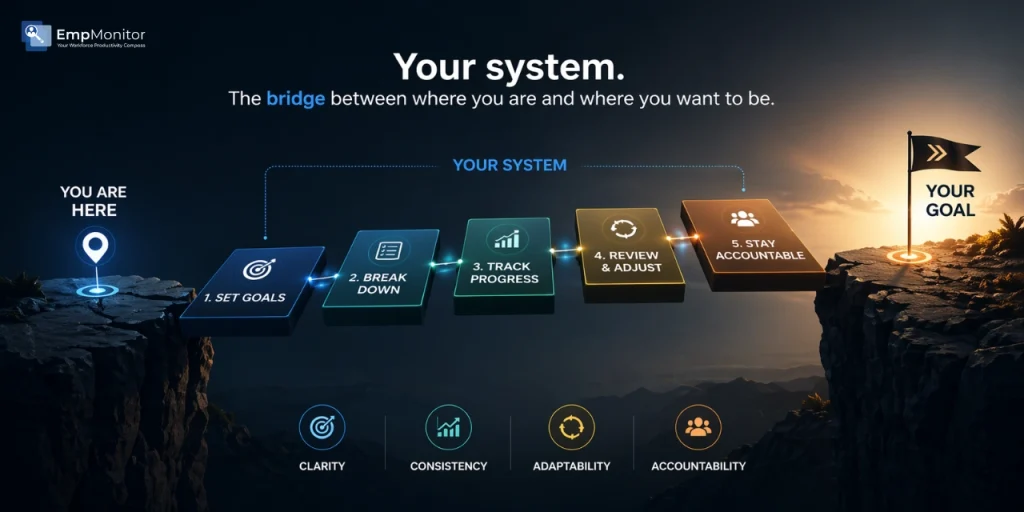
Another Year, Same Abandoned Goals?
You start strong. A fresh list, a clear intention, maybe even a new goal tracker. Then life gets busy, priorities shift, and that tracker quietly disappears from your routine.
This isn’t a motivation problem. It’s a system problem.
Most people don’t fail because they lack ambition. They fail because they don’t have a reliable way to see progress, adjust direction, and stay engaged over time. Without that feedback loop, even the best goals fade into the background.
Here’s the shift that changes everything. It’s not just a tool but a system for turning intention into visible progress. When done right, it keeps your goals alive long after the initial excitement wears off.
By the end of this guide, you’ll have a complete system you can actually use, whether you’re managing personal habits or leading a team.
Read Aloud!
What Makes a Goal Tracker Actually Effective?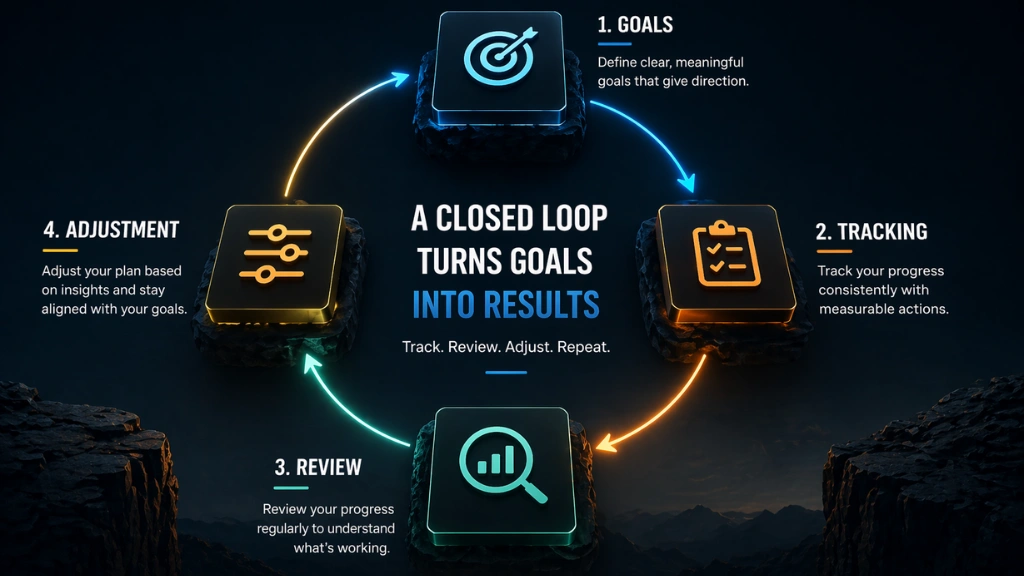

An effective tracker connects three key elements into one simple system. It starts with clear goals, follows through with consistent tracking, and ends with regular review and adjustment.
It works because it closes the loop between planning and action. You’re not just listing goals. You’re actively managing them.
An effective tracker must:
- Define goals using a clear framework like SMART or OKRs
- Track progress consistently through daily or weekly updates
- Include a review cycle to adjust and stay aligned
Why Most Goal Trackers Fail Before They Even Begin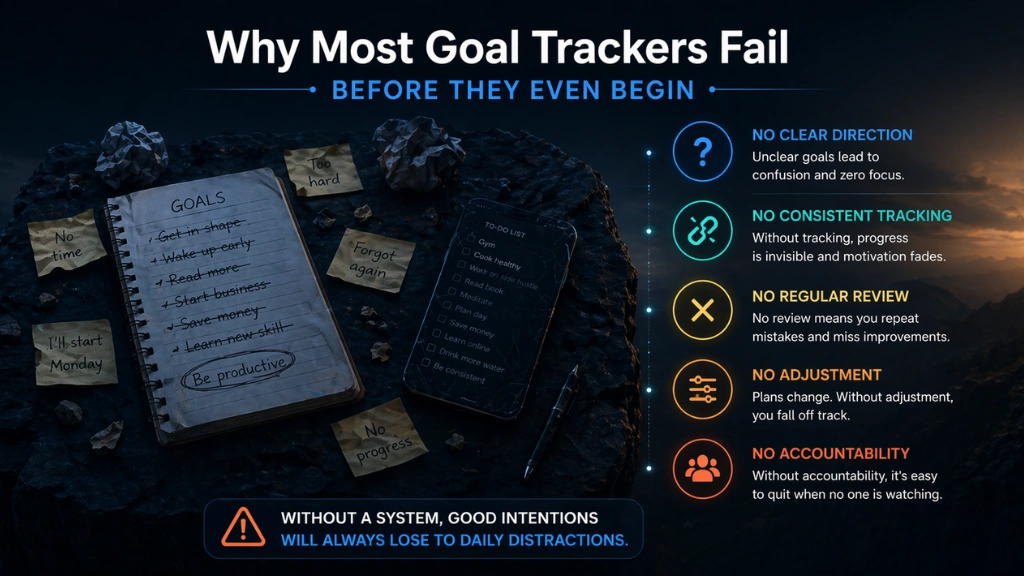
A common mistake is treating them like a to-do list. Tasks get checked off, but there’s no sense of progress toward a bigger outcome.
That’s where things break down.
Goals set without milestones feel overwhelming. You might write “get fit” or “grow revenue,” but without structure, those ideas stay vague and untrackable. And vague goals don’t survive busy schedules.
There’s another issue. Most trackers lack a review system. You log data, maybe for a week or two, then stop because nothing meaningful comes from it.
Think about it. If you can’t answer “Am I getting closer?”, your tracker isn’t doing its job.
The real fix isn’t another app. It’s a better system.
The 5-Step Goal Tracking System That Actually Works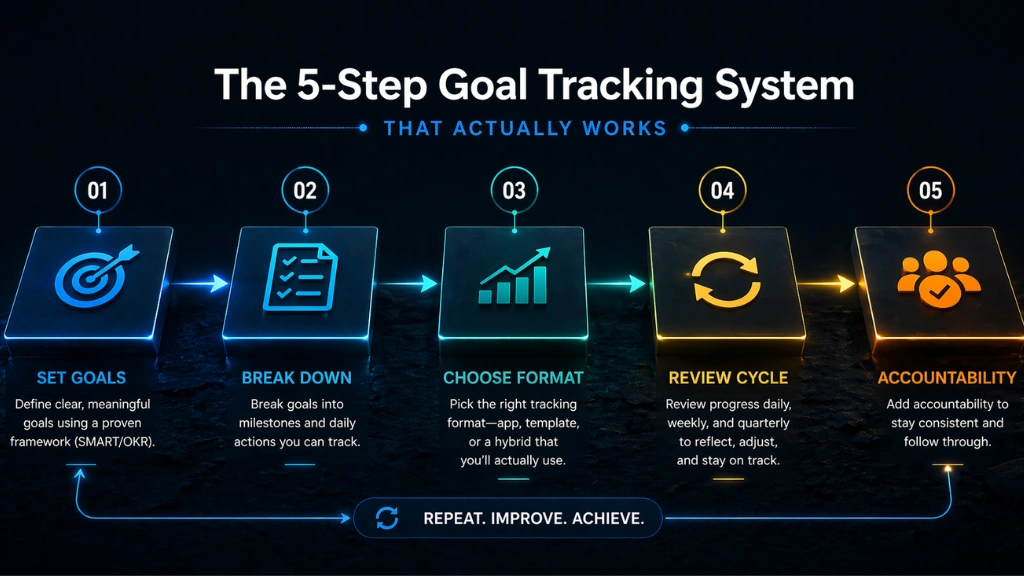
Step 1: Set Goals Worth Tracking (SMART vs. OKR)
Every effective goal tracker starts with clarity. If the goal is unclear, tracking won’t help.
SMART goals work well for individuals. They’re specific, measurable, and tied to a clear deadline. For example, “Run a 5K in 10 weeks” gives you something concrete to track.
OKRs, on the other hand, are better for teams. You define an objective, then break it into measurable results. This keeps everyone aligned on outcomes, not just tasks.
Here’s a simple way to choose. If you’re working on personal habits or short-term goals, use SMART. If you’re managing team performance or long-term strategy, OKRs make more sense.
Many businesses use both. Strategy runs on OKRs, while daily execution follows SMART goals.
Step 2: Break It Down Into Milestones and Daily Actions
Big goals feel distant. That’s why most people abandon them.
A goal tracker template becomes powerful when it breaks goals into smaller steps. You’re not just tracking the outcome. You’re tracking the path.
Start with a simple structure:
- Annual goal
- Quarterly milestone
- Monthly checkpoint
- Weekly target
- Daily action
Let’s say your goal is to increase team productivity by 20 percent. That becomes weekly check-ins, daily priorities, and measurable outputs.
This is where progress becomes visible. And once you can see progress, you’re more likely to continue.
Step 3: Choose Your Tracking Format (App, Template, or Hybrid)
Not every goal tracker app works for every person. The best format is the one you’ll actually use consistently.
Digital tools are great for teams. They offer reminders, dashboards, and real-time updates. If you’re managing multiple people, an online goal tracker becomes almost necessary.
Templates, like Google Sheets or Notion, give you flexibility. You control what you track without extra complexity.
Then there’s the underrated option. A physical tracker. Writing things down creates a stronger sense of commitment.
Some people combine both. A daily goal tracker for logging actions, and a weekly review sheet for reflection.
Before choosing a format, ask yourself one question. Will I open this every day?
If the answer is no, the tool isn’t the problem. The format is.
Step 4: Build Your Review Cycle (Daily, Weekly, Quarterly)
Tracking without reviewing doesn’t work. A goal tracker only becomes useful when it helps you make decisions.
Daily check-ins should be quick. Two minutes is enough. Did you take action or not?
Weekly reviews go deeper. You look at progress, identify blockers, and adjust your plan. This is where most improvements happen.
Quarterly reviews are strategic. You step back and ask whether the goal still makes sense. Sometimes the smartest move is to change direction.
For teams, these reviews should be built into meetings. A tracker shouldn’t feel like extra work. It should be part of how work happens.
Step 5: Add an Accountability Layer
Even the best tracker struggles without accountability.
When no one else sees your progress, it’s easy to skip updates. That’s human nature.
Accountability doesn’t need to be complex. It could be a friend, a manager, or a shared dashboard. The key is visibility.
For individuals, simply sharing weekly progress with one person can improve consistency. For teams, structured visibility creates alignment.
This is where tools and systems overlap. A smart goal tracker isn’t just tracking data. It’s creating a shared sense of responsibility.
What a Goal Tracker Should Actually Look Like
A practical goal tracker template doesn’t need to be complicated. In fact, simpler systems last longer.
For personal use, keep it tight:
- Goal
- Daily action
- Completion status
- Notes
- Weekly streak
For teams, structure matters more:
- Goal owner
- Defined goal (SMART or OKR)
- Milestones
- Progress percentage
- Blockers
Here’s how this plays out in real situations.
A freelancer might track revenue goals using a simple spreadsheet. Each day, they log outreach or completed work.
A manager might run weekly team reviews using a shared dashboard. Progress is visible without constant follow-ups.
An HR team might rely on an online goal tracker connected to performance systems. This links individual goals to company objectives.
The key rule stays the same. If your tracker takes more than 10 minutes a week to maintain, it won’t last.
Smart Goal Tracking at Work: How Teams and Managers Do It Differently
Tracking goals alone is one thing. Tracking them across a team is different.
A personal tracking system focuses on motivation. For teams, the focus shifts to alignment and clear visibility.
Managers need to see progress without interrupting work. They need to know what’s on track, what’s delayed, and why.
Employees, on the other hand, need clarity. They should understand how their goals connect to larger outcomes.
This is where many systems fail. They either become too rigid or too invisible.
The balance comes from shared visibility without constant oversight. Teams perform better when they feel ownership, not pressure.
How EmpMonitor Helps Teams Track Goals Without the Guesswork

As teams grow, spreadsheets start to break. A goal tracker that works for one person doesn’t scale easily.
This is where employee monitoring software like EmpMonitor comes in. It acts as both an employee management platform and a performance tracking system, built for real workplace needs.
Instead of manually chasing updates, managers get a clear view of progress.
Key advantages include:
- Real-time productivity tracking tied to daily actions
- Structured goal and task assignment
- Visual performance dashboards
- Attendance and workload tracking
- Automated reporting without manual effort
- Support for remote and distributed teams
The real benefit is clarity. You don’t have to guess whether goals are moving forward. You can see it.
The Psychology Behind Why Tracking Works
A goal tracker works because it makes progress visible.
When you see small wins, your brain registers movement. That creates momentum. Without that feedback, effort feels invisible, and motivation drops.
There’s also the streak effect. Once you build consistency, you don’t want to break it. Even simple tracking systems use this to keep you engaged.
Frequency matters too. A daily tracking system keeps goals active in your mind. Weekly check-ins work for bigger projects, but daily tracking builds habits faster.
Writing things down also strengthens commitment. Whether it’s digital or physical, recording progress makes goals feel real.
And then there’s social accountability. When others can see your progress, you’re more likely to follow through.
Design your system around these principles. That’s what makes it stick.
Read More!
Your Goals Deserve More Than a List
A goal tracker alone won’t create results. What works is a system you actually follow.
Set clear goals. Break them down. Choose a format you’ll use. Review progress consistently. Add accountability.
That’s the difference between abandoned plans and measurable progress.
Start small. Pick one goal. Track it for a week. Then build from there.
Because once you can see progress, you stop relying on motivation. You start relying on momentum.
FAQ: Real Questions People Ask About Goal Trackers
What’s the difference between a habit tracker and a goal tracker?
A habit tracker focuses on repeated actions. A goal tracker focuses on progress toward a specific outcome. Both work best together.
How many goals should I track at once?
Stick to three to five. More than that spreads your attention too thin.
What’s the best free goal tracker template?
Simple templates in Google Sheets or Notion work well. The best one is the one you’ll consistently update.
How do I track employee goals without micromanaging?
Use shared dashboards and agreed milestones. Employee management software can automate visibility without constant check-ins.
Is a daily goal tracker better than a weekly one?
Daily tracking works best for habits. Weekly tracking suits larger projects. Match the frequency to the goal.
How do I stick to using a goal tracker?
Keep it simple, integrate it into your routine, and review it regularly. Consistency matters more than complexity.