


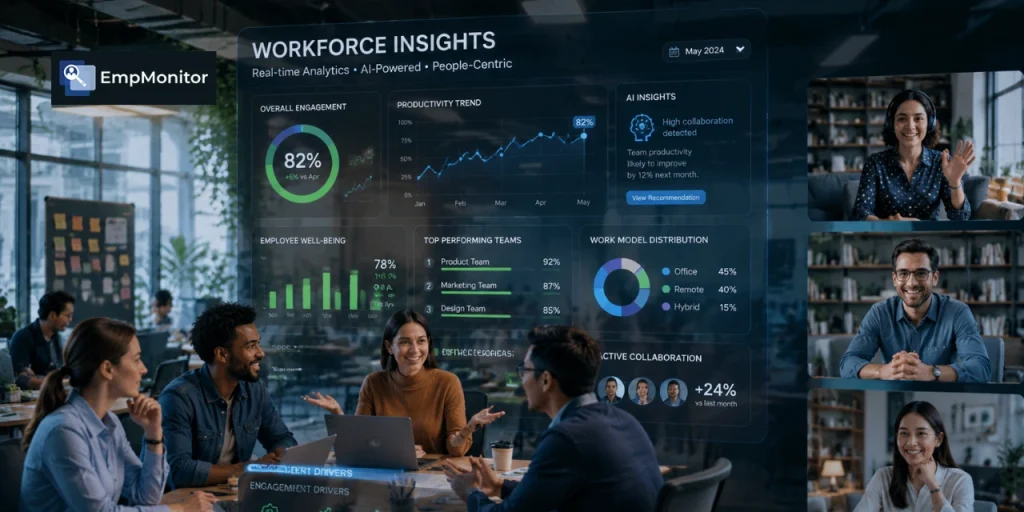
Employee disengagement is quietly costing businesses more than they realize. According to Gallup’s 2026 State of the Global Workplace report, global employee engagement has dropped to just 20%, translating into trillions of dollars in lost productivity worldwide. When people show up to work physically but have mentally checked out, performance suffers, turnover climbs, and the entire organization feels the strain.
That’s why workforce engagement has moved from an HR buzzword to a genuine business priority. Modern companies are no longer just tracking output; they’re investing in strategies, systems, and tools that help employees feel connected, motivated, and valued. And the results speak for themselves: businesses with highly engaged teams consistently outperform those without.
Read Aloud!
What Is Workforce Engagement?
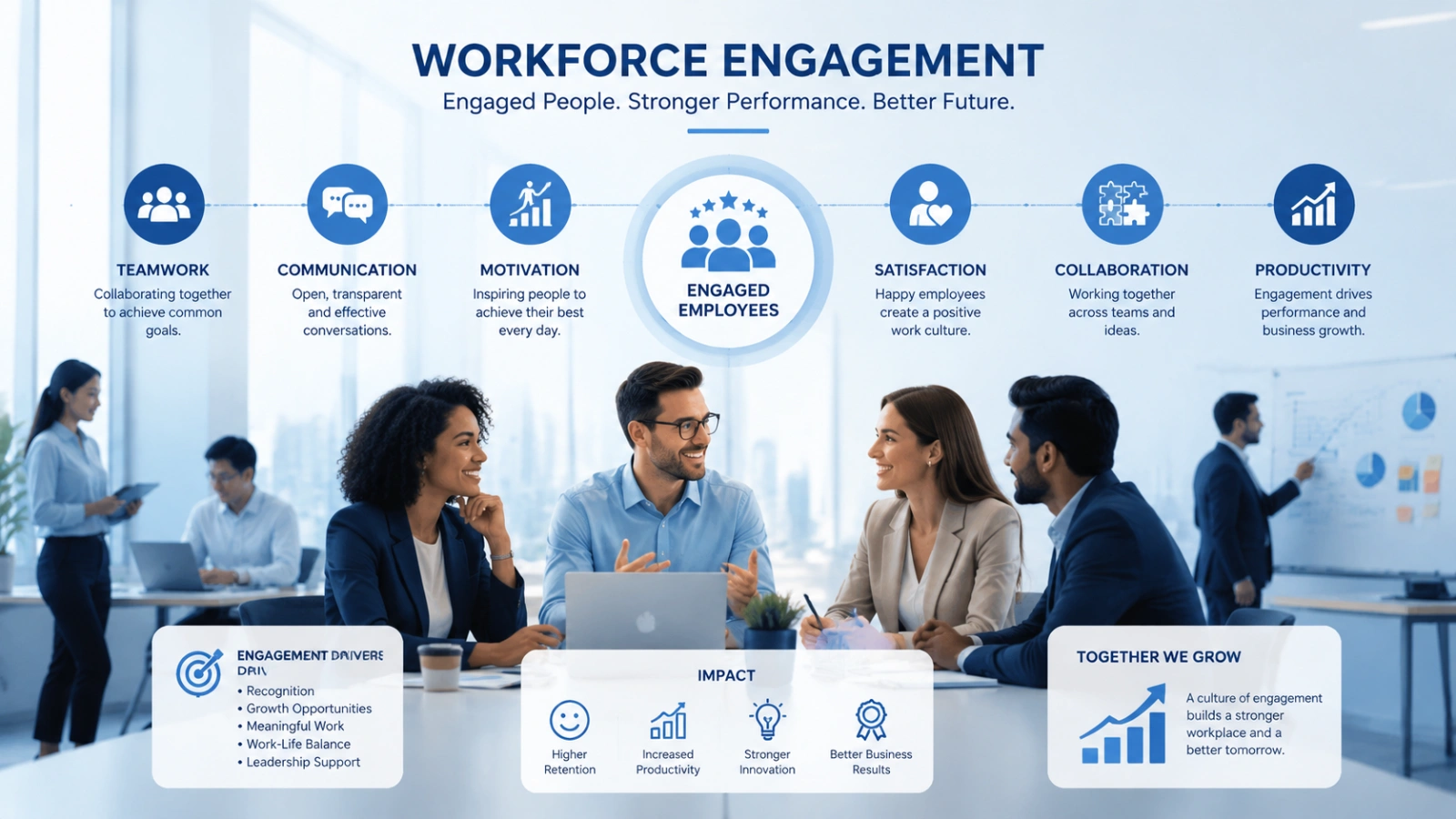

Workforce engagement is more than just whether employees are happy at work. It describes the emotional commitment an employee has to their role, their team, and the organization’s goals. An engaged employee doesn’t just complete tasks; they take ownership, collaborate proactively, and bring discretionary effort to everything they do.
It’s worth distinguishing this from two terms often used interchangeably:
- Employee satisfaction refers to whether employees are content with their job conditions pay, benefits, and workload. Someone can be satisfied but completely disengaged.
- Employee experience is the broader journey across the entire employment lifecycle from hiring to exit.
Workforce engagement sits at the intersection of both: it reflects how emotionally invested someone is in doing meaningful work, day to day.
What Is Workforce Engagement Management?
Workforce engagement management refers to the combination of strategies, processes, and technologies that organizations use to actively monitor, maintain, and improve how engaged their employees are. Rather than waiting for exit interviews to find out why someone left, workforce engagement management helps businesses identify problems early and fix them before they escalate.
Core Components of Workforce Engagement Management
Effective workforce engagement management typically includes:
- Performance tracking — understanding how employees are contributing and where they may be struggling
- Communication systems — ensuring clear, consistent dialogue between teams and leadership
- Recognition programs — acknowledging effort and achievement in meaningful ways
- Employee feedback mechanisms — giving people a voice and acting on what they share
- Workforce analytics — using data to identify trends in engagement, productivity, and retention
- Scheduling and workload balance — preventing burnout through fair distribution of work
Why Businesses Are Investing in It Now
The shift to remote and hybrid work created an engagement gap that traditional management styles couldn’t close. Managers can no longer rely on informal office interactions to sense team morale. Add to this rising burnout rates, intensifying competition for talent, and pressure to do more with less — and it becomes clear why Gartner identifies AI-powered workforce analytics and predictive retention tools as top HR priorities heading into 2026.
Why Workforce Engagement Matters More Than Ever
The modern workplace has fundamentally changed. Employees now expect flexibility, transparency, and purpose, not just a paycheck. When those expectations aren’t met, the consequences are measurable.
Disengaged employees are more likely to:
- Call in sick more often.
- Deliver lower-quality work
- Quietly underperform without flagging issues.
- Leave for competitors who appear more attentive to culture.
Gallup reports that declining engagement is directly linked to lower productivity and weaker organizational performance. Managers, in particular, account for roughly 70% of the variance in team engagement scores, meaning leadership behavior has an outsized impact on how people feel about their work.
Hybrid and remote setups have only amplified this challenge. Without the natural rhythm of office life, many employees feel isolated, overlooked, or unsure of how they’re perceived. Proactive engagement strategies help bridge that gap.
How Workforce Engagement Improves Employee Productivity
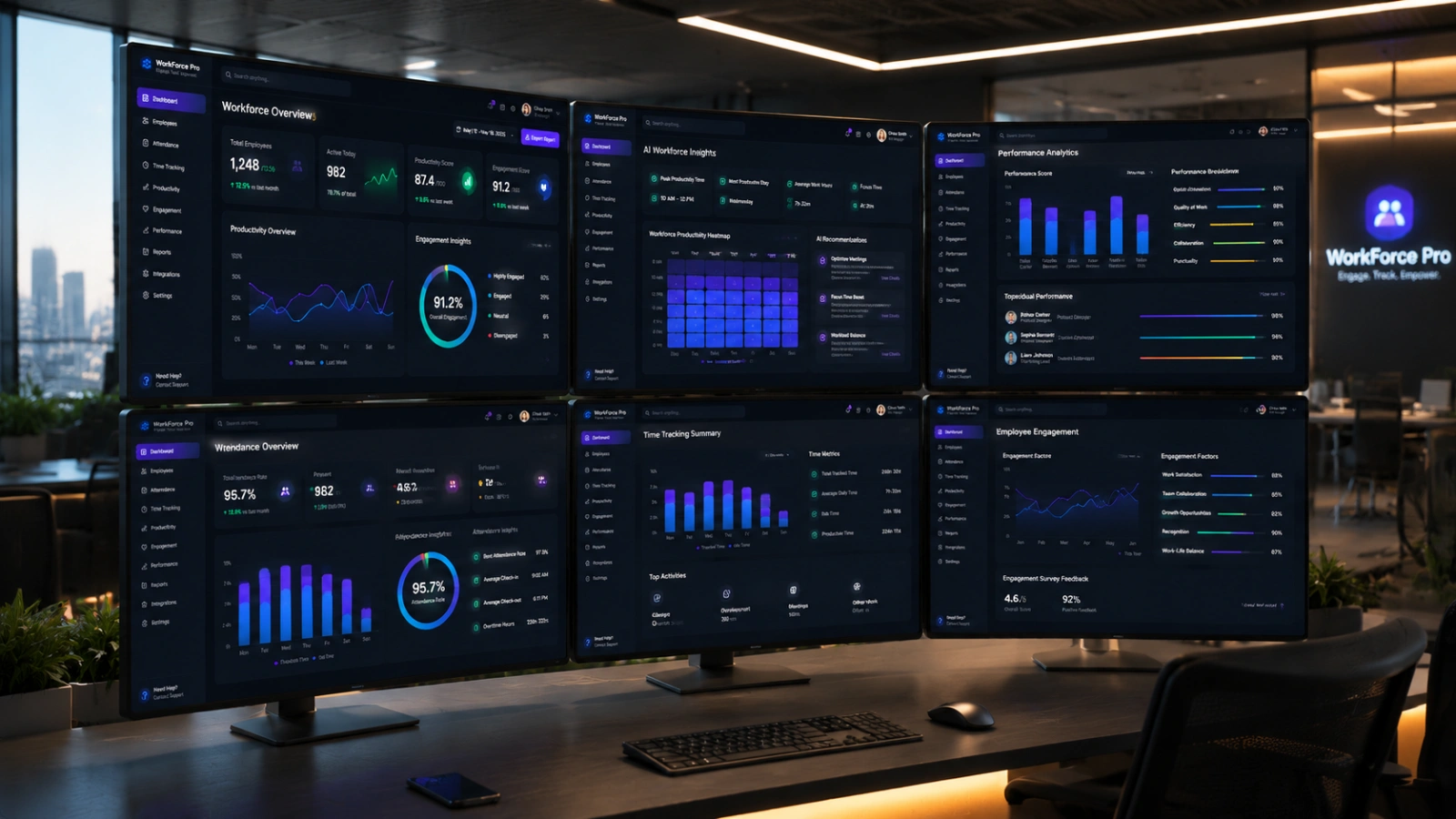
Engaged employees don’t just work harder; they work smarter. Here’s how workforce engagement directly lifts productivity:
Higher Motivation and Accountability
When employees feel connected to the company’s mission, they’re more likely to take ownership of their work. They don’t need to be micromanaged because they’re intrinsically motivated to deliver results. That sense of personal accountability shortens feedback loops and raises output quality.
Better Collaboration and Communication
Engaged teams communicate more openly. They share information, flag problems early, and support each other which reduces duplicated effort and workplace friction. Strong internal communication is one of the clearest markers of a high-performing team.
Reduced Absenteeism and Burnout
Burnout is one of the leading causes of productivity loss. Employees who feel supported, recognized, and appropriately challenged are far less likely to hit a wall. Engagement strategies that monitor workload balance help prevent overwork before it becomes a health issue.
Improved Innovation and Creativity
Psychological safety, the sense that you can share ideas without fear of judgment, is a byproduct of genuine engagement. When employees trust their environment, they think more creatively, raise new ideas, and challenge the status quo in constructive ways.
Faster Workflows Through Technology
Recent research from TechRadar shows that employees using modern workplace tools — including AI-assisted workflows and engagement dashboards report measurably better productivity and work quality. The right technology doesn’t just speed things up; it makes work feel less effortful and more purposeful.
How Workforce Engagement Increases Employee Retention
Replacing an employee is expensive; estimates typically range from 50% to 200% of that person’s annual salary when you factor in recruitment, onboarding, and lost productivity. Engagement is one of the most powerful levers companies have to reduce that cost.
Employees Stay Where They Feel Valued
Recognition doesn’t have to be elaborate. Regular acknowledgment of good work whether from a manager, peer, or leadership, creates a sense of belonging that’s difficult to replicate elsewhere. People don’t leave companies; they leave environments where they feel invisible.
Career Development Builds Loyalty
According to research by Tandem, career development opportunities are among the top factors influencing employee retention in 2026. Mentorship programs, internal promotions, and upskilling initiatives signal that the company is invested in an employee’s future and that loyalty tends to be reciprocal.
Flexible Work Improves Retention
Hybrid and remote flexibility have become baseline expectations for many workers. Organizations that offer genuine flexibility rather than performative policies report higher satisfaction and lower attrition, particularly among top performers who have options.
Leadership Transparency Strengthens Trust
Employees who trust their leaders stay longer. Transparent communication about company direction, honest responses to feedback, and empathetic management styles all reinforce the sense that leadership is on the same team. That trust is hard to build and easy to lose.
Top Workforce Engagement Strategies for HR Teams
If you’re looking to improve engagement in a practical, scalable way, these ten strategies provide a strong starting point:
- Build a culture of recognition, and celebrate contributions consistently and publicly.
- Gather continuous employee feedback, act on what you hear, not just annually.
- Offer flexible work policies that reflect employee needs.
- Invest in career development programs, mentorships, and learning budgets.
- Prioritize mental health support, EAPs, counseling access, and open conversations.
- Model transparent leadership share company direction, not just decisions.
- Encourage team collaboration through structured and informal channels.
- Use AI-powered workforce analytics to surface engagement risks early.
- Personalize the employee experience where possible one size rarely fits all.
- Deploy modern workforce engagement software to manage and measure all of the above.
The Role of Workforce Engagement Software in Modern Businesses
Managing engagement manually — through surveys, one-on-ones, and gut instinct — doesn’t scale. Workforce engagement software gives HR teams and managers the infrastructure to do this systematically and with data behind every decision.
Modern platforms help businesses:
- Track productivity patterns and flag anomalies
- Monitor employee sentiment over time
- Streamline communication across distributed teams
- Automate reporting so managers focus on people, not spreadsheets
- Identify disengagement risks before they become resignation letters
Research from IT Pro found that outdated workplace tools directly harm morale — with around 20% of employees reporting feeling exhausted and demoralized by legacy systems. The technology a company chooses signals how much it values its people’s time and experience.
Key Features to Look For
- Real-time productivity analytics
- Attendance and activity tracking
- Engagement dashboards for managers
- Workforce insights and trend reports
- Task management and workload visibility
- AI-powered analytics for predictive decision-making
How EmpMonitor Helps Improve Workforce Engagement
EmpMonitor is a workforce productivity and engagement monitoring platform built for the demands of modern, distributed teams. It gives businesses the real-time visibility they need to keep employees engaged, supported, and performing without resorting to micromanagement.
Real-Time Employee Productivity Insights
EmpMonitor tracks employee activity across systems, giving managers a clear and objective picture of how work is actually getting done. Instead of guessing at productivity levels or relying on self-reporting, leaders can see workflow patterns, application usage, and output trends — and respond proactively when something looks off.
Workforce Analytics for Better Decision-Making
The platform’s analytics capabilities go beyond simple time tracking. EmpMonitor surfaces performance insights, attendance data, and team-level trends that help HR leaders make informed decisions about workload distribution, team structure, and recognition opportunities. Data-driven management is simply more accurate and more fair.
Remote and Hybrid Workforce Management
For companies managing distributed teams, EmpMonitor provides the visibility that physical proximity used to offer. Managers can monitor activity across locations and time zones, ensure balanced workloads, and identify team members who may be struggling — all without needing to be in the same room.
Reducing Burnout Through Smarter Monitoring
One of EmpMonitor’s less obvious but highly valuable capabilities is its ability to surface overload patterns before they become a burnout crisis. When certain employees are consistently working beyond healthy limits, or when specific workflows are creating bottlenecks, EmpMonitor flags these signals so managers can intervene early.
Enhancing Accountability Without Micromanagement
There’s a meaningful difference between watching employees and supporting them. EmpMonitor is built around the former approach in a constructive sense: giving teams transparent, measurable benchmarks they can track themselves, and giving leadership the data to coach rather than hover. When performance expectations are visible and consistent, accountability becomes a shared value rather than a top-down imposition.
Common Workforce Engagement Challenges

Even well-intentioned organizations run into obstacles. The most common include:
- Burnout from sustained high workloads with insufficient recovery
- Communication gaps between leadership and front-line employees
- Lack of recognition — effort going unacknowledged over time
- Outdated technology that creates friction rather than removing it
- Low manager engagement — disengaged managers rarely lead engaged teams.
- Remote work fatigue — the cumulative toll of digital-only interaction
A recent DHR Global report highlights burnout and poor organizational communication as the leading drivers of engagement decline in 2025–2026. Addressing these requires both cultural change and the right tools.
Also Read
7 Reasons Why Your Company Needs Workforce Management Tool
6 Reasons Why Your Business Needs Digital Workforce Management
Future Trends in Workforce Engagement
The way companies approach engagement is evolving fast. Here’s what’s shaping the next few years:
AI-Powered Employee Experience — AI is moving from back-office automation into the heart of the employee experience: personalized onboarding, intelligent workload suggestions, and real-time sentiment analysis.
Predictive Workforce Analytics — Instead of reacting to disengagement after the fact, companies will use predictive models to identify at-risk employees before they disengage or resign.
Personalized Engagement Strategies — Blanket engagement programs are giving way to tailored approaches based on individual preferences, career stage, and working style.
Hybrid Workforce Optimization — As hybrid becomes the norm rather than the exception, tools that bridge the in-office/remote divide will be essential.
Human-Centric Leadership — Gartner identifies employee mental fitness and empathetic management as core competencies for CHROs heading into 2026, reflecting a broader shift toward leadership that prioritizes people alongside performance.
Final Thoughts
Workforce engagement is not a soft metric — it’s a direct driver of productivity, retention, and business performance. Engaged employees do better work, stay longer, and contribute to a culture that attracts more talent like them. Disengaged employees do the opposite.
The companies winning this challenge in 2026 are those that treat engagement as a system — with clear strategies, strong leadership, and the right workforce engagement software to bring it all together. Workforce engagement management is no longer optional for businesses that want to compete for top talent and sustain operational performance over the long term.
If you’re ready to move from guesswork to data-driven engagement, EmpMonitor gives you the tools to make it happen starting today.
Frequently Asked Questions
What is workforce engagement management?
Workforce engagement management refers to the strategies, processes, and technologies businesses use to monitor and improve how engaged, motivated, and productive their employees are. It encompasses everything from feedback systems and recognition programs to workforce analytics and scheduling tools.
Why is workforce engagement important?
Disengaged employees cost businesses through reduced productivity, higher absenteeism, and increased turnover. Engaged employees are more motivated, collaborative, and loyal — directly improving business outcomes.
How does workforce engagement improve productivity?
Engaged employees take greater ownership of their work, communicate better with teammates, and are less likely to burn out. They bring initiative and accountability to their roles rather than simply meeting the minimum expectations.
Can workforce engagement reduce employee turnover?
Yes. Employees who feel valued, recognized, and connected to the organization’s goals are significantly less likely to leave. Recognition, career development, and transparent leadership are among the most effective retention levers.
What is workforce engagement software?
Workforce engagement software is a digital platform that helps businesses track productivity, monitor employee sentiment, manage distributed teams, and identify engagement risks all in one place.