

Effective workplace communication forms the backbone of every successful organization. When employees can express ideas clearly, listen actively, and respond thoughtfully, entire teams perform at higher levels. Yet most organizations struggle with this fundamental skill. Research shows that poor workplace communication costs companies thousands of dollars annually in lost productivity, missed deadlines, and damaged relationships.
That’s why leaders are actively looking for ways to Improve Workplace Communication For Better Results, not as a soft skill, but as a measurable business advantage. Better communication isn’t something you’re born with; it’s a skill you can develop, practice, and master with dedication and the right internal communication tool.
Listen To The Podcast Now!
Why Communication Matters in Your Organization?


Communication isn’t just about exchanging messages; it’s the foundation that keeps an organization running smoothly. In today’s fast-moving work environment, where teams are spread across different cities, time zones, or even continents, the way we communicate can make or break productivity. When people clearly understand what’s expected, everything moves faster. When they don’t, confusion creeps in, projects stall, and unnecessary stress builds up.
Good workplace communication helps teams stay connected and confident. Employees feel more engaged because they know their opinions matter, they understand the bigger picture, and they feel supported instead of left guessing. It also builds trust—when leadership is open and transparent, people feel more secure, more aligned, and more willing to collaborate.
Strong communication encourages fresh ideas, too. When people aren’t afraid to speak up, they share smarter solutions, spot problems earlier, and help each other grow. And as a bonus, it reduces misunderstandings that can lead to conflicts or costly mistakes.
At the end of the day, organizations that communicate well create workplaces where people enjoy working, stay longer, and perform better. Teams move with clarity. Everyone understands their priorities. And the entire company works toward the same goals with fewer hiccups and more confidence. That’s why communication isn’t just important; it’s essential.
The True Financial and Cultural Cost of Poor Communication:
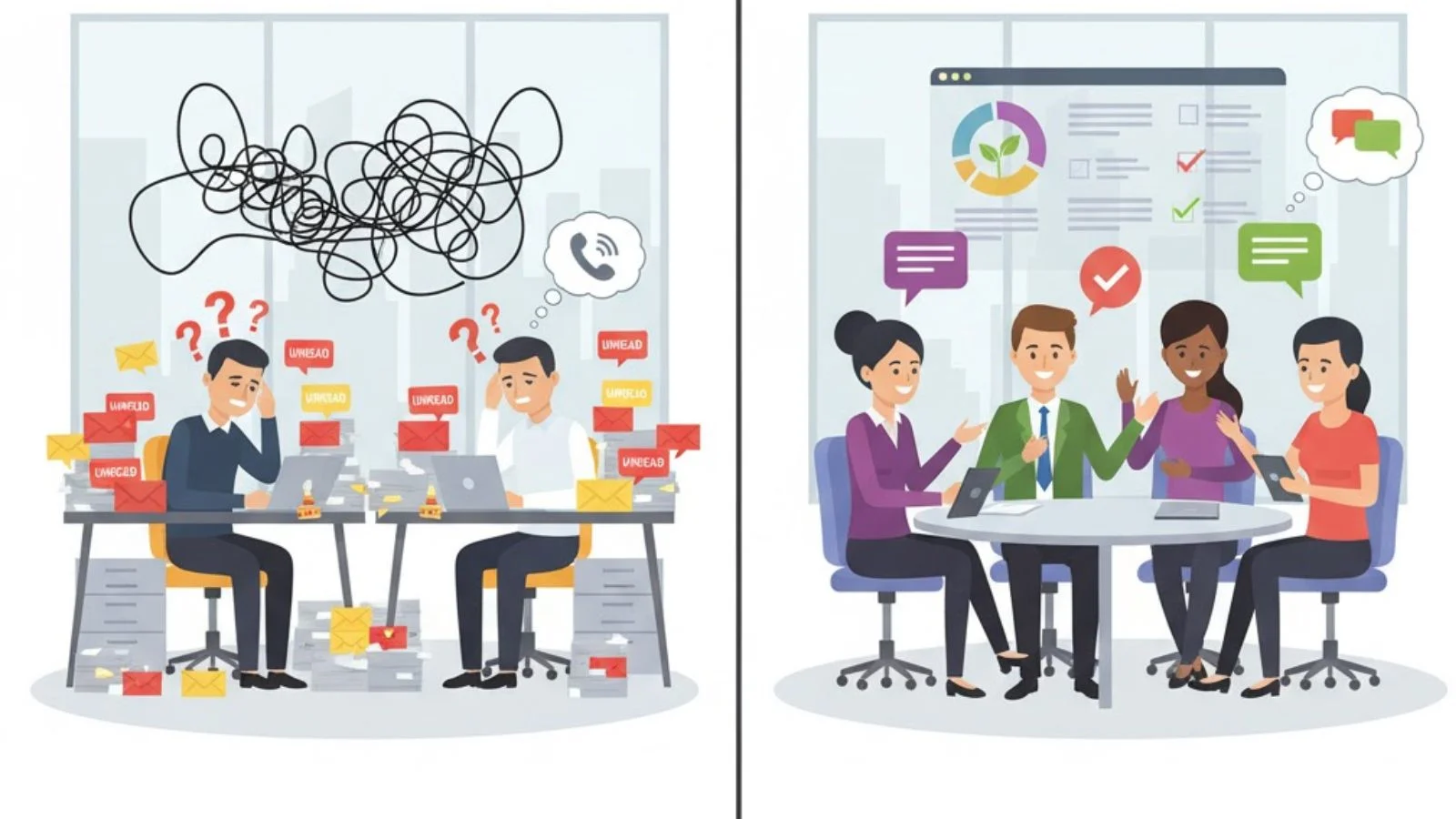
When communication in the workplace is ineffective, consequences ripple throughout your entire organization. Employees spend extra time clarifying expectations. Projects launch with incorrect specifications. Talented people leave because they feel disconnected from leadership. Conflict festers because problems aren’t addressed directly.
Studies consistently show that companies with strong internal communication experience 25% higher productivity rates compared to competitors. They also have significantly lower turnover and better employee satisfaction scores. When people understand how their work contributes to larger organizational goals, know what’s expected, and feel heard by management, they’re more engaged, committed, and likely to stay long-term.
The financial implications are staggering. The average employee loses roughly two hours per week due to poor workplace communication. Multiply that across your entire organization, and you’re looking at massive lost productivity. Beyond numbers, there’s the emotional toll. Employees in poor communication environments experience higher stress, lower morale, and reduced job satisfaction.
Five Essential Communication Skills That Transform Teams:
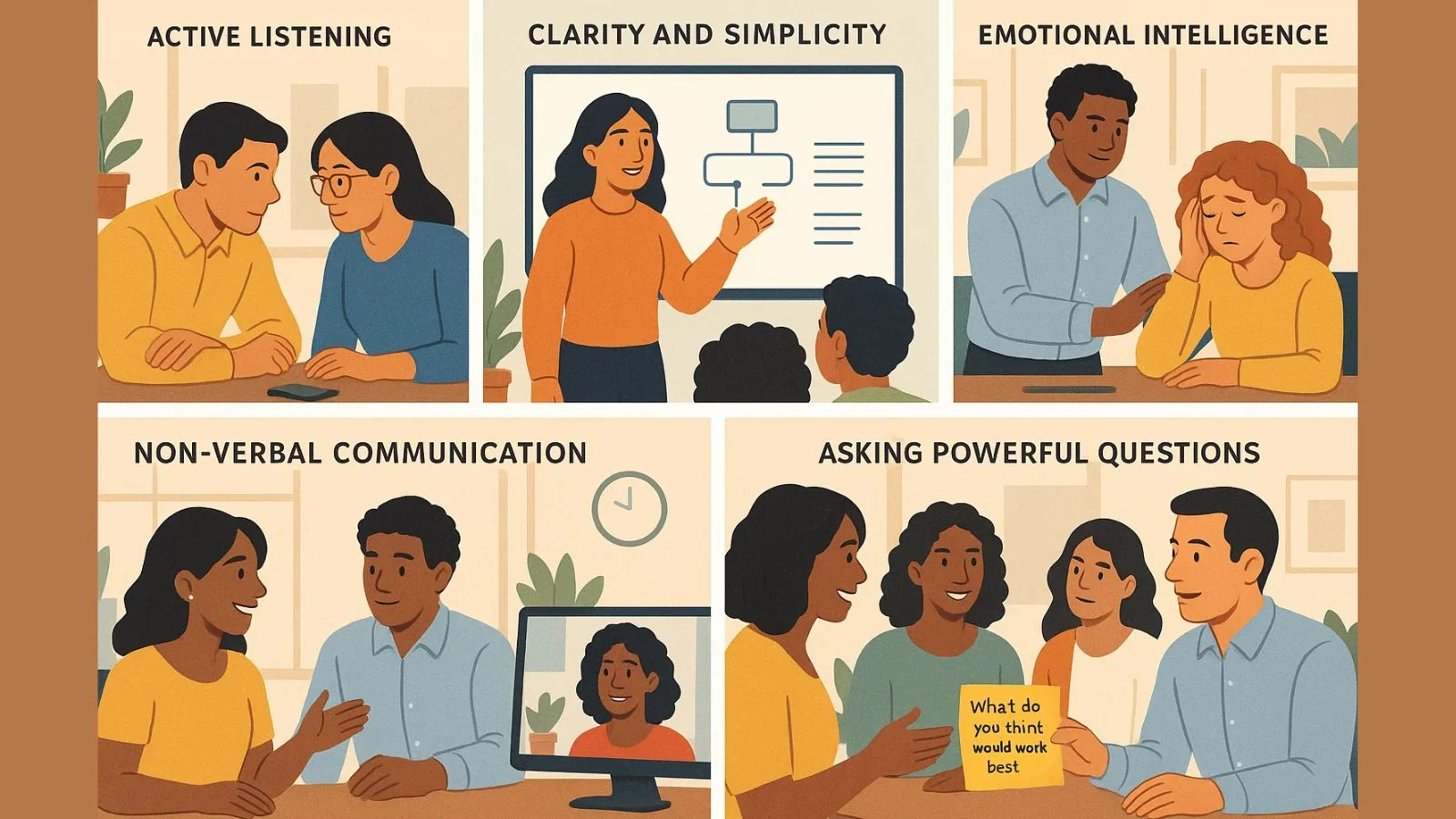
Improving workplace communication requires more than good intentions. It demands specific, learnable skills you can develop over time with intentional practice. Here are five impactful skills that create tangible results.
1. Active Listening: The True Foundation:
Active listening is often overlooked because it seems passive. In reality, it’s one of the most powerful communication skills available. When you listen actively, you’re fully present with another person. You’re not planning your response. You’re not checking your phone. You’re genuinely trying to understand their perspective and emotions.
Active listening involves paying attention to both words and underlying emotions. Ask clarifying questions like “Can you help me understand?” or “What’s the biggest challenge?” Pause before responding and reflect: “So what I’m hearing is…” This approach makes people feel respected and valued, strengthening workplace communication throughout your team.
2. Clarity and Simplicity in Expression:
Many professionals confuse complexity with intelligence. They use jargon and lengthy sentences, thinking it sounds authoritative. The opposite is true. The best communicators make difficult ideas simple and understandable. Strong communication skills include explaining complex concepts clearly without unnecessary jargon.
When giving instructions, be specific about what success looks like. Instead of “Handle this professionally,” say “Complete by Friday at 3 pm, incorporate feedback in the final report, and send for review by 2 pm Thursday.” Use conversational language that sounds like how humans naturally talk.
3. Emotional Intelligence and Genuine Empathy:
Understanding emotions, both yours and others’, is crucial for workplace communication that creates positive outcomes. Emotional intelligence means recognizing when someone is frustrated, anxious, or discouraged, and responding with appropriate sensitivity. This doesn’t mean blurring professional boundaries. It means acknowledging emotions: “I can see this deadline stresses you.
4. Non-Verbal Communication and Authentic Presence:
What you don’t say often matters as much as what you do. Non-verbal communication includes body language, facial expressions, tone, and overall presence. Maintaining eye contact signals full attention. Leaning forward shows genuine interest. When your tone matches your words, you build credibility. In remote settings, this becomes even more critical. Your camera presence, response speed, and punctuality all communicate respect or indifference. Strong workplace communication recognizes that every interaction sends a message about how much you value the other person and their contributions.
5. Asking Powerful Questions That Open Dialogue:
Questions are underrated tools in professional environments. Instead of telling people what to think, ask questions that help them discover solutions. Powerful questions open conversations and demonstrate genuine curiosity about someone’s perspective.
Examples include: “What do you think would work best?” “How would you approach this?” “What resources would help?” “What’s preventing resolution?” These questions invite collaboration and make people feel like valued contributors rather than order-takers. This dramatically improves workplace communication because people become active participants in solutions.
Practical Strategies for Implementing Better Workplace Communication:
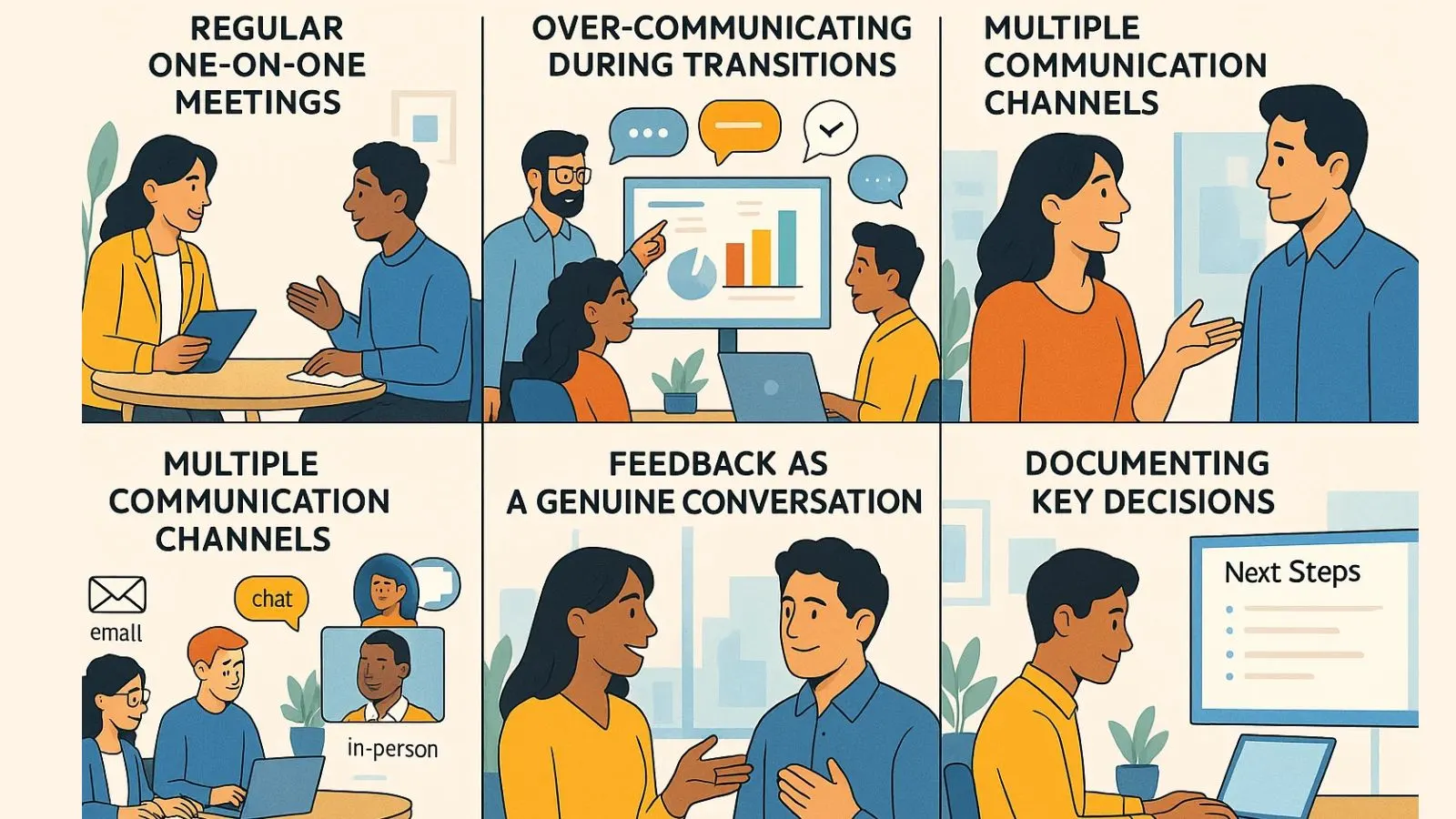
Understanding skills intellectually is different from implementing them daily. Here are concrete strategies you can start using immediately in your organization.
1. Schedule regular one-on-one meetings:
These shouldn’t be reserved only for performance reviews. Monthly or bi-weekly check-ins where you listen and ask how someone is doing strengthen relationships significantly and prevent small issues from becoming major problems.
2. Over-communicate during transitions:
When things change, projects shift, new initiatives launch, and structures reorganize, communicate more frequently than necessary. Uncertainty breeds anxiety. Clear, frequent updates provide reassurance and keep people grounded.
3. Create multiple communication channels:
Some messages work in emails. Others need real-time conversation. Some require written documentation. Effective workplace communication uses the right channel for the right message. Quick decisions? Instant message. Complex explanations? Email or video call. Important announcements? All-hands meeting plus written summary.
4. Make feedback a genuine conversation:
Instead of delivering feedback as verdicts, frame them as conversations. Ask what the other person thinks first. Listen to their perspective. Then share your observations. This creates dialogue rather than defensiveness.
5. Document key decisions and next steps:
After important conversations, send a brief recap: “Here’s what we decided and who’s responsible for each piece.” Using a meeting note taker automatically captures these key decisions, action items, and responsibilities and shares them with the entire team. This prevents misunderstandings and creates accountability moving forward.
Also Read:
How To Improve Workplace Communication For Better Results?
6 Reasons That Make Staff Communication More Important Than Ever
How To Use Employee Monitoring To Improve Workplace Communication?
Effective workplace communication goes beyond emails and meetings; it’s about understanding workflows, identifying bottlenecks, and ensuring teams stay aligned. Employee monitoring tools, when used ethically and transparently, provide valuable insights into how teams collaborate, respond, and engage during work hours. Instead of micromanaging, the goal is to foster clarity, faster decision-making, and smoother coordination across departments.
How EmpMonitor Helps Enhance Workplace Communication
- Real-Time Activity Monitoring
EmpMonitor shows live activity status such as active, idle, or offline. This helps managers know the best time to reach team members, reducing delays and unnecessary follow-ups. - Automatic Time Tracking & Timesheets
With precise time logs for tasks and projects, communication becomes clearer—everyone knows what is being worked on, for how long, and where assistance may be required. - Productivity Reports & Behavior Insights
By analyzing productivity trends, managers can identify workload imbalances, communication gaps, or process issues and address them through timely discussions or resource allocation. - Screenshots & Screen Recording (Ethically Used)
When used transparently, these features offer context for misunderstandings in task execution. It helps resolve disputes or confusion without lengthy back-and-forth communication. - Project & Task Tracking
EmpMonitor’s project insights make it easier for teams to communicate priorities, deadlines, and dependencies. Everyone stays aligned on who is handling what part of a task. - Alerts & Notifications
Automated alerts on policy violations or unusual behavior allow quick communication and faster problem-solving before issues escalate. - Remote Workforce Visibility
For distributed teams, EmpMonitor bridges communication gaps by offering visibility into availability, workflow progress, and collaboration patterns, making remote coordination smoother.
Common Workplace Communication Mistakes to Avoid:
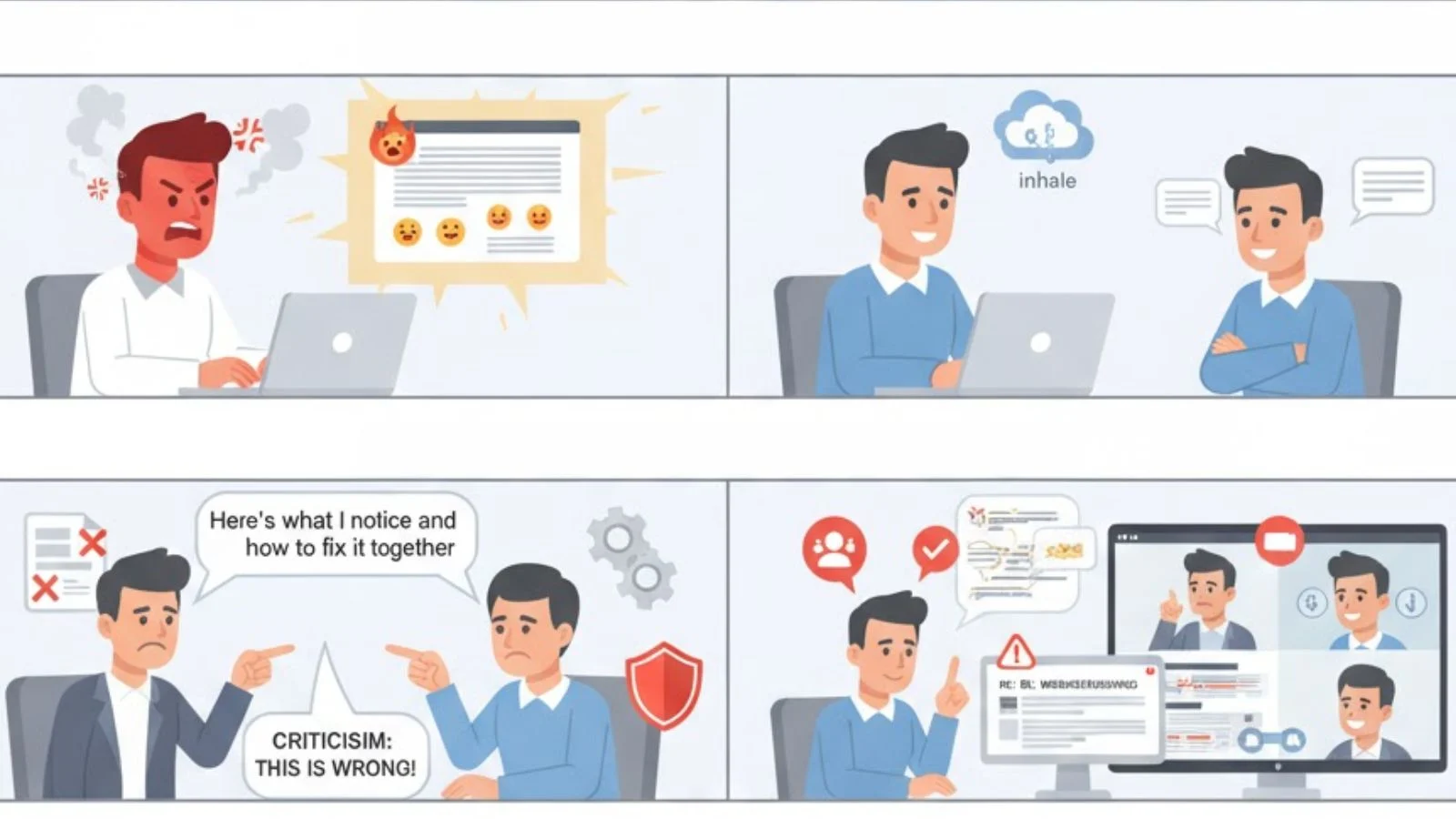
Even with the best intentions, certain patterns sabotage workplace communication effectiveness. Being aware of these helps you catch yourself before they damage relationships or derail projects.
1. Assuming understanding without verification.
You explain something once and assume everyone understood. Then projects derail because people misinterpret instructions. Always verify by having team members explain back what they heard.
2. Letting emotions drive responses.
When frustrated or angry, pause before communicating. Sleep on angry emails. Talk to trusted colleagues. Ensure messages are driven by facts and solutions, not raw emotions.
3. Delivering criticism without context.
Jumping to “This is wrong” without explanation makes people defensive. Provide context: “Here’s what I notice and why it matters. Here’s how we fix this together.”
4. Over-relying on email for complex topics.
Email lacks tone and nuance. What you intend as neutral can read as harsh. Complex topics deserve real-time conversation where you can read reactions.
5. Ignoring quieter voices.
Louder personalities dominate meetings. Intentionally draw out quiet team members: “We haven’t heard from you. What are your thoughts?” This ensures diverse perspectives and makes everyone feel included.
Making Better Workplace Communication Your Competitive Advantage:

Workplace communication excellence isn’t a nice-to-have; it’s a genuine competitive advantage that separates thriving companies from struggling ones. Organizations where people communicate clearly, listen actively, and collaborate effectively consistently outperform those where communication is poor or neglected.
They retain their best talent, execute projects faster with fewer costly errors, and innovate more readily because information flows freely through all levels. The journey toward better workplace communication starts with real awareness and genuine commitment from leadership.
It continues through consistent practice and refinement as you learn what works in your specific culture. You won’t master these skills overnight, and honestly, that’s completely fine. Focus on developing one skill at a time. Pick one strategy to implement this month and actually track the results you’re seeing. Notice what changes, celebrate small wins, and build from that momentum.
Your organization’s success ultimately depends on how well people understand each other, genuinely trust one another, and work together toward shared goals. Everything flows from communication, from customer satisfaction to employee retention to your bottom-line financial performance. By investing seriously in these skills and implementing systematic approaches to measurement and continuous improvement, you’re investing in the essential foundation that makes everything else your organization does actually possible.
Conclusion:
Better workplace communication is genuinely the cornerstone of organizational success; it’s not just some management buzzword thrown around in corporate meetings. By mastering active listening, expressing yourself with clarity, developing emotional intelligence, and asking powerful questions, you create environments where teams naturally thrive, and real results actually flourish.
The journey requires commitment and consistency, but the rewards are substantial: increased productivity, higher employee retention rates, stronger relationships that last, and measurably better project outcomes. Communication isn’t a destination you reach and then forget about. It’s an ongoing practice that requires continuous attention and refinement.
Start implementing these strategies today, measure your progress honestly, and watch your organization transform from the inside out. The path to meaningful improvement starts with just one conversation approached differently. Choose to listen more deeply than usual, ask better questions that make people think, and genuinely notice what happens next. Small changes in how you communicate can create surprisingly big results across your entire organization.
FAQ’s:
Q1: How long does it take to improve workplace communication?
Ans: You’ll notice small improvements within weeks, but meaningful cultural change typically takes three to six months of consistent practice and reinforcement across your organization. Different teams move at different speeds depending on their starting point and commitment level.
Q2: Should we communicate differently in remote versus in-person settings?
Ans: Yes, absolutely. Remote communication requires more deliberate structure, much clearer documentation, and intentional relationship-building since casual water cooler interactions don’t happen naturally like they do in physical offices. You have to be more intentional.
Q3: How do I handle communication with difficult team members?
Ans: Use active listening, emotional intelligence, and ask genuine questions first. Often, so-called “difficult” communication improves dramatically when people feel truly heard and understood first. Sometimes resistance melts away when someone realizes they’re actually being listened to.
Q4: Can communication skills really be taught?
Ans: Absolutely, yes. Communication is a learnable skill, not a fixed talent you’re born with. Like any skill, playing an instrument, writing, or coding, it improves significantly with practice, honest feedback, and intentional effort over time. Everyone can get better at this.
Q5: What if my team is resistant to changing how we communicate?
Ans: Resistance is normal when changing any organizational behavior. Start by explaining why better workplace communication matters to them personally, how it affects their workload, stress levels, and job satisfaction. Model the behaviors you want to see, celebrate small wins, and be patient.