



One of the most common and expensive problems for every organization is time theft. It’s not easy to instantly find out if there is someone who is stealing work time in your business.
Some companies might even take a long time to discover whether their employees are really stealing time from work or not. And that is not only about employees, but in case you have hired contract workers for billable hours, they may also steal some extra money from your pocket, even when they are not productive enough.
What makes it even more difficult to recognize is that its effect won’t be visible to you for quite a long time. But as time goes by, you may notice that even when you have a sufficient workforce, the tasks and projects are not completed on the expected time. And due to that, it’s costing you more than what you need to spend, actually.
It’s just like a leaking pipeline, which starts with dripping but then gradually spills a lot until it gets fixed completely. So to address all such issues, in this article, we are going to provide you with a detailed explanation of what time theft really is and how you can detect and control it.
Play the audio:
What Is Time Theft?
If you want to define time theft or ask what time theft is exactly, the simplest answer is when the person you have hired is stealing work hours and making you pay for the time they haven’t been productive. Whether it’s time stealing, attendance fraud, time-sheet fraud, or time clock fraud, all such things will come under the time theft category.
In fact, there are many ways time theft could happen in an organization, which makes it even more difficult to identify. Modern workplace time theft goes beyond late arrivals and early logouts. It now includes fake online activity, excessive social media usage during work hours, inaccurate time tracking, delayed task completion, and staying logged in without actively working. Besides that, there are some other ways employees may sneak on to get a bit more money than what they really deserve. For example, these are some of the time thefts, which seem way more offensive to the eyes of employers:-
- Timesheet fraud
- Doing personal activities during production hours
- Unauthorized overtime
- Proxy attendance
- Buddy punching etc
With so many such issues, it is quite a struggle for employers to detect the real problem and take preventive measures. Now that most organizations have adapted to a remote work culture, companies have become more susceptible to time theft problems. Though the remote work option has brought revolutionary changes for the business. And it seems quite favorable for both employers and employees. But time theft problems are still quite expensive.
How’s Time Theft Costing You More?
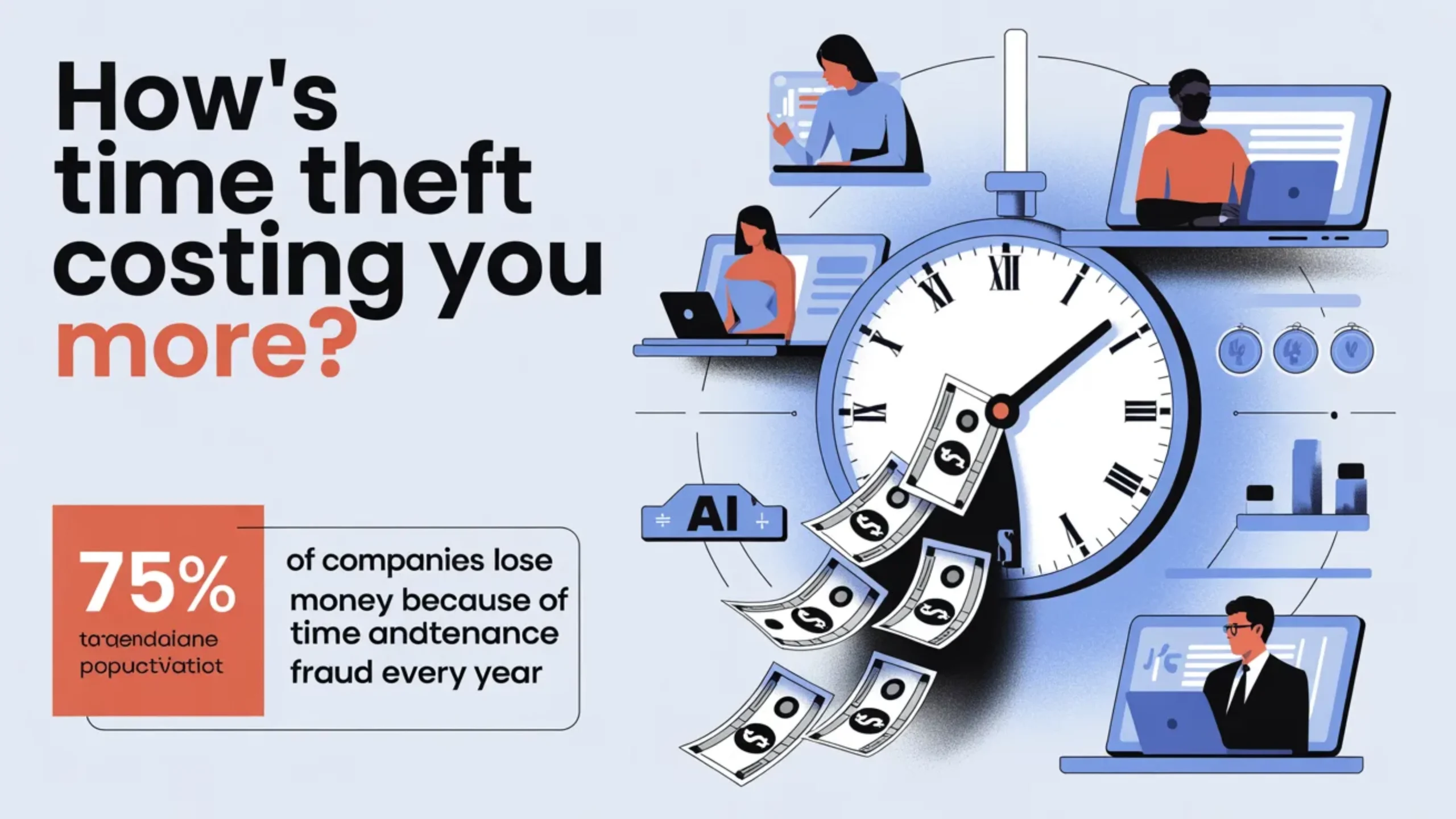

Employee time theft continues to be a major productivity challenge for modern businesses. With the rise of remote and hybrid work, companies are increasingly investing in workforce analytics, productivity tracking, and AI-powered attendance management systems to improve operational efficiency and reduce unproductive work hours. As we have already said, things like buddy punching and attendance fraud have also become quite common these days. And according to a report, 75% of companies lose money because of time and attendance fraud every year.
Costing You More Than Just Money
As you can clearly see, due to fraudulent time reporting, companies have to take on the overload of expenses. But that’s not the only burden for employers. It also hurts the productivity example, and work environment in your business.
For example, let’s say that a single employee is fudging work time during production hours. However, this may also lead to causing more work burden on other team members. And it would make them lose their motivation to be more productive in their work. Usually, when such things happen, underperformers go unnoticed, while your other employees also feel unrewarded for their hard work.
So, it is quite necessary to stop employee time theft in your business. But do you know how you can achieve that?
How Can Businesses Prevent Time Theft In 2026?
Now that is a $400 billion question to which every employer wants to get an answer. But it’s not like rocket science. Sure, you need to come up with some strong policies and a smart system to enhance transparency in your work. Here are some of the ways that might help you.
- Set clear and realistic expectations for your employees so that they can also complete their tasks and projects on time.
- Improve communication with your workforce and try to get in their shoes. This would not only help you to learn about time frauds, but you may also pick up nitty-gritty issues and complications in your business.
-
Create transparent workplace policies with clear measuring productivity expectations, attendance guidelines, and performance goals to encourage accountability across remote and in-office teams.
- Employ the timesheet management software that can help you to remotely monitor the work hours and attendance of your employees.
-
Businesses can use workforce analytics tools to understand app usage trends, productive work patterns, idle time, and workflow efficiency without relying on excessive surveillance. This way, you can find out if they are really working or using social media and other unproductive apps during production hours.
- Connect the payroll of your employees based on their work time and attendance.
In many cases, we have seen that some employees take advantage due to the separate management of payroll and work time. It creates a gray area where employees can shave off some work time and even get paid in the end.
Besides that, even if you want to implement all these factors won’t be easy for you. But there you have the solution to manage all these issues- EmpMonitor.
It is an AI-powered workforce management platform that helps businesses monitor productivity, attendance patterns, work engagement, and operational efficiency across remote, hybrid, and office teams. So that you can easily determine whether your employees are committing time theft or not. Accordingly, you can warn those who are not doing their job correctly and reward those who are doing really great jobs.
Employers Can Also Commit Time Theft
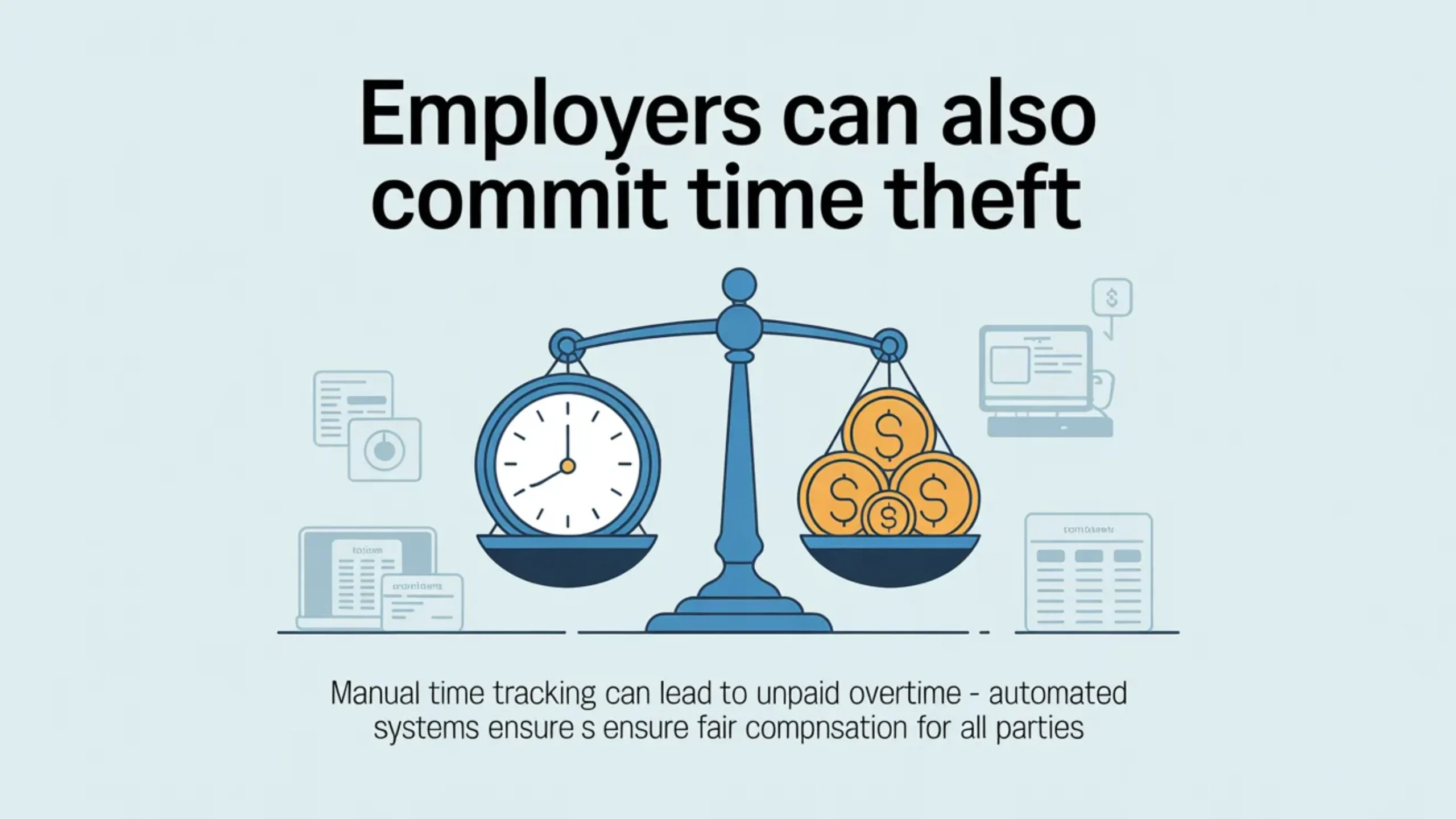
On the other hand, whether you believe it or not, employer time theft is also a real thing. Often, it happens in many organizations that employees won’t be able to get their overtime pay. One of the reasons why such things happen is because of manual time and attendance management. So, having a work time management software like EmpMonitor is not only advantageous for employers but also for employees. Because it shows you an accurate analysis of the overtime work of every employee, so that they can get paid fairly.
Why You Should Get EmpMonitor?
Lucky for you that EmpMonitor provides you with all such features that would help you to keep track of work time in your business. It is designed for use across various industries, including the IT sector, Finance, Legal Services, Educational institutes, Banking, and Health Care business, etc.
Here are some of the best work time tracking features of EmpMonitor.
Easy to set up: It’s quite easy to set up within an employee’s computer without interrupting their regular work activities.
Productivity tracking: It can help you to keep track of productivity from each and every employee in your organization.
Websites and apps usage: You can also find out what apps and websites your employees are using during production hours.
Activity-based work time analysis: Based on the on-screen activities, you can know whether they are active or idle during production hours.
Activity insights: The platform provides productivity insights, workflow visibility, and real-time activity analytics to help managers improve team performance and accountability.
Report generation: Every single data from each employee’s computers is stored in the cloud memory, which you can access anytime you want.
Conclusion:
If you like this article, please share it with others. And in case you have any doubts, please mention them in the comments.
FAQs About Time Theft
What is time theft in the workplace?
Time theft happens when employees are paid for time they are not actively working or contributing productively. It can include inaccurate timesheets, excessive breaks, personal activities during work hours, unauthorized overtime, and fake attendance reporting.
Is time theft illegal?
Yes, intentional time theft can be considered workplace fraud because employees are receiving payment for unworked hours. Businesses usually address it through company policies, attendance systems, and productivity management tools.
What are the most common examples of time theft?
Some common examples of time theft include buddy punching, fake remote activity, staying logged in without working, inaccurate timesheets, excessive social media usage during work hours, and taking longer breaks than allowed.
How does time theft affect businesses?
Time theft can reduce productivity, increase payroll costs, delay project completion, and negatively impact team performance. Over time, it may also create unfair workloads and reduce employee morale.
Why is time theft increasing in remote and hybrid work environments?
Remote and hybrid work environments provide employees with greater flexibility, but they also make manual attendance tracking software more difficult. Without proper workforce visibility, businesses may struggle to identify unproductive work patterns and inaccurate time reporting.