



How one of the leading digital marketing agencies with a globally distributed remote workforce moved from missed deadlines and limited visibility to measurable productivity, happier clients, and a 42% improvement in billable efficiency in just 60 days.
Industry: Digital Marketing & Creative Services
Company Size: 65 employees
Work Model: 100% Remote (8 countries)
Challenge: Inconsistent output, lack of visibility into real work hours, and recurring deadline delays
Solution: EmpMonitor – Workforce Productivity & Employee Monitoring Suite
Results: 42% increase in billable efficiency | 38% fewer missed deadlines | $90K annual savings
The Background: Creative Chaos at Scale
One of the leading digital marketing agencies in the creative services space had experienced rapid growth since its founding in 2019. What started as a small six-person team quickly expanded into a 65-member remote workforce operating across eight countries.
The agency worked with a wide range of clients including eCommerce brands, SaaS startups, and regional retail chains. As demand increased, so did the number of projects and client expectations.
From the outside, the company appeared to be thriving.
Internally, however, leadership teams were beginning to notice growing operational friction.
Creative work is inherently difficult to measure. A copywriter might spend hours thinking through an idea before writing a single line. Designers often work in deep creative sessions where visible output isn’t always immediate.
Because of this, managers had very limited visibility into what was actually happening during the workday.
As the operations team later explained, remote work offered incredible flexibility and creative freedom, but without the right systems in place, it could easily turn into unstructured productivity.
The Problem: Productivity Was Anybody’s Guess
The company’s productivity issues were not caused by a lack of talent or motivation. Instead, they stemmed from a lack of reliable systems to track and analyze work patterns.
Three core problems consistently surfaced during leadership meetings.

1. No Reliable Measure of Actual Work Time
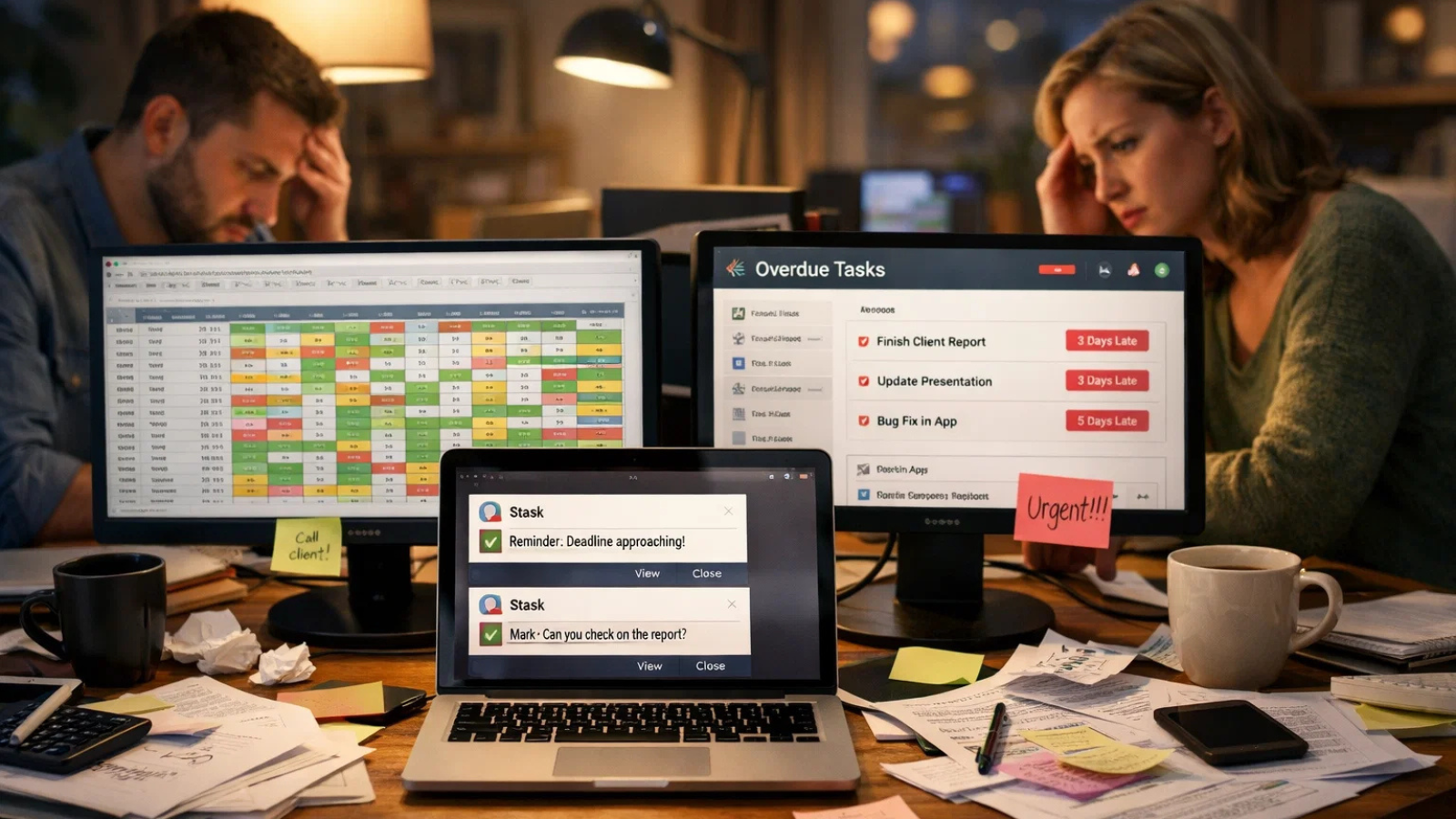
Team members logged their hours in a spreadsheet-based tracker. However, these hours were entirely self-reported.
Managers had no way to determine whether logged time represented focused work, multitasking, or long idle periods.
Since client invoices were based on these reported hours, the finance team grew increasingly concerned about billing accuracy and operational transparency.
2. Missed Deadlines Were Becoming Frequent
Over a 12-month period, approximately 34% of projects were delayed or missed their deadlines.
Initially, clients were understanding. But repeated delays began affecting relationships.
Two major retainer clients formally raised concerns, and leadership realized that the issue was somewhere in the execution pipeline, but they lacked the data needed to identify where problems were occurring.
Without measurable insights, project retrospectives often turned into speculation rather than solutions.
3. Remote Collaboration Bottlenecks Were Invisible
The agency already used modern collaboration tools including Slack, Notion, and Asana.
On the surface, the workflow appeared organized.
In reality, tasks frequently stalled between departments. A designer might wait days for copy approval. An account manager could unknowingly repeat client outreach because handoff notes were incomplete.
Because these delays weren’t visible in real time, work often remained marked as “in progress” despite being effectively stalled.
Leadership recognized that the company needed data-driven visibility, not just additional meetings or check-ins.
“We kept having the same conversations in retrospectives. Missed deadlines, unclear ownership, hours that didn’t add up. We needed data, not opinions.”
The Discovery: Why EmpMonitor

The operations team spent several weeks evaluating workforce analytics and productivity monitoring solutions.
They needed a platform that went beyond simple time tracking.
Three factors ultimately made EmpMonitor the preferred choice.
Productivity Intelligence
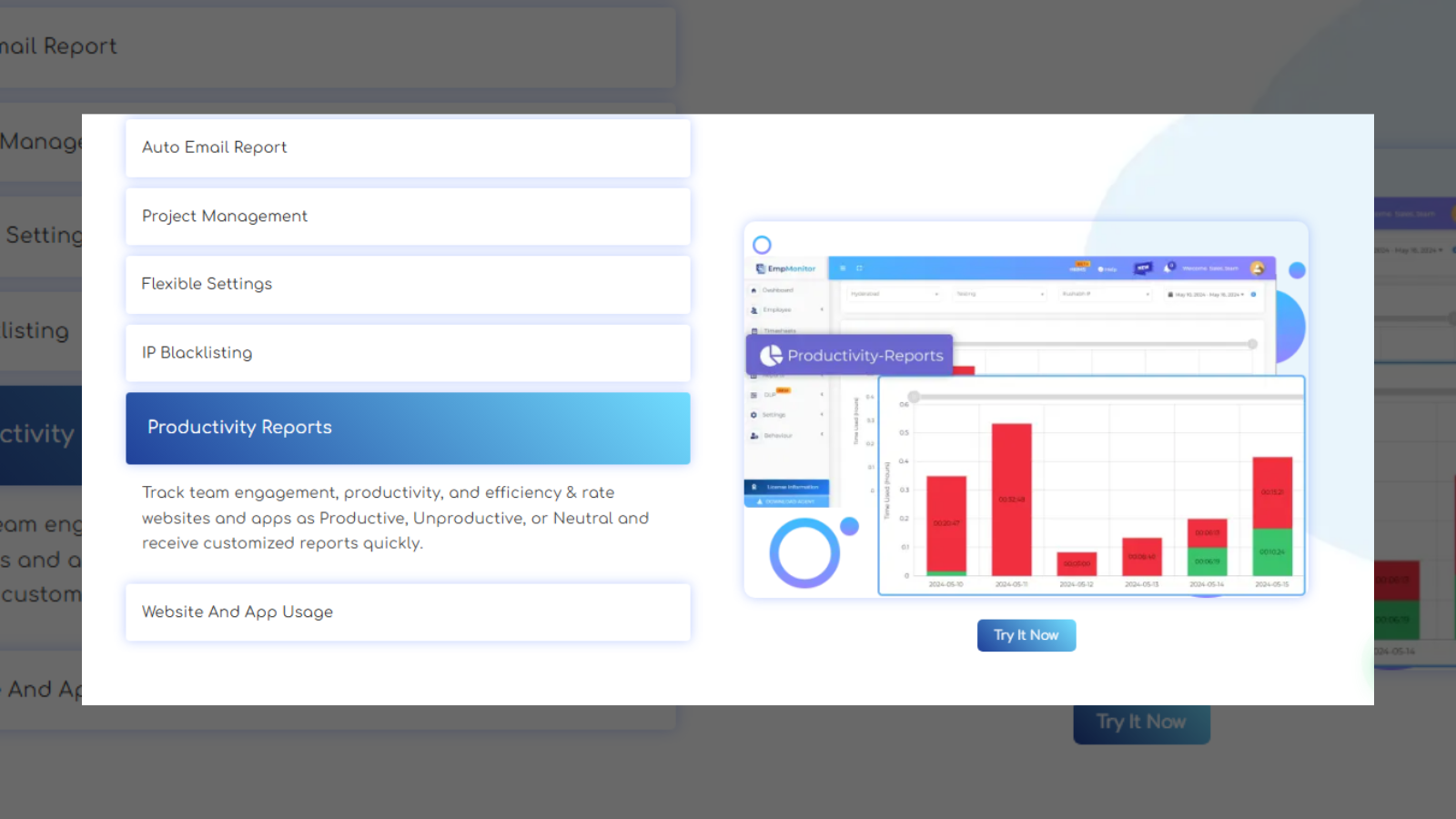
EmpMonitor provided automatic productivity scoring based on active work time, application usage, and work behavior patterns.
Instead of simply tracking login hours, managers could see actual productive time.
Idle Time Visibility
Idle time tracking helped identify whether employees were actively working, taking breaks, or waiting for another team member.
This allowed leadership to distinguish between individual inefficiencies and system-level bottlenecks.
Cost vs. ROI
At approximately $3 to $4.66 per user per month depending on team size, the cost was minimal compared to the financial losses caused by project delays and inefficient billing.
The operations team concluded that even a small productivity improvement would easily justify the investment.
The company implemented EmpMonitor’s Gold plan for its 65-person remote workforce.
The Implementation: Fixing the Machine
Week 1: Transparent Communication
Leadership introduced the platform openly to the team.
Employees were informed exactly what the tool tracked, how the data would be used, and what it would not be used for.
The focus was not on surveillance, but on understanding workflow efficiency and identifying bottlenecks.
Interestingly, the response from employees was largely positive. Many team members welcomed a system that could finally differentiate genuine effort from unstructured work patterns.
Week 2–3: The First Data Insights
Within two weeks, the platform revealed valuable operational insights.
Average active productivity time across the team was 5.1 hours per day out of an eight-hour workday.
Some employees consistently reached 7+ hours of focused work, while others logged full workdays but averaged closer to 3.2 hours of productive activity.
URL and application tracking also revealed patterns of non-work browsing during specific parts of the day.
More importantly, the data exposed three recurring bottlenecks:
- Copy approvals delayed by creative directors
- Design revisions waiting for client feedback
- Duplicate client outreach caused by incomplete handoff documentation
These insights made it clear that many productivity problems were workflow issues rather than performance issues.
Month 2: Data-Driven Improvements
With clear visibility into work patterns, leadership introduced several targeted operational changes.
Creative directors were given team productivity dashboards, allowing them to proactively identify workflow delays.
A new handoff protocol for account managers was implemented to ensure smoother project transitions.
Performance reviews also changed significantly.
Instead of relying on subjective opinions, discussions were now supported by data-backed productivity insights, allowing high performers to be recognized more clearly while providing specific guidance to those who needed support.
The company also introduced a daily focus block policy – two uninterrupted 90-minute work sessions where internal communication tools were muted to allow deep work.
Productivity metrics quickly confirmed that focused work hours increased significantly during these periods.
The Results: 60 Days In
The improvement curve was steep and fast.
| Metric | Before EmpMonitor | After 60 Days |
| Average Active Work Hours | 5.1 hrs/day | 6.8 hrs/day |
| Billable Efficiency | Baseline | +42% |
| Missed Deadlines | 34% of projects | 21% of projects |
| HR Audit Time (weekly) | 5 hours | 0.5 hours |
| Annual Cost Savings | — | $90,000 |
Billable Efficiency Transformed
The jump from 5.1 to 6.8 active hours per day, a 33% increase in real productive time, translated directly into billable efficiency gains. Projects that previously required buffer weeks to complete were being delivered on schedule. The finance team recalculated invoicing based on verified hours rather than self-reported figures, immediately improving margin accuracy.
Deadlines Became the Norm, Not the Exception
Missed deadlines dropped from 34% to 21% within 60 days, a 38% reduction. The two clients who had flagged complaints both renewed their retainers. Leadership attributed the turnaround directly to the bottleneck visibility EmpMonitor provided. Fixing systems was faster and more effective than any motivational initiative they had tried previously.
The Financial Impact
Reduced rework, accurate billing, and recaptured client revenue combined for an estimated $90,000 in annualized savings. Against an EmpMonitor subscription cost of under $3,000 per year for their team size, the return on investment crossed 30x.
“Within 60 days, we finally understood our own team. That sounds basic, but for a remote company, it was everything.”
The Takeaway: Productivity Isn’t a People Problem
This case highlights an important lesson for remote organizations.
Most productivity challenges are not people problems, they are visibility problems.
When managers cannot see how work flows through a team, they rely on assumptions. Those assumptions often lead to ineffective solutions such as more meetings, excessive check-ins, or unnecessary pressure.
What actually solves the problem is accurate data about how work happens.
By replacing guesswork with measurable insights, the company was able to build a remote work system that balanced creative freedom with operational clarity.
EmpMonitor Features That Solved PixelPulse’s Challenges
- Productivity Scoring – real-time, automatic measurement of active vs. idle work time per employee
- Idle Time Tracking – exposed bottlenecks between team members and flagged stalled tasks
- URL & App Tracking – revealed where work hours were actually going during the day
- Real-Time Dashboard – gave managers instant visibility without disruptive check-ins
- Individual Reports – shifted performance reviews from opinion-based to data-backed
- Attendance Automation – eliminated manual hour logging and payroll discrepancies
- Screenshot Monitoring – provided accountability for client-billable work sessions
Struggling with remote team productivity? Visit empmonitor.com to start your free trial or book a personalized demo.
FAQs: Remote Team Productivity and EmpMonitor
Q1. Can EmpMonitor identify productivity bottlenecks in remote teams?
Yes. Idle time analytics and real-time dashboards highlight where work stalls between team members, helping managers quickly identify and resolve workflow issues.
Q2. Is EmpMonitor suitable for creative teams?
Yes. The platform measures active work time and application usage, making it effective for designers, writers, developers, and other knowledge-based roles.
Q3. Does monitoring reduce employee morale?
When introduced transparently, many teams actually respond positively because the data helps recognize genuine effort and provides objective performance insights.
Q4. What kind of ROI can organizations expect?
In this case, operational improvements generated $90,000 in annualized savings, compared to a subscription cost of under $3,000 annually.
Q5. How quickly can teams gain actionable insights?
Most organizations begin seeing meaningful productivity data within the first two weeks of implementation, allowing early workflow improvements.