
Strong results start with clarity. Each plan, task, and decision needs direction that every team member can understand and follow. Without that clarity, confusion grows, effort scatters, and progress slows down. That clear direction comes from well-defined project objectives. These objectives act as the foundation of success, shape daily actions, and keep everyone on the same path.
When a team sets strong Strategic objectives, it gains focus, measurable progress, and faster outcomes. Without them, projects drift, budgets expand, and timelines stretch. This guide will show how to create, apply, monitor, and strengthen project objectives that truly drive results.
Tap to Play Audio
Why Clear Project Objectives Are Important for Every Team
Clear project objectives give a team purpose. They explain what success looks like, which tasks matter most, and how progress gets measured. When every member understands the project baseline, decision-making becomes easier, collaboration improves, and productivity rises.
Vague targets create confusion. Team members work hard, yet their efforts move in different directions. Strong project objectives remove that confusion. They provide a shared target, set clear expectations, and connect daily tasks to a bigger outcome.
Leaders rely on Strategic objectives to track progress, manage resources, and solve problems fast. Clients rely on project objectives to understand results. Teams rely on Strategic objectives to stay motivated and aligned.
Clear project objectives also reduce risk. They prevent wasted effort and help teams adjust plans before problems grow large. They serve as a guide during change and help everyone stay focused during challenges.
What Are Project Objectives?
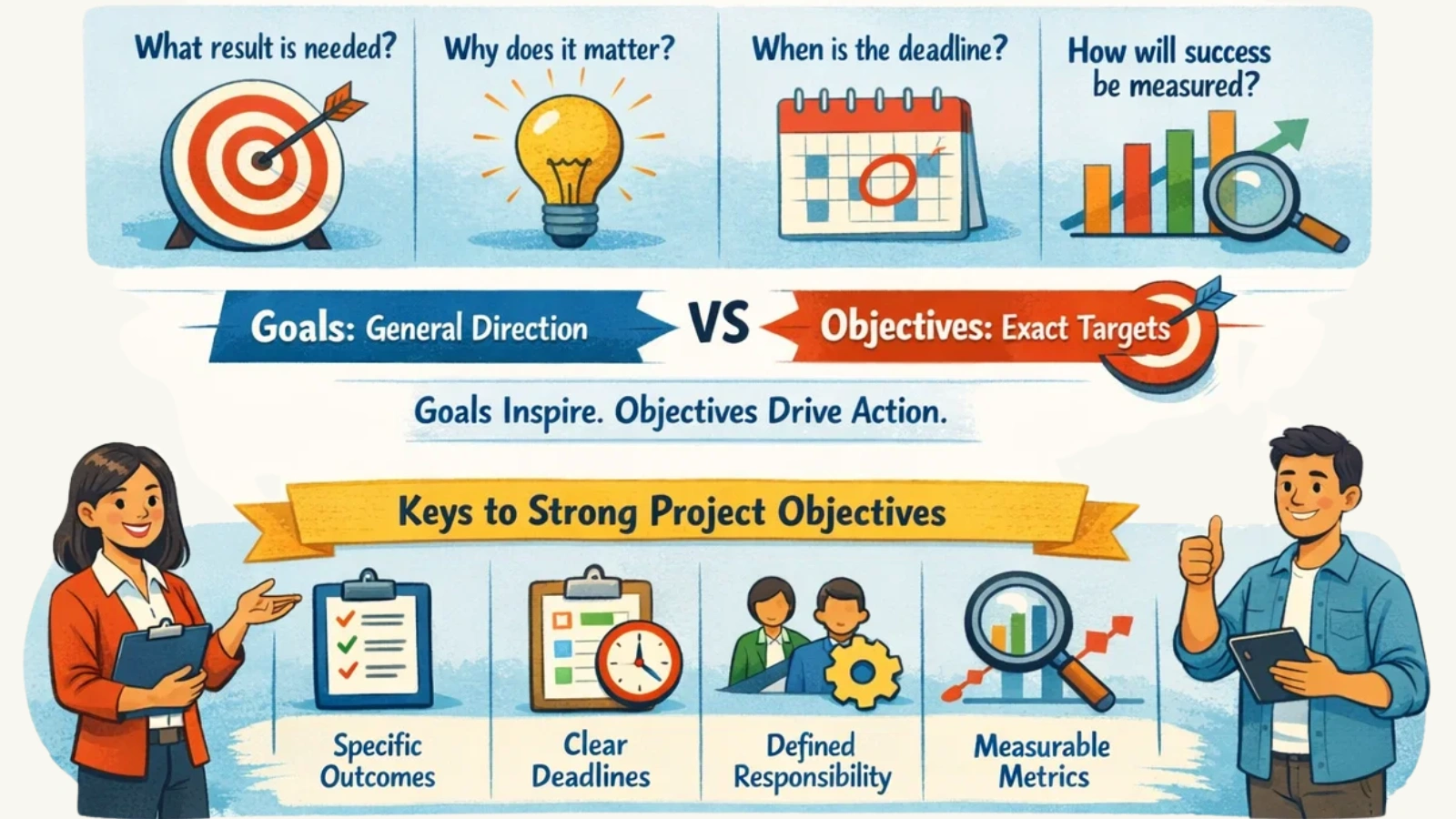

What are project objectives? They define specific, measurable outcomes that a project must achieve within a set time. They describe the “what” and “why” behind every action. They help a team understand the exact results expected at the end of a project.
Project objectives must answer these core questions:
- What result must the project produce?
- Why does this result matter?
- When must the project reach completion?
- How will success be measured?
What are project objectives compared to goals? Goals show a general direction. Project objectives show exact targets. Goals inspire. Strategic objectives direct action.
Clear project objectives use direct language, include measurable results, and align with business priorities. They do not confuse or leave room for doubt. They push a team toward consistent performance.
A well-written set of project objectives includes:
- Specific outcomes
- Clear deadlines
- Defined responsibility
- Measurable metrics
Strong project objectives provide a clear path and help every contributor know where to focus energy.
Explore More
Fein Definition: Hidden Dangers That Could Hurt Your Business
Objective Of The Project In Project Management
The Objective of a project in employee management defines the main purpose and desired result. It gives leadership a reason to invest resources, time, and talent into a specific plan. It connects action with outcome.
A strong project objective answers this question: “What change or value will this project deliver?” It can include improvements in revenue, efficiency, customer experience, or internal systems.
In project management, the Objective of the project guides every phase:
- Planning
- Execution
- Monitoring
- Review
It helps leaders set priorities. It shapes task distribution. It also supports data-based decisions. Clear project objectives also help leaders measure performance against expectations. Without strong objectives, a team meeting’s success.
Teams that anchor their work around a defined project Objective deliver consistent results and avoid distractions.
Objectives Of Project Management And Their Role In Success
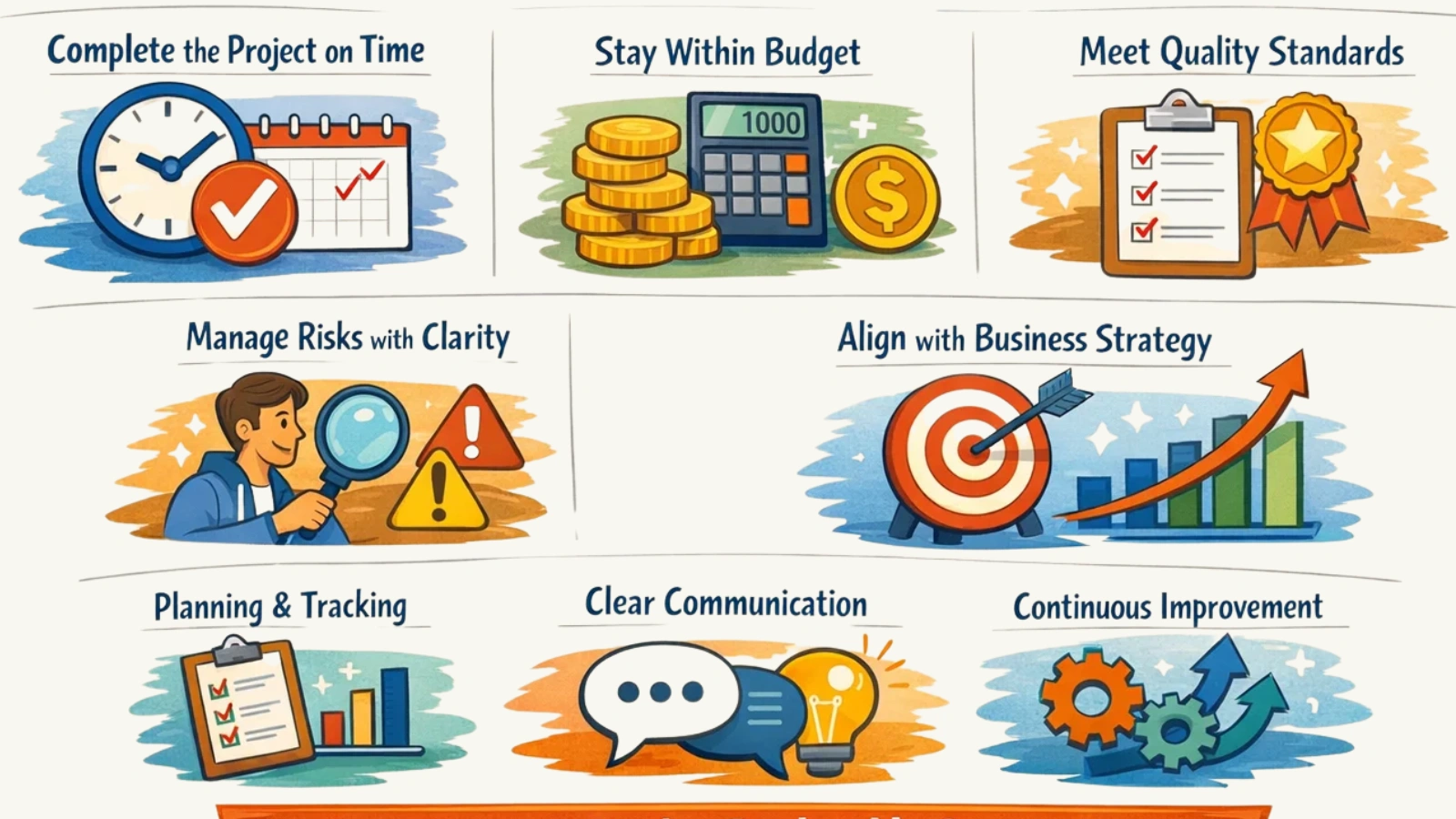
The objectives of project management shape how a project stays on track. These objectives balance time, cost, quality, and scope. They guide each phase of work and help leaders maintain control.
The main objectives of project management include:
- Complete the project on time
- Stay within budget
- Meet quality standards
- Manage risks with clarity
- Align outcomes with business strategy
By defining clear project objectives, leaders stay ahead of delays and problems. They use plans and tracking tools to ensure accountability. The objectives of project management also include communication, coordination, and continuous improvement. Teams that follow these objectives reduce errors and boost confidence.
When every task aligns with clear Strategic objectives, success becomes predictable rather than accidental.
Step-By-Step Guide: How To Create Strong Project Objectives
Creating strong project objectives requires focus, research, and clarity. Follow these practical steps for reliable results:
1: Define the desired outcome
Identify the exact change the project must produce. Describe the final result clearly so every team member understands the target without confusion.
2: Use measurable language
Include specific numbers, time limits, or measurable performance targets. This makes the project objective trackable and helps teams check real progress against expectations.
3: Connect objectives to business needs
Link every project objective to a broader business goal. This alignment ensures the work adds value and directly supports growth, efficiency, or customer success.
4: Keep objectives realistic
Set goals that challenge the team yet remain achievable with available resources, soft skills, and time. Realistic objectives maintain motivation and reduce frustration.
5: Assign ownership
Attach each project objective to a responsible person or team. Clear ownership improves accountability and ensures someone monitors progress and removes obstacles.
6: Add a clear deadline
Give every project objective a fixed end date. Deadlines build urgency, support planning, and help teams manage time and priorities effectively.
7: Review and revise
Revisit project objectives regularly and adjust them when plans or conditions change. This flexibility keeps targets relevant and achievable throughout the project lifecycle.
Strong Strategic objectives guide each decision. They serve as a filter for tasks, priorities, and resource use.
Project Objectives Examples For Different Industries
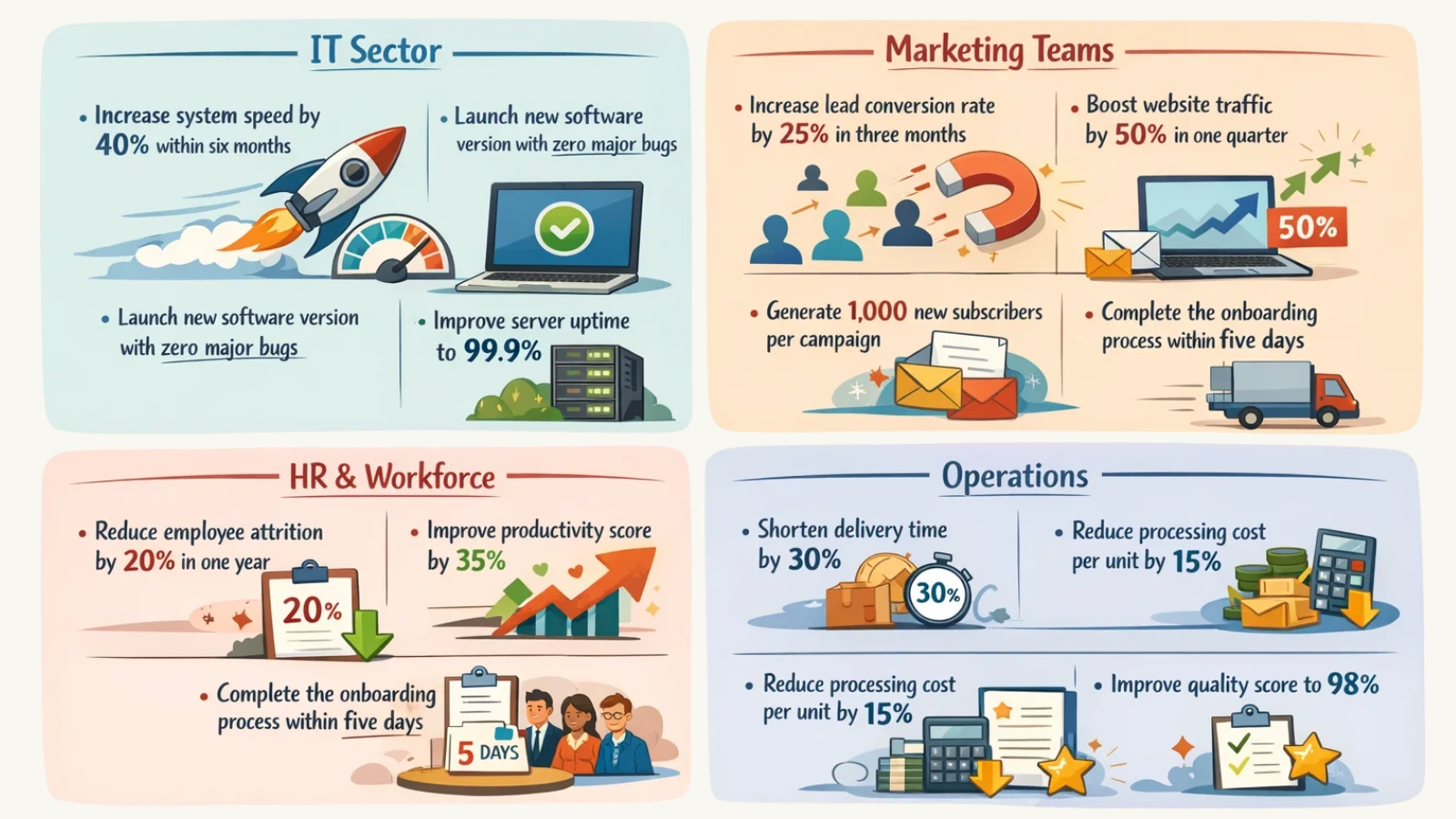
Clear project objectives examples help teams shape better plans. Below are several industry-based project objectives examples:
IT Sector
- Increase system speed by 40% within six months
- Launch new software version with zero major bugs
- Improve server uptime to 99.9%
Marketing Teams
- Increase lead conversion rate by 25% in three months
- Boost website traffic by 50% in one quarter
- Generate 1,000 new subscribers per campaign
HR and Workforce
- Reduce employee attrition by 20% in one year
- Improve productivity score by 35%
- Complete the onboarding process within five days
Operations
- Shorten delivery time by 30%
- Reduce processing cost per unit by 15%
- Improve quality score to 98%
These project objectives examples show how clarity drops confusion and boosts precision.
Sample Project Objectives You Can Use Today
Below are ready-to-apply sample Business objectives for various teams. These sample project objectives provide structure and clarity:
- Launch a new product to 5,000 users within 3 months
- Improve customer response time to under 2 minutes
- Reduce task completion time by 25%
- Achieve a 95% customer satisfaction score
- Increase productivity per employee by 20%
- Lower data error rate to under 1%
- Introduce a new internal system with 100% staff training
Each of these sample project objectives defines a clear outcome, time limit, and measurement method.
A team can adjust values to fit any business need. Strong Business objectives help teams stay focused, avoid waste, and track progress with accuracy.
How Empmonitor Helps In Monitoring Projects?
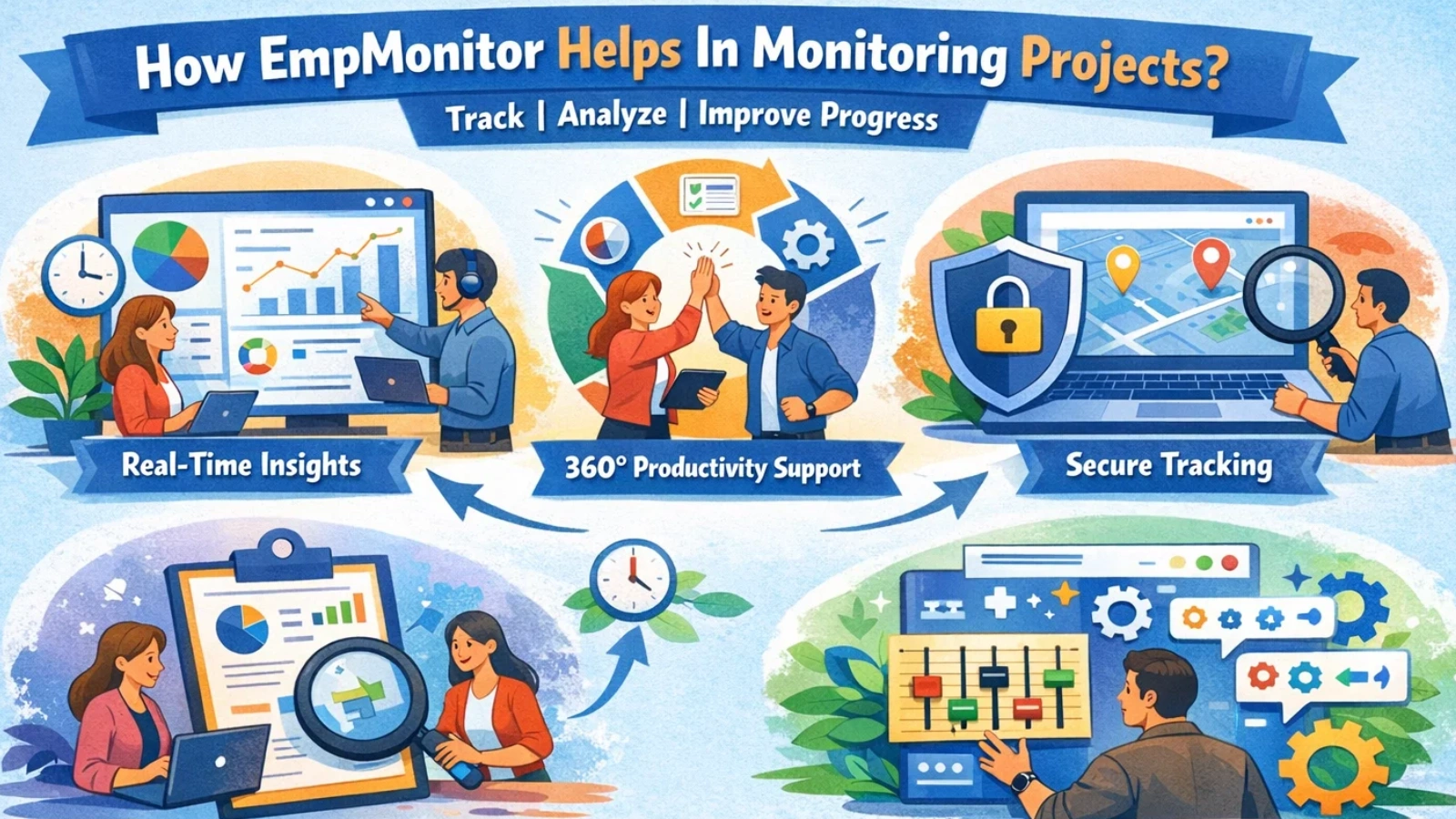
EmpMonitor offers a complete system that empowers teams to track, analyze, and improve progress toward key project objectives. It goes far beyond basic tracking and provides 360-degree support for workforce productivity tools and performance.
It offers real-time insight, detailed reports, secure tracking, and advanced control. Teams use EmpMonitor to stay focused, productive, and aligned with every Objective of the project.
Track Real-Time Progress Toward Project Objectives
Live activity monitoring
EmpMonitor shows real-time employee activity through a centralized dashboard. Leaders see who works, which tasks get attention, and how time gets used. This supports accurate progress toward Business objectives.
Application and website usage insights
EmpMonitor tracks app and web use. Managers spot distractions and guide employees back to priority tasks that support project objectives. These insights provide context for productivity decisions.
Improve Time Accountability for Every Task
Time tracking
EmpMonitor records every working minute. It shows start time, end time, and active duration. This clarity strengthens accountability and aligns effort with Business objectives.
Idle vs productive hours
The system highlights idle and productive hours. Managers understand efficiency patterns and take quick action to improve performance.
Accurate timesheets
Automated reports offer clear time records. These timesheets support fair evaluation and help teams meet project deadlines with confidence.
Ensure Team Alignment With the Objective of the Project
Task tracking
EmpMonitor allows team leaders to track assigned tasks and completion status. Everyone stays aligned with the primary Objective of the project.
Project management dashboard
One unified dashboard displays progress, timelines, and activity levels. Leadership spots risks early and makes informed decisions to protect project objectives.
Workforce engagement analysis
EmpMonitor analyzes activity patterns to reveal engagement levels. Managers strengthen motivation and refocus attention toward project objectives.
Strengthen Security While Achieving Objectives
Insider threat detection
EmpMonitor identifies suspicious behavior and attempts to access restricted systems. This feature protects data while teams pursue Business objectives.
Data loss prevention
The system blocks unauthorized data transfers and USB activity. This ensures company information remains secure during every project.
Website and app blocking
EmpMonitor limits access to distracting or harmful sites. This keeps employees focused on work that supports project objectives and results.
This complete toolset makes EmpMonitor an essential partner for businesses that need reliable performance, accountability, and protection while pursuing critical project objectives.
How To Measure If Your Project Objectives Are Working?
Measuring progress keeps a project on track. Use these methods to evaluate project objectives:
- Compare results with defined targets
- Track weekly and monthly KPIs
- Use automated performance reports
- Review team efficiency data
- Analyze time spent vs output
- Monitor the quality of results
- Assess customer feedback
When KPIs match or exceed goals, project objectives work as planned. When numbers fall short, leaders adjust strategy fast. This continuous review ensures improvement and better results.
Benefits Of Strong Project Objectives For Business Growth
Strong project objectives deliver real impact on business success. They create clarity, unity, and consistent progress.
Key benefits include:
- Higher productivity levels
- Cleaner communication
- Better time management
- Lower operating costs
- Reduced confusion
- Faster decision-making
- Improved team morale
- Stronger customer trust
- Better use of resources
Well-written project objectives keep every action meaningful. They prevent wasted time and energy. They guide businesses toward steady, measurable growth.
Organizations that master Business objectives outpace competitors and build stronger foundations for future expansion.
Final Thoughts
Clear direction drives strong results. Well-defined project objectives give every team member a target to hit and a standard to follow. They connect effort with outcome in a measurable and meaningful way. Use clear language. Set realistic targets. Assign ownership.
Track progress. Secure data. With the right structure and the right tools like EmpMonitor, teams achieve more with less confusion. Strong project objectives turn plans into performance and effort into success.
Frequently Asked Questions
1. What is the difference between project goals and project objectives?
While often used interchangeably, they serve different purposes. A project goal is a high-level, broad statement of what you hope to achieve (e.g., “Improve customer service”). A project objective is a specific, actionable, and measurable step taken to achieve that goal (e.g., “Reduce average customer wait time to under 60 seconds by Q4”).
2. What are the 5 SMART characteristics of project objectives?
To ensure project objectives drive results, they should follow the SMART framework:
- Specific: Clear and unambiguous.
- Measurable: Includes numbers or milestones to track progress.
- Achievable: Realistic given your team’s resources and timeline.
- Relevant: Aligned with broader business values and goals.
- Time-bound: Has a defined start and end date.
3. How many objectives should a project have?
For most projects, three to five core objectives are ideal. Having too many objectives can scatter your team’s focus and make resource allocation difficult. It is better to excel at four critical objectives than to underperform on ten vague ones.
4. Why do project objectives often fail?
The most common reasons for failure include lack of clarity (being too vague), scope creep (adding new requirements mid-project), and lack of alignment with the team’s actual daily tasks. Using a tool like EmpMonitor helps prevent this by providing real-time visibility into whether daily work actually matches the defined objectives.
5. Can project objectives change once a project has started?
Yes, but with caution. Business objectives should be flexible enough to adapt to major market shifts or resource changes. However, frequent changes to objectives can lead to “project drift.” Any revision should be documented and communicated clearly to all stakeholders to maintain alignment.