


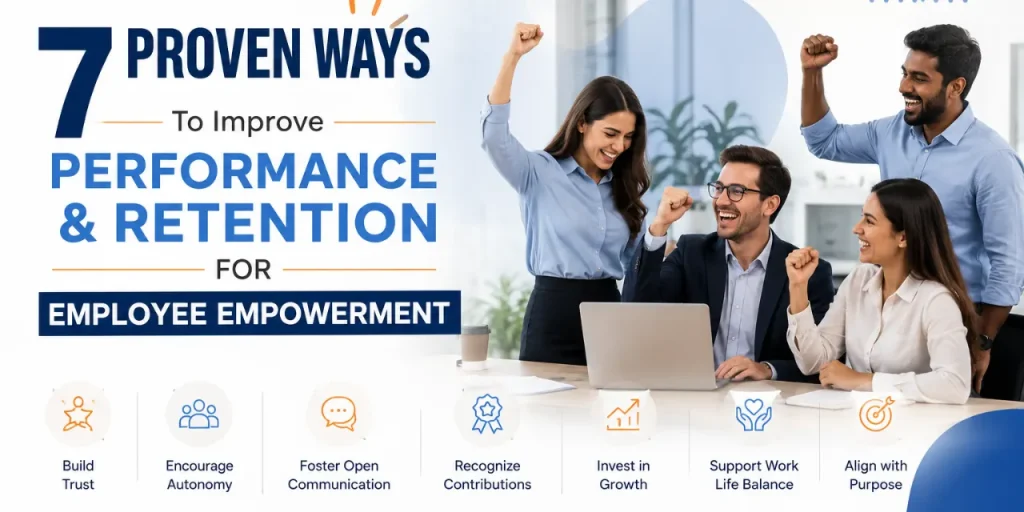
The organisations that consistently outperform their competitors share one defining trait, empowering employees, employee empowerment examples, what is employee empowerment they trust their people. Employee empowerment is the practice of giving employees the tools, authority, and confidence to make decisions and take ownership of their work. When done right, it creates a ripple effect across the entire organisation: higher engagement, stronger retention, and measurably better performance. And yet, many companies still manage through micromanagement, rigid hierarchies, and one-size-fits-all policies that quietly erode motivation over time. In this blog, we’ll explore seven proven ways to build genuine employee empowerment into your workplace and how the right workforce tools make it far easier to sustain at scale.
Listen to this podcast!
What Is Employee Empowerment and Why Does It Matter?
Before diving into the strategies, it’s worth being clear on the concept itself. What is employee empowerment? At its core, it means shifting meaningful decision-making authority to the people closest to the work, giving them autonomy, resources, and the confidence to act without requiring approval at every step.
The business case is well-established. Empowered employees are more productive, more creative, and far less likely to leave. They take initiative rather than waiting for direction. They solve problems at the source rather than escalating everything upward. The result is a leaner, faster, and more resilient organisation, one that attracts strong talent and keeps it.
1. Give Employees Autonomy Over How They Work


The first and most foundational pillar of employee empowerment is autonomy. This means trusting people to decide how they accomplish their goals, not just what those goals are. Rigid process control is the enemy of initiative.
When employees have flexibility in their working style, schedule, and approach, they feel respected as professionals rather than managed as resources. This doesn’t mean removing accountability; it means changing how accountability is measured. Focus on outcomes and results rather than activity and presence, and watch how quickly ownership and initiative follow.
2. Invest in Continuous Learning and Skill Development
Empowering employees means equipping them to grow, not just perform. Organisations that invest consistently in learning and development send a powerful signal: we believe in your potential, and we’re willing to back it.
This investment doesn’t have to be expensive. Structured mentorship programmes, cross-functional project opportunities, access to best enterprise LMS platforms, and regular knowledge-sharing sessions all count. When employees feel their skills are growing, they’re more committed to the organisation, funding that growth, and more capable of contributing at a higher level.
3. Create Psychological Safety for Open Communication
Empowering employees without creating an environment where they feel safe to speak up is only half the job. Psychological safety, the belief that one can share ideas, flag concerns, or admit mistakes without fear of humiliation or retaliation, is the invisible foundation that makes everything else work.
Leaders build this through consistent behaviour: actively asking for feedback, responding to concerns without defensiveness, acknowledging mistakes openly, and ensuring that raising difficult topics is rewarded rather than punished. When psychological safety is present, employee empowerment becomes self-sustaining. People bring their whole thinking to work.
4. Recognise Contributions Consistently and Specifically
Recognition is one of the most underused tools in workforce management. Generic praise, “good job, everyone,” barely registers. Specific, timely, public recognition of real contributions is what makes people feel genuinely valued.
The impact of recognition on retention is significant. Employees who feel consistently acknowledged for their work are far less likely to be actively looking for another role. This is one of the most direct employee empowerment examples in practice: when people see their specific contributions noticed and celebrated, they’re motivated to keep contributing at that level and beyond.
5. Involve Employees in Goal-Setting and Decision-Making
One of the clearest employee empowerment examples is participatory goal-setting. When employees have input into the targets they’re working toward, they feel invested in the outcome rather than just instructed to deliver a result someone else defined.
This applies at every level from team OKRs to individual performance reviews. People who co-create their goals understand the reasoning behind them, have more realistic expectations about what success requires, and are more likely to take ownership when things get difficult. Inclusion in decision-making isn’t a soft benefit; it’s a direct driver of engagement and accountability.
6. Build Transparent Performance Feedback Loops
Empowering employees means ensuring they always know where they stand. Vague, infrequent, or exclusively top-down feedback creates uncertainty, and uncertainty is the enemy of confidence and initiative.
Organisations committed to employee empowerment replace annual reviews with continuous feedback: regular one-to-ones, real-time data on individual and team performance, and constructive input that employees can act on immediately rather than being informed of in a year-end conversation. Transparency in performance feedback builds trust, removes guesswork, and gives employees the clarity they need to grow.
7. Use Workforce Data to Empower Managers to Lead Fairly
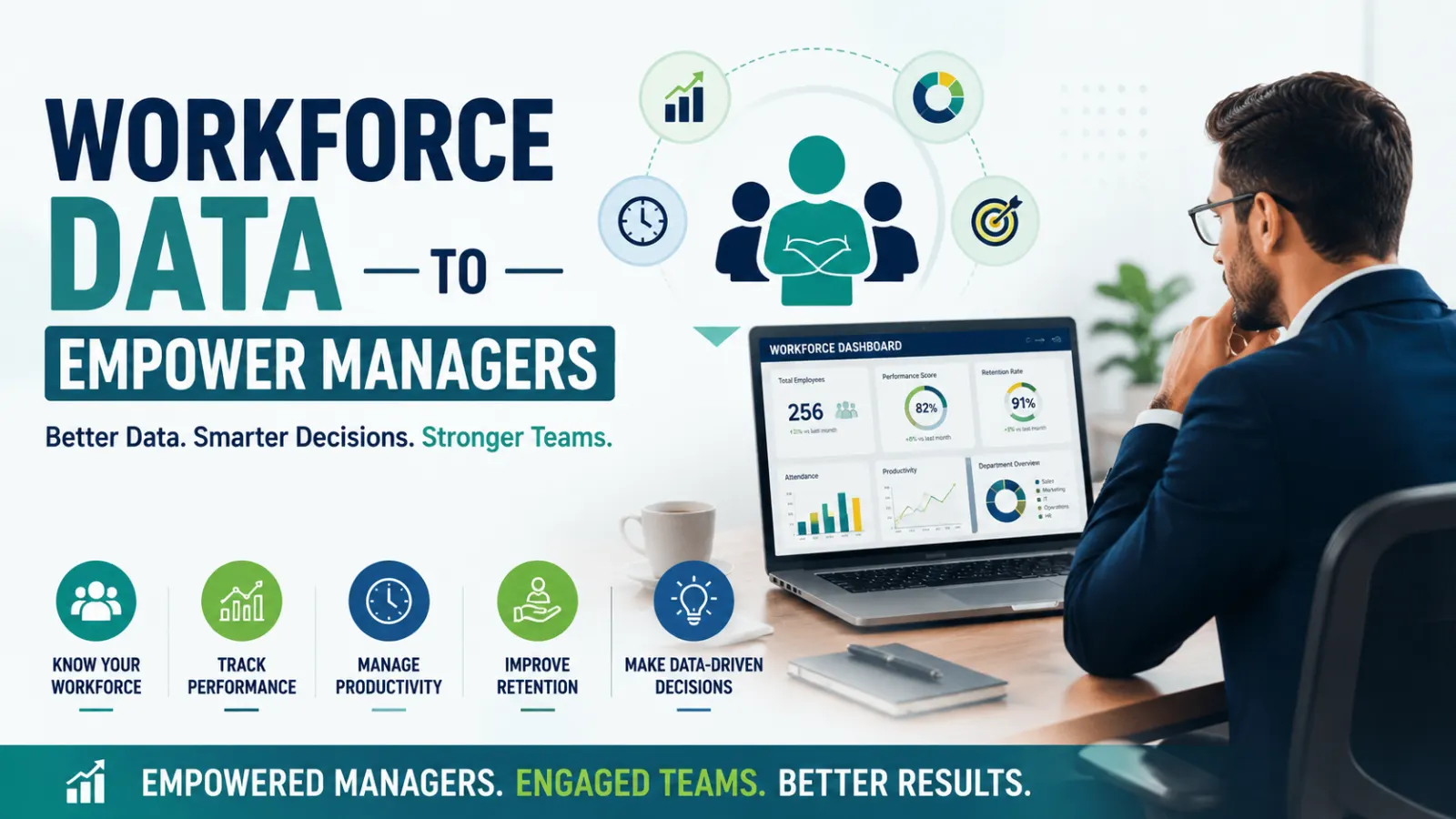
The final strategy is one that’s often overlooked: equipping managers with the right data to lead fairly. Bias, whether conscious or unconscious, undermines employee empowerment faster than almost anything else. When decisions about recognition, promotion, workload, and performance are based on gut feel rather than data, the people who lose out are rarely the loudest voices in the room.
Objective workforce data levels the playing field. It allows managers to recognise effort that goes unnoticed, redistribute workloads equitably before burnout sets in, and have performance conversations grounded in fact rather than impression.
Read More:
The Role Of Employee Monitoring Software In Successful Workplaces
Employee Activity Tracker: Tips to Optimise Work Performance
How EmpMonitor Supports Genuine Employee Empowerment
Turning these seven strategies into daily practice requires more than good intentions; it requires the right infrastructure. EmpMonitor is the #1 open-source employee monitoring and workforce management platform trusted by 15,000+ companies across 100+ countries, tracking 500,000+ employees worldwide.
Here’s how EmpMonitor directly supports and sustains employee empowerment across your organisation:
- Real-Time Activity Dashboard – Managers gain live visibility into team performance, enabling data-driven, fair conversations rather than subjective assumptions.
- Productivity Calculation – Automatically quantifies productive vs idle time, helping identify overworked team members and redistribute workloads before burnout happens.
- Time Tracking Software – Accurate, transparent timesheets that give employees full visibility into their own work patterns, supporting autonomy and self-management.
- Attendance & Leave Tracking – Automated attendance management removes ambiguity and ensures consistent, fair policy application across every team member.
- User Activity Monitoring – Hourly insights into app usage and task activity that support objective, evidence-based performance reviews, removing bias from appraisal conversations.
- HRMS Integration – A built-in HR management layer that streamlines onboarding, policy administration, and workforce planning in one unified platform.
- Insider Threat Prevention – Protects organisational data while maintaining the secure environment that employee trust and autonomy require.
- Live Screencasting & Recording – Newly launched feature providing real-time activity visibility, ideal for managing remote and hybrid teams with transparency and fairness.
- Project & Task Management – Helps teams set, track, and collaborate on goals in one place, reinforcing and empowering employees through clear ownership and accountability.
- Free 15-Day Trial – Full-feature access from day one, with plans starting at just $3/user/month. No hidden fees, no complexity, just results.
EmpMonitor gives managers the objective data and operational tools they need to lead empowering employees fairly, consistently, and at scale.
Empowering Employees Is a Process, Not a One-Time Decision
It’s worth saying clearly: employee empowerment is not a policy you implement once and tick off the list. It’s a cultural commitment that requires daily reinforcement through how managers communicate, how performance is measured, how recognition is distributed, and how decisions are made.
The seven strategies in this blog work best when they’re integrated rather than applied in isolation. Autonomy without feedback creates confusion. Recognition without transparency feels hollow. Data without action is just noise. When these elements work together, supported by the right tools and leadership, the result is a workforce productivity that consistently brings its best.
Conclusion
Strong employee empowerment reduces turnover, lifts performance, and builds the kind of workplace culture that attracts people worth keeping. Whether you’re starting with one strategy or redesigning your entire approach, the direction is clear: trust your people, give them the tools they need, and measure what matters. Platforms like EmpMonitor make it easier to do all three fairly, consistently, and at scale.
Frequently Asked Questions
Q1. What is employee empowerment in the workplace?
Employee empowerment means giving staff the authority, tools, and confidence to make decisions and take ownership of their work rather than requiring approval or direction at every step.
Q2. What are the benefits of employee empowerment?
Higher engagement, stronger retention, improved productivity, faster problem-solving, and a more innovative, resilient workplace culture are all consistent outcomes of well-implemented employee empowerment.
Q3. How does EmpMonitor support employee empowerment?
EmpMonitor provides real-time productivity data, fair attendance tracking, transparent timesheets, and HRMS tools, helping managers lead with objectivity and empowering employees through clear, evidence-based feedback.
Q4. What are some employee empowerment examples?
Participatory goal-setting, flexible working arrangements, public recognition of specific contributions, continuous learning investment, and transparent performance feedback are all strong, practical examples.